Resume-aware faculty matching

Find professors who actually fit you

Upload your resume. Four AI agents analyze your background, rank the faculty who fit, inspect their recent research, and help you draft outreach — grounded in their actual work, not templates.

Free to startNo credit cardCancel anytime
Top matches Balanced preset
Dr. Sarah Chen
Stanford · Interpretability · NLP
91
Dr. Marcus Holloway
MIT · Robotics · RL
84
Dr. Aisha Okonkwo
CMU · Fairness · HCI
82
Nova · Professor Researcher · re-ranking top 20…
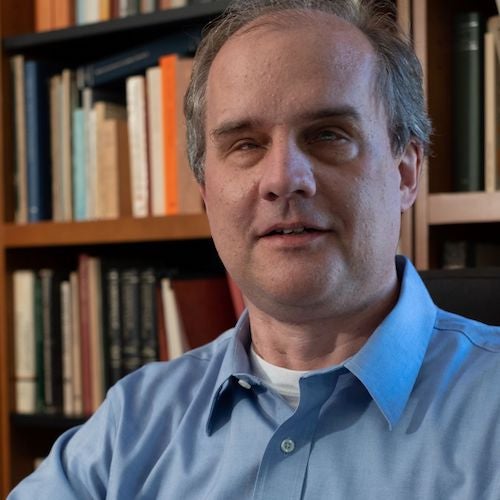
Robert Englebretson

Robert Englebretson

· Associate Professor Director of Undergraduate Studies in LinguisticsVerified

Rice University · Linguistics

Active 1997–2023

h-index9
Citations1.0k
Papers223 last 5y
Funding
See your match with Robert Englebretson — sign in to PhdFit.Sign in

About

Dr. Robert Englebretson is a professor at Rice University specializing in linguistics with a focus on discourse and grammar, colloquial Indonesian, conversational English, Austronesian linguistics, discourse and conversation analysis, sociolinguistics, and functional approaches to language. His research also encompasses audio field recording and recording technology, discourse transcription, and Braille. He has contributed significantly to the study of Braille, including the development and analysis of IPA Braille, an updated tactile representation of the International Phonetic Alphabet, which supports blind and visually impaired students and professionals in linguistics. Englebretson's work includes research on the primacy of morphology in English Braille spelling and the cognitive sciences' approach to Braille, emphasizing the need to de-center the sighted norm. He has also been involved in creating corpora such as the HONOR (Harvey Oral Narratives on Record) corpus of interviews from Hurricane Harvey, reflecting his engagement with linguistic data collection and analysis. Englebretson has edited volumes and contributed chapters on topics such as Indonesian language structure, discourse participants in interaction, and stancetaking in discourse, demonstrating his broad expertise in linguistic theory and applied linguistics. He actively teaches a range of linguistics courses at Rice University, including introductory and advanced linguistic analysis, research on Braille, field methods, and seminars on interactional linguistics focusing on identity, social interaction, and grammar. His work has been recognized and disseminated through various academic publications and podcast appearances, highlighting his role in advancing linguistic knowledge and accessibility.

Research topics

  • Computer Science
  • Linguistics
  • Psychology
  • Natural Language Processing
  • Sociology
  • Pedagogy
  • Cognitive psychology
  • Physics
  • Communication
  • Philosophy
  • Classical mechanics
  • Epistemology

Selected publications

  • A position paper on researching braille in the cognitive sciences: decentering the sighted norm

    Applied Psycholinguistics · 2023 · 21 citations

    1st authorCorresponding
    • Computer Science
    • Psychology
    • Cognitive psychology

    Abstract This article positions braille as a writing system worthy of study in its own right and on its own terms. We begin with a discussion of the role of braille in the lives of those who read and write it and a call for more attention to braille in the reading sciences. We then give an overview of the history and development of braille, focusing on its formal characteristics as a writing system, in order to acquaint sighted print readers with the basics of braille and to spark further interest among reading researchers. We then explore how print-centric assumptions and sight-centric motivations have potentially negative consequences, not only for braille users but also for the types of questions researchers think to pursue. We conclude with recommendations for conducting responsible and informed research about braille. We affirm that blindness is most equitably understood as but one of the many diverse ways humans experience the world. Researching braille literacy from an equity and diversity perspective provides positive, fruitful insights into perception and cognition, contributes to the typologically oriented work on the world’s writing systems, and contributes to equity by centering the perspectives and literacy of the people who read and write braille.

  • The primacy of morphology in English braille spelling: an analysis of bridging contractions

    Morphology · 2023 · 5 citations

    1st authorCorresponding
    • Computer Science
    • Natural Language Processing
    • Linguistics

    Abstract This study examines the use of braille contractions in a corpus of spelling tests from braille-reading children in grades 1-4, with particular attention to braille contractions that create mismatches with morphological structure. Braille is a tactile writing system that enables people who are blind or visually impaired to read and write. In English and many other languages, reading and writing braille is not simply a matter of transliterating between print letters and their braille equivalents; Unified English Braille (the official braille system used in the United States, Canada, the United Kingdom, and several other English-speaking countries) contains 180 contractions—one or more braille cells that represent whole words or strings of letters. In some words, the prescriptive rules for correct braille usage cause contractions to bridge morphological boundaries and to obscure the spellings of stems and affixes. We demonstrate that, when the prescriptive rules for correct braille usage flout morphological structure, young braille spellers generally follow the morphology rather than the orthographic rules. This work establishes that morphology matters for young braille learners. We discuss the potential impact of our findings on braille research, development, and pedagogy, and we suggest ways in which our findings contribute to understanding the nature of orthographic morphemes and the place of braille in the reading sciences.

  • Epilogue: commentary on stancetaking in motion

    Text and Talk · 2023 · 2 citations

    1st authorCorresponding
    • Sociology
    • Epistemology
    • Linguistics
  • Orthographic units in the absence of visual processing: Evidence from sublexical structure in braille

    Cognition · 2016-05-17 · 23 citations

    articleSenior author
  • A Basic Sketch Grammar of Gĩkũyũ.

    2015-01-01

    article1st authorCorresponding
  • Discourse participants in interaction: Cross-linguistic perspectives on subject expression and ellipsis

    Journal of Pragmatics · 2014-02-24 · 4 citations

    article1st authorCorresponding
  • An overview of IPA Braille: An updated tactile representation of the International Phonetic Alphabet

    Journal of the International Phonetic Association · 2009-03-23 · 13 citations

    article1st authorCorresponding

    This article provides an overview of IPA Braille, revised and updated by Englebretson (2008) under the auspices of the International Council on English Braille (ICEB). After a brief introduction to braille as a writing system and a review of the disparate braille notations formerly used for phonetics, the author discusses the need for a single, up-to-date, linguistically-informed braille notation for the IPA. The author then outlines the rationale and procedures used in developing IPA Braille, and presents an appendix of the complete charts showing the braille equivalents for all symbols of the current IPA (revised to 2005). This article is relevant to phoneticians interested in applications of the IPA, linguists interested in writing systems, instructors who may have blind students enrolled in phonetics and linguistics courses, and especially to blind students and professionals needing access to a complete, updated braille IPA notation. The publication of the full braille charts in JIPA ensures that IPA Braille is available to the wider community of phoneticians and linguists, who typically do not have access to the literature from specialized braille publishing houses.

  • From subordinate clause to noun-phrase: Yang constructions in colloquial Indonesian

    Typological studies in language · 2008-10-14 · 9 citations

    book-chapter1st authorCorresponding

    This paper addresses the blurring of a distinction between subordinate clause and nominal phrase in colloquial Indonesian conversation. Specifically, it presents a discourse-based analysis of the forms and functions of constructions introduced by the morpheme yang . Previous literature has generally described these constructions as relative clauses; however, this paper shows that they form a continuum around three general foci. They range from traditional relative clauses serving as modifiers of head nouns, to headless referring expressions serving as presupposed information in clefts, to referring expressions functioning as direct nominal arguments of predicates. The findings call into question the label “relative clause” for these Indonesian constructions, and support a view of grammatical categories as emerging from their use in discourse.

  • Exploring language structure: A student's guide. By Thomas E. Payne. Cambridge: Cambridge University Press, 2006. Pp. xxii, 367. ISBN 0521671507. $34.99.

    Language · 2008-09-01

    article1st authorCorresponding

    Reviewed by: Exploring language structure: A student's guide Robert Englebretson Exploring language structure: A student's guide. By Thomas E. Payne. Cambridge: Cambridge University Press, 2006. Pp. xxii, 367. ISBN 0521671507. $34.99. Exploring language structure is an excellent textbook. It provides a thorough, in-depth introduction to the analytical methods of descriptive morphosyntax, filling an often overlooked gap in the curriculum between introductory and advanced linguistics courses. It is particularly well-suited for use in a linguistic analysis course at the undergraduate level, building on the general foundation that students should have received in a broad introductory survey course, and successfully preparing students for more advanced courses in morphology, syntax, and language description and documentation. The book is clear, organized, and well written, and each chapter contains numerous examples and exercises from a wonderfully diverse variety of the world's languages. From the very first page, Payne makes clear that he is writing to and for the nonspecialist student reader: the book is dedicated '[t]o all beginning students of linguistics who have ever felt they were drowning in a sea of strange terminology and mysterious concepts', and P consistently keeps this audience in focus throughout the text. Terms are clearly defined and exemplified, material is well organized, and the book contains a twenty-nine-page comprehensive glossary. P's style is succinct and interesting, and often amusingly quirky, for example, 'they [major word classes] express complex and multidimensional ideas, such as sincerity, absolutism, and underwear' (119). Throughout the text, P engages his readers in a topic that many students may otherwise find dry and complicated. The book contains ten main chapters, followed by a glossary, references, and an index. The chapters are roughly divided equally between morphology (Chs. 1–5) and syntax (Chs. 6–10), although as P observes: 'functions that are accomplished in the syntax of one language may be accomplished morphologically in another. So in reality the distinction between morphology and syntax is not always absolutely clear, though it is often very useful' (152). Ch. 1 introduces the reader to basic concepts of grammar from a broadly typological and functional perspective. P uses the metaphor of language being a complex tool designed to facilitate communication, and argues that a thorough analysis of language depends crucially on both form and function. P then introduces the three major ways in which grammar expresses meaning: lexically, morphologically, and syntactically. The tool metaphor, the interdependence of form and function, and the triune of lexicon, morphology, and syntax are themes that persist throughout the remaining chapters. Ch. 2 introduces key concepts of morphology, including conceptual categories (tense, locative, etc.), discusses the labeling and glossing of those categories, and provides an overview of the major types of morphemes and morphological processes. P concludes the chapter by outlining two formal means of representing morphological structure—position-class diagrams and process rules—and leads the reader through a step-by-step demonstration of how to make use of both of these models. Ch. 3 deals with morphophonemics and introduces students to allomorphy, phonological environments, underlying forms, rule writing, rule ordering, and rule naturalness. The next two chapters deal with word classes and subclasses respectively. Ch. 4 discusses major and minor word classes (nouns, verbs, adjectives, and adverbs vs. pronouns, conjunctions, particles, etc.). P defines word classes structurally, based on syntactic distribution and morphological form, and discusses the range of semantic concepts that each word class tends to express. [End Page 658] Word-class membership is understood as prototype-based and varying from language to language. P gives suggestions for how to approach word classes in languages with which the reader is not familiar. Ch. 5 demonstrates that there are often formally or semantically defined subclasses within the general word classes of a language (e.g. conjugation and declension classes, grammatical gender, etc.). Readers are given careful guidelines for determining subclasses: first based on similarities in phonological and morphological form, and then based on semantic coherence. The remainder of the text turns to a discussion of syntax—defined as 'the study of how words clump together in phrases and clauses' (152). Ch. 6 provides an overview of linear order, constituency, and hierarchy; discusses the...

  • Grammatical resources for social purposes: Some aspects of stancetaking in colloquial Indonesian conversation

    Pragmatics & beyond. New series · 2007-10-25 · 56 citations

    book-chapter1st authorCorresponding

Frequent coauthors

  • Simon Fischer‐Baum

    Rice University

    4 shared
  • M. Cay Holbrook

    University of British Columbia

    2 shared
  • Marja‐Liisa Helasvuo

    University of Turku

    1 shared
  • Rebecca Treiman

    1 shared
  • Wambũi Mũringo Wa-Ngatho

    1 shared
  • Carol Genetti

    Stanford University

    1 shared

Awards & honors

  • George R. Brown Award for Superior Teaching (2010)
  • George R. Brown Award for Superior Teaching (2025)
  • Sarah A. Burnett Excellence in Teaching in the Social Scienc…
  • Phi Beta Kappa Teaching Prize (2007)
  • Darleen Bogart Braille Excellence Award (2019)
  • Resume-aware match score
  • Save to shortlist
  • AI-drafted outreach

See your match with Robert Englebretson

PhdFit ranks faculty by your research interests, methods, and publications — grounded in their actual work, not templates.

  • Free to start
  • No credit card
  • 30-second signup