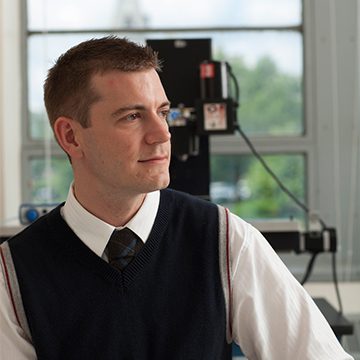
Robert F. Shepherd
VerifiedCornell University · Aerospace Engineering
Active 1991–2026
About
Robert F. Shepherd received his B.S. (2002) and Ph.D. (2010) in Material Science at the University of Illinois, where his research focused on developing polymeric and colloidal suspensions as 'inks' for 3D printers and fabricating microfluidic devices to synthesize micro-scale parts. He also earned an M.B.A. in 2009 at the University of Illinois, during which he started a company and gained experience in market research, financials, and legal aspects of entrepreneurship. In 2010, he continued his education as a post-doctoral fellow at Harvard University in George Whitesides's research group, developing pneumatic actuators in soft elastomers capable of multi-gait movement, which have been used for low-cost manipulators and biomimetic camouflage and display systems. His research interests include developing disruptive manufacturing technologies such as 3D printing, microfluidics, and replica molding, as well as functional materials to enable new devices and user experiences. He is particularly focused on increasing the speed, resolution, and material capabilities of free-form fabrication techniques and developing soft actuators that mimic biological functions to create more efficient and life-like machines.
Research topics
- Computer Science
- Materials science
- Composite material
- Artificial Intelligence
- Ecology
- Nanotechnology
- Biomedical engineering
- Medicine
- Human–computer interaction
- Electrical engineering
Selected publications
Advanced Functional Materials · 2026-01-21
articleOpen accessSenior authorCorrespondingABSTRACT Volumetric Additive Manufacturing (VAM) offers unparalleled speed in creating arbitrary 3D geometries; primarily due to requiring only one degree of freedom (DoF), rotation. A limitation, however, has been its size scale (∼3 cm), which has been attributed to light absorption. Accordingly, efforts have focused on adding translational DoF's to expose more material volume to this light path. The additional translational DoF increases print times, and still has not yielded thicker parts in all axes. This paper focuses on an important challenge to printing arbitrarily thick sections in all axes, thermal evolution from photopolymerization. In this work, we describe a scientific investigation and engineering solution to this issue, along with improvements to remaining challenges by: (i) using the index matching fluid as an active cooling source, (ii) optimizing the resin for deeper light propagation, and (iii) implementing a 4k light engine and large lens for higher intensity projections. With this system, we were able to print at least 70,153 mm 3 part volumes at throughputs of ∼390 mm 3 s −1 . Our printing system produces parts ∼60% larger and ∼400% faster than the next largest VAM method, and ∼1,740% larger and ∼23% faster than the next fastest method.
The codevelopment of soft robotics and assistive technology
Science Robotics · 2026-02-18
articleSenior authorCorrespondingFostering relationships between the disability and soft robotics communities will spark innovations that could benefit all.
Sensor fusion of touch & vision in soft manipulators for fruit picking
Nature Communications · 2026-03-23
articleOpen accessSenior authorModern agricultural robotic systems are constrained by limited sensing and manipulation capabilities, particularly in fruit harvesting, where variability in color, size, and firmness poses significant challenges. Existing solutions, often reliant on rigid grippers and single-modality sensors, frequently cause fruit bruising and substantial postharvest losses. Here, we present a compact, five-finger soft robotic gripper with integrated multimodal sensing-including vision, tactile, and curvature sensing-for adaptive and non-destructive fruit harvesting. The system incorporates 13 sensors, onboard electronics, local computation, and a rotational harvesting module. Each finger embeds custom stretchable optical fibers that function as tactile and curvature sensors, while the palm houses a miniaturized camera and distance sensor. The gripper actuates within two seconds at 80 kPa, exerts up to 6 N of pulling force, and lifts objects up to 1 kg-more than 16 times its own weight. Its workspace expands from 200 mm² to 14,000 mm², enabling the handling of fruits with diverse shapes and sizes. Each finger bends up to 240°, with performance closely matching finite element predictions. For vision measurements, the hue channel in the HSV color space enables robust real-time color detection, achieving 100% shape classification accuracy and a size measurement error below 1.8%. Tactile sensors distinguish soft from firm objects, while curvature sensors accurately measure the finger's bending state-both based on optical signal loss. Real-time demonstrations validate the system's ability to assess ripeness using multimodal data (vision, tactile, and curvature) and successfully harvest greenhouse strawberries with minimal damage. This platform offers a versatile, sensor-rich solution for both precision agriculture and general-purpose robotic manipulation.
Modular, scalable, and resilient soft wave energy harvester
Device · 2026-05-01
articleSenior authorPLoS ONE · 2026-03-03
articleOpen accessImaging techniques are fundamental tools in biology for examining cell growth and responses to the environment. Many tissues require fixing, staining, and/or clearing before they can be visualized under a microscope. However, these protocols, such as those using propidium iodide (PI), a fluorescent cationic stain widely used across biological specimens including plant, mammalian, and bacterial, often require laborious dehydration and rehydration steps to facilitate stain penetration. These stepwise solvent exchanges, for example, by passing tissues through a graded ethanol series, are time-consuming and manually intensive. While automated tissue processors offer an alternative, they are outside of the budget for many labs. Here, we present an open-source, low-cost (~$400) automated tissue processor that performs sequential dehydration and rehydration of biological tissues, significantly reducing hands-on labor. The processor is made of readily available, standardized parts and includes custom software that allows users to define and save protocols. We demonstrate the use of the processor by automating a multi-day PI staining protocol across multiple plant species, tissue morphologies, and users, and by comparing tissue quality with hand-processed samples. Our design provides a low-cost, accessible alternative to expensive commercial tissue processors, offering a practical solution for a wide range of biology laboratories.
ChemRxiv · 2025-04-11
preprintOpen accessThe ability to control the movement of charged species in the circuitry of living beings and machines is essential for complex signal processing, computation, and, ultimately, higher functionality. We describe a class of photo-ion generators (PIGs) based on non-ionic photoacids that can create large (> 1000x) irreversible changes in ionic conductivity under illumination depending on the PIG species, concentration, and solvent. Incorporation of PIGs into polyurethane rubber by simple swelling methods yields soft (E > 2 MPa), stretchable, photo-ionic gels (PIGels). The resolution of photo-patterned conductivity in PIGels is less than 1 cm and demonstrates stability over several days, suggesting utility in engineered devices. Utilizing this novel class of material, we demonstrate high sensitivity mechanical sensors via conductance changes ([ΔG/G0]/σ = 20 MPa-1) and photo-writable, soft circuitry.
Soft, Modular Power for Composing Robots with Embodied Energy
Advanced Materials · 2025-01-02 · 7 citations
articleOpen accessSenior authorCorrespondingAbstract The adaptable, modular structure of muscles, combined with their confluent energy storage allows for numerous architectures found in nature: trunks, tongues, and tentacles to name some more complex ones. To provide an artificial analog to this biological soft muscle, a self‐powered, soft hydrostat actuator is presented. As an example of how to use these modules, a worm robot is assembled where the near totality of the body stores electrochemical potential. The robot exhibits an extremely high system energy density (51.3 J g −1 ), using a redox flow battery motif, with a long theoretical operational range of more than 100 m on a single charge. The innovation lies in the battery pouch, fabricated with a dry‐adhesion method, automatically bonding Nafion separators to a silicone‐urethane copolymer body. These pouches contain anolyte within a hydrostat pod filled with catholyte, increasing current density per pod. Each pod has a motor and tendon actuator for radial compression and expansion. By linking these self‐contained pods in series, the robot worm is created that automatically navigates an enclosed, curved path. This high‐capacity soft worm also climbs up and down a vertical pipe, using a two‐anchor crawling gait, with an extra payload equivalent to 1.5 times its body weight.
Science Robotics · 2025-06-11 · 4 citations
articleSenior authorCorrespondingPrecision agriculture aims to increase crop yield while reducing the use of harmful chemicals, such as pesticides and excess fertilizer, using minimal, tailored interventions. However, these strategies are limited by factors such as sensor quality, which typically relies on visual plant expression, and the manual, destructive nature of many nonvisual measurement methods, including the Scholander pressure bomb. By automating more intimate interactions with foliage in vivo, it would be possible to inject chemical and biological probes that reveal more phenotypes—such as water stress in response to varying environmental conditions and visible gene expression to measure the success of gene engineering applications. To address this, we developed a soft robotic leaf gripper and stamping-injection method to improve foliar delivery of nanoscale synthetic and biological probes. This allows for nondestructive, in situ, multispecies applications. We used two probes: Agrobacterium tumefaciens carrying the RUBY gene as a reporter system for plant transformation and nanoparticle hydrogels for measuring leaf water potential (ψ). Our hourglass-shaped design enabled the gripper to exert higher forces with reduced radial expansion compared with conventional designs, achieving an injection success rate above 91%. Studies on sunflower ( Helianthus annuus L.) and cotton ( Gossypium hirsutum L.) showed that our method achieved an average 12-fold increase in infiltration areas, with substantially less leaf damage—3.6% in sunflower and none in cotton—compared with the needle-free syringe method. Enabling long periods of successful in vivo phenotyping on both species after precise and safe foliar delivery underscores the potential of the leaf gripper for robotic plant bioengineering.
Explosion-powered eversible tactile displays
Science Robotics · 2025-08-27 · 3 citations
articleSenior authorCorrespondingHigh-resolution electronic tactile displays stand to transform haptics for remote machine operation, virtual reality, and digital information access for people who are blind or visually impaired. Yet, increasing the resolution of these displays requires increasing the number of individually addressable actuators while simultaneously reducing their total surface area, power consumption, and weight, challenges most evidently reflected in the dearth of affordable multiline braille displays. Blending principles from soft robotics, microfluidics, and nonlinear mechanics, we introduce a 10-dot-by-10-dot array of 2-millimeter-diameter, combustion-powered, eversible soft actuators that individually rise in 0.24 milliseconds to repeatably produce display patterns. Our rubber architecture is hermetically sealed and demonstrates resistance to liquid and dirt ingress. We demonstrate complete actuation cycles in an untethered tactile display prototype. Our platform technology extends the capabilities of tactile displays to environments that are inaccessible to traditional actuation modalities.
Liquid Metal Nanoparticles-Infused Wearable CSCMR WPT Systems
2024-01-09
article
Recent grants
Frequent coauthors
- 44 shared
Bobak Mosadegh
Cornell University
- 28 shared
Thomas J. Wallin
Massachusetts Institute of Technology
- 26 shared
Simon Dunham
Cornell University
- 23 shared
Hedan Bai
ETH Zurich
- 19 shared
George M. Whitesides
- 19 shared
Emmanuel P. Giannelis
Cornell University
- 18 shared
Sanlin S. Robinson
- 18 shared
Jennifer A. Lewis
Labs
Shepherd Group Research LaboratoryPI
Education
- 2012
Postdoctoral Fellow, Chemistry & Chemical Biology
Harvard University
- 2010
PhD, Material Science and Engineering
University of Illinois
- 2002
B.S., Material Science & Engineering
University of Illinois
Awards & honors
- Senior Member, National Academy of Inventors (NAI) 2022
- Young Investigator Program, Office of Naval Research 2016
- College of Engineering Teaching & Advising Award, Cornell Un…
- Extreme Mechanics Letters Young Investigator Award 2016
- National Academy of Engineering FOE Fellow 2016
- Resume-aware match score
- Save to shortlist
- AI-drafted outreach
See your match with Robert F. Shepherd
PhdFit ranks faculty by your research interests, methods, and publications — grounded in their actual work, not templates.
- Free to start
- No credit card
- 30-second signup