Resume-aware faculty matching

Find professors who actually fit you

Upload your resume. Four AI agents analyze your background, rank the faculty who fit, inspect their recent research, and help you draft outreach — grounded in their actual work, not templates.

Free to startNo credit cardCancel anytime
Top matches Balanced preset
Dr. Sarah Chen
Stanford · Interpretability · NLP
91
Dr. Marcus Holloway
MIT · Robotics · RL
84
Dr. Aisha Okonkwo
CMU · Fairness · HCI
82
Nova · Professor Researcher · re-ranking top 20…
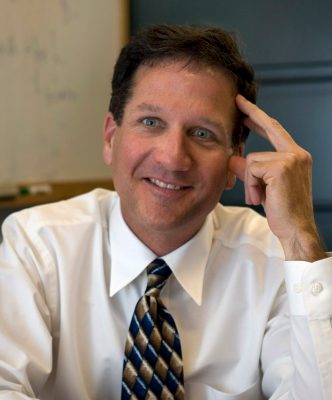
Roger Edelen

Roger Edelen

· Full-time Faculty

Virginia Tech · Finance

Active 1999–2024

h-index21
Citations3.0k
Papers458 last 5y
Funding
See your match with Roger Edelen — sign in to PhdFit.Sign in

Research topics

  • Computer Security
  • Computer Science
  • Econometrics
  • Economics
  • Monetary economics
  • Financial economics
  • Statistics
  • Psychology
  • Mathematics

Selected publications

  • Regulating inattention in fee-based financial advice

    Journal of Financial Economics · 2024-12-24 · 1 citations

    article1st author
  • Regulating Inattention in Fee-based Financial Advice

    SSRN Electronic Journal · 2024-01-01 · 4 citations

    preprintOpen access1st authorCorresponding
  • Crowding and Tail Risk in Momentum Returns

    Journal of Financial and Quantitative Analysis · 2021 · 26 citations

    • Computer Science
    • Computer Security
    • Economics

    Abstract Several theoretical studies suggest that coordination problems can cause arbitrageur crowding to push asset prices beyond fundamental value as investors feedback trade on each others’ demands. Using this logic, we develop a crowding model for momentum returns that predicts tail risk when arbitrageurs ignore feedback effects. However, crowding does not generate tail risk when arbitrageurs rationally condition on feedback. Consistent with rational demands, our empirical analysis generally finds a negative relation between crowding proxies constructed from institutional holdings and expected crash risk. Thus our analysis casts both theoretical and empirical doubt on crowding as a stand-alone source of tail risk.

  • Discussion of “Obfuscation in mutual funds”: The role of financial advisers

    Journal of Accounting and Economics · 2021-08-24

    article1st authorCorresponding
  • Institutional Crowding and the Moments of Momentum

    SSRN Electronic Journal · 2017-01-01 · 5 citations

    articleOpen access
  • Institutional investors and stock return anomalies

    Journal of Financial Economics · 2016-01-21 · 317 citations

    article1st author
  • Capitalizing on Capitol Hill: informed trading by hedge fund managers

    SSRN Electronic Journal · 2015-01-01 · 3 citations

    articleOpen access

    This paper examines the hypothesis that hedge fund managers gain an informational advantage in securities trading through their connections with lobbyists. Using datasets on the long-equity holdings and lobbyist connections of hedge funds from 1999 through 2012, we show that hedge funds outperform passive benchmarks by 56 to 93 basis points per month on their political holdings when they are connected to lobbyists. Furthermore, the political outperformance of connected funds decreased signi…cantly after the STOCK Act became e¤ective. Our study provides evidence on the transmission of political information in …nancial markets and on the value of such information to …nancial market participants. Keywords: Hedge funds; Lobbyists; Informed trading; Performance; Information transfer. JEL Classi…cation: G11, G23, G14. We are especially grateful to an anonymous referee for exceptionally thorough readings and constructive suggestions. We thank Vikas Agarwal, Heitor Almeida, Craig Brown, Alex Chinco, Tarun Chordia, Stephen Dimmock, Roger Edelen, Vyacheslav Fos, Andrea Frazzini, Fangjian Fu, Campbell Harvey, Andrew Karolyi, Christopher Malloy, Pedro Matos, Neil Pearson, Joshua Pollet, Je¤rey Ponti¤, Clemens Sialm, Melvyn Teo, Sheridan Titman, Mitch Warachka, Scott Weisbenner, Hao Zhang, as well as conference and seminar participants at the 2010 Financial Research Association annual meeting, the 2011 SFS Finance Cavalcade, the 2012 American Finance Association annual meetings, the Fifth Singapore International Conference on Finance, Baruch College, Drexel University, Georgetown University, Georgia Institute of Technology, Michigan State University, National University of Singapore, Purdue University, Singapore Management University, University of Illinois at Urbana-Champaign, University of Massachusetts Amherst, University of Miami, University of Oregon, University of Texas at Dallas, University of Washington, and Virginia Tech for comments and helpful discussions. We also bene…t from conversations with Michael Mayhew at Integrity Research Associates and the team at VogelHood Research who provided valuable insights about the political intelligence industry. We thank Yih-Ling Ang, Zhe Du, Ruidi Huang, Jing Xie, and Si’en Yu for excellent research assistance. We retain responsibility for any remaining errors. yCorresponding author. Tel: +1 217 300 7024; fax: +1 217 244 3102. Email addresses: menggao4@illinois.edu (M. Gao), huangjk@illinois.edu (J. Huang).

  • Institutional Investors and Stock Return Anomalies

    SSRN Electronic Journal · 2014-01-01 · 106 citations

    articleOpen access1st authorCorresponding
  • Institutional Investors and Stock Return Anomalies

    SSRN Electronic Journal · 2013-01-01 · 11 citations

    articleOpen access1st authorCorresponding
  • Shedding Light on “Invisible” Costs: Trading Costs and Mutual Fund Performance

    Financial Analysts Journal · 2013-01-01 · 118 citations

    article1st authorCorresponding

    Industry observers have long warned of the “invisible” costs of fund trading, yet evidence that these costs matter is mixed because many studies do not account for the largest trading-cost component—price impact. Using portfolio holdings and transaction data, the authors found that funds’ annual trading costs are, on average, higher than their expense ratio and negatively affect performance. They also developed an accurate but computationally simple trading-cost proxy—position-adjusted turnover.

Frequent coauthors

  • Pedro Barroso

    Universidade Católica Portuguesa

    26 shared
  • Paul Karehnke

    ESCP Business School

    26 shared
  • Gregory B. Kadlec

    Virginia Tech

    23 shared
  • John Chalmers

    7 shared
  • Richard B. Evans

    University of Virginia

    6 shared
  • Ozgur Ince

    University of South Carolina

    6 shared
  • Jerold B. Warner

    3 shared
  • Hassan Tehranian

    3 shared
  • Resume-aware match score
  • Save to shortlist
  • AI-drafted outreach

See your match with Roger Edelen

PhdFit ranks faculty by your research interests, methods, and publications — grounded in their actual work, not templates.

  • Free to start
  • No credit card
  • 30-second signup