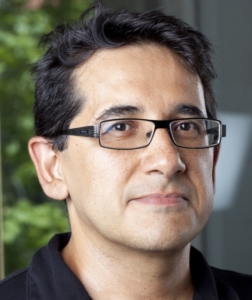
Ruben Hernandez-Leon
· ProfessorVerifiedUniversity of California, Los Angeles · Sociology
Active 1997–2025
About
Ruben Hernandez-Leon is a professor in the UCLA Sociology Department. His research focuses on migration, particularly the migration of urban Mexicans to the United States, and the systems and industries that organize migration control. He has authored books such as 'Metropolitan Migrants: The Migration of Urban Mexicans to the United States' and co-edited 'New Destinations: Mexican Immigration in the United States.' His scholarly work includes numerous articles and chapters examining topics like the migration industry, social capital in immigrant communities, and high-skilled industrial migration from Mexico to the U.S. Hernandez-Leon's contributions provide in-depth analysis of migration patterns, the social and economic factors influencing migration, and the organizational systems that regulate mobility across the Mexico-U.S. border.
Research topics
- Political Science
- Geography
- Sociology
- Economics
- Business
- Law
- Economic growth
- Management
- Finance
- History
- Art
- Demographic economics
- Engineering
- Labour economics
- Marketing
- Public relations
Selected publications
Migraciones internacionales · 2025-12-15
articleOpen access1st authorCorrespondingThis article examines the geography of H-2 visas, a temporary migrant labor program that recruits mainly Mexican workers to the United States. The analysis draws on the EMIF Norte survey and labor certification data from the U.S. Department of Labor to map the origins and destinations of H-2 temporary migrant workers. Findings indicate that, despite significant changes in the modality of cross-border migration, in Mexico, H-2 recruitment occurs in the states and regions where undocumented sojourning previously took place. In the United States, while demand remains strongest in regions long familiar with guest workers, H-2 recruitment has become increasingly prominent in western states. Overall, the H-2 visa program has expanded at a national scale in both countries, and although the rise of H-2 visas reflects a new mobility regime, this managed migration scheme is spatially developing on the legacy of undocumented migration.
The end of Mexico–US migration as we knew it – or back to the future?
Transitions Journal of Transient Migration · 2024-03-22 · 1 citations
article1st authorCorrespondingOver the last decade, scholars have declared the collapse of the Mexico–US system of undocumented migration. The H2 visa programme, a regime of managed sojourning is replacing the system of unauthorized cross-border mobility. In fiscal year 2023, the US government issued nearly 370,000 H2 temporary work visas to Mexicans. This temporary migrant labour programme is also bringing back circulation, temporary legal stays, and mostly male cross-border mobility – features that are akin to the old Bracero Program (1942–64). We contend that the restoration of these legal and sociodemographic dynamics undermines critical pillars of the system of undocumented labour mobility, limiting and reorienting the role of social networks, and potentially ending the way Mexico–United States has functioned for the past half century. We use ethnographic, interview and survey data to analyse the expansion of this new regime of highly mediated cross-border mobility, the ascent of the brokerage apparatus, and its effect transforming the social infrastructure of migration. We ask, specifically, how does the H2 temporary migrant labour programme constrain and diminish kin and hometown-based social networks, previously seen as ‘the engine of migration’? How does the shift from migrant networks to a brokerage apparatus impact trust, reciprocity and the development of migratory social capital? How is the new regime changing the experience of migration – substituting risk and adventure for certainty and routinized movement? How does the H2 temporary migrant labour programme revert the locus of social reproduction of the labour force back to sending communities, preempting integration at the destination? We frame the answers to these questions in the emerging migration industry and infrastructures paradigm, which examines to the role of migrant and non-migrant actors in the facilitation, control and overall mediation and structuring of cross-border mobility.
2023-02-07
book-chapter1st authorCorrespondingBringing back the Bracero Program: the migration industry in the recruitment of H-2 visa workers
Edward Elgar Publishing eBooks · 2022 · 9 citations
1st authorCorresponding- Political Science
- Sociology
- Business
The enlargement of the United States temporary migrant labor program, the H visa, suggests a 'return' to a migratory labor regime like the Bracero Program. This is ushering an epochal change, characterized by the state's restriction and decline of undocumented flows, the criminalization of the resident unauthorized population and the reinstatement of a system of managed migration. In this context, different stakeholders of the migrant labor regime - migrants, employers, migration brokers, state institutions and advocates - are recasting old strategies and assuming different roles. Increasing opportunities for legal migration are monopolized by intermediaries, who both partly displace and continue to rely on migrant support networks. The brokerage apparatus recruiting Mexican workers for the H-2 program plays a critical role articulating the transition between the old and the new regime, exercising a dual function of facilitation of cross-border mobility and control of the migrant workforce.
Routledge eBooks · 2020 · 2 citations
1st authorCorresponding- Political Science
- Political Science
- Geography
Over the past 15 years, hundreds of thousands of children of immigrants and their families have moved from the United States to Mexico pushed by different legal and economic expulsion factors. Using evidence from a multi-sited, twenty year-long study of Mexican migration to Georgia, we analyze the varied educational, linguistic, employment and family reunification experiences of children of immigrants in two communities of origin in central and northern Mexico. We draw from insights of the political sociology of international migration to contend that the movement of children of immigrants and their families to the parental homeland forces the realignment of people, state and territory that emigration initially disrupts. We also argue that this realignment is imperfect because children of immigrants, especially those who are U.S.-born and possess dual citizenship and their families continue to circulate between Mexico and the United States, employing mobility strategies and tapping resources located in both countries.
Journal of Ethnic and Migration Studies · 2020 · 48 citations
1st authorCorresponding- Political Science
- Business
- Public relations
This article analyses the skills and competence acquisition of migration entrepreneurs in the H-2 visa programme, a U.S. temporary worker scheme. This programme, which nowadays largely recruits Mexicans, is managed by a migration industry of labour contracting agencies, recruiters, document processors, and transporters. This article focuses on recruiters, in charge of selecting workers, and document processors, responsible for completing visa application forms. Hailing mostly from the rural working class, recruiters derive expertise from membership in the social world of the migrant. The competences of document processors closely track their belonging in the urban middle class, reflecting experiences of formal education which prepare them to deal with the bureaucratic interface of the programme. These migration entrepreneurs also acquire skills by cooperating and competing with colleagues, migrants, contracting firms, employers, advocates, and government officials – interactions that expose them the risks and benefits of a more expansive role in the brokerage apparatus.
How did son jarocho become a music for the immigrant rights movement?
2020-05-20 · 1 citations
book-chapter1st authorCorrespondingChicana/o activists and artists in Greater Los Angeles have turned son jarocho, a traditional music genre from southeastern Mexico, into an organizing resource and a means to express the plight of immigrants. Building on a movement that started in Mexico to reestablish the communal celebration of the fandango as the centre of the son jarocho tradition, these Chicana/o activists have reinterpreted fandangos as the enactment of community. They have also repurposed son jarocho and its lyrical content to articulate demands for the rights of undocumented immigrants and other social justice causes. These endeavours take place in community and cultural centres founded and led by a mix of immigrant generations: veterans of the Chicana/o civil rights movement of the 1970s, first generation immigrants and their adult children and grandchildren. These actors embrace fandangos as a metaphor and blueprint for community participation as they write new lyrics to demand justice for immigrants.
Chapter 1. The Migration of Urban Mexicans to the United States
2019-12-31
book-chapter1st authorCorrespondingChapter 4. The Monterrey-Houston Connection
2019-12-31
book-chapter1st authorCorresponding2019-12-31
book-chapter1st authorCorresponding
Frequent coauthors
- 54 shared
Jacqueline Hagan
University of North Carolina at Chapel Hill
- 53 shared
Néstor Rodríguez
- 49 shared
Aviva Chomsky
Salem State University
- 49 shared
S. Brown
Energie NB Power (Canada)
- 49 shared
Jeff Popke
University of North Carolina at Chapel Hill
- 49 shared
Kara Cebulko
Robert Wood Johnson Foundation
- 49 shared
Taeku Lee
Harvard University
- 49 shared
Julia Preston
Robert Wood Johnson Foundation
Education
- 2010
Ph.D., Sociology
University of California, Los Angeles
- 2006
M.A., Sociology
University of California, Los Angeles
- 2004
B.A., Sociology
University of California, Los Angeles
- Resume-aware match score
- Save to shortlist
- AI-drafted outreach
See your match with Ruben Hernandez-Leon
PhdFit ranks faculty by your research interests, methods, and publications — grounded in their actual work, not templates.
- Free to start
- No credit card
- 30-second signup