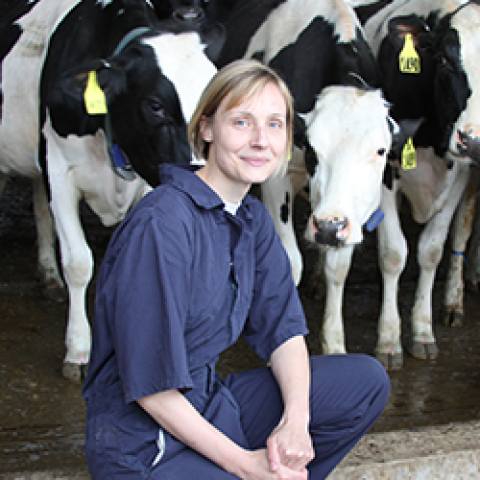
Sabine Mann
· Associate ProfessorVerifiedCornell University · Public Health and Food Safety
Active 1996–2026
About
Sabine Mann, DVM, ECBHM, PhD, DACVPM, is an Associate Professor in the Department of Population Medicine and Diagnostic Sciences at Cornell University College of Veterinary Medicine. Her research interests focus on metabolism, physiology, and the interplay with nutritional immunology during transition phases. Her goal is to facilitate understanding of beneficial and maladaptive mechanisms during times of negative nutrient balance and to improve physiological functions, including immune function, during stress. Her research methods span from mechanistic studies in target cells or tissues to various epidemiological study designs. Dr. Mann received her veterinary degree from the School of Veterinary Medicine Hannover, Germany, in 2007, and became a Diplomate of the European College of Bovine Health Management in 2012. She earned her Dr. med. vet. from LMU Munich, Germany, in 2012, and completed her Ph.D. at Cornell University in 2016. Her professional experience includes internships and residencies at Cornell University and LMU Munich, as well as roles as an instructor and lecturer. She has been recognized with awards such as the Zoetis Award for Veterinary Research Excellence in 2022 and has received multiple honors for her research presentations. Dr. Mann is a member of several professional organizations, including the American College of Veterinary Preventive Medicine, the American College of Veterinary Internal Medicine, and the European College of Bovine Health Management.
Research topics
- Biology
- Medicine
- Animal science
- Endocrinology
- Internal medicine
- Food science
- Chemistry
- Immunology
- Surgery
- Agronomy
- Bioinformatics
- Biochemistry
- Andrology
- Microbiology
- Chromatography
Selected publications
Journal of Dairy Science · 2026-03-03
articleOpen accessSenior authorOur objectives were to describe the effects of full cow-calf contact for 3, 5, or 7 d after calving compared with immediate separation on milk yield and components, cow metabolic indicators, milking characteristics, and IMI status, as well as on calf outcomes transfer of passive immunity (TPI), milk intake, and health scores. Holstein cows with a singleton calf were eligible for enrollment, and 23 Holstein cows (8 primiparous, 15 multiparous) and their calves were included in a randomized block design. Cows were housed in identical box stalls regardless of treatment assignment and milked twice daily from parturition to d 8. In pairs assigned to the 0D group, calves were separated immediately after birth, whereas in the 3D, 5D, and 7D treatment groups, calves were separated 3, 5, or 7 d after birth, respectively. All calves were fed colostrum at 8.5% of birth body weight (BBW). Contact calves had access to the cow's box stall except during milking, when they were confined to a connected calf creep area. Separated calves were fed whole milk twice daily, up to a total of 25% of BBW per day, and housed in identical pens in a different section of the same barn. Milk yield was measured at each milking, and milk components were determined on d 0, 1, 3, 5, and 7. Quarter-level milk was taken for microbial cultures on d 0 and 8. Vacuum dynamics were measured daily using a portable vacuum recorder to detect bimodal milk flow curves. Serum samples of cows and calves were analyzed for metabolic markers and IgG concentration, respectively. Calf health was scored daily, and hip and withers heights were measured. The most common reason for exclusion was low colostrum production of the dam. Milk production was lower during the respective contact periods in the 3D, 5D, and 7D groups, but rebounded to the level of the 0D group after separation, respectively. Lactose concentration was lower in the 5D group compared with 0D. Bimodality was only found in milking observations of the contact groups but not in the 0D group. Quarter-level new IMI or risk of cure, as well as metabolic indicators did not differ between groups. Successful TPI was shown in all groups, and calf health and growth indicators did not differ between groups. Median milk intake in the separated calves ranged from 9 to 9.8 kg on d 7. In summary, Holstein cows with delayed separation of their calves showed a transient reduction in milk yield, occurrence of bimodality, and lower milk lactose concentration, whereas metabolic indicators and IMI risk did not differ. Calves showed no difference in health scores or growth, and separated calves voluntarily consumed a median daily amount of milk equal to 18% to 20% of BBW. Delayed separation of calves from their dams was associated with differences in milk production, bimodality and milk components, whereas under controlled colostrum feeding conditions, calves showed no difference in TPI, health outcomes, or injury risk. Long-term effects on milk production, bimodality, calf growth, and health merit further investigation.
Journal of Dairy Science · 2025-04-01 · 6 citations
articleOpen accessSenior authorThe nadir in transition cow nutrient balance coincides with a period of heightened inflammation. Decreased circulating AA might contribute to an altered immune phenotype that favors a proinflammatory response. Objectives were to (1) investigate the effect of increasing MP supply in the prepartum, postpartum, or both diets on the response to an intravenous (IV) LPS challenge, (2) compare the response of IV LPS to fasted unstimulated control cows, and (3) determine the duration of the effect of IV LPS or fasting on milk production. Multiparous cows (n = 96) were assigned to 1 of 4 treatment groups at 28 d before expected calving following a randomized block design. Prepartum diets were formulated to contain either a control (85 g of MP/kg of DM) or high (113 g of MP/kg of DM) level of MP. Postpartum diets were formulated to contain either a control (104 g of MP/kg of DM) or high (131 g of MP/kg of DM) level of MP. To control the potential confounding effects of Met and Lys supply, diets were formulated to supply an equal amount at 1.24 and 3.84 g/Mcal of ME in both prepartum diets and 1.15 and 3.16 g/Mcal of ME in both postpartum diets, respectively. The combination of a pre- and postpartum diet resulted in 4 treatment groups: control-control, control-high, high-control, and high-high. Cows (n = 24; 23 ± 2 DIM) were selected to undergo an IV LPS challenge (0.0625 µg/kg of BW over 1 h; IVLPS) in 6 blocks. Each block included 1 cow from each treatment and 1 unchallenged control cow (n = 6; DIM = 22 ± 2; CON) alternating between treatments. All cows were allowed 1 h of ad libitum feed intake before IV LPS and fasted for 10 h following challenge. Separate repeated measure ANOVA models were used to compare the effects of dietary treatment and IV LPS. Dietary treatment did not affect the clinical, inflammatory, or hematologic response to IV LPS. Compared with baseline values, DMI and milk yield decreased on the day of challenge 14.0% and 17.7% in IVLPS and 13.8% and 4.0% in CON, respectively. Compared with CON, IVLPS decreased leukocyte counts at 1 and 4 h and increased tumor necrosis factor from 1 to 4 h, IL-10 from 1 to 6 h, and haptoglobin from 24 to 72 h. Intravenous LPS increased concentrations of glucose at 10 h and decreased those of BHB at 10 h, fatty acid at 6 and 10 h, and calcium from 3 to 10 h relative to challenge. Intravenous LPS decreased circulating EAA from 2 to 8 h and NEAA at 4 h relative to challenge. Fasting and IVLPS decreased milk yield on the day of challenge compared with cows from the source population but milk recovered by d 2 relative to challenge. In conclusion, MP supply did not modify the inflammatory response to IV LPS, but IV LPS altered the metabolic response compared with CON. Furthermore, fasted and IV LPS-challenged animals recovered milk production within 2 d postchallenge.
The cow-calf separation debate: Implications for bovine practitioners
American Association of Bovine Practitioners Conference Proceedings · 2025-03-26
articleOpen access1st authorCorrespondingThe objective of this presentation is to introduce the topic of cow-calf separation in dairy cattle pertinent to the dairy practitioner. It includes background on the reasons given for and against cow-calf contact such as health, behavior, housing considerations and production effects. It will specifically provide insight into the available and ongoing research in cow-calf contact systems with a focus on the possible role of the bovine practitioner in the current debate. Knowledge gaps are identified in almost all areas of importance to the producer and provide an opportunity for involvement of the bovine practitioner in research and practical implementation.
From milk to maturity: The potential for lactocrine programming of heifer reproduction
JDS Communications · 2025-11-20
articleOpen accessSenior authorStandard dairy calf management sees that calves are fed a consistent liquid diet until weaning at ∼60 d of age, which is generally provided as whole milk from the bulk tank (a composite of all lactating cows) or a commercial milk replacer product. Although these diets aim to satisfy the nutritional needs of the calf, their composition is not similar to the transient profile of hormones and nonnutritive bioactive factors in the milk the dam produces at this stage. Inclusion or exclusion of hormones in milk during this time may have substantial effects on reproductive programming via lactocrine signaling. This review proposes 4 potential lactocrine factors (IGF-1, insulin, estradiol, and progesterone) relevant to current dairy calf feeding strategies and highlights known interactions within female reproductive development, wide knowledge gaps, and opportunities for further investigation.
JDS Communications · 2025-07-02 · 1 citations
articleOpen access1st authorCorrespondingThe objective of this observational study was to describe the association between lag time from calving to first milking for colostrum harvest. Colostrum samples from primiparous and multiparous Holstein cows (n = 640) from a single herd milking approximately 5,200 cows 3 times daily in a 100-stall rotary parlor were used in this prospective cohort study. Calves were removed immediately after calving and not allowed to suckle their dam. Colostrum was harvested twice daily at 0930 and 1730 h and stored in a colostrum bank, from which all newborn calves were fed within 2 h after birth. Only cows milked at 0930 h were eligible for enrollment. Time of calving was recorded and time lag to the morning milking at 0930 h was calculated. Total yield of the colostrum was determined by weight. Colostrum samples were analyzed for IgG concentration by radial immunodiffusion and DM content by oven drying for 20 h at 100°C. Lag time in this cohort had a median of 10 h, ranged from 0 to 18 h, and was divided into 3 h increments to assess associations with outcomes of interest. Additionally, data were explored using segmented regression analyses. Total IgG yield was calculated from yield and IgG concentration. The association of colostral yield, IgG concentration, DM, as well as total IgG yield was analyzed for the different lag time groups using mixed effects linear regression. All lag time groups were compared with the control level 0 to 3 h using Dunnett's test. A total of 203 (31.7%), 149 (23.3%), 113 (17.7%), and 175 (27.3%) animals were in lactations 1, 2, 3, and ≥4, respectively. Cows were distributed with 78 (12.2%) in group 0 to 3 h, 116 (18.1%) in group >3 to 6 h, 96 (15%) in group >6 to 9 h, 123 (19.2%) in group >9 to 12 h, 110 (17.2%) in group >12 to 15 h, and 117 (18.3%) in the >15 to 18 h group. When lag time exceeded 9 h, the concentration of IgG and DM percentage were lower than in the 0 to 3 h control level. Colostrum yield was higher than the control level when cows were milked for the first time >15 h after calving. Segmented linear regression identified a breakpoint at 8.3 h for a decrease in IgG concentration and DM, as well as 5.7 h for an increase in yield. Lag time was not observed to be associated with total IgG yield in either model. After 9 h, a dilution effect was observed as demonstrated by a drop in IgG concentration and DM with no associated change in total IgG yield.
JDS Communications · 2025-03-03 · 6 citations
articleOpen accessSenior authorFreezing colostrum is a common management strategy to ensure availability of high-quality colostrum for each calf. Limited data are available on the effects of freezing colostrum on important colostral components. The objective of this study was to investigate the effects of freezing bovine colostrum at -20°C for 1 yr on concentrations of IgG, IgA, IgM, and insulin, as well as on total plate count (TPC) and coliform counts (TCC). Composite colostrum samples (250 mL) were collected from the complete first milking from Holstein cows (n = 10), immediately cooled on ice, and divided into fourteen 8-mL aliquots. One aliquot was stored on ice for analysis within 6 h of collection (fresh) and 13 additional aliquots were frozen and stored at -20°C for subsequent analyses upon thawing at 21°C to 24°C in 4-wk intervals. All samples were analyzed for Brix % via a digital Brix refractometer; IgG, IgA, and IgM via radial immunodiffusion; insulin via radio immunoassay; and TPC and TCC via commercial ready-to-use aerobic bacterial culture plates. Data were analyzed using mixed effects repeated-measures ANOVA. Compared with fresh colostrum, Brix % was 4.1% ± 0.9% to 6.2% ± 0.9% lower between 4 and 52 wk. Concentration of IgG was reduced 8.1% ± 2.8%, 7.6% ± 2.5%, and 8.2% ± 2.3% at 32, 44, and 48 wk relative to sampling, respectively. Freezing colostrum did not affect concentrations of IgA or IgM. Insulin concentrations were reduced 14.5% ± 3.5% at 16 wk, 11.1% ± 3.0% at 40 wk, 18.4% ± 3.3% at 48 wk, and 20.8% ± 3.2% at 52 wk relative to sampling compared with insulin concentration determined in fresh colostrum. Coliform count was reduced 22.1% ± 7.6% by 4 wk and continued to be lower at each time point through 52 wk. Total plate count was reduced at 4, 20, and 24 wk to 46.9% (30.9%-71.4%), 47.9% (31.5%-72.9%), and 51.0% (33.3%-78.1%) of the TPC in the fresh colostrum, but did not differ at the other time points. We conclude that freezing colostrum appeared to affect Brix %, TCC, and concentrations of IgG and insulin. As such, producers should store colostrum at -20°C for no longer than 32 wk to minimize the risk of a change in the composition.
JDS Communications · 2025-06-18
articleOpen accessSenior author<h2>Abstract</h2> Providing newborn calves with sufficient high-quality colostrum is a critical calf-management strategy to support health, survival, and future productivity. Unfortunately, colostrum may also serve as a fomite for disease when contaminated with bacteria at harvest, during storage, or during reheating before feeding. Thermal processing, including heat treatment (HT; 60°C for 60 min) and freezing (FR; −20°C), are common strategies to manage bacterial contamination. Although both strategies maintain IgG concentrations, they destroy colostral immune cells, and HT is known to decrease the concentration and activity of certain bioactive factors such as complement and IgA. We hypothesized that HT and FR would influence the inherent antibacterial properties of bovine colostrum compared with unprocessed, refrigerated colostrum (RW). Our objective was thus to compare growth of <i>Escherichia coli</i> in RW, HT, and FR bovine colostrum. Sterile colostrum samples were collected from Holstein cows (n = 11) on a commercial dairy in New York State and divided into 4 aliquots. One aliquot was submitted for bacterial culture to exclude samples with any bacterial growth (n = 4). The remaining 7 samples were used for the experiment. Aliquots were either RW (4°C for 20 h; n=7), HT (60°C for 60 min, then 4°C for 19 h; n=7), or FR (−20°C for 20 h; n=7). Immediately before inoculation of samples for a bacterial kinetics assay, a dried bovine colostrum-based replacer (Ultra Start 150, Sav-A-Calf, Chilton, WI) was prepared from a single bag according to package instructions as a nutrient-rich control (n = 7). The prepared aliquots underwent bacterial culture to ascertain the absence of bacterial growth before inoculation. To simulate contamination that may occur on-farm, all samples were inoculated with 10<sup>4</sup> cfu/mL <i>E. coli</i> (WM1; 060913 P0lA, isolated from bovine feces) and tested in a bacterial kinetics assay at 37°C. At 0, 2, 4, 6, 8, and 24 h, growth of <i>E. coli</i> was quantified on MacConkey agar plates inoculated at 37°C. Relative to colostrum replacer, growth of <i>E.coli</i> was lower in RW and FR colostrum from 4 to 24 h and lower in HT colostrum at 6 and 8 h. These results demonstrate inherent microbial growth-inhibiting activity in RW colostrum and suggest that FR better preserved this activity than HT. Our study contributes to understanding the effect of thermal processing on antimicrobial properties of colostrum with the goal of helping to inform colostrum-management strategies for dairy producers. Specifically, our data emphasizes the need to practice hygiene during all steps of the colostrum harvest and storage process, including after completion of HT, because this renders colostrum more susceptible to bacterial growth. Similarly, the cooling and heating steps of stored colostrum should be rapid to minimize growth of <i>E.coli</i>.
Journal of Dairy Science · 2025-04-11 · 2 citations
articleOpen accessSenior authorThe nutrient deficit during the transition period might alter activity of the nutrient-sensing mechanistic target of rapamycin, thereby influencing immune phenotype and the inflammatory balance of transition cows. We investigated changes in circulating markers of inflammation during the transition period. Additionally, we assessed changes in ex vivo indicators of the whole blood leukocyte cytokine response to LPS stimulation and leukocyte phagocytosis and oxidative burst. The second objective was to determine whether increasing the MP supply in the prepartum, the postpartum, or both diets would affect the measured parameters. Multiparous Holstein cows (n = 96) were assigned to 1 of 4 treatment groups at 28 d before expected calving following a randomized block design. Prepartum diets were formulated to contain either a control (85 g MP/kg DM) or high (113 g MP/kg DM) level of estimated MP. Postpartum diets were formulated to contain either a control (104 g MP/kg DM) or high (131 g MP/kg DM) level of estimated MP. To control the potential confounding effect of Met and Lys supply, diets were formulated to supply an equal amount at 1.24 and 3.84 g/Mcal of ME in both prepartum diets and 1.15 and 3.16 g/Mcal of ME in both postpartum diets, respectively. The combination of a pre- and a postpartum diet resulted in treatment groups: control-control (CC), control-high (CH), high-control (HC), and high-high (HH). Serum concentrations of tumor necrosis factor (TNF), IL-10, and IFN-γ were determined at -6, 3, 10, and 21 d relative to calving using a multiplex assay. Complete blood cell count, whole blood cytokine response to LPS stimulation, and PMN and peripheral blood mononuclear cell (PBMC) phagocytosis and oxidative burst were determined at -28, -10, 7, and 21 d relative to calving. Serum concentrations of TNF were below the lower limit of detection (≤12 pg/mL) in 282 (75.4%) samples. Serum concentrations of IL-10 and IFN-γ were greatest at -6 d relative to calving. Serum concentrations of IFN-γ did not differ by treatment, but IL-10 was greater in CH compared with HH and HC at 10 and 21 DIM, respectively. Compared with CC, white blood cell counts were 13.9% higher in HC, granulocyte counts were 17.6% and 14.7% higher in CH and HC, respectively, and monocyte counts were 27.4% higher at 7 DIM in HC. Lymphocyte counts were 12.7% and 13.9% higher in HC compared with CC and CH, respectively. Phagocytic ability and oxidative burst of PMN and PBMC did not differ by treatment. Whole blood LPS-induced IL-10 and TNF concentrations increased to a greater extent at 7 DIM and 7 and 21 DIM compared with -10 d relative to calving, respectively, and similarly in all treatments. In summary, whereas serum IL-10 and IFN-γ concentrations were greatest during late gestation, whole blood LPS-induced cytokines and phagocytosis increased to a greater extent during early lactation, suggesting a robust inflammatory response. However, increasing the MP supply during the transition period did not meaningfully influence indicators of the inflammatory response.
Journal of the American Veterinary Medical Association · 2025-12-05
articleSenior authorObjective: To describe the associations between Faffa Malan Chart (FAMACHA) score, fecal strongyle eggs per gram (EPG), Hct, total protein (TP), and body condition score (BCS) in small ruminants in New York State. Methods: Pastured animals not given anthelmintics within 4 weeks were enrolled. From June 1 to August 11, 2021 (period A), 137 goats and 110 sheep on 20 farms with a FAMACHA score of 3 to 5 were enrolled. From July 6 to October 19, 2022 (period B), 79 goats and 72 sheep on 18 farms with FAMACHA scores of 1 to 5 were enrolled. Associations between FAMACHA score, strongyle EPG, Hct, TP, and BCS were investigated. Results: FAMACHA scores were not associated with strongyle EPG in goats or sheep in either period. Increasing FAMACHA score was associated with lower Hct for goats in both periods and for sheep in period B, but not period A. Strongyle EPG was not associated with BCS in goats or sheep in either period. Increasing strongyle EPG was associated with declining Hct in both species and periods and with declining TP in both species in period A and in goats in period B. Conclusions: We found no association between FAMACHA score and strongyle EPG. Further epidemiologic study of gastrointestinal nematodes is necessary to determine the best criteria for employing selective anthelmintic treatment in similar populations. Clinical Relevance: Veterinarians should consider using multiple parameters to estimate parasitic burden in addition to FAMACHA when deciding to administer anthelmintics to small ruminants in New York State.
Journal of Dairy Science · 2024-01-20 · 40 citations
articleOpen accessSenior authorCorrespondingColostrum is a rich source of nutritional and non-nutritional components and is recognized as essential to transfer passive immunity to newborn calves. Because of the individual and seasonal variability in colostrum yield and composition, maintaining an adequate supply of high-quality colostrum year-round remains a challenge for commercial dairy producers. In this narrative review, we described the individual, seasonal, and herd-level variability of colostrum production and summarized the association between individual animal factors such as parity, sex of the calf, calf birth weight, as well as indicators of the cow's metabolic status and the yield and composition of colostrum. Further, we reviewed the current knowledge on the influence of prepartum nutrition and management strategies on colostrum production. Research on the metabolizable energy and protein supplied in the prepartum diet as well as on the inclusion and source of vitamins, minerals, and feed additives suggests prepartum nutrition influences the yield, quality, and composition of colostrum. Furthermore, the prepartum environment and dry period length remain influential factors in the production of colostrum. However, additional research is needed to understand the mechanisms by which prepartum nutrition and management affect colostrum production. Finally, time from calving to colostrum harvest and oxytocin administration as well as the current knowledge on the effect of heat treatment and colostrum storage strategies on colostral components were discussed. To conclude, we identify critical gaps in knowledge for future focus of investigation in colostrum research.
Frequent coauthors
- 84 shared
T.R. Overton
New York State College of Agriculture & Life Sciences
- 65 shared
D.V. Nydam
Cornell University
- 51 shared
Joseph J. Wakshlag
New York State College of Veterinary Medicine
- 49 shared
T.A. Westhoff
New York State College of Veterinary Medicine
- 40 shared
J.A.A. McArt
New York State College of Veterinary Medicine
- 39 shared
Anja Sipka
New York State College of Veterinary Medicine
- 36 shared
F.A. Leal Yepes
Washington State University
- 36 shared
T.L. Chandler
Cornell University
Awards & honors
- Zoetis Award for Veterinary Research Excellence, 2022
- Winner graduate student competition (PhD Production Medicine…
- EAAP Young Scientist/Novus travel grant competition, Orlando…
- Cornell University College of Veterinary Medicine Graduate R…
- Winner oral presentation competition, Biological and Biomedi…
- Resume-aware match score
- Save to shortlist
- AI-drafted outreach
See your match with Sabine Mann
PhdFit ranks faculty by your research interests, methods, and publications — grounded in their actual work, not templates.
- Free to start
- No credit card
- 30-second signup