Resume-aware faculty matching

Find professors who actually fit you

Upload your resume. Four AI agents analyze your background, rank the faculty who fit, inspect their recent research, and help you draft outreach — grounded in their actual work, not templates.

Free to startNo credit cardCancel anytime
Top matches Balanced preset
Dr. Sarah Chen
Stanford · Interpretability · NLP
91
Dr. Marcus Holloway
MIT · Robotics · RL
84
Dr. Aisha Okonkwo
CMU · Fairness · HCI
82
Nova · Professor Researcher · re-ranking top 20…
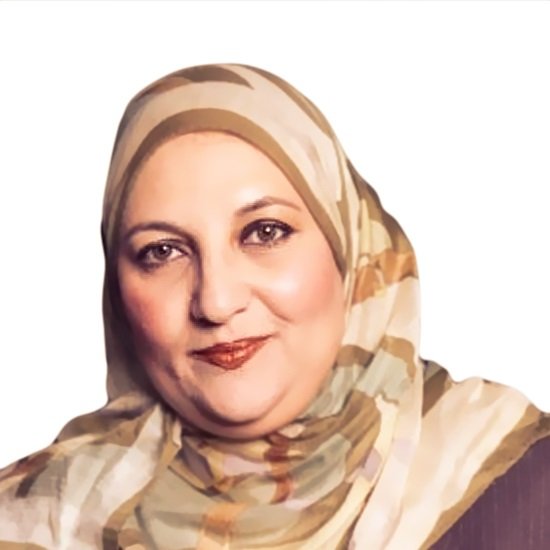
Sahar Khamis

Sahar Khamis

· Associate Professor, CommunicationVerified

University of Maryland, College Park · Communication

Active 2004–2025

h-index19
Citations1.1k
Papers8719 last 5y
Funding
See your match with Sahar Khamis — sign in to PhdFit.Sign in

About

Dr. Sahar Khamis is an Associate Professor in the Department of Communication at the University of Maryland, with affiliate professorships in Women's Studies and the Consortium on Race, Gender and Ethnicity. She is an expert on Arab and Muslim media and has held the position of Head of the Mass Communication and Information Science Department at Qatar University. Additionally, Dr. Khamis was a Mellon Islamic Studies Initiative Visiting Professor at the University of Chicago. She has co-authored several books including Islam Dot Com: Contemporary Islamic Discourses in Cyberspace (2009) and Egyptian Revolution 2.0: Political Blogging, Civic Engagement and Citizen Journalism (2013), and co-edited Arab Women's Activism and Socio-Political Transformation: Unfinished Gendered Revolutions (2018). Her scholarly work includes numerous book chapters, journal articles, and conference papers published regionally and internationally in both English and Arabic. Dr. Khamis has received multiple prestigious academic and professional awards and serves on the editorial boards of several communication journals, particularly those focusing on Arab and Muslim media. Beyond academia, she is a media commentator and analyst, a public speaker, a human rights commissioner in Montgomery County, Maryland, and hosts a monthly radio show on U.S. Arab Radio, the first Arab-American radio station broadcasting in the U.S. and Canada.

Research topics

  • Political Science
  • Sociology
  • Law
  • Media studies
  • Gender studies
  • Engineering
  • Psychology
  • Public relations
  • History
  • Political economy

Selected publications

  • 15 Can You See Me Beyond, NOT Behind, My Hijab?

    Rutgers University Press eBooks · 2025-02-26

    book-chapter1st authorCorresponding
  • Unveiling the online dynamics influencing the success and virality of TikTok social movements: A case study on pro and anti hijab feminist activism

    Media War & Conflict · 2025-01-07 · 2 citations

    articleOpen accessSenior author

    When TikTok started as a youth-oriented platform, it was mostly used for light entertainment, including music, songs and dance clips. Today, however, it is often relied upon as a hub for social and political activism. Hashtags are an important affordance to create visibility and attract attention. Using a qualitative multimodal thematic analysis, this study examines the shifting patterns in TikTok’s nature as a social media platform and investigates its various affordances in the realm of activism, in general, and feminist activism, in particular. Adopting a comprehensive approach, which takes into account various dynamics, including the overall political and social context, the various actors and the deployed tools and tactics, this study investigates why and how some feminist TikTok campaigns, such as #MahsaAmini which erupted in Iran to resist the imposition of the hijab following the murder of Mahsa Amini, are more likely to go viral and gain more international visibility than other TikTok feminist campaigns, such as #HandsOffMyHijab which erupted in France to resist the hijab and niqab ban. Findings revealed how various factors contributed to increasing the virality and international visibility of the Iranian Mahsa Amini’s #WomanLifeFreedom campaign, including the used online tactics, the support of media and political actors, the power of celebrities and social media influencers, and the online and offline support by male figures. The undertaken thematic analysis identified different dominant themes and representations of hijab in the two online social movements, reflecting varying expressions of feminisms, activisms and resistance. In so doing, the study offers a conceptual model for understanding these online dynamics within the appropriate socio-political and cultural contexts.

  • The dynamics of gendered socio-political activism in pre- and post-revolutionary Egypt

    2025-01-01

    other1st authorCorresponding
  • Maternal Health Information Access and Utilization Among African Immigrant Mothers in the United States

    Howard Journal of Communications · 2025-07-30

    article1st author
  • ‘It’s Bisan from Gaza and I’m Still Alive’: Palestinian Digital Feminism and Intersectional Narratives of Resistance

    Feminist Encounters A Journal of Critical Studies in Culture and Politics · 2025-03-01 · 1 citations

    articleOpen access1st authorCorresponding

    This qualitative study adopts a postcolonial feminist intersectional approach to investigate the agency and activism of Palestinian women who are utilising social media platforms, such as Instagram and TikTok, to amplify their voices of resistance, share their narratives of empowerment, and challenge mainstream Western media narratives amid the war in Gaza. Through analysing a number of prominent Palestinian women digital activists’ social media accounts, the study unpacks the intersectionality and overlap between myriad forms of feminist resistances and activisms which crosscut the parallel political and social spheres, and private and public spheres. The study explores the ways through which these women activists deploy digital media to convey their messages and analyses the most important themes they focus on, such as asserting their empowerment, showcasing their resistance, boosting their visibility, and galvanising international solidarity and support. The study unpacks the affordances of these social media platforms, such as the power of visual communication through images and videos, and the role they play in enhancing the visibility of women’s resistances and activisms and broadening their global outreach. The study investigates how digital spaces empower marginalised voices and it contributes to a deeper understanding of the complexities and hybridity of intersectional, global feminist activisms and resistances.

  • Arab Women’s Revolutionary Art: A Book Interview with Dr. Nevine El-Nossery

    Arab Media and Society. · 2024-03-17

    articleOpen access1st authorCorresponding

    Dr. Sahar Khamis interviewed Dr. Nevine El-Nossery regarding her new book titled Arab Women’s Revolutionary Art: Between Singularities and Multitudes, which explore the ways women in the contemporary MENA region (Middle East and North Africa) have re-imagined revolutionary discourses—through creativity and collective action—as a means of resistance.

  • The Paradoxes of Modern Islamic Discourses and Socio-Religious Transformation in the Digital Age

    Religions · 2024-02-08 · 5 citations

    articleOpen access1st authorCorresponding

    The introduction of the internet brought about many transformations in the political, social, cultural, and educational fields worldwide. This phenomenon of digital transformation introduced a myriad of positive, negative, and paradoxical impacts. This critical essay tackles some of the significant transformations and paradoxes which the introduction of the internet invited in modern Muslim societies, with a special focus on two specific domains. First, the realm of religious authority or obtaining authoritative religious knowledge in the age of the internet. Second, the realm of shifting gendered Islamic identities in the age of cyberspace. In exploring these complex and hybrid phenomena, special attention is paid to the tensions between the opposing forces of tradition and modernity, diversity and cohesion, hegemony and resistance, and globalization and localization in cyberspace, and their numerous and far-reaching effects.

  • (Re)Visiting the Potentials and Limitations of New Media as Tools for Resistance Among Arab Diasporas

    Oxford Research Encyclopedia of Communication · 2024-08-19

    reference-entry1st authorCorresponding

    When the Arab Spring uprisings erupted in 2011, the high hopes for democratization and reform were accompanied by an equally high degree of confidence in the liberating potentials of new media. These new media, especially social media, were perceived as viable alternatives to state-controlled mainstream media, excellent tools for resisting autocratic regimes, and unmatched platforms for amplifying marginalized voices. However, over a decade later, just like the Arab Spring uprisings took unexpected detours, resulting in far-from-ideal outcomes in the so-called post-Arab Spring countries, there were equally disheartening reversals in the role of social media from tools for liberation in the hands of freedom fighters to tools for repression in the hands of autocratic regimes. This raised many questions over the validity and effectiveness of new media and their democratizing potentials, thus necessitating a careful scrutiny and reassessment of their shifting roles. This qualitative study relied on in-person and virtual in-depth interviews with ten activists, journalists, and artists living in the diaspora from three Arab countries—Egypt, Bahrain, and Saudi Arabia—to investigate the deployment of new tools of communication by Arab diasporic communities to resist their autocratic regimes at home. The study pays special attention to the various potentials and limitations of this complex phenomenon and its varied implications. Providing examples from these three Arab resistance communities in the diaspora, this article illustrates the similarities and differences, and the overlaps and divergences, in their deployment of social media tools in the domains of political and social activism and resistance. It examines how diasporic Arab communities contributed to the struggles against their dictatorial regimes through deploying new communication technologies to disrupt, expose, and resist authoritarianisms back home. It also explains why, and how, some of these efforts and techniques have been more successful than others in achieving these goals. Moreover, through the voices and experiences of these Arab diasporic dissidents, the potentials, limitations, and future prospects of “cyberactivism” will be explored.

  • Effective Countering Islamophobia Strategies in the Digital Age: Three Approaches

    Islamophobia Studies Journal · 2023-01-01 · 4 citations

    articleOpen access1st authorCorresponding

    One of the most serious challenges which is still threatening Muslims globally is the surge in Islamophobia, or negative attitudes and excessive fear towards Islam and Muslims. The digital age became a double-edged sword when it comes to the threat of Islamophobia. On one hand, it opened the door for anti-Muslim campaigns to spread widely and quickly online. On the other hand, it provided modern Muslims with much-needed opportunities to resist such hateful campaigns using the very same digital tools. This article sheds light on three important strategies which have been successfully deployed by modern Muslims to resist Islamophobia in the digital age. The first is the effective utilization of humor to resist some of the most hateful anti-Muslim campaigns and misrepresentations in cyberspace and present successful counter-narratives. The second is putting faith in action, through Muslim philanthropy and communal giving, especially amid the COVID-19 pandemic. This has been done by using digital tools to spread and amplify these good deeds, while resisting Islamophobia simultaneously by correcting some of the false images and skewed misrepresentations about Islam and Muslims and replacing them with positive ones. And the third is boosting the visibility of Muslim women’s identities and amplifying their voices, which shatters the negative stereotypes about Muslim women as silent and helpless beings and counters their misrepresentation and marginalization, while countering Islamophobia in parallel. In discussing each of these strategies, the appropriate context is explained and relevant examples are provided to illustrate the arguments made throughout this paper.

  • Rise and Fall of the Reformer Topos? Presidents, Alliance Politics, and the Paradoxical Reinvention of Middle East Autocrats as Agents of Change

    Rhetoric and Public Affairs · 2023-01-01

    articleSenior author

    Abstract The United States and Middle East autocracies do not make for the most natural of allies. One of the most common rhetorical tactics used to defend these alliances is to portray the ruler in question as a reformer who is steering his country into alignment with American sociopolitical norms. We argue that this tactic emerged out of realist assessments of foreign policy during the Cold War. However, Saudi Arabia's Crown Prince Mohammad bin Salman's attempt to deploy this topos during the Trump presidency met mixed results, calling into question the ability of leaders to balance between idealist and realist strains of U.S. foreign policy rhetoric. This essay explores the ramifications of this outcome, including how increased information access may portend the eventual demise of the reformer topos and signal the need for new topoi to legitimize American alliances with Middle Eastern autocracies.

Frequent coauthors

  • Mohammed el-Nawawy

    Doha Institute for Graduate Studies

    22 shared
  • Katherine Vaughn

    7 shared
  • Aymen Mili

    3 shared
  • Randall Fowler

    Abilene Christian University

    3 shared
  • Paul B. Gold

    2 shared
  • Nada Alwadi

    Virginia Tech

    2 shared
  • Jing Lin

    1 shared
  • Sachi Edwards

    Soka University

    1 shared

Labs

Education

  • Ph.D.

    University of Manchester (U.K.)

Awards & honors

  • Recipient of a number of prestigious academic and profession…
  • Resume-aware match score
  • Save to shortlist
  • AI-drafted outreach

See your match with Sahar Khamis

PhdFit ranks faculty by your research interests, methods, and publications — grounded in their actual work, not templates.

  • Free to start
  • No credit card
  • 30-second signup