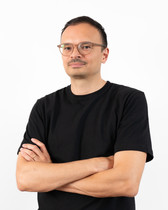
Salmaan Craig
· Associate ProfessorUniversity of California, Los Angeles · Architecture and Urban Design
Active 2004–2016
About
Salmaan Craig, Eng.D., is a building scientist, architectural educator, and Associate Professor at UCLA Architecture and Urban Design. He was previously an Assistant Professor then Associate Professor at McGill University School of Architecture and, before that, a Lecturer at the Harvard Graduate School of Design. He also spent several years in practice, first as a façade engineer at Buro Happold and then in the Specialist Modelling Group at Foster + Partners, contributing to projects such as the Masdar Institute, Apple Campus, and Bloomberg Headquarters. Craig's research program develops new concepts for solar architecture with biogenic materials. He investigates how to compose and shape these materials as part of natural thermal and ventilation cycles, aiming for them to replace mechanical systems for air-conditioning. His insights into these thermal flow cycles are derived from physical experiments conducted in labs and field settings. His architectural interest in these cycles serves as a catalyst for building form, spatial seduction, and new patterns for living and working. Ecologically, he explores whether these biomaterials can not only replace air-conditioning but also help reconcile construction with natural climate solutions at the regional scale.
Research topics
- Medicine
- Internal medicine
- Physical therapy
- Emergency medicine
- Pediatrics
Selected publications
Journal of Stroke and Cerebrovascular Diseases · 2016-07-21 · 15 citations
articleAbstract TP203: New Onset Atrial Fibrillation Post Stroke
Stroke · 2013-02-01
articleBackground: Atrial fibrillation (AF) makes a person five times more likely to experience a stroke. According to the National Stroke Association, atrial fibrillation accounts for about 15 percent of stroke. Many of these patients do not have any previous history of AF, and are diagnosed with this condition post-stroke. We sought to characterize the frequency and features of AF in stroke patients hospitalized after acute presentation, focusing on new diagnoses. Methods: All subjects were enrolled in the Field Administration of Stroke Therapy- Magnesium (FAST-MAG) clinical trial, a phase 3 NIH-funded study of pre-hospital Magnesium Sulfate vs. placebo for patients with symptom onset <2hours. General demographic information, past medical history, first electrocardiogram (ECG) in the emergency department (ED), and final diagnosis data were collected on consecutive subjects. Results: Of 1478 patients, 69 (4.7%) had no previous history of AF but were diagnosed with AF post-stroke onset. There were 274 cases with AF recorded on the ED ECG (274), only 36 (13.1%) had no documented history of AF. Patients in both groups were of similar age (age 81 vs 79 years) and had similar rates of ICH diagnosis (8.7 vs 7.1%). However, newly diagnosed patients had more severe strokes (median NIHSS 14 vs 10, p=0.008) and a lower burden of cardiac disease by history (coronary artery disease 15.9 vs 31.7%, and myocardial infarction 5.8 vs 15.9%). Female gender women (50.7 vs 48.2%) history of prior stroke (10.1 vs 8.8%), hypertension (89.9 vs 89.5%), and hyperlipidemia (56.5 vs 54.1%) were similar in both groups. Conclusion: Most new diagnoses of AF after stroke were made based on the ED ECG. Strokes in patients who would go on to have new AF diagnoses were more severe than those where AF diagnosis was already established, likely due to less likelihood of anticoagulation.
Neurology · 2013-02-12
articleOBJECTIVE: To validate the Rankin Focused Assessment – Ambulation (RFA-A), a short, practicable structured assessment that assigns a modfied Rankin Scale (mRS) global disability score with high inter-rater reliability.
393 Stroke Onset: How Accurate Are Last Known Well Times Obtained Out-of-Hospital
Annals of Emergency Medicine · 2012-09-20
articleOpen access1st authorCorrespondingImproving the Reliability of Stroke Disability Grading in Clinical Trials and Clinical Practice
Stroke · 2010-04-02 · 238 citations
articleOpen accessBACKGROUND AND PURPOSE: The modified Rankin Scale rates global disability after stroke and is the most comprehensive and widely used primary outcome measure in acute stroke trials. However, substantial interobserver variability in modified Rankin Scale scoring has been reported. This study sought to develop and validate a short, practicable structured assessment that would enhance interrater reliability. METHODS: The Rankin Focused Assessment was developed by selecting and refining elements from prior instruments. The Rankin Focused Assessment takes 3 to 5 minutes to apply and provides clear, operationalized criteria to distinguish the 7 assignable global disability levels. The Rankin Focused Assessment was prospectively validated 3 months poststroke among 50 consecutive patients enrolled in the Phase 3 National Institutes of Health Field Administration of Stroke Therapy-Magnesium (FAST-MAG) Trial. RESULTS: Among the 50 patients, mean age was 71.5 years (range, 43 to 93 years), 48% were female, and stroke subtype was hemorrhagic in 24%. At Day 90, 43 patients were alive and 7 had died. The modified Rankin Scale median was 2.0 and mean was 2.8. When pairs of 14 raters assessed all enrolled patients, the percent agreement was 94%, the weighted kappa was 0.99 (95% CI, 0.99 to 1.0), and the unweighted kappa was 0.93 (95% CI, 0.85 to 1.00). Among the 43 surviving patients, the percent agreement was 93%, the weighted kappa was 0.99 (0.98 to 1.0), and the unweighted kappa was 0.91 (0.82 to 1.00). CONCLUSIONS: The Rankin Focused Assessment yields high interrater reliability in the grading of final global disability among consecutive patients with stroke participating in a randomized clinical trial. The Rankin Focused Assessment is brief and practical for use in multicenter clinical trials and quality improvement activities.
Journal of Clinical Oncology · 2004-07-15
article2549 Background: T cells can be activated and expanded ex vivo from peripheral blood mononuclear cells using paramagnetic beads coated with antibodies to the CD3 and CD28 receptors (Xcellerate Process). Methods: Patients with androgen independent prostate cancer and no history of prior chemotherapy were enrolled. Patients received one infusion of 75–100 x 109 CD3/CD28 activated T cells (Xcellerated T Cells). Objectives of the study were to assess the safety of the therapy, changes in serum prostate specific antigen (PSA), and changes in markers of bone resorption. Results: 20 patients underwent leukapheresis, and 19 were treated (1 patient progressed prior to treatment). Baseline characteristics for the treated patients [median(range)] were: age 71.1 (55.1–84.4), PSA 28.2 ng/mL (6.2–348.0), and Gleason score 7 (4–9). Ten patients had documented bone metastases. Xcellerated T Cells were successfully manufactured in all patients. T cells expanded 125 ± 33 fold (mean ± S.D.). The final products were 99.1 ± 1.4% T cells with CD4:CD8 ratio of 5.2 ± 4.0. The mean number of viable cells infused was 84 ± 18 x 109. Toxicities possibly, probably or definitely related to the therapy of Grade 1, 2 or 3 severity were seen in 13, 3 and 1 patients respectively. The most common toxicities were rigors, pyrexia and nausea. The lymphocyte count per mm3 increased from 1218 ± 156 at Day 0, to 3455 ± 355 at Day 7 and 2756 ± 393 at Month 4 (mean ± SEM). Two patients had PSA declines of >50%, with PSA nadirs occuring 5 and 14 months following treatment. Serum markers of bone resorption (NTX, BAP, ICTP) measured in 5 patients with positive bone scans were not statistically different at Month 3 compared with baseline. Conclusions: Xcellerated T Cells can be delivered on an outpatient basis with few side effects, and result in sustained increases in lymphocyte counts, and significant PSA declines in some patients. Author Disclosure Employment or Leadership Consultant or Advisory Stock Ownership Honoraria Research Funding Expert Testimony Other Remuneration Xcyte Therapies, Inc. Xcyte Therapies, Inc. Xcyte Therapies, Inc.
Biodegradation of Chlorinated Solvents: Reactions near DNAPL and Enzyme Function
2003-12-11
reportOpen accessSenior authorCorrespondingChlorinated solvents are among the most widespread groundwater contaminants in the country, contamination which is also among the most difficult and expensive for remediation. These solvents are biodegradable in the absence of oxygen, but this biodegradation requires both a food source for the organisms (electron donor) and the presence of chlorinated solvent biodegrading organisms. These two requirements are present naturally at some contamination sites, leading to natural attenuation of the solvents. If one or both requirements are absent, then engineered bioremediation either through addition of an external electron donor or through bioaugmentation with appropriate microorganisms, or both, may be used for site remediation. The most difficult case for cleanup is when a large residual of undissolved chlorinated solvents are present, residing as dense -non-aqueous-phase- liquid ( DNAPL). A major focus of this study was on the potential for biodegradation of the solvents when pre sent as DNAPL where concentrations are very high and potential for toxicity to microorganisms exist. Another focus was on a better understanding of the biological mechanisms involved in chlorinated solvent biodegradation . These studies were directed towards the chlorinated solvents, trichloroethene (TCE), tetrachloroethene or perchloroethene (PCE), and carbon tetrachloride (CT). The potential for biodegradation of TCE and PCE DNAPL was clearly demonstrated in this research. From column soil studies and batch studies we found there to be a clear advantage in focusing efforts at bioremediation near the DNAPL. Here, chlorinated solvent concentrations are the highest, both because of more favorable reaction kinetics and because such high solvent concentrations are toxic to microorganisms, such as methanogens, which compete with dehalogenators for the electron donor. Additionally, biodegradation near a PCE DNAPL results in an enhanced dissolution rate for the chlorinated solvent, by factors of three to five times, leading to a more rapid clean-up of the DNAPL zone. The most favored electron donor to add is one which partitions well with the chlorinated solvent or can be concentrated near it. Unfortunately, an ideal electron donor, such as vegetable oil, is difficult to introduce and mix with DNAPL in the ground, doing this properly remains an engineering challenge. Numerical model studies have indicated that several factors may significantly influence the rate and extent of enhancement, including the inhibitory effects of PCE and cDCE, the level of ED concentration, DNAPL configuration, and competition for ED. Such factors need to be considered when contemplating engineered DNAPL bioremediation. Pseudomonas stuzeri KC is an organism that transforms CT to carbon dioxide and chloride without the formation of the hazardous intermediate, chloroform. This is accomplished by production and secretion of a molecule called PDTC. This study was direct ed towards determining how PDTC works. Cu (II) at a ratio of 1:1 Cu to PDTC was found to result in the most rapid CT transformation, confirming that the PDTC-Cu complex is both a reactant and a catalyst in CT transformation. CT degradation requires that the PDTC be in a reduced form, which is generated by contact with cell components. Fe(II) inhibits CT transformation by PDTC. Studies indicated that this inhibition is enhanced by some compound or factor in the supernatant with molecular weight greater than 10,000 Da. We have made progress in determining what this factor might be, but have not yet been able to identify it. In related studies, we found that CT transformation by another organism, Shewanella oneidensis MR1, also involves an excreted factor, but this factor is different from PDTC and results in chloroform transformation as an intermediate. Our studies have indicated that this factor is similar to vitamin K2, and we have also confirmed that vitamin K2 does transform C T into chloroform.
Frequent coauthors
- 31 shared
Jeffrey L. Saver
University of California, Los Angeles
- 29 shared
Sidney Starkman
University of California, Los Angeles
- 27 shared
Scott Hamilton
Stanford University
- 18 shared
David S. Liebeskind
- 18 shared
Frank Pratt
- 18 shared
Nerses Sanossian
University of Southern California
- 18 shared
Samuel J. Stratton
University of California, Los Angeles
- 16 shared
William Koenig
Quatela Center for Plastic Surgery
- Resume-aware match score
- Save to shortlist
- AI-drafted outreach
See your match with Salmaan Craig
PhdFit ranks faculty by your research interests, methods, and publications — grounded in their actual work, not templates.
- Free to start
- No credit card
- 30-second signup