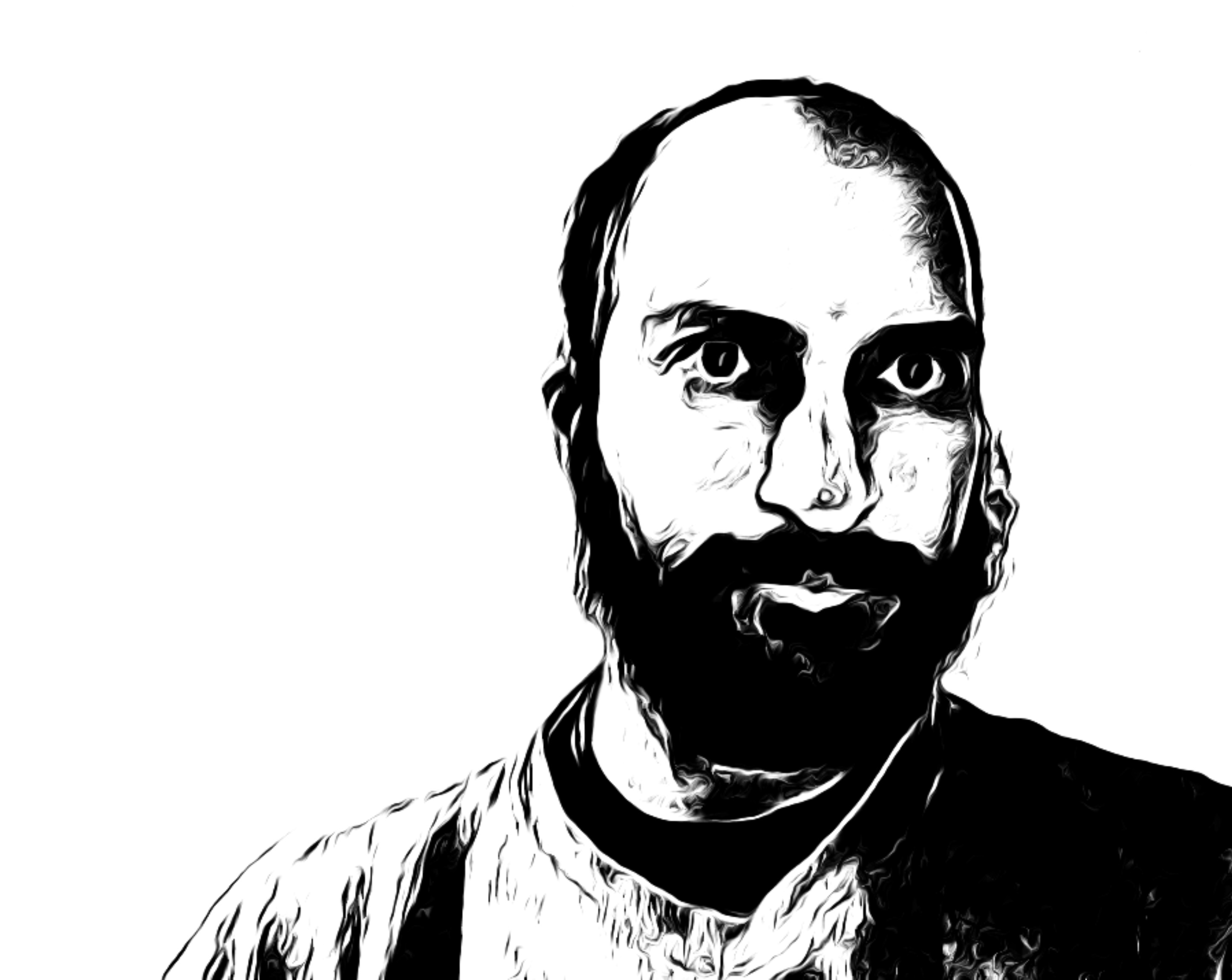
Sameer Iyer
· Professor of MathematicsUniversity of California, Davis · Biomedical Engineering
Active 1970–2026
About
Sameer Iyer is an Associate Professor in the Department of Mathematics at the University of California, Davis. His research interests include nonlinear partial differential equations, asymptotic problems from fluid mechanics, and hydrodynamic stability. He received his Sc.B. in 2012, Sc.M. in 2018, and Ph.D. from Brown University between 2013 and 2018, where his advisor was Yan Guo. Following his doctoral studies, he was an NSF postdoctoral researcher at Princeton University from 2018 to 2021. He became an Assistant Professor at UC Davis in 2021 and was promoted to Associate Professor starting July 2025. His work primarily focuses on boundary layer theory, stability of shear flows, and the inviscid limit in fluid dynamics, contributing to the mathematical understanding of fluid flow stability, boundary layer expansions, and related phenomena.
Research topics
- Mathematics
- Mathematical analysis
- Thermodynamics
- Physics
- Quantum mechanics
- Mechanics
Selected publications
Global inviscid limit of 2D, stationary Navier-Stokes and stability of Prandtl expansions
Forum of Mathematics Pi · 2026-01-01
articleOpen access1st authorCorrespondingAbstract In this work, we establish the convergence of 2D, stationary Navier-Stokes flows with viscosity $\varepsilon> 0$ , $(u^\varepsilon , v^\varepsilon )$ to the classical Prandtl boundary layer, $(\bar {u}_p, \bar {v}_p)$ , posed on the domain $(0, \infty ) \times (0, \infty )$ : $$ \begin{align*} \| u^\varepsilon - \bar{u}_p \|_{L^\infty_y} \lesssim \sqrt{\varepsilon} \langle x \rangle^{- \frac 1 4 + \delta}, \qquad \| v^\varepsilon - \sqrt{\varepsilon} \bar{v}_p \|_{L^\infty_y} \lesssim \sqrt{\varepsilon} \langle x \rangle^{- \frac 1 2}. \end{align*} $$ This validates Prandtl’s boundary layer theory globally in the x -variable for a large class of boundary layers, including the entire one parameter family of the classical Blasius profiles, with sharp decay rates. The result demonstrates asymptotic stability in two senses simultaneously: (1) asymptotic as $\varepsilon \rightarrow 0$ and (2) asymptotic as $x \rightarrow \infty $ . In particular, our result provides the first rigorous confirmation for the Navier-Stokes equations that the boundary layer cannot “separate” in these stable regimes, which is very important for physical and engineering applications.
Stability of the favorable Falkner-Skan profiles for the stationary Prandtl equations
Advances in Mathematics · 2025-12-30
article1st authorCorrespondingLinear decay of the beta-plane equation near Couette flow on the plane
ArXiv.org · 2025-11-01
preprintOpen accessSenior authorWe prove new time decay estimates for the linearized $β$-plane equation near the Couette flow on the plane that combine inviscid damping and the dispersion of Rossby waves. Specifically, we show that the profiles of the velocity field components (i.e. $u(t,x+ty,y)$) decay pointwise on any compact set with polynomial rates. While mixing dominates for streamwise frequencies that are $O(1)$, dispersive effects need to be extracted for low streamwise frequencies that appear along a critical ray in frequency space. Our proof entails the analysis of oscillatory integrals with homogeneous phase and multipliers that diverge in the infinite time limit. To handle this singular limit, we prove a Van der Corput type estimate, followed by two delicate asymptotic analyses of the phase and multipliers: one that is of ``boundary layer" type, featuring sharp gradients that grow in $t$ across the critical ray, and one that is of ``multi-scale" type, which extracts a governing analytic profile function for the phase.
Stability threshold of close-to-Couette shear flows with no-slip boundary conditions in 2D
ArXiv.org · 2025-10-18
preprintOpen accessIn this paper, we develop a stability threshold theorem for the 2D incompressible Navier-Stokes equations on the channel, supplemented with the no-slip boundary condition. The initial datum is close to the Couette flow in the following sense: the shear component of the perturbation is small, but independent of the viscosity $ν$. On the other hand, the $x$-dependent fluctuation is assumed small in a viscosity-dependent sense, namely, $O(ν^{\frac12}|\log ν|^{-2})$. Under this setup, we prove nonlinear enhanced dissipation of the vorticity and a time-integrated inviscid damping for the velocity. These stabilizing phenomena guarantee that the Navier-Stokes solution stays close to an evolving shear flow for all time. The analytical challenge stems from a time-dependent nonlocal term that appears in the associated linearized Navier-Stokes equations.
Pseudo-Gevrey smoothing for the passive scalar equations near Couette
Journal of Functional Analysis · 2025-04-05 · 2 citations
articleOpen accessStability Threshold of Nearly-Couette Shear Flows with Navier Boundary Conditions in 2D
Communications in Mathematical Physics · 2025-01-11 · 3 citations
articleCorrespondingStability of the Favorable Falkner-Skan Profiles for the Stationary Prandtl Equations
arXiv (Cornell University) · 2024-03-12
preprintOpen access1st authorCorrespondingThe (favorable) Falkner-Skan boundary layer profiles are a one parameter ($β\in [0,2]$) family of self-similar solutions to the stationary Prandtl system which describes the flow over a wedge with angle $β\fracπ{2}$. The most famous member of this family is the endpoint Blasius profile, $β= 0$, which exhibits pressureless flow over a flat plate. In contrast, the $β> 0$ profiles are physically expected to exhibit a \textit{favorable pressure gradient}, a common adage in the physics literature. In this work, we prove quantitative scattering estimates as $x \rightarrow \infty$ which precisely captures the effect of this favorable gradient through the presence of new ``CK" (Cauchy-Kovalevskaya) terms that appear in a quasilinear energy cascade.
Pseudo-Gevrey Smoothing for the Passive Scalar Equations near Couette
arXiv (Cornell University) · 2024-05-29
preprintOpen accessIn this article, we study the regularity theory for two linear equations that are important in fluid dynamics: the passive scalar equation for (time-varying) shear flows close to Couette in $\mathbb T \times [-1,1]$ with vanishing diffusivity $ν\to 0$ and the Poisson equation with right-hand side behaving in similar function spaces to such a passive scalar. The primary motivation for this work is to develop some of the main technical tools required for our treatment of the (nonlinear) 2D Navier-Stokes equations, carried out in our companion work. Both equations are studied with homogeneous Dirichlet conditions (the analogue of a Navier slip-type boundary condition) and the initial condition is taken to be compactly supported away from the walls. We develop smoothing estimates with the following three features: [1] Uniform-in-$ν$ regularity is with respect to $\partial_x$ and a time-dependent adapted vector-field $Γ$ which approximately commutes with the passive scalar equation (as opposed to `flat' derivatives), and a scaled gradient $\sqrtν \nabla$; [2] $(\partial_x, Γ)$-regularity estimates are performed in Gevrey spaces with regularity that depends on the spatial coordinate, $y$ (what we refer to as `pseudo-Gevrey'); [3] The regularity of these pseudo-Gevrey spaces degenerates to finite regularity near the center of the channel and hence standard Gevrey product rules and other amenable properties do not hold. Nonlinear analysis in such a delicate functional setting is one of the key ingredients to our companion paper, \cite{BHIW24a}, which proves the full nonlinear asymptotic stability of the Couette flow with slip boundary conditions. The present article introduces new estimates for the associated linear problems in these degenerate pseudo-Gevrey spaces, which is of independent interest.
The Feynman–Lagerstrom Criterion for Boundary Layers
Archive for Rational Mechanics and Analysis · 2024-05-30 · 6 citations
articleCorrespondingLocal Rigidity of the Couette Flow for the Stationary Triple-Deck Equations
arXiv (Cornell University) · 2024-05-17
preprintOpen access1st authorCorrespondingThe Triple-Deck equations are a classical boundary layer model which describes the asymptotics of a viscous flow near the separation point, and the Couette flow is an exact stationary solution to the Triple-Deck equations. In this paper we prove the local rigidity of the Couette flow in the sense that there are no other stationary solutions near the Couette flow in a scale invariant space. This provides a stark contrast to the well-studied stationary Prandtl counterpart, and in particular offers a first result towards the rigidity question raised by R. E. Meyer in 1983.
Frequent coauthors
- 7 shared
Yan Guo
- 5 shared
Björn Sandstede
- 5 shared
Nader Masmoudi
- 5 shared
David Gérard‐Varet
Cambridge University Press
- 3 shared
Yasunori Maekawa
Kyoto University
- 3 shared
Siming He
- 3 shared
Vlad Vicol
- 3 shared
Jacob Bedrossian
Labs
Sameer Iyer LabPI
Education
- 2012
Other
Brown University
- 2018
Other
Brown University
- 2018
Ph.D.
Brown University
Awards & honors
- NSF CAREER: Boundary Layers and Hydrodynamic Stability
- NSF DMS180294 (2018-2021)
- Hellman Fellowship, UC Davis (2023-2024)
- Resume-aware match score
- Save to shortlist
- AI-drafted outreach
See your match with Sameer Iyer
PhdFit ranks faculty by your research interests, methods, and publications — grounded in their actual work, not templates.
- Free to start
- No credit card
- 30-second signup