About
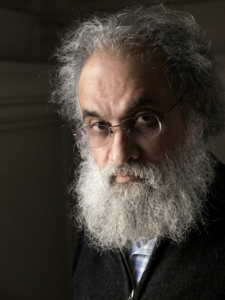
Sanjay Subrahmanyam is a Distinguished Professor and holds the Irving and Jean Stone Endowed Chair in Social Sciences at UCLA. His field of study encompasses South and Southeast Asia, Europe, and World history. The information provided indicates his academic focus on these geographical and thematic areas, reflecting a broad and comparative approach to history. His position as an endowed chair highlights his recognized expertise and leadership within the social sciences at UCLA.
Research topics
- Political Science
- Law
- Sociology
- Ancient history
- Philosophy
- Political economy
- Literature
- Art
- Environmental science
- Oceanography
- Archaeology
- Geology
- History
- Economics
- Gender studies
- Geography
- Neoclassical economics
Selected publications
Rei ou bode expiatório? A lenda do sultão Bulaqi e a política mogol do Estado da Índia (1630-1635)
Anais de história de além mar/Anais de história de além-mar · 2026-04-30
articleOpen access1st authorCorrespondingResumo disponível no PDF.
The Question of I'tisam-ud-Din: An Indian Traveler in Eighteenth-Century Europe
Studies in eighteenth century culture/Studies in eighteenth-century culture · 2025-01-01
article1st authorCorrespondingUneasy Partnership: A Note on Armenian-Danish Commercial Collaboration in the Indian Ocean, ca. 1700
Journal of the Economic and Social History of the Orient · 2025-04-07
articleSenior authorAbstract The trading network of the Armenians of New Julfa expanded apace in the Indian Ocean and Mediterranean in the seventeenth century, the same period when the chartered trading East India Companies of the Netherlands, England, France and Denmark were being created. While we know a fair amount regarding Armenian dealings with the English, French, and Dutch, less has been written concerning the case of the Danes. However, an exploration of Copenhagen’s Rigsarkivet sheds some intriguing light on the Armenian-Danish relationship, which was one of both violent conflict and episodic partnership. This exploratory note closely considers a commercial contract in Julfa dialect from the early eighteenth century, which sheds light on the Armenian sugar trade from Bengal and the community’s dealings with the Danes.
Kilka refleksji o historiach powiązanych
Klio - Czasopismo Poświęcone Dziejom Polski i Powszechnym · 2024-05-20
articleOpen access1st authorCorrespondingTłumaczenie wykładu WHY CONNECTED HISTORIES? SOME REFLECTIONS
University of Texas Press eBooks · 2024-03-14
book-chapterOpen access1st authorCorrespondingA Note on Transliteration T he linguistic complexity of the western Indian Ocean as a region poses challenges to the historian in terms of schemes of transliteration to be used.Diacritical marks have generally been dispensed within this book.For Persian and Arabic, a slightly modified form of the Steingass system is used here: Nur-ud-Din rather than Nur al-Din, Abu'l Fazl rather than Abu al-Fadl, and so on.Apostrophes and single opening quotation marks are used for hamzas and ayns, respectively.The normal modern conventions are in use for the occasional citations from Ottoman Turkish.For Indian languages, standard transliteration is followed, without diacritics for consonants, and long (and short) vowels are also not marked.
A Note on Currency and Tonnage
University of Texas Press eBooks · 2024-03-14
book-chapterOpen access1st authorCorrespondingThe Indian Economic & Social History Review · 2024-01-01
article1st authorCorrespondingGuido van Meersbergen, Ethnography and Encounter: The Dutch and English in Seventeenth-Century South Asia (Leiden and Boston: Brill, 2022), 316 pp.
Academic Studies Press eBooks · 2023-03-28
book-chapterSenior authorAHS volume 78 issue 3 Cover and Front matter
Annales Histoire Sciences Sociales · 2023-09-01
articleOpen accessAn abstract is not available for this content so a preview has been provided. As you have access to this content, a full PDF is available via the ‘Save PDF’ action button.
Inventing a ‘Genocide’: The Political Abuses of a Powerful Concept in Contemporary India
The Journal of Holocaust Research · 2023-01-02
article1st authorCorrespondingABSTRACTThe long-term historical demography of India is a highly intractable subject, due to a lack of reliable statistical data. Nevertheless, in recent decades, it has become increasingly common in popular and journalistic circles (including Le Figaro and The New York Times) to resort to the term ‘genocide’ in order to claim that a very large number of people were systematically killed in the process of the Islamic conquest of the area (c. 1000–1800 CE). This short essay examines the fragile basis of this claim, as well as the ideological programs underlying it. Effectively, such an abuse cheapens the term and devalues historical situations when genocide really occurred, including the Shoah.KEYWORDS: IndiaMuslimsgenocideHindus Disclosure statementNo potential conflict of interest was reported by the author(s).Notes1 Anson Rabinbach, “Raphael Lemkin et le concept de génocide,” Revue d’Histoire de la Shoah 189 (2008): pp. 511–554. Also useful, albeit dated, is the brief reflection in Mark Mazower, “After Lemkin,” Jewish Quarterly 41, no. 4 (Winter 1994): pp. 5–8.2 https://www.un.org/en/genocideprevention/genocide-convention.shtml.3 Samantha Power, “The United States and Genocide Prevention: No Justice without Risk,” The Brown Journal of World Affairs 6, no. 1 (Winter/Spring 1999): pp. 19–31.4 Brian Greenhill and Michael Strausz, “Explaining Nonratification of the Genocide Convention: A Nested Analysis,” Foreign Policy Analysis 10, no. 4 (October 2014): pp. 371–391.5 Abhijeet Shrivastava, “How India’s Legislation Risks Impunity for Genocidal Speech,” Völkerrechtsblog 2022. doi: 10.17176/20220722-113318-0.6 AA.VV., “Who are the Guilty? Causes and Impact of the Delhi Riots,” Economic and Political Weekly 19, no. 47 (1984, November 24): pp. 1979–1985; Veena Das, (ed.), Mirrors of Violence: Communities, Riots and Survivors in South Asia (Delhi: Oxford University Press, 1990).7 Ornit Shani, Communalism, Caste and Hindu Nationalism: The Violence in Gujarat (Cambridge: Cambridge University Press, 2007).8 For a typical example of this form of reasoning, see Harbans Mukhia, “Communalism and the Writing of Medieval Indian History: A Reappraisal,” Social Scientist 11, no. 8 (August 1983): pp. 58–65. The main colonial work evoked is H. M. Elliot and J. Dowson, The History of India, as Told by Its Own Historians: The Muhammadan Period, 8 vols. (London: Trübner and Co., 1867–1877).9 Manu Bhagavan, “Princely States and the Hindu Imaginary: Exploring the Cartography of Hindu Nationalism in Colonial India,” The Journal of Asian Studies 67, no. 3 (August 2008): pp. 881–915.10 Sita Ram Goel, et al., Hindu Temples: What Happened to Them, 2 vols. (New Delhi: Voice of India, 1990–1991).11 François Gautier, “Identité hindou et nationalisme indien : L’enjeu du ‘négationnisme’ marxiste,” Le Figaro, 30 May 1998; Gautier, “La tentation de l'indianisme français,” Le Figaro, 1 June 1998. Gautier is a notorious figure in India for his extreme pro-Hindutva positions; see Yulia Egorova, Jews and Muslims in South Asia: Reflections on Difference, Religion, and Race (New York, NY: Oxford University Press, 2018), pp. 59–60.12 For a brief account of the controversy, see Jacques Weber, “Les enjeux de l’histoire indienne entre sécularisme et nationalisme hindou,” in Singaravelou, (ed.), Laïcité: Enjeux et pratiques (Bordeaux: Presses universitaires de Bordeaux, 2007), pp. 212–213.13 K. S. Lal, Growth of Muslim population in Medieval India, AD 1000–1800 (Delhi: Research Publications, 1973), pp. 309–310.14 Lal’s estimate of 200 million appears derived loosely from some speculations in an unreliable essay by Jatindra Mohan Datta, “Proportion of Muhammadans in India through Centuries [sic],” Modern Review 83, no. 1 (January 1948): pp. 31–34. In contrast in a standard work, Angus Maddison proposes an estimate of 75 million for the same year: Angus Maddison, The World Economy: A Millennial Perspective (Paris: OECD, 2001), p. 238. For other recent discussions, both quantitative and qualitative, which lend no credence to Lal’s views, see Sumit Guha, Health and Population in South Asia: From Earliest Times to the Present (London: C. Hurst, 2001), pp. 24–34; and Tim Dyson, A Population History of India: From the First Modern People to the Present Day (Oxford: Oxford University Press, 2018), pp. 48–75.15 For a detailed critique of Lal’s statistics, also see Irfan Habib, “Economic History of the Delhi Sultanate – An Essay in Interpretation,” Indian Historical Review 4, no. 1 (June 1977): pp. 287–303 (in particular, pp. 298–303).16 K. S. Lal, Theory and Practice of Muslim State in India (New Delhi: Aditya Prakashan, 1999), pp. 343–344.17 Shuji Cao, “Population Changes,” in Debin Ma and Richard von Glahn, (eds.), The Cambridge Economic History of China, vol. 1 (Cambridge: Cambridge University Press, 2022), pp. 300–339.18 Massimo Livi-Bacci, “The Depopulation of Hispanic America after the Conquest,” Population and Development Review 32, no. 2 (June 2006): pp. 199–232.19 https://archive.nytimes.com/www.nytimes.com/imagepages/2011/11/06/opinion/06atrocities_timeline.html?pagewanted=all.20 https://www.pewresearch.org/religion/2020/01/22/what-americans-know-about-the-holocaust/. Compare with the analysis in Yulia Egorova, “Memory of the Holocaust in India: A Case Study for Holocaust Education,” in Jacob S. Eder, Philipp Gassert, and Alan E. Steinweis, (eds.), Holocaust Memory in a Globalizing World (Göttingen: Wallstein Verlag, 2017), pp. 215–227.Additional informationNotes on contributorsSanjay SubrahmanyamSanjay Subrahmanyam is Distinguished Professor of History and Irving & Jean Stone Chair in Social Sciences at UCLA. He previously taught in Delhi, Oxford, and the Collège de France (Paris). His publications are mainly focused on the early modern period. He has been awarded the Dan David Prize (2019) and the Prix International d’Histoire (2020).
Frequent coauthors
- 295 shared
Jacques Revel
- 295 shared
Christian Lamouroux
École des Hautes Études en Santé Publique
- 295 shared
Laurent Thévenot
- 295 shared
André Orléan
- 295 shared
Jocelyne Dakhlia
École des hautes études en sciences sociales
- 295 shared
François Hartog
University of Cambridge
- 294 shared
Sandro Carocci
University of Rome Tor Vergata
- 294 shared
Jane Burbank
École des hautes études en sciences sociales
Labs
Awards & honors
- Inaugural Infosys Prize in Humanities (2012)
- Dan David Prize for History (2019)
- Prix International de l'Histoire (2020)
- Conférence Eugène Fleischmann in Paris (2025)
- L'Eclipse de la Lune Ottomane (2025)
- Resume-aware match score
- Save to shortlist
- AI-drafted outreach
See your match with Sanjay Subrahmanyam
PhdFit ranks faculty by your research interests, methods, and publications — grounded in their actual work, not templates.
- Free to start
- No credit card
- 30-second signup