Resume-aware faculty matching

Find professors who actually fit you

Upload your resume. Four AI agents analyze your background, rank the faculty who fit, inspect their recent research, and help you draft outreach — grounded in their actual work, not templates.

Free to startNo credit cardCancel anytime
Top matches Balanced preset
Dr. Sarah Chen
Stanford · Interpretability · NLP
91
Dr. Marcus Holloway
MIT · Robotics · RL
84
Dr. Aisha Okonkwo
CMU · Fairness · HCI
82
Nova · Professor Researcher · re-ranking top 20…
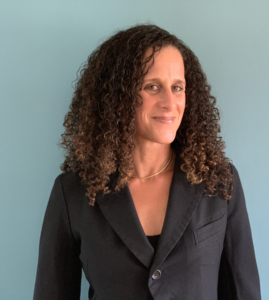
Sarah Abrevaya Stein

Sarah Abrevaya Stein

University of California, Los Angeles · History

Active 1997–2023

h-index12
Citations443
Papers9811 last 5y
Funding
See your match with Sarah Abrevaya Stein — sign in to PhdFit.Sign in

About

Sarah Abrevaya Stein is a Distinguished Professor and Viterbi Family Endowed Chair in Mediterranean Jewish Studies at UCLA. She is the author or editor of ten books, with her recent work including Wartime North Africa, A Documentary History 1934-1950, which she co-edited with Aomar Boum. This book, awarded the Best Historical Materials Award from the American Library Association and the Judaica Reference Award from the Association for Jewish Libraries in 2023, is the first collection of primary documents on North African history and the Holocaust, providing diverse perspectives from Muslims, Christians, and Jews across the region during wartime. Her previous notable publication, Family Papers: A Sephardic Journey Through the Twentieth Century, explores the intertwined histories of Sephardic Jewry and a single family archive, and was recognized as a Best Book of 2019 by The Economist and an Editors' Choice by The New York Times Book Review. Stein's scholarship has been supported by prestigious fellowships, including Guggenheim and National Endowment for the Humanities, and her work has been translated into multiple languages. Her research focuses on Jewish, Sephardic, and Mediterranean history, with particular emphasis on the experiences of Jewish communities in North Africa, the Ottoman Empire, and southeastern Europe, as well as their interactions with broader global commerce and colonial histories.

Research topics

  • Sociology
  • Ethnology
  • History
  • Ancient history
  • Archaeology
  • Gender studies
  • Political Science
  • Religious studies
  • Biology
  • Art
  • Classics
  • Botany
  • Law
  • Medicine
  • Geography
  • Anthropology

Selected publications

  • Eating on the Ground

    The American Historical Review · 2023-12-01

    article1st authorCorresponding

    Abstract The picnic blanket is lumpy, the ants bite, and the food’s sandy, but you see so much more when you’re eating on the ground. The picnic and the portable camera came of age together in late Ottoman society, and “vernacular” picnic photographs are a ubiquitous feature of the Sephardic photo album. This essay converses with the children, women, men, and objects that appear in these images, considering how Sephardic Jews relaxed and ate in nature at a time when so much was shifting around them—and whether the scattered, globally diasporic, families-owned archive of the Sephardic photo album can be united to restore a lived, dusty, lusty image of late and post-Ottoman Jewish life.

  • Botánica Sephardica

    Comparative Studies in Society and History · 2022 · 1 citations

    1st authorCorresponding
    • Sociology
    • Political Science
    • History

    Abstract This article traces the genealogy of a Jewish-owned botánica located in East Harlem in the 1930s and 1940s. Botánicas are understood to manifest an intricate, transatlantic religious, spiritual, and healing world, offering herbal products, sacramental goods, ritual implements, and counseling to Italian, Latinx, Black, and Caribbean practitioners of folk Catholicism, herbalism, hoodoo, Vodou, Santería, Espiritismo, Curanderismo, Òrìṣà worship and other ethnomedical and spiritual systems. Yet this botánica was owned by an Eastern Mediterranean Jew from the Ottoman/Italian island of Rhodes, and it integrated Sephardic and Mediterranean histories and sources of inspiration. Extraordinarily, this history stands for a greater whole. Jews were pioneering spiritual merchants in the United States. Restoring their history requires journeying globally, beginning with Ottomans’ fidelity to herbalism; tracing émigré Sephardic Jews’ uneven dialogue with Black African men and women in colonial Central and Southern Africa; and delving into the commercial, spiritual, and racial interplay furthered by Jewish-owned pharmacies and botánicas in New York City, Baltimore, Atlanta, Memphis, Charleston, Chicago, and Los Angeles and by Jewish spiritual merchants and their Caribbean, Latinx, and Black patrons. All this introduces an unexpected Jewish and Mediterranean history to the botánica, and an unexpectedly multifarious spiritual, mercantile, and racial dimension to Jewish history.

  • 9 JEWS, PLUMES, AND GLOBAL COMMERCE IN THE MODERN PERIOD

    Berghahn Books · 2022-10-11

    book-chapter1st authorCorresponding
  • The Queen of Herbs: A Plant’s-Eye View of the Sephardic Diaspora

    The Jewish Quarterly Review · 2022 · 2 citations

    1st authorCorresponding
    • Sociology
    • History
    • Ethnology

    This ethnobotanical, historical study explores modern Sephardic Jews’ abiding affection for <i>ruta graveolens</i>, rue, or ruda (as it is known in Ladino). Folkloric writing on ruda has emphasized the immutability of Mediterranean Jewish folkways, but ruda has a history that reveals how a plant can further a particular diaspora—not the Jewish diaspora from biblical Israel, nor the Sephardic diaspora from medieval Iberia, but the Jewish diaspora from the modern Ottoman Balkans. Ruda offers a fresh perspective on the caterwaul of change engulfing modern Sephardim, refocusing attention from politics to the intimate, tactile, and gendered.

  • I. EVERYDAY LIFE

    Stanford University Press eBooks · 2020-08-26

    book-chapterSenior author
  • Acknowledgments

    Stanford University Press eBooks · 2020-08-26

    book-chapterOpen accessSenior author

    Despite the existence of pioneering scholarship, the study of Se phar di history is still in its infancy with many chapters still unwritten.Producing the first overarching documentary history on the modern Judeo-Spanish cultural world has hinged on the generosity of many colleagues.Our first debt is to those who were most tireless with their aid.Olga Borovaya read every page of this book and commented with sophistication and meticulousness, identifying errors as well as conceptual problems.She is also responsible for helping identify, translate, and annotate a number of sources.Devin E. Naar and Paris Papamichos Chronakis (who, like Olga, served as ongoing consultants) were immensely helpful at every stage of this project, not only sharing the fruits of their own research, but helping us think through the broad and complex sweep of Se phar di history.For many years Rachel Deblinger served indefatigably as our editorial assistant and digital humanities guru, handling with aplomb a vast and unruly body of data and facilitating our collaboration, always with wisdom and good cheer.Many others were generous with their own research findings, guiding us to fascinating documents of the Se phar di past, sharing their expertise in various fields, and helping us appreciate more fully the immensity of this project.

  • Note on Translation and Transliteration

    Stanford University Press eBooks · 2020-08-26

    book-chapterOpen accessSenior author

    French, Greek, Serbian, Croatian, Bulgarian, Italian, Spanish, Portuguese, German, Yiddish, and English

  • Introduction: Colonial Tunisia from the Gutter Up

    Stanford University Press eBooks · 2020-12-31

    book-chapterSenior author
  • FOREWORD

    Stanford University Press eBooks · 2020-12-31

    book-chapterOpen accessSenior author
  • Sephardi Lives

    Stanford University Press eBooks · 2020 · 3 citations

    Senior authorCorresponding
    • History
    • Geography
    • Ethnology

    This ground-breaking documentary history contains over 150 primary sources originally written in 15 languages by or about Sephardi Jews. Designed for use in the classroom, these documents offer students an intimate view of how Sephardim experienced the major regional and world events of the modern era. They also provide a vivid exploration of the quotidian lives of Sephardi women, men, boys, and girls in the Judeo-Spanish heartland of the Ottoman Balkans and Levant, as well as the émigré centers which Sephardim settled throughout the twentieth century, including Europe, North and South America, Africa, and Asia.

Frequent coauthors

Awards & honors

  • Best Historical Materials Award from the American Library As…
  • Judaica Reference Award from the Association for Jewish Libr…
  • National Jewish Book Award Finalist (2019)
  • National Jewish Book Award Finalist (2018)
  • National Jewish Book Award Finalist (2012)
  • Resume-aware match score
  • Save to shortlist
  • AI-drafted outreach

See your match with Sarah Abrevaya Stein

PhdFit ranks faculty by your research interests, methods, and publications — grounded in their actual work, not templates.

  • Free to start
  • No credit card
  • 30-second signup