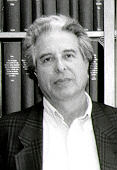
Saul Friedlander
University of California, Los Angeles · History
Active 1800–2017
About
Saul Friedlander is a Professor Emeritus at UCLA, specializing in Jewish and European history. His research focuses on Modern Europe and Jewish History, with notable publications including 'Nazi Germany and the Jews, vol. 1: The Years of Persecution, 1933-1939' and 'Nazi Germany and the Jews, vol. 2: The Years of Extermination.' His work explores themes related to Nazism, the Holocaust, and the representation of these historical events. Friedlander has contributed significantly to the understanding of Nazi Germany's impact on Jewish communities and has engaged in scholarly discourse on the limits of representation, psychoanalysis, and history.
Research topics
- Materials science
- Chemistry
- Environmental science
- Mechanics
- Nanotechnology
Selected publications
The American Journal of Surgery · 2017-11-13
articleOpen accessJournal of Aerosol Science · 2008-01-07 · 34 citations
articleSenior authorJournal of materials research/Pratt's guide to venture capital sources · 2007-04-01 · 41 citations
articleJournal of Aerosol Science · 2007-07-27 · 13 citations
articleSenior authorTransport of Nanoparticles in Gases: Overview and Recent Advances
Aerosol and Air Quality Research · 2007-01-01 · 80 citations
articleOpen accessSenior authorNanoparticles play a major role in industrial processes and natural phenomena in a variety of fields including chemical engineering, chemistry, physics, public health and biology. Nanoparticles are suspended in fluids during production, handling, processing, and by unintentional and/or undesirable release to the environment. In many cases the suspending fluid is a gas, as for example in large scale production, air pollution, clean room applications and many more. The small size of nanoparticles makes it possible to compare their transport properties to the fluid itself. Brownian particle diffusion is one of the most important mechanisms leading to significant transport rates. Diffusion is well known in mass transfer, however, differences arise because of the wide spectrum of nanoparticle sizes and their morphology (aggregate structure) - a concept understood in particle science and technology but needed in many diverse fields of nanoparticle applications. Nanoparticle transport can be controlled by external force fields because these forces may act exclusively on the nanoparticles and have negligible effects on fluid molecules. These include thermophoresis and forces in electrical fields.
Nano Letters · 2006-10-28 · 46 citations
articleSenior authorMechanical properties of nanoparticle chain aggregates (NCA) including tensile strength and Young's modulus were measured using an instrument incorporating an AFM tip under SEM imaging. The NCA were studied individually and as network films. Carbon NCA were made by laser ablation of graphite, and SnO2 NCA were made by oxidation of a tin compound. The films were deformable and showed elastic behavior. NCA serve as reinforcing fillers in rubber and films of SnO2 NCA for trace gas detection.
Bivariate population dynamics simulation of fractal aerosol aggregate coagulation and restructuring
Journal of Aerosol Science · 2006-01-11 · 50 citations
articleSenior authorNanotechnology · 2006-09-07 · 128 citations
articleSenior authorA method is described for designing nanoparticle agglomerate films with desired film porosity and film thickness. Nanoparticle agglomerates generated in aerosol reactors can be directly deposited on substrates to form uniform porous films in one step, a significant advance over existing technologies. The effect of agglomerate morphology and deposition mechanism on film porosity and thickness are discussed. Film porosity was calculated for a given number and size of primary particles that compose the agglomerates, and fractal dimension. Agglomerate transport was described by the Langevin equation of motion. Deposition enhancing forces such as thermophoresis are incorporated in the model. The method was validated for single spherical particles using previous theoretical studies. An S-shape film porosity dependence on the particle Peclet number typical for spherical particles was also observed for agglomerates, but films formed from agglomerates had much higher porosities than films from spherical particles. Predicted film porosities compared well with measurements reported in the literature. Film porosities increased with the number of primary particles that compose an agglomerate and higher fractal dimension agglomerates resulted in denser films. Film thickness as a function of agglomerate deposition time was calculated from the agglomerate deposition flux in the presence of thermophoresis. The calculated film thickness was in good agreement with measured literature values. Thermophoresis can be used to reduce deposition time without affecting the film porosity.
MRS Proceedings · 2006-01-01 · 3 citations
articleJournal of Nanoparticle Research · 2006-08-10 · 30 citations
articleSenior author
Frequent coauthors
- 13 shared
Chandra Venkataraman
Indian Institute of Technology Bombay
- 12 shared
Mahadeva P. Sinha
California Institute of Technology
- 11 shared
Marc Ullmann
Universitätsklinikum Erlangen
- 11 shared
Joseph P. Pinto
- 10 shared
Lutz Mädler
University of Bremen
- 10 shared
V. Wongphatarakul
Environmental Protection Agency
- 10 shared
Antonio H. Miguel
- 9 shared
Arantza Eiguren-Fernández
Education
- 1979
Ph.D., History
University of California, Los Angeles
- 1974
M.A., History
University of California, Los Angeles
- 1971
B.A., History
University of California, Los Angeles
- Resume-aware match score
- Save to shortlist
- AI-drafted outreach
See your match with Saul Friedlander
PhdFit ranks faculty by your research interests, methods, and publications — grounded in their actual work, not templates.
- Free to start
- No credit card
- 30-second signup