Resume-aware faculty matching

Find professors who actually fit you

Upload your resume. Four AI agents analyze your background, rank the faculty who fit, inspect their recent research, and help you draft outreach — grounded in their actual work, not templates.

Free to startNo credit cardCancel anytime
Top matches Balanced preset
Dr. Sarah Chen
Stanford · Interpretability · NLP
91
Dr. Marcus Holloway
MIT · Robotics · RL
84
Dr. Aisha Okonkwo
CMU · Fairness · HCI
82
Nova · Professor Researcher · re-ranking top 20…
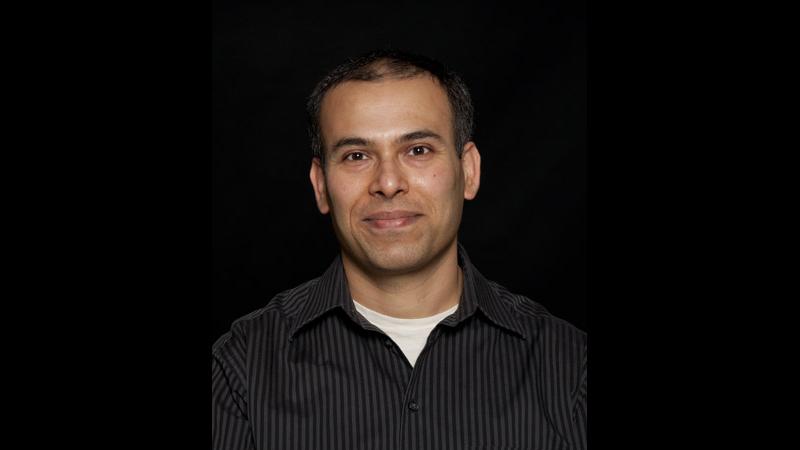
Saurabh Bagchi

Saurabh Bagchi

Verified

Purdue University · Computer Science

Active 1963–2026

h-index45
Citations7.5k
Papers495189 last 5y
Funding$4.2M
See your match with Saurabh Bagchi — sign in to PhdFit.Sign in

About

Saurabh Bagchi is a Professor in the School of Electrical and Computer Engineering and the Department of Computer Science at Purdue University in West Lafayette, Indiana. His research interests include dependable computing and distributed systems. He is the founding Director of a university-wide resilience center at Purdue called CRISP, which he has led since 2017, and he is also the Principal Investigator of the Army's Artificial Intelligence Innovation Institute (A2I2) from 2020 to 2025, which spans nine universities. Bagchi has been recognized with numerous awards and honors, including being selected to the International Federation for Information Processing (IFIP) in 2020, and he is a Fellow of the Institute of Engineering and Technology (IET) as of 2022. His professional accolades also include the Alexander von Humboldt Research Award, multiple Adobe Faculty Awards, and awards from AT&T Labs, Google, and IBM. He has served on the IEEE Computer Society's Board of Governors and holds distinctions such as IEEE Computer Society Distinguished Contributor and IEEE Golden Core member, as well as being an ACM Distinguished Scientist and a Distinguished Speaker for ACM. Bagchi has supervised over 25 PhD students and 50 Masters thesis students, many of whom have built successful careers in industry or academia. He is also the founder and CTO of the cloud computing startup KeyByte, established in 2021. His educational background includes a BS from the Indian Institute of Technology Kharagpur, and both MS and PhD degrees from the University of Illinois at Urbana-Champaign, all in Computer Science.

Research topics

  • Computer Science
  • Computer Security
  • Artificial Intelligence
  • Distributed computing
  • Computer network
  • Human–computer interaction
  • Cognitive psychology
  • Data science
  • Telecommunications
  • Microeconomics
  • Economics
  • Psychology
  • Social psychology
  • Operating system
  • Real-time computing

Selected publications

  • SABLE: Code and Dataset

    Zenodo (CERN European Organization for Nuclear Research) · 2026-03-27

    articleOpen accessSenior author

    This artifact provides the code for trigger generation and federated learning experiments used in our work. CelebA is not included because of its license restrictions; please download it from the official source and follow the README for the required folder structure and execution order.

  • Vision-Only Gaussian Splatting for Collaborative Semantic Occupancy Prediction

    Proceedings of the AAAI Conference on Artificial Intelligence · 2026-03-14

    articleOpen accessSenior author

    Collaborative perception enables connected vehicles to share information, overcoming occlusions and extending the limited sensing range inherent in single-agent (non-collaborative) systems. Existing vision-only methods for 3D semantic occupancy prediction commonly rely on dense 3D voxels, which incur high communication costs, or 2D planar features, which require accurate depth estimation or additional supervision, limiting their applicability to collaborative scenarios. To address these challenges, we propose the first approach leveraging sparse 3D semantic Gaussian splatting for collaborative 3D semantic occupancy prediction. By sharing and fusing intermediate Gaussian primitives, our method provides three benefits: a neighborhood-based cross-agent fusion that removes duplicates and suppresses noisy or inconsistent Gaussians; a joint encoding of geometry and semantics in each primitive, which reduces reliance on depth supervision and allows simple rigid alignment; and sparse, object-centric messages that preserve structural information while reducing communication volume. Extensive experiments demonstrate that our approach outperforms single-agent perception and baseline collaborative methods by +8.42 and +3.28 points in mIoU, and +5.11 and +22.41 points in IoU, respectively. When further reducing the number of transmitted Gaussians, our method still achieves a +1.9 improvement in mIoU, using only 34.6% communication volume, highlighting robust performance under limited communication budgets.

  • GEM: Gaussian Evolution Model for Occupancy Forecasting and Motion Planning

    ArXiv.org · 2026-05-17

    articleOpen accessSenior author

    Future 3D semantic occupancy forecasting and motion planning are central to autonomous driving, as they require models to reason about how surrounding scenes evolve and how the ego vehicle should act. Existing occupancy world models commonly discretize scenes into latent embeddings, volumetric features, or quantized tokens, and forecast future states through fixed-step autoregressive generation. This limits temporal flexibility, obscures scene evolution, accumulates errors over long horizons, and poorly matches the continuous-time dynamics of real driving scenes. We propose GEM, a Gaussian Evolution Model for non-autoregressive occupancy world modeling, where driving scenes are represented as explicit continuous 4D Gaussian primitives with learned dynamics. Instead of rolling out future occupancy states step by step, GEM directly queries the Gaussian world representation at arbitrary timestamps and splats the corresponding conditional 3D Gaussians into semantic occupancy volumes. This enables efficient forecasting over the full horizon while retaining a compact and interpretable scene representation. By decoupling spatial geometry, temporal support, and primitive motion, GEM makes the predicted world easier to inspect, as each primitive's evolution can be followed continuously over time. The same representation also supports motion planning by predicting future ego trajectories from the learned Gaussian world. Extensive experiments show that GEM achieves state-of-the-art future semantic occupancy forecasting and strong motion planning performance, while providing flexible temporal querying.

  • Beyond Corner Patches: Semantics-Aware Backdoor Attack in Federated Learning

    ArXiv.org · 2026-03-31

    articleOpen accessSenior author

    Backdoor attacks on federated learning (FL) are most often evaluated with synthetic corner patches or out-of-distribution (OOD) patterns that are unlikely to arise in practice. In this paper, we revisit the backdoor threat to standard FL (a single global model) under a more realistic setting where triggers must be semantically meaningful, in-distribution, and visually plausible. We propose SABLE, a Semantics-Aware Backdoor for LEarning in federated settings, which constructs natural, content-consistent triggers (e.g., semantic attribute changes such as sunglasses) and optimizes an aggregation-aware malicious objective with feature separation and parameter regularization to keep attacker updates close to benign ones. We instantiate SABLE on CelebA hair-color classification and the German Traffic Sign Recognition Benchmark (GTSRB), poisoning only a small, interpretable subset of each malicious client's local data while otherwise following the standard FL protocol. Across heterogeneous client partitions and multiple aggregation rules (FedAvg, Trimmed Mean, MultiKrum, and FLAME), our semantics-driven triggers achieve high targeted attack success rates while preserving benign test accuracy. These results show that semantics-aligned backdoors remain a potent and practical threat in federated learning, and that robustness claims based solely on synthetic patch triggers can be overly optimistic.

  • GEM: Gaussian Evolution Model for Occupancy Forecasting and Motion Planning

    arXiv (Cornell University) · 2026-05-17

    preprintOpen accessSenior author

    Future 3D semantic occupancy forecasting and motion planning are central to autonomous driving, as they require models to reason about how surrounding scenes evolve and how the ego vehicle should act. Existing occupancy world models commonly discretize scenes into latent embeddings, volumetric features, or quantized tokens, and forecast future states through fixed-step autoregressive generation. This limits temporal flexibility, obscures scene evolution, accumulates errors over long horizons, and poorly matches the continuous-time dynamics of real driving scenes. We propose GEM, a Gaussian Evolution Model for non-autoregressive occupancy world modeling, where driving scenes are represented as explicit continuous 4D Gaussian primitives with learned dynamics. Instead of rolling out future occupancy states step by step, GEM directly queries the Gaussian world representation at arbitrary timestamps and splats the corresponding conditional 3D Gaussians into semantic occupancy volumes. This enables efficient forecasting over the full horizon while retaining a compact and interpretable scene representation. By decoupling spatial geometry, temporal support, and primitive motion, GEM makes the predicted world easier to inspect, as each primitive's evolution can be followed continuously over time. The same representation also supports motion planning by predicting future ego trajectories from the learned Gaussian world. Extensive experiments show that GEM achieves state-of-the-art future semantic occupancy forecasting and strong motion planning performance, while providing flexible temporal querying.

  • Beyond Corner Patches: Semantics-Aware Backdoor Attack in Federated Learning

    arXiv (Cornell University) · 2026-03-31

    preprintOpen accessSenior author

    Backdoor attacks on federated learning (FL) are most often evaluated with synthetic corner patches or out-of-distribution (OOD) patterns that are unlikely to arise in practice. In this paper, we revisit the backdoor threat to standard FL (a single global model) under a more realistic setting where triggers must be semantically meaningful, in-distribution, and visually plausible. We propose SABLE, a Semantics-Aware Backdoor for LEarning in federated settings, which constructs natural, content-consistent triggers (e.g., semantic attribute changes such as sunglasses) and optimizes an aggregation-aware malicious objective with feature separation and parameter regularization to keep attacker updates close to benign ones. We instantiate SABLE on CelebA hair-color classification and the German Traffic Sign Recognition Benchmark (GTSRB), poisoning only a small, interpretable subset of each malicious client's local data while otherwise following the standard FL protocol. Across heterogeneous client partitions and multiple aggregation rules (FedAvg, Trimmed Mean, MultiKrum, and FLAME), our semantics-driven triggers achieve high targeted attack success rates while preserving benign test accuracy. These results show that semantics-aligned backdoors remain a potent and practical threat in federated learning, and that robustness claims based solely on synthetic patch triggers can be overly optimistic.

  • SABLE: Code and Dataset

    Zenodo (CERN European Organization for Nuclear Research) · 2026-03-27

    articleOpen accessSenior author

    This artifact provides the code for trigger generation and federated learning experiments used in our work. CelebA is not included because of its license restrictions; please download it from the official source and follow the README for the required folder structure and execution order.

  • ApproxBit: Efficient Video Analytics through Latency-Aware Offloading with Learned Binary Codes

    2026-05-08

    articleOpen accessSenior author

    With the growing ubiquity of video content, efficient video analytics has become essential for applications such as surveillance, autonomous driving, and augmented reality. Yet, deploying video analytics models on resource-constrained edge devices and in low-bandwidth environments remains challenging. A dominant method for handling demanding video analytics tasks on edge devices has been to offload computation strategically from the edge device to servers. However, all prior solutions fail to offload under severely constrained, real-world network conditions (such as, a few-Mbps satellite network) due to the much higher data rates associated with video tasks. We introduce ApproxBit, a system to optimize shared edge-to-cloud processing for video analytics tasks; the two that we experiment with are video action recognition and video question answering. ApproxBit integrates an encoder within the video model, uses learned binary codes to effectively compress and offload data, and adaptively decides on the offloading point depending on the network bandwidth. ApproxBit’s adaptive and efficient data compression, which reduces the original feature map size by up to 2142.4 ×, makes it an ideal solution for video analytics on edge devices, especially with constrained networks. We evaluate ApproxBit on the two video tasks, across different model architectures (e.g., convolution- and Transformer-based) and multiple datasets (e.g., Something-Something-v2, Kinetics, and MSVD). Our results of latency and accuracy are superior over baselines: edge-only processing, server-only processing, DNN Surgery [ToCC ’23], full offloading of H.264-encoded videos, DeepCOD [SenSys ’20], neural video compression DCVC-FM [CVPR ’24], and LimitNet [MobiSys ’24]. We also demonstrate ApproxBit’s adaptivity to changing network conditions, and generalization in a real-world user study.

  • Introduction to the Invited Top Papers of USENIX ATC 2024

    ACM Transactions on Computer Systems · 2026-04-25

    article1st authorCorresponding
  • Digital Guardians: The Past and The Future of Cyber-Physical Resilience

    Iowa State University Digital Repository (Iowa State University) · 2026-04-15

    preprintOpen access1st authorCorresponding

    Resilience in cyber-physical systems (CPS) is the fundamental ability to maintain safety and critical functionality despite adverse "perturbations," which includes security attacks, environmental disruptions, and hardware or software failures. This survey provides a comprehensive review of CPS resilience, framing the field through five interconnected themes that are required in an integrated whole to achieve real-world resilience. The article first posits that resilience is a system-wide property emerging from interactions between hardware, software, and human users. Second, it addresses the challenges of learning-enabled CPS, which often operate in data-scarce environments characterized by imbalanced or noisy data, requiring innovative solutions like synthetic data generation and foundation model adaptation. Third, the survey examines proactive measures for resilience, which include distinctive aspects of verification, testing, and redundancy. Fourth, it explores recovery mechanisms, moving beyond traditional fault models to design "just good enough" recovery strategies that prioritize safety-critical functions during perturbations. Finally, it highlights the central role of the human, focusing on the different levels of human intervention, the necessity of trust calibration, and the requirement for explainable AI to support human-CPS teaming. These themes are illustrated through representative application domains, primarily Connected and Autonomous Transportation Systems (CATS) and Medical CPS (MCPS). By integrating the five interconnected themes, this survey provides a systematic roadmap for achieving the resilient CPS in increasingly complex and adversarial environments.

Recent grants

Frequent coauthors

Awards & honors

  • Alexander von Humboldt Research Award (2018)
  • Adobe Faculty Award (2017, 2020, 2021)
  • AT&T Labs VURI Award (2016)
  • Google Faculty Award (2015)
  • IBM Faculty Award (2014)
  • Resume-aware match score
  • Save to shortlist
  • AI-drafted outreach

See your match with Saurabh Bagchi

PhdFit ranks faculty by your research interests, methods, and publications — grounded in their actual work, not templates.

  • Free to start
  • No credit card
  • 30-second signup