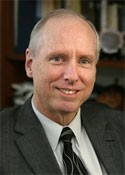
Scott Waugh
University of California, Los Angeles · History
Active 1977–2025
About
Scott Waugh is a faculty member at the UCLA Department of History. The provided page text does not include specific details about his research focus, background, or key contributions.
Research topics
- Materials science
Selected publications
:<i>Henry III: Reform, Rebellion, Civil War, Settlement, 1258–1272</i>
Speculum · 2025-03-28
article1st authorCorrespondingArthroscopy The Journal of Arthroscopic and Related Surgery · 2023-01-03
editorialOpen accessA recent research study showed that blood flow restriction (BFR) therapy was safe and well tolerated but failed to demonstrate efficacy as a modality that provides greater gains in quadriceps strength when added to a standard home program in patients awaiting anterior cruciate ligament (ACL) reconstruction. Despite employing a validated method of measurement, the results were highly variable, indicating the need for measurements with sufficient accuracy to detect the small, but potentially meaningful, gains in quadriceps strength that's been attributed to BFR. The results inform future investigations of BFR prior to ACL surgery by demonstrating the need for accurate methods of measurements when the anticipated effects are small.
BRILL eBooks · 2022
- Materials science
2022-05-30
reference-entry1st authorCorrespondingThe Despenser family gained prominence and wealth through their service to the English king over several generations. Under Edward II, that service generated powerful resentment and opposition among the nobility and led to the downfall of the Despensers and Edward II.
Lancaster, Thomas Earl of (ca. 1278–1322)
2022-05-30
reference-entry1st authorCorrespondingThomas of Lancaster, the most wealthiest and most powerful nobleman in England, led the effort to reform the realm in opposition to Edward II. He ultimately joined in a rebellion against the king in which he was defeated and executed. The reform effort failed, but he was remembered for his efforts.
Edward III (1312–77; r. 1327–77)
2022-05-30
reference-entry1st authorCorrespondingEdward III came to the throne of England on the deposition of his father, Edward II. After shaking off the tutelage of his mother, Isabella, and Roger de Mortimer, Edward turned his attention to warfare, first against Scots and then in France. A more effective leader than his father, Edward built a web of loyalty and service among the noble and knightly ranks of the kingdom that enabled him to pursue his military goals. He scored outstanding successes, illustrated by memorable battles such as Halidon Hill, Crécy, Calais, and Poitiers, but the tide of war constantly shifted and not much had been gained by the end of his reign. War took a heavy toll at home through taxation and service, and the country was battered by plague in 1348/9 and 1360/1. Effective officials and administrative reforms enabled the government to meet these challenges for much of the reign. When he died, he was renowned for his military glory but he left the country in a precarious condition.
Isotopic Atlas of Australia: Geochronology compilation for Victoria: Version 1.0
2021-01-01 · 1 citations
report14. The Origins of the Office of Escheator
Boydell and Brewer eBooks · 2015-12-31 · 1 citations
book-chapter1st authorCorrespondingThe Origins of the Office of Escheator
2015-10-15 · 3 citations
other1st authorCorrespondingEnglish kings from the Conquest onward prized feudal incidents as sources of patronage and revenue, but it was not until Henry III's reign that an office devoted to administrating those rights – the escheatorship – was permanently established. Angevin kings relied on a variety of methods to find, seize, keep and account for the lands and rights to which lordship entitled them. They worked well enough to enable John's ruthless exploitation of those resources, driving the barons to formulate restrictions on the king's feudal authority, which became enshrined in Magna Carta. The Crown, however, did not relinquish its rights, and the turmoil in the wake of Magna Carta and John's death emphasised anew the importance of feudal incidents to the king. Between 1217 and 1250, therefore, the royal government experimented with different administrative configurations to manage its feudal assets. These efforts raised issues regarding the span of authority of different offices, relationships among officials, the role of the eyre, and how best to use the resources that came to the Crown. Through this process the office of escheator gradually came into being, until, by 1250, it had become a regular feature of the king's government in county communities.
The Growth of Royal Government under Henry III
2015-10-15 · 11 citations
bookThe thirteenth century saw major developments in England's administration, as the procedures and processes of government expanded rapidly, the principles enshrined in Magna Carta became embedded, knights and burgesses were summoned to Parliament for the first time, and nothing short of a political revolution took place.<BR> The essays here draw on material available for the first time via the completion of the project to calendar all the Fine Rolls of Henry III; these rolls comprise the last series of records of the English Chancery from that period to become readily available in a convenient form, thereby transforming access to several important fields of research, including financial, legal, political and social issues. The volume covers topics including the evidential value of the fine rolls themselves and their wider significance for the English polity, developments in legal and financial administration, the roles of women and the church, and the fascinating details of the development of the office of escheator. Related or parallel developments in Scotland, Wales and Ireland are also dealt with, giving a broader British dimension.<BR><BR> Louise J. Wilkinson is Professor of Medieval History, Canterbury Christ Church University; David Crook is Honorary Research Fellow at the National Archives and the University of Notthingham.<BR><BR> Contributors: Nick Barratt, Paul Brand, David Carpenter, David Crook, Paul Dryburgh, Beth Hartland, Philippa Hoskin, Charles Insley, Adrian Jobson, Tony Moore, Alice Taylor, Nicholas Vincent, Scott Waugh, Louise Wilkinson
Frequent coauthors
- 9 shared
Geo Pisani
Piaggio (Italy)
- 9 shared
Graziella Berti
University of Miami
- 9 shared
Marco Birindelli
University of Miami
- 9 shared
Lucia Tomasi
University of Miami
- 9 shared
Michael C. Milone
University of Pennsylvania
- 9 shared
Marco Micheli
University of California, Los Angeles
- 9 shared
Karen Rose Mathews
- 9 shared
Monica Krekić
University of Miami
- Resume-aware match score
- Save to shortlist
- AI-drafted outreach
See your match with Scott Waugh
PhdFit ranks faculty by your research interests, methods, and publications — grounded in their actual work, not templates.
- Free to start
- No credit card
- 30-second signup