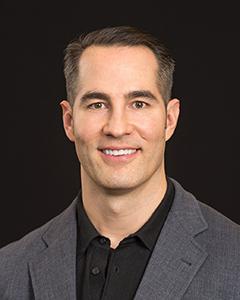
Sean Esteban McCabe
VerifiedUniversity of Michigan · Systems, Populations and Leadership
Active 1992–2026
About
Sean Esteban McCabe is a professor at the University of Michigan School of Nursing and the Carol J. Boyd Collegiate Professor. He is the Director of the Center for the Study of Drugs, Alcohol, Smoking and Health (DASH Center) and is recognized as an internationally renowned scholar in epidemiology of substance use disorders, prescription medication use and misuse, and survey methodology. Dr. McCabe has clinical experience treating adolescents, young adults, and adults with substance use disorders. His research interests include substance use disorder, controlled substances, and the impact of addiction and overdose on children. He has been the recipient of multiple awards, including the prestigious 2024 Betty Ford Award for his significant impact on the field of addiction and recovery. Dr. McCabe has authored or co-authored over 300 peer-reviewed articles and has been a principal investigator on numerous NIH- and FDA-funded projects. He is actively involved in mentoring students, postdoctoral fellows, and junior faculty, emphasizing a collaborative, learner-centered approach to teaching and research. His work also reflects a personal history of recovery from alcohol and opioid use disorder, motivating his dedication to helping others struggling with addiction and supporting those in recovery.
Research topics
- Psychiatry
- Gerontology
- Psychology
- Clinical psychology
- Medicine
- Demography
- Social psychology
Selected publications
LGBT Health · 2026-02-10
articleSenior authorPURPOSE: This study examined associations between sexual identity and both substance use and mental health outcomes via nationally representative data from adolescents and young adults, using a six-response sexual identity assessment. METHODS: Data were from 11,328 adolescents (12-17 years) and 13,131 young adults (18-25 years) completing the 2023 National Survey on Drug Use and Health. Sexual identity had six-response options: heterosexual, lesbian/gay, bisexual, using a different term, unsure/don't know, and do not understand the question. Substance use variables included alcohol, cannabis, nicotine, prescription drug misuse, polysubstance use, and substance use disorder (SUD). Mental health variables included major depressive episodes, suicidal ideation, and serious psychological distress (measured only among young adults). Multivariable logistic regression models were fitted to examine whether substance use and mental health differed by sexual identity. Analyses adjusted for sociodemographics, occurred separately by age group and sex, and heterosexual individuals were the reference category. RESULTS: Youth identifying as lesbian, gay, bisexual, unsure/don't know, or using a different term had significantly higher rates of all mental health concerns than their heterosexual peers, with 80% of adjusted odds ratios above 3.0. Substance use-sexual identity links were less consistent, although lesbian and bisexual females were more likely than heterosexual females to have past-year SUD. Individuals not understanding the sexual identity question had lower rates than their heterosexual peers on 15 of 36 outcomes (41.7%). CONCLUSION: Screening and indicated prevention for mental health concerns and SUD are needed for sexual minority youth, along with the development of culturally sensitive interventions.
Kratom Use and Associations With Mental Health in the United States
Journal of Addiction Medicine · 2026-05-13
article1st authorCorrespondingOBJECTIVES: To assess the US lifetime and past-year prevalence of kratom Mitragyna speciosa use and its associations with mental health and DSM-5 substance use disorder (SUD). METHODS: This study examined cross-sectional survey data collected from 169,408 non-institutionalized individuals aged 12 and older in US households between 2021 and 2024. Measures included kratom use, nonmedical use of cannabis, prescription drugs (opioids, sedatives/tranquilizers, stimulants), other drugs, mental health indicators (serious psychological distress, DSM-5 major depression, suicidal ideation), and DSM-5 SUD. RESULTS: Between 2021 and 2024, lifetime and past-year kratom use were highest among adults aged 21 to 34, 3.40% (95% CI: 3.17-3.65) and 1.01% (95% CI: 0.91-1.13), respectively. Among people who reported prior-to-past-year kratom use, most reported past-year cannabis (65.7%; 95% CI: 60.4-70.3) and had a past-year SUD (52.8%; 95% CI: 50.1-55.4), whereas an estimated 37.8% (95% CI: 37.2-47.3) experienced serious psychological distress. Similar results were observed for those who reported past-year kratom use. Multivariate logistic regression analysis revealed prior-to-past-year and past-year kratom use was associated with increased adjusted odds of past-year SUD (AOR: 4.36; 95% CI: 3.89-4.88 and AOR: 4.81; 95% CI: 3.99-5.80, respectively). Similar results were found for other substance use, DSM-5 major depression, and suicidal ideation. CONCLUSIONS: Over 5 million people in the United States used kratom in their lifetime, with the highest use at ages 21-34 years. Kratom use is increasing and strongly associated among individuals who use cannabis, have a DSM-5 SUD, and experience serious psychological distress. These findings reinforce a profile of individuals who use kratom, many with behavioral health symptoms, and need evidence-based treatment warranting consideration in clinical and policy efforts.
Social Psychiatry and Psychiatric Epidemiology · 2026-03-13
articleOpen accessSenior authorPURPOSE: This study examines the associations between childhood parental death and parental substance-related problems and DSM-5 substance use disorders (SUDs), suicide attempt, and mental health discorders (mood, anxiety, post truamatic stress) in adulthood.. METHODS: Using data from the National Epidemiologic Survey of Alcohol and Related Conditions-III (n = 36,309), we compared four mutually exclusive groups who experienced the following before age 18: parental death and no parental substance use problems; parental substance use problems and no parental death; both parental death and parental substance use problems; and neither parental death nor substance use problems. We examined differences in adverse childhood experiences (ACEs), suicidality, and six DSM-5 SUD and mental health disorders. Parental death and parental substance-related problems were treated as exposures rather than included in the ACEs measure. RESULTS: Parentally-bereaved individuals who experienced parental substance-related problems reported significantly greater number of ACEs (M = 5.34) compared to all other groups. Parentally-bereaved individuals who experienced parental substance-related problems had greater odds of a suicide attempt and all six DSM-5 SUD and mental health disorder outcomes (aOR range = 2.06-3.59) compared to parentally-bereaved individuals without parental substance-related problems. They also had greater odds of a suicide attempt and four DSM-5 SUD and mental health disorders (aOR range = 1.19-1.46) compared to those who experienced parental substance use problems and no parental death. Some differences were attenuated in models adjusting for ACEs; however, differences remained for six of the seven outcomes. CONCLUSION: Individuals who experienced parental death and parental substance-related problems have increased risk for suicidality, DSM-5 SUD, and mental health disorders which may warrant additional trauma-informed mental health care in bereavement services.
Childhood Mortality by Parental Cause of Death
JAMA Network Open · 2026-03-23
articleOpen access1st authorCorrespondingThis cohort study examines rates of childhood mortality in offspring by cause of parental death (ie, drug overdose, homicide, or suicide) to evaluate the need for preventive interventions for bereaved children.
London School of Economics and Political Science Research Online (London School of Economics and Political Science) · 2026-04-30
articleAddictive Behaviors · 2026-03-25
articleSSRN Electronic Journal · 2026-01-01
preprintOpen access1st authorCorrespondingSSRN Electronic Journal · 2026-01-01
preprintOpen accessTrends in Medical and Nonmedical Use of Prescription Stimulants Among US Adolescents
JAMA · 2025-07-29 · 2 citations
articleOpen access1st authorCorrespondingThis study examines trends in medical and nonmedical prescription stimulant use patterns for attention-deficit/hyperactivity disorder among US adolescents.
Drug and Alcohol Dependence · 2025-07-30
articleOpen access
Recent grants
NIH · $721k · 2021
NIH · $153k · 2007
NIH · $631k · 2008
Trajectories of Prescription Nonmedical Drug Misuse
NIH · $3.3M · 2011–2028
Sexual Orientation, Discrimination, and Health Disparities in DSM-5 Alcohol Use Disorders
NIH · $855k · 2018–2022
Frequent coauthors
- 510 shared
Carol J. Boyd
University of Michigan–Ann Arbor
- 323 shared
Philip Veliz
University of Michigan–Ann Arbor
- 214 shared
Ty S. Schepis
Verkehrsinstitut München
- 136 shared
Vita V. McCabe
University of Michigan–Ann Arbor
- 117 shared
Brady T. West
Joe Andruzzi Foundation
- 108 shared
Luisa Kcomt
Wayne State University
- 108 shared
Christian J. Teter
McLean Hospital
- 92 shared
Rebecca J. Evans‐Polce
University of Michigan–Ann Arbor
Education
- 2002
Post-Doctoral Fellowship, Epidemiology, National Institute on Drug Abuse & Substance Abuse Research Center
University of Michigan
- 2000
Ph.D., School of Education
University of Michigan
- 1998
M.A., School of Education
University of Michigan
- 1995
M.S.W., School of Social Work
University of Michigan
- 1992
B.A., Psychology and Spanish Area Studies
Kenyon College
Awards & honors
- Betty Ford Award, AMERSA, 2024
- Mentor, CPDD Early Career Investigator Award (Pasman), 2024
- National Hispanic Science Network Travel Award, National His…
- Underserved Population Award Winner, American Society on Add…
- Research Faculty Recognition Award, University of Michigan,…
- Resume-aware match score
- Save to shortlist
- AI-drafted outreach
See your match with Sean Esteban McCabe
PhdFit ranks faculty by your research interests, methods, and publications — grounded in their actual work, not templates.
- Free to start
- No credit card
- 30-second signup