Resume-aware faculty matching

Find professors who actually fit you

Upload your resume. Four AI agents analyze your background, rank the faculty who fit, inspect their recent research, and help you draft outreach — grounded in their actual work, not templates.

Free to startNo credit cardCancel anytime
Top matches Balanced preset
Dr. Sarah Chen
Stanford · Interpretability · NLP
91
Dr. Marcus Holloway
MIT · Robotics · RL
84
Dr. Aisha Okonkwo
CMU · Fairness · HCI
82
Nova · Professor Researcher · re-ranking top 20…
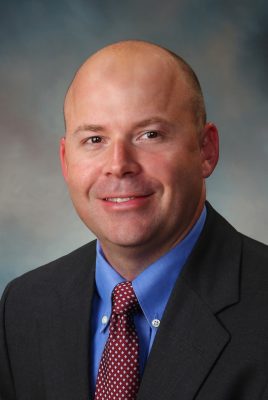
Sean Hillison

Sean Hillison

· Assistant Professor of Accounting and Information SystemsVerified

Virginia Tech · Accounting

Active 2017–2025

h-index3
Citations38
Papers107 last 5y
Funding
See your match with Sean Hillison — sign in to PhdFit.Sign in

About

Sean Hillison, Ph.D., CPA, is an associate professor in the Department of Accounting and Information Systems at Virginia Tech. His academic focus is on judgment and decision-making research in auditing and accounting. Dr. Hillison's research has been published in leading academic journals, including the Journal of Accounting Research, The Accounting Review, and Contemporary Accounting Research. He serves on the editorial board of Current Issues in Auditing, a scholarly journal dedicated to advancing dialogue between academics and audit practitioners. He joined the Pamplin College of Business faculty in fall 2017 after completing his doctoral studies at the University of Illinois at Urbana-Champaign. Dr. Hillison holds a Master’s Degree and a Bachelor’s Degree in Accounting from the University of Florida. Prior to his academic career, he practiced public accounting for nine years in Ernst & Young’s South Florida assurance group, where he most recently served as an audit senior manager working with SEC registrants and private equity-controlled companies. His professional and academic work reflects a strong focus on auditing, financial accounting, and decision-making processes.

Research topics

  • Political Science
  • Accounting
  • Psychology
  • Business
  • Law
  • Social psychology
  • Public relations

Selected publications

  • The influence of client incivility and coping strategies on audit professionals' judgments

    Contemporary Accounting Research · 2025-06-30 · 1 citations

    articleOpen access

    Abstract Prior research demonstrates that audit professionals encounter client incivility. We extend this research by examining whether client incivility negatively impacts auditors' judgments and whether any adverse effects are reduced when auditors use coping strategies. We first collect descriptive survey evidence revealing that client incivility toward auditors is more widespread than currently documented. Next, using an experiment, we predict and find that auditors who experience client incivility (vs. those who do not) are less likely to challenge aggressive reporting if they are not prompted to cope. We also find that active coping reduces the adverse impact of client incivility, whereas findings for passive coping are inconclusive. Audit standards and users of financial statements expect auditors to fulfill their duty of maintaining a high level of professional skepticism irrespective of external circumstances. Our findings highlight the challenges auditors face in meeting these expectations when facing uncivil clients, thus posing a threat to audit quality.

  • How Does Management Voluntary Disclosure Behavior Influence Auditors’ Judgments?

    Journal of Accounting Research · 2024-03-05

    article1st authorCorresponding

    ABSTRACT Forward‐looking information, often used by auditors to evaluate complex estimates and form conclusions about going‐concern audit report modifications, is commonly disclosed voluntarily by U.S. public companies. We experimentally examine how this disclosure behavior affects auditors’ skepticism toward such information. Prior research has shown that investors and analysts frequently interpret voluntarily disclosed forward‐looking information as credible. We demonstrate that auditors, in contrast, exhibit greater skepticism toward forecasted information that has been voluntarily disclosed (vs. mandatorily disclosed or held privately) because of their reduced trust in management, even when the forecasts align with prior year trends (vs. being more optimistic). Our results suggest that a manager's decision to disclose, rather than the disclosure content itself, leads to increased auditor skepticism. Our findings have implications not only for audit outcomes, but also for manager disclosure behavior, as increased auditor scrutiny could discourage future voluntary disclosure.

  • Auditing from a Distance: The Impact of Remote Auditing and Supervisor Monitoring on Analytical Procedures Judgments

    The Accounting Review · 2024 · 21 citations

    • Political Science
    • Accounting
    • Business

    ABSTRACT As remote auditing remains widespread, the profession is concerned that decreased auditor-client interactions and remote supervision challenges can reduce audit quality. In response, some firms have increased supervisor monitoring of remote auditors. We experimentally examine how two key remote audit factors, the spatial distance between auditors and clients and the frequency of supervisor monitoring, influence auditors’ judgments in creative tasks. We predict and find that working remotely facilitates auditors’ higher-level cognition that enhances creative hypothesis generation and improves decision quality when uncovering a seeded error if monitored less frequently than more frequently. More frequent monitoring constrains auditors, which squashes effort and creativity, diminishing the benefits of working remotely. Working onsite at the client location reduces the sense of psychological distance, thereby diminishing the difference between monitoring frequencies. These findings have implications for audit practice as working remotely can enhance performance on creative problem-solving tasks, but only when monitored less frequently.

  • How Does Management Voluntary Disclosure Behavior Influence Auditors’ Judgments?

    SSRN Electronic Journal · 2023-01-01 · 1 citations

    articleOpen access1st authorCorresponding
  • The Influence of Client Incivility and Coping Strategies on Audit Professionals’ Judgments

    SSRN Electronic Journal · 2023-01-01 · 3 citations

    articleOpen access
  • Workplace Aggression Initiated by Clients against Accounting Professionals

    SSRN Electronic Journal · 2020 · 3 citations

    • Accounting
    • Psychology
    • Business
  • Revising Audit Plans to Address Fraud Risk: A Case of “Do as I Advise, Not as I Do”?*

    Contemporary Accounting Research · 2020 · 31 citations

    • Political Science
    • Business
    • Accounting

    ABSTRACT Prior research documents that auditors fail to revise audit plans to effectively address identified fraud cues. While auditors may understand what evidence would address such cues, we propose that auditors fail to apply this understanding because they use implemental mindsets when making decisions for themselves (i.e., deciding). However, we also propose that auditors use deliberative mindsets when advising. To test our predictions, we assign auditors to a decider or an advisor role in a realistic case that contains seeded fraud cues and asks them to consider revising last year's plan. We also manipulate whether the case prompts auditors to revise the plan unconventionally . Results indicate decider‐condition auditors use implemental mindsets: Prompted deciders follow the unconventional plan without regard to underlying fraud risk and unprompted deciders stick with the same‐as‐last‐year plan. Advisor‐condition auditors use more deliberative mindsets: In the prompt and no prompt conditions, they identify plans that are strongly linked to their own fraud risk assessments and that better align with experts' recommended plan for effectively addressing the seeded fraud cues. Supplemental analyses suggest deciding and advising auditors both follow the experts' plan when they believe in its potential effectiveness but, after controlling for the influence of perceived effectiveness, deciding auditors follow it to a greater extent simply because they believe the PCAOB wants it. By contrast, advising auditors do not exhibit signs of excessive PCAOB influence. Our findings provide evidence that seeking informal advice (or thinking like an advisor) helps auditors to effectively revise audit plans in response to identified fraud risk—it helps when a prompt is present or not, suggesting it complements rather than merely substitutes for interventions meant to improve auditors' judgment and decision making.

  • How Accounting Professionals Cope with Client-Initiated Workplace Aggression

    SSRN Electronic Journal · 2020-01-01

    articleOpen access
  • Revising Audit Plans to Address Fraud Risk: A Case of Do as I Advise, Not as I Doo?

    SSRN Electronic Journal · 2018-01-01 · 2 citations

    articleOpen access
  • Discussion of “The Consequences of Audit‐Related Earnings Revisions”

    Contemporary Accounting Research · 2017-08-23 · 2 citations

    article1st author

    Abstract We organize our discussion of Haislip, Myers, Scholz, and Seidel (2017) (hereafter HMSS ) around three areas: managing auditor business risk, a lack of auditor competence as an alternative story to auditors acting independently for their results, and drawing inferences from archival vis‐à‐vis experimental studies. We conclude our discussion by arguing that the investigation by HMSS sets the stage for future research concerning why earnings revisions occur and why auditors and CFO s appear to bear adverse consequences when they do occur.

Frequent coauthors

  • Mark E. Peecher

    5 shared
  • Tim Bauer

    University of Waterloo

    5 shared
  • Ala Mokhtar

    McMaster University

    3 shared
  • Bradley Pomeroy

    University of Waterloo

    2 shared
  • Kamber D. Vittori

    Northeastern University

    2 shared
  • Sudip Bhattacharjee

    Virginia Tech

    1 shared
  • Carissa L. Malone

    Virginia Tech

    1 shared

Awards & honors

  • 2021 American Accounting Association Auditing Section Midyea…
  • Center for Audit Quality Access to Audit Personnel Grant
  • Resume-aware match score
  • Save to shortlist
  • AI-drafted outreach

See your match with Sean Hillison

PhdFit ranks faculty by your research interests, methods, and publications — grounded in their actual work, not templates.

  • Free to start
  • No credit card
  • 30-second signup