About
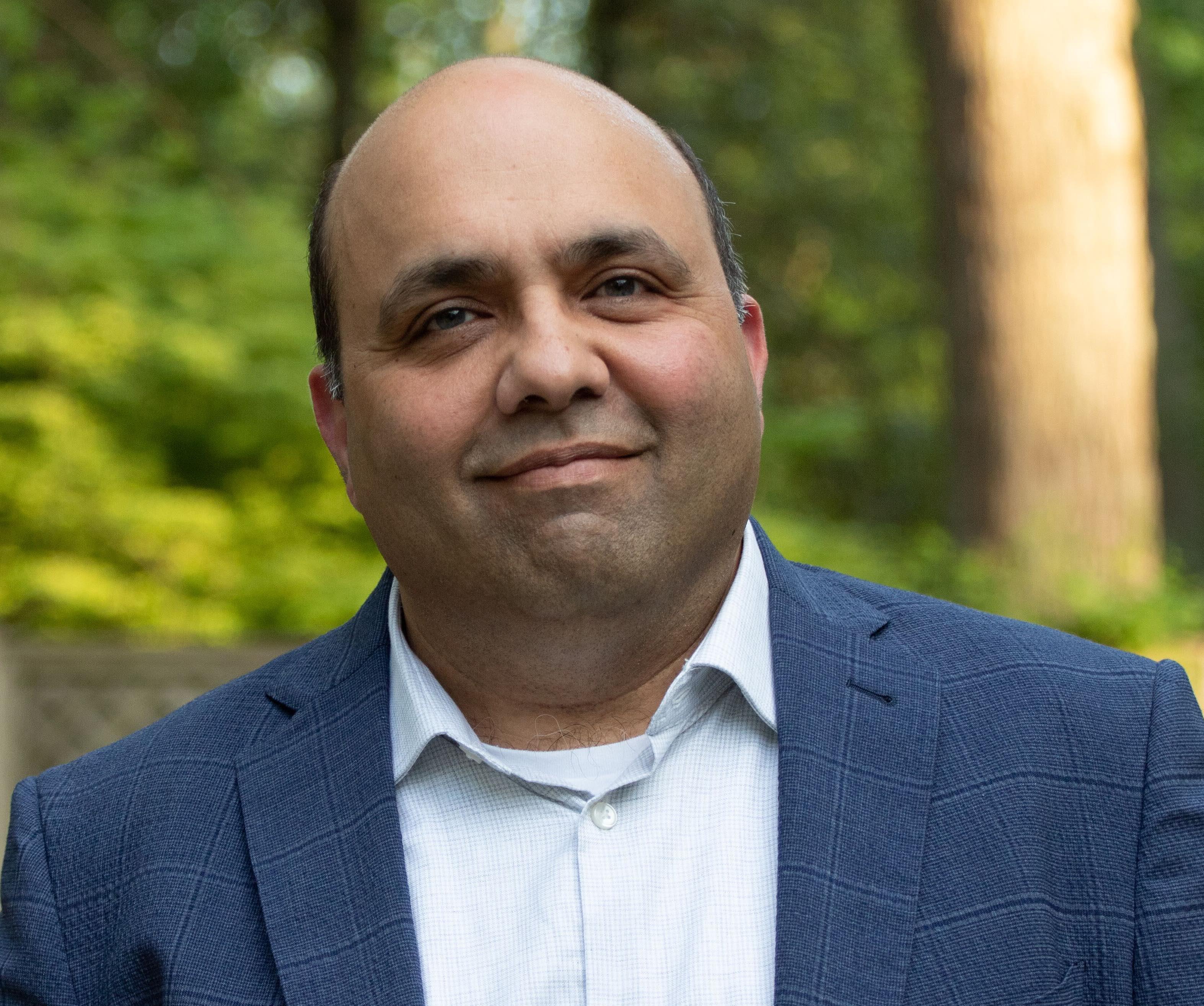
Shahzad Bashir is a faculty member at Aga Khan University, Institute for the Study of Muslim Civilisations. His scholarly work focuses on Islamic history, literature, and intellectual traditions, with a particular interest in the intersections of historical fiction, Sufism, and the socio-religious dynamics of Muslim communities in South Asia. Bashir's research extends Georg Lukács's theorization of historical fiction by analyzing nineteenth-century Urdu novels that respond to colonial conditions, such as Abdulhalim Sharar's Malik al-'Aziz and Virginia (1888), which use fictionalized encounters between Muslims and Christians during the Crusades to critique colonial India. He explores how such narratives resist historicism while affirming the reality of the past, imagining alternative futures through re-narration of history.
Research topics
- History
- Art
- Sociology
- Computer Science
- Political Science
- World Wide Web
- Literature
- Epistemology
- Philosophy
Selected publications
Results in Engineering · 2025-05-19 · 4 citations
articleOpen accessThe aviation sector is projected to account for over a quarter of global greenhouse gas emissions in the coming decades. Current reliance on kerosene-fueled turbofan engines leads to significant fuel losses, low exergy efficiency, and severe environmental impacts. This study proposes and evaluates a hybrid turbofan configuration that decouples the fan-stage from the turbine using a solid oxide fuel cell (SOFC) powered by hydrogen. The system is assessed through a comprehensive thermodynamic, exergoeconomic, and exergoenvironmental framework, benchmarked against conventional engines. Thermodynamic cycle analysis shows that SOFC integration improves overall thermal efficiency by approximately 14–22% in the core, with gains of ∼0.3 in thermal efficiency. Despite a 40% increase in relative system cost due to hydrogen and SOFC complexity, exergoeconomic evaluation indicates long-term savings from lower fuel consumption. Exergoenvironmental analysis reveals an 89% reduction in emission damage cost and a 68% drop in total environmental impact, with hydrogen eliminating CO 2 , SO 2 , and UHC emissions and reducing NO x by 35%. Climate simulations indicate that SOFC hybrids lower the aviation-induced global surface temperature rise by over 75% through 2100. The system achieves over $26 million in avoided environmental damage over its operational lifetime. While the SOFC hybrid engine entails higher initial investment and design complexity, it offers a practical and forward-looking solution for aviation decarbonization. The proposed configuration aligns with international climate targets and presents a viable transition pathway for future aircraft propulsion systems. • SOFC-turbofan hybrids cut emissions damage cost by up to 89%. • Hydrogen-SOFC integration boosts engine core efficiency by 14–22%. • NOx emissions cut by ∼35%; CO 2 , SO 2 , and UHC fully eliminated. • Earth surface warming from aviation reduced by over 75% with SOFC system. • Lifecycle cost offset by $26M+ in saved environmental damage over 30 years.
Reducing Emissions and Fuel Consumption in Supersonic Aviation with Ammonia Hybrid Engines
SSRN Electronic Journal · 2024-08-13 · 3 citations
preprintOpen accessCOMPOSING HISTORY FOR THE WEB: DIGITAL REFORMULATION OF NARRATIVE, EVIDENCE, AND CONTEXT
History and Theory · 2022 · 2 citations
1st authorCorresponding- Computer Science
- Sociology
- Computer Science
ABSTRACT I recently published A New Vision for Islamic Pasts and Futures , a digital book that presents a new way to understand Islam. This article describes the process and conceptual work that went into designing the book's interface. It emphasizes that hypertext enabled through digital means is not intrinsically more dynamic than print since work in both forms requires equally intensive hermeneutical effort. However, the digital realm provides a more expansive spectrum of tools to formulate concepts and to build on them. Digital presentation can be integrated into processes of theorizing, describing, and advocating that form the core of scholarship in the humanities. The article focuses on three areas—narrative, evidence, and context—that are central to modern historical work. My book's interface demonstrates that web capabilities are compositional tools whose deployment should be mulled over in a manner similar to how authors treat writing and editing. Moreover, we should take account of the quotidian fact that, in our environment, information and knowledge reach us extensively via computer‐based mediation. Whether in books or in articles, academic work is assimilated through piecemeal delivery rather than bound volumes. Instead of romanticizing traditional forms whose import may be diminishing, historians and other humanities scholars can create new arguments by being attentive to the web's capabilities and to the current social conditions of possibility pertaining to the circulation of knowledge. Facility with digital composition can then feed back into all forms of humanistic thinking and writing.
Edinburgh University Press eBooks · 2022-01-05
bookSaid (2003) is the classic account.Note the comments of Hughes (2007: 27) on the distinct stance of German-speaking Jewish intellectuals like Geiger and Goldziher who are ignored by Said, as was scholarship in the Nordic countries and Russia.Marchand (2010) provides a detailed analysis of German orientalism before 1945.Waardenburg (2002: 2) describes how Islamic studies in the 1950s in the Netherlands came to adopt anti-colonial sympathies.The pivot away from empire seems to have been particularly rapid here compared to France and Britain.Also, see Bennett 2013: 11-19. 3Waardenburg 1995. 7Modood 2012. 8Uslaner (2005) compares segregation and trust across North America, the United Kingdom, Sweden and Australia.Peach (2006) charts the relative segregation of different religious populations in Britain. 9There is a useful summary in Ford 2015: 585. 10 An overview of the relationship between the work of theology faculties and the anthropology of Islam in Scandinavia is given in Flaskerud and Leirvik (2018).Hoffmann (2019) reflects on the situation in Denmark.14 Sutton and Nanji 1996: 79.For the assumption that the Jewish experience needs to be expressed by a Jewish professor, see Imhoff 2018: 131. 15Eickelman and Piscatori 1996: 162.Also cf.Bashir (2017) for the Eurocentrism of many attempts to critique 'the West'. 16There was a strand of (self-) criticism by some orientalists that precedes Said.Note Claude Cahen's scathing comments on philologists who know no history and historians who know no Arabic (Nanji 1997:
Chapter 8. Prospects for a New Idiom for Islamic History
Edinburgh University Press eBooks · 2022-01-05
book-chapter1st authorCorrespondingProspects for a New Idiom for Islamic History
Edinburgh University Press eBooks · 2022-01-27
book-chapter1st authorCorrespondingThis chapter reflects on the positivistic treatment of medieval ‘histories’ written in Muslim contexts, which often ignore their significance as pieces of rhetoric. This is a product both of an emphasis on philology in training and a wish to make essentialised generalisations about Islam to communicate to policy makers. A corrective is offered here in recognising the Sunni bias of many of the sources for canonical understandings of Islamic history and recognising that Islam is a discursive field and a product of the choices of historians, rather than having an essence that precedes our texts.
The Many Spirits of the Islamic Past
2022-11-26
other1st authorCorrespondingThe Market in Poetry in the Persian World
Cambridge University Press eBooks · 2021-11-24
book1st authorCorresponding'Poetic speech is a pearl, connected to the king's ear.' This statement gestures to words as objects of material value sought by those with power and resources. I provide a sense for the texture of the Persian world by discussing what made poetry precious. By focusing on reports on poets' lives, I illuminate the social scene in which poetry was produced and consumed. The discussion elicits poetry's close connections to political and religious authority, economic exchange, and the articulation of gender. At the broadest level, the study substantiates the interdependency between cultural and material reproduction of society.
Dancing the Islamic Way. Two Famous Sufi Masters
Vandenhoeck & Ruprecht eBooks · 2021-12-06
book-chapter1st authorCorrespondingArbiters of Iran: Chroniclers and Patrons in an Age of Literary Bounty
I.B.Tauris eBooks · 2020-01-01
book-chapter1st authorCorresponding
Frequent coauthors
- 16 shared
Jane Dammen McAuliffe
- 16 shared
Between Language
Princeton University
- 16 shared
Kitāb Al-Diyārāt
New York University Press
- 16 shared
Donald S. Lopez
- 16 shared
Emmanuel Lévinas
- 16 shared
Russell T. McCutcheon
University of Alabama
- 16 shared
Ayatollah Khomeini
New York University Press
- 16 shared
Juliane Hammer
University of North Carolina at Chapel Hill
Education
- 2006
Ph.D., Islamic Studies
Brown University
- 2001
M.A., Middle Eastern Studies
Brown University
- 1998
B.A., Near Eastern Studies
University of California, Berkeley
Awards & honors
- Andrew F. Carnegie Fellowship
- John Simon Guggenheim Memorial Fellowship
- Stanford Humanities Center Fellowship
- Charles Ryskamp Fellowship (ACLS)
- National Endowment for the Humanities Fellowship
- Resume-aware match score
- Save to shortlist
- AI-drafted outreach
See your match with Shahzad Bashir
PhdFit ranks faculty by your research interests, methods, and publications — grounded in their actual work, not templates.
- Free to start
- No credit card
- 30-second signup