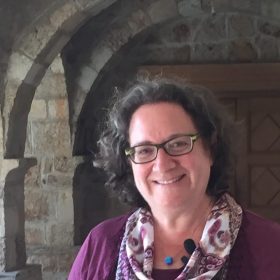
Sharon Gerstel
· Director, UCLA Stavros Niarchos Foundation Center for the Study of Hellenic Culture, Professor of Byzantine Art and Archaeology, Department of Art History, George P. Kolovos Family Centennial Term ChairUniversity of California, Los Angeles · Classics
Active 1988–2024
About
Sharon E. J. Gerstel is a Professor of Byzantine Art and Archaeology at the University of California, Los Angeles, and serves as the Director of the UCLA Stavros Niarchos Foundation Center for the Study of Hellenic Culture. Her research focuses on Byzantine art, archaeology, and ethnography, with particular interest in the intersection of music, architecture, and monumental decoration. Gerstel is a widely published author, with notable works including 'Beholding the Sacred Mysteries' (1999) and 'Rural Lives and Landscapes in Late Byzantium' (2015), the latter of which received multiple awards such as the 2016 Runciman Prize, the inaugural book prize by the International Center of Medieval Art, and the Maria Theocharis Prize by the Christian Archaeological Society in Greece. Her scholarly contributions explore themes related to religious and cultural practices in Byzantium, including the study of sacred spaces, village life, and the visual and material culture of the Byzantine world.
Research topics
- Sociology
- History
- Visual arts
- Literature
- Classics
- Art
- Political Science
- Communication
- Ancient history
- Archaeology
- Law
- Psychology
- Art history
Selected publications
Tracing village communities: unknown inscriptions from the church of St. Philip, Ano Poula, Mani
Byzantinische Zeitschrift · 2024-03-01
articleSenior authorNuns in the Byzantine Countryside (With Sharon Gerstel)
2024-08-13
book-chapter1st authorCorrespondingThis article reconsiders previous scholarly arguments that Byzantine female convents were located primarily in urban settings. New evidence, derived primarily from recently published prosopographical reference works and studies of the paintings in village churches, is analyzed to suggest that female monastics and convents were more common in villages and the countryside than formerly realized. Women who took monastic vows may have also lived in informal house monasteries, which are less likely to be mentioned in the historical records.
Byzantinische Zeitschrift · 2024-03-01
paratextOpen accessAmerican School of Classical Studies at Athens eBooks · 2023-06-30
book-chapter1st authorCorrespondingThe ESTATES of NICCOLÒ ACCIAIUOLI
American School of Classical Studies at Athens eBooks · 2023-06-30
book-chapter1st authorCorrespondingAmerican School of Classical Studies at Athens eBooks · 2023-06-30
book-chapter1st authorCorrespondingMonumental Painting: Post-Iconoclasm
Oxford University Press eBooks · 2021 · 2 citations
1st authorCorresponding- Sociology
- Art
- Visual arts
Abstract Although few secular examples of Byzantine monumental painting survive, hundreds of churches throughout the Mediterranean and the Balkans preserve impressive decorative programs. Many of these churches are well studied. Others, however, remain unpublished. Close study of the paintings provides valuable information about techniques, materials, and artistic styles. Church decoration can show enormous regional variation: specific communities and patrons often exerted influence on subject matter. Inscriptions played an important role in many churches, providing an archive of liturgical texts to be spoken and sung and epigrams to be read. Liturgical texts, hymns, and ritual performance were important inspirations for painters and communities in the Middle and Late Byzantine periods. Phenomenological effects of sound and light were also considered in monumental decoration.
<i>Holy, Holy, Holy:</i> Hearing the Voices of Angels
Gesta · 2021 · 4 citations
1st authorCorresponding- Art
- Literature
- History
Were Byzantine writings about the intermingling of human and angelic voices within ecclesiastical settings merely reflections of mystical theology, or were they actual observations about the movement of sound? Focusing on Thessaloniki, we consider how Byzantine writers described the voices of angels, how certain chants in the divine services animated the voices of celestial beings, and how and where painters represented angels, particularly within the city's monastic churches. We then turn to the study of the acoustical property of reverberation in eight Byzantine churches in the city in order to investigate whether undefined voices heard by subjective listening could be documented by objective, scientific testing.
Images of Hell and the Afterlife in the Churches of Lakonia
Cambridge University Press eBooks · 2020-09-17
book-chapter1st authorCorrespondingSharon E. J. Gerstel and Panayotis S. Katsafados explore images of Hell in churches of the 12th and 14th centuries in Lakonia, the southern Peloponnese, considering the transition of images of sinners from those collectively punished to those individually tormented. After examining the traces of images of Hell in two churches in Mystras and Chrysapha, the authors turn to more humble structures in Epidauros Limera and the Mani, where the representation of sinners is related to village life. The depicted priests, farmers, and women engage in sins that destabilised the village’s agrarian economy and disrupted social order, suggesting that, at a local level, warnings about behaviour in the earthly world were as critical to the community as warnings about salvation in the world to come. Rare images of figures labelled as ‘potion makers’ and ‘witches’ indicate attempts of the Church to regulate dangerous activities that contravened ecclesiastical law and teachings. Representations of usurers, falsifiers of documents, and those who cheat at the scales hint at the challenges that plagued communities in financial hardship. Such depictions continue in the region in the post-Byzantine period, though with increasing complexity, demonstrating a long-term interest in the use of imagery for social commentary.
Frequent coauthors
- 4 shared
Chris Kyriakakis
- 3 shared
Spyridon Antonopoulos
City, University of London
- 3 shared
Michael Angold
University of Edinburgh
- 3 shared
Alice‐Mary Talbot
- 3 shared
Konstantinos Raptis
- 3 shared
James J. Donahue
- 2 shared
S. Peter Cowe
- 2 shared
Elizabeth Zachariadou
Awards & honors
- 2016 Runciman Award
- Resume-aware match score
- Save to shortlist
- AI-drafted outreach
See your match with Sharon Gerstel
PhdFit ranks faculty by your research interests, methods, and publications — grounded in their actual work, not templates.
- Free to start
- No credit card
- 30-second signup