Shayne Aaron Legassie
· Associate ProfessorVerifiedUniversity of North Carolina at Chapel Hill · Film Studies
Active 2007–2024
About
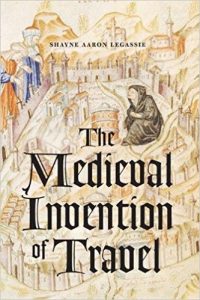
Shayne Aaron Legassie is an Associate Professor in the Department of English and Comparative Literature at the University of North Carolina at Chapel Hill. He holds a Ph.D. from Columbia University, obtained in 2007, a Master’s degree from Columbia University in 2000, and a Bachelor’s degree from the University of New Hampshire in 1999. His research interests encompass the literature of medieval and Early Modern Europe, Mediterranean Studies, travel writing, gender and sexuality studies, ecology, critical theory, art history, and global cinema. His first book, The Medieval Invention of Travel, published by the University of Chicago Press in 2017, explores how the development of new literary genres, textual communities, and writing technologies transformed attitudes toward travel in late-medieval Europe. He is currently working on a new book titled Hollywood Horror and the Gothic Fly, which examines horror cinema's treatment of the housefly within the context of premodern science, theology, and painting. Legassie has contributed to various scholarly publications and edited volumes, and his work has been recognized with awards such as the SAMLA Studies Book Award for his monograph.
Research topics
- Psychology
- Literature
- Ancient history
- Art
- Botany
- History
- Classics
- Biology
Selected publications
Medievalism, Orientalism, and the Botany of the Holy Land
Literature Compass · 2024
1st authorCorresponding- Literature
- Art
- Classics
ABSTRACT This article considers the intersection of medievalism and Orientalism in the botanical study of the Holy Land from the Middle Ages itself through the 1930s.
3. Memory Work and the Labor of Writing
2019-12-31
article1st authorCorresponding2019-01-01
other1st authorCorresponding1. Exoticism as the Appropriation of Travail
2019-12-31
article1st authorCorresponding2. Travail and Authority in the Forgotten Age of Discovery
2019-12-31
article1st authorCorresponding6. The Chivalric Mediterranean of Pero Tafur
2019-12-31
article1st authorCorrespondingCoda: Beyond 1500; or, Travel’s Labor’s Lost
2019-12-31
article1st authorCorresponding2017-01-01
book-chapter1st authorCorrespondingAbstract The Coda argues that many of the phenomena explored in this book continued on into modernity and explores the possibility that the perfection of steam-powered travel--and not the voyage of Columbus--may constitute the most decisive break with medieval understandings of travel.
2. Travail and Authority in the Forgotten Age of Discovery
2017-01-01
book-chapter1st authorCorrespondingAbstract As scholarly tradition would have it, geographic modernity begins with Columbus, and unfolds like a morality play—an allegorical triumph of "empiricism" (nebulously defined) over "authority" (narrowly identified with the reading practices of the medieval university). Stereotype depicts the Middle Ages as a period that cleaved dogmatically to ancient authorities such as Aristotle, Cicero, and Augustine, while greeting new ideas with a mixture of indifference and twitching paranoia. In reality, not only did medieval people eagerly anticipate new geographical knowledge, they also engaged in searching debates about its potentially disruptive implications. Relatedly, they also thought in complex ways about the basis of the traveler's authority and about how that authority could best be translated into textual form for a world where written information—not all of it reliable—seemed to proliferate, mutate, and spread faster than it ever had before.
1. Exoticism as the Appropriation of Travail
2017-01-01
book-chapter1st authorCorrespondingAbstract This chapter explains the cultural logic of medieval exoticism and its implications for reading travel writing about East Asia during the period. In the Middle Ages, the prestige-value of exotic commodities derived in large part from the labor involved in transporting them from their place of origin to their place of consumption. In many settings, the exchange, ownership, and display of exotica were politically symbolic in nature. This cultural reality invites a reconsideration of how two of the most widely studied works of medieval travel writing--the Itinerarium of William of Rubruck and the Divisament dou monde of Marco Polo and Rustichello da Pisa--render the subjective experiences of their traveling protagonists.
Frequent coauthors
- 3 shared
John M. Ganim
University of California, Riverside
Awards & honors
- SAMLA Studies Book Award – Monograph (2018)
- Resume-aware match score
- Save to shortlist
- AI-drafted outreach
See your match with Shayne Aaron Legassie
PhdFit ranks faculty by your research interests, methods, and publications — grounded in their actual work, not templates.
- Free to start
- No credit card
- 30-second signup