Resume-aware faculty matching

Find professors who actually fit you

Upload your resume. Four AI agents analyze your background, rank the faculty who fit, inspect their recent research, and help you draft outreach — grounded in their actual work, not templates.

Free to startNo credit cardCancel anytime
Top matches Balanced preset
Dr. Sarah Chen
Stanford · Interpretability · NLP
91
Dr. Marcus Holloway
MIT · Robotics · RL
84
Dr. Aisha Okonkwo
CMU · Fairness · HCI
82
Nova · Professor Researcher · re-ranking top 20…
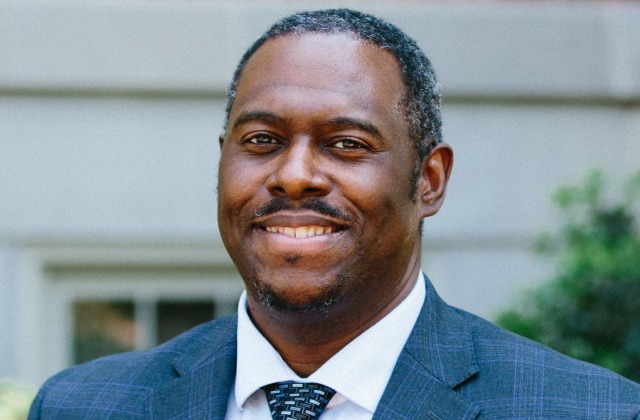
Sherick Hughes

Sherick Hughes

· Samuel M. Holton Distinguished ProfessorVerified

University of North Carolina at Chapel Hill · Health Behavior

Active 2002–2025

h-index13
Citations772
Papers449 last 5y
Funding
See your match with Sherick Hughes — sign in to PhdFit.Sign in

About

Dr. Sherick Hughes is the Founder and Director of the Interpretive Research Suite and Bruce A. Carter Qualitative Thought Laboratory at the University of North Carolina at Chapel Hill. He also serves as the co-director of the UNC Graduate Certificate in Qualitative Studies. Dr. Hughes holds a B.A. from the University of North Carolina at Wilmington (1997), an M.A. from Wake Forest University (1999), an M.P.A. (2001), and a Ph.D. (2003) from the University of North Carolina at Chapel Hill. His scholarship encompasses over 60 manuscripts focusing on critical race studies and Black education, the social context of education in urban and rural settings, interdisciplinary foundations of education, and qualitative and mixed methods research methodology in education. Dr. Hughes has published research articles and reviews in highly selective peer-reviewed journals such as Educational Researcher, American Educational Research Journal, Educational Studies, Urban Education, Urban Review, Education and Urban Society, International Journal of Inclusive Education, and Teachers College Record. He is the author and co-author of numerous qualitative and mixed-methods book chapters and has authored and co-authored four books, including the 2007 AESA Critics’ Choice Award-winning text Black Hands in the Biscuits Not in the Classrooms: Unveiling Hope in a Struggle for Brown’s Promise, and the 2014 AESA Critics’ Choice Award-winning title The Evolving Significance of Race: Living, Learning, and Teaching. He is also the author and editor of What We Still Don’t Know about Teaching Race: How to Talk About it in the Classroom and the 2018 AESA Critics’ Choice Award-nominee Autoethnography: Product, Process and Possibility for Critical Social Research, a textbook published by Sage Publications. Dr. Hughes’s work has been recognized by Phi Delta Kappa and the Harvard Family Involvement Network of Educators. He received a 2010-2011 CTE-Lilly Fellowship from the Center for Teaching Excellence and the Office of Undergraduate Studies and was honored with a Border Crossers Award in 2012 for his contributions to social justice education. In 2013, he received the Early Career Award from Division G–Social Context of Education of the American Educational Research Association, and in 2016, he was honored with a Distinguished Scholar Award from the same association. Prior to his current position, Dr. Hughes taught at the University of Maryland (College Park) and the University of Toledo (Ohio).

Research topics

  • Psychology
  • Sociology
  • Social psychology
  • Developmental psychology
  • Medicine
  • Psychotherapist
  • Clinical psychology
  • Pedagogy
  • Gender studies
  • Physical therapy
  • Psychiatry

Selected publications

  • Racialized Emotion Recognition Accuracy and Anger Bias of Children’s Faces

    UNC Libraries · 2025-05-10

    articleOpen accessSenior author

    Research suggests that individuals are racially biased when judging the emotions of others (Elfenbein & Ambady, 2002) and particularly regarding attributions about the emotion of anger (Halberstadt, Castro, Chu, Lozada, & Sims, 2018; Hugenberg & Bodenhausen, 2003). Systematic, balanced designs are rare, and are comprised of adults viewing adults. The present study expands the questions of racialized emotion recognition accuracy and anger bias to the world of children. Findings that adults demonstrate either less emotion accuracy and/or greater anger bias for Black versus White children could potentially explain some of the large racialized disciplinary discrepancies in schools. To test whether racialized emotion recognition accuracy and anger bias toward children exists, we asked 178 prospective teachers to complete an emotion recognition task comprised of 72 children's facial expressions depicting six emotions and divided equally by race (Black, White) and gender (female, male). We also assessed implicit bias via the child race Implicit Association Test and explicit bias via questionnaire. Multilevel modeling revealed nuanced racialized emotion recognition accuracy with a race by gender interaction, but clear racialized anger bias toward both Black boys and girls. Both Black boys and Black girls were falsely seen as angry more often than White boys and White girls. Higher levels of either implicit or explicit bias did not increase odds of Black children being victim to anger bias, but instead decreased odds that White children would be misperceived as angry. Implications for addressing preexisting biases in teacher preparation programs and by children and parents are discussed.

  • Context Matters as Racialization Evolves: Exploring Bias in Preservice Teacher Responses to Children

    UNC Libraries · 2025-03-28

    articleOpen access

    This study explores preservice teacher attributions to children’s behaviors portrayed in specific emotion-laden school scenarios. Participants included 178 preservice teachers from three universities. The preservice teachers viewed video vignettes of Black and White child actors in six different school scenarios. Our team constructed two themes from the preservice teachers’ narratives about what they saw: (a) context matters (i.e., different scenarios activate different preservice teacher attributions), and (b) racialization evolves (i.e., preservice teachers make different attributions about Black and White boys engaged in the same behaviors). Findings underscore the importance of teacher education and professional development for novice teachers that address racial bias in attributions of student behaviors.

  • My skin is unqualified: an autoethnography of black scholar-activism for predominantly white education

    UNC Libraries · 2025-07-29

    articleOpen access1st authorCorresponding

    This research addresses the guiding autoethnographic question: “What three key institutional incidents/conditions inform my Black scholar-activism for predominantly White education in this historical moment?” Moreover, it applies autoethnography to illuminate three key incidents/conditions involving: (1) predominantly White undergraduates; (2) top-level predominately White male university administrators; and (3) White school community leaders in this historical moment (i.e. within the last 4 years). The research is organized to begin with a new poem and proceed to illuminate: (a) the current, observed historical context, (b) the application of critical race theory for illuminating my lived experiences of this context, (c) the rationale for applying autoethnography in this research, and (d) the three key incidents/conditions. It concludes by returning to the guiding question, critical race theory, related implications and rationales.

  • Out of Site, Out of Mind: The Evolving Significance of Race in the Story of an Early Quaker-Freedmen School

    UNC Libraries · 2025-08-01

    articleOpen access1st authorCorresponding

    This article documents collective memories of the founding, curriculum, and attendees of one of the first (1866) Reconstruction Era Quaker-Freedmen School sites in the Southeastern United States. It applies critical oral history methodology including the collection of primary documents, previous investigations into the school, and interviews of community elders. Through the close study of the school’s history, including the present quest for official historical memorialization, this investigation accentuates how Whiteness as property remains across generations and contexts. What began as a historical investigation of the school necessarily evolved as an analysis of the complications in race relations in the observed college town.

  • Novel Definitions of Wellness and Distress among Family Caregivers of Patients with Acute Cardiorespiratory Failure: A Qualitative Study

    Annals of the American Thoracic Society · 2024 · 9 citations

    • Medicine
    • Clinical psychology
    • Psychiatry

    Caregiver wellness and distress are multidimensional and extend beyond the absence or presence of psychological outcomes. Future intervention research should incorporate novel outcome measures that include elements of self-efficacy, preparedness, and adaptation and optimize postdischarge support for family caregivers.

  • Context Matters as Racialization Evolves: Exploring Bias in Preservice Teacher Responses to Children

    American Educational Research Journal · 2023 · 4 citations

    1st authorCorresponding
    • Sociology
    • Psychology
    • Social psychology

    This study explores preservice teacher attributions to children’s behaviors portrayed in specific emotion-laden school scenarios. Participants included 178 preservice teachers from three universities. The preservice teachers viewed video vignettes of Black and White child actors in six different school scenarios. Our team constructed two themes from the preservice teachers’ narratives about what they saw: (a) context matters (i.e., different scenarios activate different preservice teacher attributions), and (b) racialization evolves (i.e., preservice teachers make different attributions about Black and White boys engaged in the same behaviors). Findings underscore the importance of teacher education and professional development for novice teachers that address racial bias in attributions of student behaviors.

  • The Power of Narratives in the Process of Teaching and Learning about Diversity

    2023-06-27 · 1 citations

    book-chapter

    Many books and journal articles focus on teaching diversity and multiculturalism, but often the writer's viewpoint is geared toward addressing pedagogy and learning exclusively from the perspective of the teacher. Rarely does the reader hear from students about their learning experiences within the academic setting. It is even more infrequent that those who teach or do research in diversity hear from former students about how the classroom experience has intersected with their life encounters beyond the course. Thus, we felt it a significant contribution to the diversity arena to edit this volume where the voices of teachers and their students converge around diversity lessons that have been taught, learned, and experienced.

  • Revisiting Claims about #BlackLivesMatter

    SUNY Press eBooks · 2022-07-01

    book-chapter1st authorCorresponding
  • Racialized emotion recognition accuracy and anger bias of children’s faces.

    Emotion · 2020 · 116 citations

    • Psychology
    • Developmental psychology
    • Social psychology

    Research suggests that individuals are racially biased when judging the emotions of others (Elfenbein & Ambady, 2002) and particularly regarding attributions about the emotion of anger (Halberstadt, Castro, Chu, Lozada, & Sims, 2018; Hugenberg & Bodenhausen, 2003). Systematic, balanced designs are rare, and are comprised of adults viewing adults. The present study expands the questions of racialized emotion recognition accuracy and anger bias to the world of children. Findings that adults demonstrate either less emotion accuracy and/or greater anger bias for Black versus White children could potentially explain some of the large racialized disciplinary discrepancies in schools. To test whether racialized emotion recognition accuracy and anger bias toward children exists, we asked 178 prospective teachers to complete an emotion recognition task comprised of 72 children's facial expressions depicting six emotions and divided equally by race (Black, White) and gender (female, male). We also assessed implicit bias via the child race Implicit Association Test and explicit bias via questionnaire. Multilevel modeling revealed nuanced racialized emotion recognition accuracy with a race by gender interaction, but clear racialized anger bias toward both Black boys and girls. Both Black boys and Black girls were falsely seen as angry more often than White boys and White girls. Higher levels of either implicit or explicit bias did not increase odds of Black children being victim to anger bias, but instead decreased odds that White children would be misperceived as angry. Implications for addressing preexisting biases in teacher preparation programs and by children and parents are discussed. (PsycInfo Database Record (c) 2022 APA, all rights reserved).

  • Meta-ethnography of autoethnographies: a worked example of the method using educational studies

    2020-04-22 · 2 citations

    book-chapter1st authorCorresponding

    Despite questions about autoethnography in the ethnography and education research family, autoethnography is published in selective peer-reviewed journals in education and in the social and health sciences. Even critics of autoethnographic studies note their ‘rising acceptance in the past 15 years’ [Delamont, S. 2009. “The Only Honest Thing: Autoethnography, Reflexivity and Small Crises in Fieldwork.” Ethnography and Education 4 (1): 51–63]. However, there has been less effort towards qualitative meta-synthesis to learn what other insights might be gained from collections of studies. With the advent of meta-autoethnography [Ellis, C. 2009. Revision: Autoethnographic Reflections of Life and Work. Walnut Creek, CA: Left Coast Press], each author can find a way to synthesise her/his own autoethnographic works, however, synthesising autoethnographies of different authors has received no attention. This article examines a critical, systematic approach to the meta-ethnography of autoethnographies and offers a worked example of the method using educational studies.

Frequent coauthors

  • Julie L. Pennington

    4 shared
  • George W. Noblit

    3 shared
  • Theodorea Regina Berry

    3 shared
  • Darrell Cleveland

    Stockton University

    2 shared
  • P Black

    2 shared
  • Pamela W. Garner

    George Mason University

    2 shared
  • Amy G. Halberstadt

    North Carolina State University

    2 shared
  • Emily J. Yanisko

    American University

    1 shared

Labs

Education

  • Ph.D., School of Education

    University of North Carolina at Chapel Hill

    2003

Awards & honors

  • American Educational Research Association (AERA) Distinguish…
  • Society of Professors of Education Book Award (2020)
  • Resume-aware match score
  • Save to shortlist
  • AI-drafted outreach

See your match with Sherick Hughes

PhdFit ranks faculty by your research interests, methods, and publications — grounded in their actual work, not templates.

  • Free to start
  • No credit card
  • 30-second signup