Resume-aware faculty matching

Find professors who actually fit you

Upload your resume. Four AI agents analyze your background, rank the faculty who fit, inspect their recent research, and help you draft outreach — grounded in their actual work, not templates.

Free to startNo credit cardCancel anytime
Top matches Balanced preset
Dr. Sarah Chen
Stanford · Interpretability · NLP
91
Dr. Marcus Holloway
MIT · Robotics · RL
84
Dr. Aisha Okonkwo
CMU · Fairness · HCI
82
Nova · Professor Researcher · re-ranking top 20…
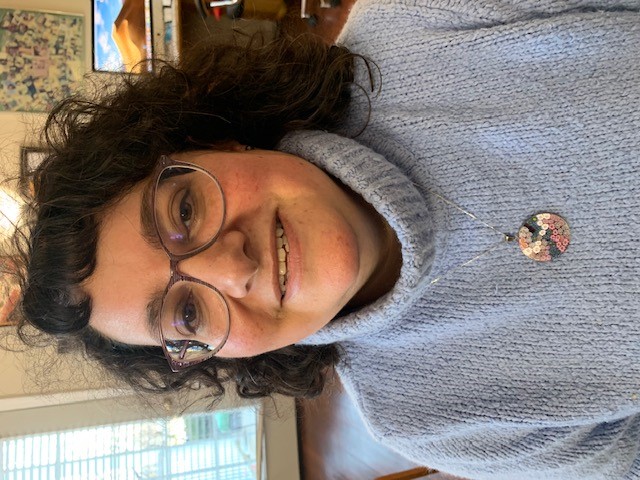
Sherylyn Briller

Sherylyn Briller

· Professor

Purdue University · Anthropology

Active 1996–2026

h-index11
Citations701
Papers442 last 5y
Funding
See your match with Sherylyn Briller — sign in to PhdFit.Sign in

About

Sherylyn Briller is an applied cultural and medical anthropologist specializing in aging, life course, disability, end-of-life issues, and global health. She received her PhD from Case Western Reserve University in 2000 and joined Purdue University’s faculty in 2014. Prior to that, she was a tenured faculty member at Wayne State University. Her research includes conducting studies in Mongolia and the United States, with a focus on aging and health-related topics. Dr. Briller is a Faculty Associate in the Center on Aging and the Life Course and has professional interests extending to anthropologists' education, career development, and interdisciplinary collaboration. She has contributed to expanding anthropological application and practice at Purdue. She is a Fellow of the Society for Applied Anthropology, Co-Chair of the Consortium of Applied and Practicing Anthropology Programs, and has served as President of the Society for Applied Anthropology and the Association for Anthropology & Gerontology Education. Her work emphasizes applying anthropological insights to aging, health, and end-of-life issues, and she has authored several publications on professional development and interdisciplinary research.

Research topics

  • Computer Science
  • Psychology
  • Mechanical engineering
  • Mathematics education
  • Engineering
  • Knowledge management
  • Engineering management
  • Engineering ethics

Selected publications

  • Convergence education in a STEM-focused university: an ethnographic study of a cross-college design and innovation program

    International Journal of STEM Education · 2026-04-10

    articleOpen access

    Innovation often transcends the bounds of individual disciplines, yet undergraduate teaching is still largely organized today within single disciplines and respective academic units. Convergence education offers a promising organizational approach to bring transdisciplinary teaching and learning into undergraduate education by aligning institutional structures, pedagogy, and partnerships around meaningful, innovation experiences to address contemporary problems. However, longstanding academic silos in higher education hinder the adoption of convergence-focused pedagogies. Therefore, this study examined the three-year implementation of a novel convergence education initiative developed to foster design and innovation capabilities across multiple academic disciplines. By integrating faculty from the university’s engineering technology, liberal arts, and business disciplines, this initiative promotes a transdisciplinary teaching and learning environment where differing perspectives, knowledge, and skillsets converge. Guided by a Communities of Transformation framework for institutional change, the study ethnographically examines how cross-college partnerships formed, how a shared philosophy that ‘every student can be an innovator’ developed, and how stakeholders experienced cross-college co-teaching and co-learning. Data sources included extended participant observations and semi-structured interviews with faculty, administrators, academic advisors, students, and alumni. The findings show how a compelling convergence education philosophy emerged over time as faculty and administrators experimented with cross-college co-teaching and as students sought more authentic, purpose-driven learning experiences. Stakeholders described how the convergence education program strengthened participants’ innovation and design capabilities, expanded experiences working in cross-functional teams, and helped to develop new transdisciplinary teaching and learning practices. At the same time, the study surfaces persistent tensions: misaligned advising and scheduling systems, inadequate funding and incentive structures, uneven buy-in across departments, and the difficulty of sustaining co-teaching partnerships amid administrative turnover and competing institutional priorities. This convergence education example illustrates both the promise and delicateness of transdisciplinary undergraduate teaching and learning. Using the Communities of Transformation framework helps explain how a shared philosophy, new teaching practices, and emerging networks can begin to shift some local practices, while also highlighting why such efforts often remain ‘islands of innovation’ within the broader institution. The study offers conceptual grounding and practical guidance for institutions seeking to implement, scale, and sustain convergence education in undergraduate STEM learning, emphasizing the need to align structures, incentives, and advising practices with cross-college co-teaching and co-learning.

  • What Would It Take to Achieve Convergence Education? Insights from Transdisciplinary Education Projects

    2025-08-21

    article
  • Understanding the Values of, and Institutional Barriers Toward, Transforming Undergraduate Learning in the Pursuit of Innovation

    2024 · 2 citations

    • Computer Science
    • Computer Science

    Innovation education experiences are now an expectation of post-secondary learning to help prepare students with creative ways of thinking to address the issues they will face in their lives and careers. Educational institutions seemingly recognize the need to do more to culturally transform teaching and learning to prepare and professionalize students for pushing boundaries in new and bigger ways. As more people question the value of higher education itself, thinking about how innovation education contributes to students’ personal and professional success is both vital and timely. Today, universities are now touting their national rankings related to innovation output and critical conversations are focused on how universities can transform to provide an accessible pathway for every student to be innovative in their own way. That being said, an exciting possibility exists to further the value of higher education while engaging more undergraduates in the innovation ecosystem. However, universities remain structurally challenged to implement transdisciplinary practices as undergraduate learning continues to be siloed within individual colleges/departments. This can leave many students without vital, formalized transdisciplinary educational environments that are authentic to real societal challenges requiring innovation. Universities, nevertheless, can be the hub to provide the resources necessary for students to truly practice innovation in ways that are connected to their own passions. And, this can happen at a time in a student’s life when they may have more freedom and flexibility to fail, iterate, learn, and potentially make an impact with their work that extends beyond the classroom. This type of approach to learning requires a more critical investigation into educational traditions and institutional structures to determine how teaching can span across disciplines and minimize the silo effect of academic departments/individual courses. To address these concerns, a National Science Foundation Improving Undergraduate STEM Education project team is working toward developing a transformed, authentically transdisciplinary, and scalable educational model for undergraduate learning focused on democratizing the practice of innovation. This paper highlights preliminary results of this research project in regard to the undergraduate innovation education model as well as the challenges and successes related to developing a cross-college program incorporating co-teaching and co-learning across engineering/technology, liberal arts, and business management.

  • Work-in-Progress: A Collaborative Model of Teaching and Learning for Undergraduate Innovation Education

    2024 · 1 citations

    Senior authorCorresponding
    • Computer Science
    • Computer Science
    • Mathematics education

    Abstract Students' education needs to reflect the progressive and innovative nature of society. While innovation was previously viewed as an economic driver or technological concept in the 20th century, modern times have innovation permeating into all branches of society, intending to seek and develop new knowledge and ideas. With this inclusion of innovation in society, students should be provided educational opportunities to develop innovation skills that can better prepare them for the professional world as well as for making both societal and personal impact. Innovation-focused education has been positioned to develop 1) social responsibility in students, 2) innovative behavior that can benefit the organizations in which they become part of in their future, 3) their own personal ventures, and 4) the general economy. And, using a transdisciplinary approach to teaching innovation, can help to break down the silos that exist within modern higher education—creating a more authentic community of practice to nourish student learning and their innovative ideas. Researchers have found that innovation capabilities are not typically a by-product of traditional comprehensive education and without specific curriculum to cultivate innovation practices among students across majors, many may be missing out on valuable knowledge and skillsets. Addressing this concern, an undergraduate program at Purdue University has been developed to provide students with the time, resources, and opportunities to enhance their innovation capabilities through co-teaching and co-learning from faculty and students from differing academic units. This program brings together the disciplinary lenses from three different colleges, including engineering technology, business, and liberal arts. Engaging students in a transdisciplinary, authentic learning experience across these academic units can allow them to form a community of practice by working on innovation projects over multiple semesters within an engaged network of faculty, peers, and mentors from a variety of disciplines. However, as this model is implemented there is a need to better understand how this collaborative approach to teaching innovation influences undergraduate learning. Therefore, this study examines student perceptions from this innovation education program related to the program's co-teaching and co-learning model, along with an analysis of the influence that the program has on innovation skills such as integrative learning, teamwork, and problem-solving. All this will be positioned to inform future innovation education research, identifying benefits and drawbacks of the collaborative form of teaching and learning, and analyzing students' self-perceptions of the skills they developed. This information will be valuable as more institutions look toward transforming teaching and learning practices to provide more engaging, cross-disciplinary programs that enhance the value of the learning experiences they provide to students on their campuses.

  • Applying Anthropological Insight in an Aging World

    Oxford Research Encyclopedia of Anthropology · 2020-10-27 · 3 citations

    reference-entry1st authorCorresponding

    Aging is a biological and sociocultural experience that occurs globally. Although aging is universal, ideas about aging and the life course vary widely and influence how aging and quality of life are perceived. Aging occurs both individually and collectively. Individuals have their own life stories and experiences shaped by cultural values, norms, and life course expectations. Anthropology’s attention to both scientific and humanistic ways of exploring what it means to be human is well suited to investigating how people live and age over time and in various locations. Like other anthropological subjects, one can explore aging in terms of human evolution as well as biological and cultural variation in aging experiences. Combining these topics to take a holistic perspective forms the subfield of the anthropology of aging. Given the breadth and scope of the anthropology of aging’s subject matter and global population aging, it is easy to see why this subfield is so fascinating to explore and work in as a career field. Numerous prior reviews cover the subfield’s origins and development and are highlighted. Homage is paid to the subfield’s history, and how to apply what has been learned to understanding a rapidly aging and socially changing world is discussed. As many have indicated, significant challenges and opportunities lie ahead.

  • A Qualitative Evidence Synthesis Review of Longitudinal Qualitative Research in Gerontology

    The Gerontologist · 2018-09-22 · 83 citations

    reviewSenior author

    BACKGROUND AND OBJECTIVES: Gerontologists have long been interested in longitudinal qualitative research (LQR), yet ambiguity remains about best practices. The purpose of this review was to conduct a qualitative evidence synthesis to identify strengths and limitations in existing gerontological LQR. RESEARCH DESIGN AND METHODS: We searched for studies published in English before September 2017, using longitudinal qualitative methods and focusing on gerontology. We searched the following databases: PubMed and ProQuest. This was followed up by a snowball search to identify additional LQR articles that were not gerontologically focused but provided conceptual or methodological information to enhance gerontological LQR. Article titles and abstracts were reviewed, and selected articles were independently evaluated by all authors and summarized in a descriptive matrix based on design, analysis, and strengths and limitations. RESULTS: Our literature search resulted in 225 articles, which was then narrowed to 71 articles from 47 different journals based on our inclusion/exclusion criteria. LQR in gerontology varies considerably by study design and analysis approach. LQR design considerations involve number of time points and duration; rapport and retention; and consistent or different sampling, data collection, and measures. LQR analysis considerations involve synchronic and diachronic approaches, consistent or evolving coding, and individual- or group-level analysis. Gerontological LQR articles vary in the extent to which they address special aging considerations. DISCUSSION AND IMPLICATIONS: This review indicates that there are areas where gerontological LQR can be strengthened going forward. We provide researchers with strategies to improve LQR rigor in our field and beyond.

  • Capturing change and stability in longitudinal qualitative research: insights from a study about aging and life transitions in Israeli continuing care retirement communities

    Educational Gerontology · 2018-12-02 · 4 citations

    articleSenior author

    The present paper considers the use of longitudinal qualitative research (LQR) as a means to capture both change and stability in people’s lives. We use an LQR study conducted in continuing care retirement communities to demonstrate three dimensions that should be taken into consideration when addressing change vs. stability. Three waves of interviews with older adults and their family members as well as memos and reflections concerning interview data are used. The first dimension concerns the question of: “who defines change?” A second dimension raises the question of, “what has changed?” Finally, a third dimension concerns the timeframe of change. We argue that LQR provides a tremendous richness of time dimensions and perspectives. Discrepancies between dimensions, perspectives and timeframes can be particularly enriching. Moreover, LQR allows also for the opportunity to examine stability.

  • Treatment Collaboration When the Stakes Are High

    Journal of Patient Experience · 2017-08-11 · 4 citations

    articleOpen access

    Family-centered care (FCC) is vital for children with special health-care needs and serious chronic illnesses. Family-clinician collaboration and partnership formation are key FCC elements associated with improved health outcomes. However, FCC implementation barriers persist. Although some ethnographic research examines how FCC principles align with practice in inpatient settings, more studies are needed in outpatient specialty clinics. Using an FCC-oriented research team (clinicians, social science researchers, and families) blended multidisciplinary clinical knowledge and family/patient expertise with chronic illness. Our ethnographic study in a high-risk asthma outpatient clinic examined how FCC principles align with clinical practice, identified factors affecting partnership, and compared our findings to a large ethnographic study in an inpatient setting. Qualitative data from direct observation of 14 families with lengthy clinic visits were analyzed. Codes were applied to themes using FCC principles. Clinic visits had interactional and contextual elements that both aligned and misaligned with key FCC principles: information sharing, respect, participation, and collaboration. Recommendations for advancing FCC are outlined, and the importance of this step in light of ongoing health disparities is addressed.

  • Designing for People

    Anthropology News · 2016-09-01

    article1st authorCorresponding
  • Long-term care: The role of occupational therapists in transformative practice

    Elsevier eBooks · 2016-01-01 · 1 citations

    book-chapter1st authorCorresponding

Frequent coauthors

  • Kathleen L. Meert

    16 shared
  • Celia S. Thurston

    Wayne State University

    14 shared
  • Stephanie Myers Schim

    Wayne State University

    9 shared
  • Kaitlin C Muklewicz

    Wayne State University

    4 shared
  • Georgia Michalopoulou

    Wayne State University

    4 shared
  • Elizabeth Secord

    Wayne State University

    4 shared
  • Andrea Nevedal

    VA Ann Arbor Healthcare System

    4 shared
  • Stephanie Myers-Schim

    Wayne State University

    4 shared

Awards & honors

  • Purdue College of Liberal Arts Faculty Excellence in Engagem…
  • Fellow, Society For Applied Anthropology
  • Wayne State University Presidential Award for Excellence in…
  • Wayne State University Academy of Scholars
  • Liberal Arts Junior Faculty Scholar Award
  • Resume-aware match score
  • Save to shortlist
  • AI-drafted outreach

See your match with Sherylyn Briller

PhdFit ranks faculty by your research interests, methods, and publications — grounded in their actual work, not templates.

  • Free to start
  • No credit card
  • 30-second signup