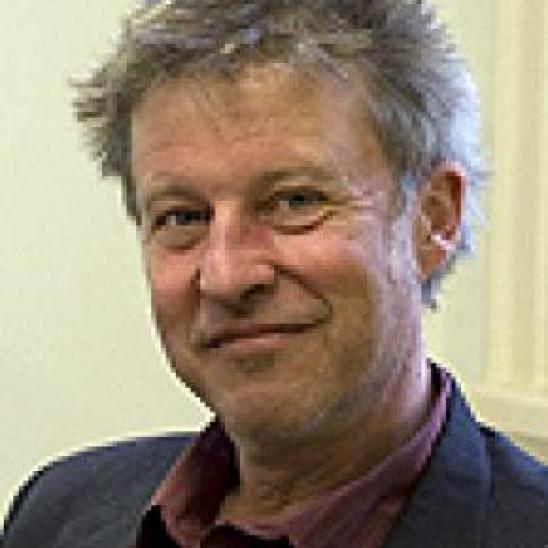
Stephan Palmié
· Norman & Edna Freehling Professor of Anthropology and of Social Sciences in the CollegeVerifiedUniversity of Chicago · Social Policy and Social Services
Active 1987–2024
About
Stephan Palmié is the Norman & Edna Freehling Professor of Anthropology and of Social Sciences in the College at the University of Chicago. He holds a D.Phil from the University of Munich (1989) and completed his Habilitation there in 1999. His ethnographic and historical research focuses on Afro-Caribbean cultures, with particular emphasis on Afro-Cuban religious formations and their connections to the broader Atlantic world. His interests include practices of historical representation and knowledge production, systems of slavery and unfree labor, constructions of race and ethnicity, embodiment and moral personhood, science and technology studies, and the anthropology of food and cuisine. Palmié conducts ethnographic and historical research on Afro-Caribbean cultures, especially Afro-Cuban religious practices, and explores their relation to Atlantic history and cultures. His work also examines practices of historical representation, systems of slavery, and the construction of race and ethnicity, contributing to the understanding of embodiment, moral personhood, and the intersections of science and religion.
Research topics
- Sociology
- Philosophy
- History
- Anthropology
- Political Science
- Epistemology
- Linguistics
- Geography
- Archaeology
- Law
Selected publications
Religion and Society · 2024-09-01
articleOpen accessCORWIN, Anna I., Embracing Age: How Catholic Nuns Became Models of Aging Well , 202 pp., bibliography, index. New Brunswick, NJ: Rutgers University Press, 2021. Hardback, $150. ISBN: 9781978822283. ANDRÉS, Rafael Ruiz, La secularización en España: Rupturas y cambios religiosos desde la sociología histórica , 328 pp. Madrid: Cátedra, 2022. Paperback, €15.67 (ISBN: 9788437643908). EPub, €10.92 (ISBN: 9788437643915). SNODGRASS, Jeffrey, The Avatar Faculty: Ecstatic Transformations in Religion and Video Games , 200 pp., ills., bibliography, index. Oakland: University of California Press, 2023. Hardback, $95.00. ISBN: 9780520384354. BERES, Derek, Matthew REMSKI, and Julian WALKER, Conspirituality: How New Age Conspiracy Theories Became a Health Threat , 370 pp., acknowledgments, notes, index. New York: PublicAffairs, 2023. $30. ISBN: 9781541702981. COPEMAN, Jacob, Arkotong LONGKUMER, and Koonal DUGGAL, eds., Gurus and Media: Sound, Image, Machine, Text, and the Digital , xvii, 453 pp., 55 color plates, index. London: UCL Press, 2023. Paperback, $60. ISBN: 978-18-00-08555-8. GAITANIDIS, Ioannis, Spirituality and Alternativity in Contemporary Japan: Beyond Religion? , xii, 245 pp., 8 b/w ills., 3 graphs, bibliography, index. London: Bloomsbury Academic, 2023. Hardback, $115. ISBN: 9781350262614. Paperback, $35.95. ISBN: 9781350262652. MOHAN, Urmila, ed., The Efficacy of Intimacy and Belief in Worldmaking Practices , 242 pp., 43 b/w ills. New York: Routledge, 2024. Hardback, £135. ISBN: 9781032498812. E-book, £35.99. ISBN: 9781003409731. ESPÍRITO SANTO, Diana, Spirited Histories: Technologies, Media, and Trauma in Paranormal Chile, 212 pp., 11 b/w ills., bibliography, index. London: Routledge, 2024. Paperback, $54.99. ISBN: 9780367691813. PÉREZ, Elizabeth, The Gut: A Black Atlantic Alimentary Tract , 84 pp. Cambridge: Cambridge University Press, 2023. Paperback, £17.00. ISBN: 9781009031530. E-book, £17.00. ISBN: 978-1-009-03311-4. PALMIÉ, Stephan, Thinking with Ngangas: What Afro-Cuban Ritual Can Tell Us about Scientific Practice and Vice Versa , 288 pp. Chicago: University of Chicago Press, 2023. Cloth, $99. ISBN: 978-0-226-82592-2. Paperback, $30. ISBN: 978-0-226-82594-6. E-book, $29.99. ISBN: 978-0-226-82593-9. SUHR, Christian, dir., Light Upon Light . 78 mins. In Arabic, English, and Danish with English and French subtitles, 2023. Available through Documentary Educational Resources.
2023-01-01 · 9 citations
book1st authorCorrespondingCOLLINGWOOD'S WHALE, CHAKRABARTY'S CONUNDRUM, AND BRAUDEL'S BORROWED TIME
History and Theory · 2023-02-26
articleOpen access1st authorCorrespondingABSTRACT As R. G. Collingwood noted toward the end of his life, the physiologically limited “time‐phase” of human observational capacity cannot but deliver a fundamentally anthropocentric and temporally myopic conception of the world as eventful, destructive, and devoid of larger, perhaps cyclical, regularities. Developing at around the same time, Fernand Braudel's project of a history of the longue durée of human interactions with the environment aimed to subvert the short time‐phase of a history accessible to immediate human experience. Although Collingwood and Braudel aimed at a conceptual merger of natural history and human history, neither of them could have foreseen what Dipesh Chakrabarty has described as their collapse into each other, which was effected by humanity's transformation into a geophysical force that produced massive, likely irreversible, and certainly long‐lasting climate change. Looking at two very different examples of a rapidly growing body of literature on an extractivist orientation as a key factor in anthropogenic ecological transformations on both local and planetary scales, this review essay suggests that an “intra‐active” (in Karen Barad's sense) view of human‐environmental relationality might help us conceptualize forms of temporality that are capable of superseding Collingwood's anthropocentric “time‐phase.”
New West Indian Guide / Nieuwe West-Indische Gids · 2023-09-21
articleOpen access1st authorCorrespondingAnthropologies of Our Caribbean Sea of (Is)lands
The Journal of Latin American and Caribbean Anthropology · 2022-09-01
articleWittgenstein among the Santeros
2022-06-29
book-chapter1st authorCorrespondingProceeding from a perspective guided by Wittgenstein’s “second philosophy”, this essay aims to probe the limits of the ethnographic endeavor vis-à-vis worlds unthinkable in terms of the ethnographer’s own “hinge propositions” around which doubt can turn, but which cannot themselves be allowed to fall into doubt. To do so, I revisit a set of ethnographic data from my first fieldwork among practitioners of Afro-Cuban ritual traditions in Miami where I was repeatedly told that the spirit of a dead slave named Tomás was watching over me. I had originally used the “idea of Tomás” as an analytic device to establish my own implication in a violent Atlantic modernity whose (however unwitting) heir I, like all “moderns”, am. Here, however, I explore how a Wittgensteinian approach may help us overcome facile representationalism, give the dead – Tomás, no less than Wittgenstein – a place in the scaffolding of our mind, engage them as metapersons, and so perpetuate their presence in our worlds or forms of life.
Social Anthropology · 2022-03-01 · 2 citations
articleOpen access1st authorCorrespondingEnglish Abstract: Can we talk about what we cannot conceive of? How far can the ethnographic gesture guide us into worlds that call into question what Collingwood described as our own (historically mutable) ‘absolute presuppositions’ from which we must spin our ethnographic propositions? ‘Witches, as the Azande conceive them, cannot exist’, wrote Evans-Pritchard at the start of a monograph aiming to prove the eminent rationality of Zande witchcraft beliefs. Taking as cases in point Evans-Pritchard’s famous equivocations on the issue of coming to inhabit worlds of thought and action that the ethnographer takes to be based on mistaken premises as well as an example from my own ethnography, I argue that what Wittgenstein called ‘hinge propositions’ – on which doubt can turn, but which can never fall into doubt themselves – have long, and all invocations of ‘radical alterity’ to the contrary, both enabled and plagued the ethnographic enterprise. French Abstract: Peut-on parler de ce que l’on ne peut pas concevoir ? Dans quelle mesure le geste ethnographique peut-il nous guider vers des mondes qui remettent en question ce que Collingwood a décrit comme des « présuppositions absolues » qui sont historiquement mutables et à partir desquelles nous devons élaborer nos propres propositions ethnographiques ? Evans-Pritchard écrit au début d’une monographie visant à prouver l’éminente rationalité des croyances sorcières des Zande : « Les sorcières, telles que les Azande les conçoivent, ne peuvent exister ». En prenant pour exemple les fameuses équivoques d’E.P. sur la question d’habiter des mondes de pensée et d’action que l’ethnographe considère comme étant basés sur des prémisses erronées, ainsi qu’un exemple de ma propre ethnographie, je soutiens que ce que Wittgenstein appelait les « propositions charnières » – sur lesquelles le doute peut tourner, mais qui ne peuvent jamais être mises en doute elles-mêmes – ont longtemps (et toutes les invocations de « l’altérité radicale » au contraire) à la fois permis et entravé l’entreprise ethnographique.
Stanford University Press eBooks · 2022
- Geography
This book owes its existence to a vast network of generous interlocutors, mentors, colleagues, friends, and co-conspirators.First among these is the community I have been working with in Peru over repeat visits since 2008, a time when they became all of these things.Gerardo Huaracha and Luisa Cutipa have been enthusiastic, encouraging hosts who quickly became shadow academic advisers.Their adult children, Sabino, Guzmán, María, Nestor, Maruja, and Alan, and their extended family made me feel welcome in Yanque.So did Yeny Huanaco Huerta, Dante Bayona, and their children, Renzo and Leandro, who became fast friends as we ate meals together almost every day when I lived in Yanque.Rogelio Taco, Ana Carol Condori Palma, Mercedes Mercado Gonzalez
Caribbeanist Anthropology and Minerva's Owl: Lessons Forgotten, Lessons Learned
The Journal of Latin American and Caribbean Anthropology · 2022 · 1 citations
1st authorCorresponding- Sociology
- Anthropology
- Sociology
Abstract This essay presents a sketch of what a critical genealogy of the anthropology of the Caribbean might involve. After looking at the origins of anthropological interest in the region, I will focus on two case studies that, for better or worse, may be said to have had lasting diagnostic value for key epistemological orientations in Caribbeanist anthropology. I do so by examining M. G. Smith's Plural Society model and Julian Stewart's Puerto Rico Project in their Cold War contexts to point out why these truly pathbreaking endeavors resulted in a vision of Caribbeanness that we may well want to rethink. [M. G. Smith, Julian Steward, beyond peasant and plantation studies]
Afterword: Things and The Imponderabilia of Actual Life in Cuba
Journal of Latin American Cultural Studies · 2021-04-03 · 1 citations
articleOpen access1st authorCorrespondingFollowing the thematic arc of the essays in this collection, and adding the author’s own reminiscences about fieldwork in Cuba, this afterword reflects on what a material semiotic approach towards a world of things thrown into disarray can reveal about what Malinowski once called “the imponderabilia of actual life” in Cuba during the “Special Period in Times of Peace”.
Frequent coauthors
- 25 shared
Susan Gál
- 25 shared
Rodolfo Marquina
Salisbury University
- 25 shared
Daviken Studnicki
Salisbury University
- 25 shared
Laura A. Graham
Stanford University
- 25 shared
Yana Stainova
McMaster University
- 25 shared
Julia Elyachar
- 25 shared
Judith Farquhar
University of Chicago
- 25 shared
Katina Lilios
Pontifical Catholic University of Peru
Awards & honors
- Winner of the 2014 Clifford Geertz Prize from the Society fo…
- Resume-aware match score
- Save to shortlist
- AI-drafted outreach
See your match with Stephan Palmié
PhdFit ranks faculty by your research interests, methods, and publications — grounded in their actual work, not templates.
- Free to start
- No credit card
- 30-second signup