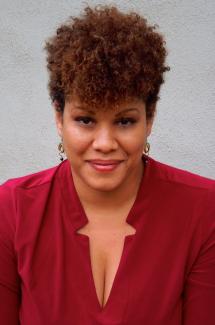
Stephanie Batiste
· EnglishVerifiedUniversity of California, Santa Barbara · Theatre and Dance
Active 2003–2024
About
Dr. Stephanie Batiste is an Associate Professor in the Departments of Black Studies and English at the University of California, Santa Barbara. She obtained her Bachelor’s degree Cum Laude from Princeton University and earned her Master’s of Philosophy and Doctorate of Philosophy in American Studies from The George Washington University. Her research and teaching focus on the relationships between representation, performance, identity, race, and power. She explores how cultural texts such as literature, theater, performance, film, art, and bodies serve as imaginative systems that shape identity, cultural values, human interactions, and possibilities of justice. Her scholarly work includes her book, "Darkening Mirrors: Imperial Representation in Depression Era African American Performance," which examines how African Americans participated in American ideologies of cultural imperialism, such as expansionism and primitivism. The book analyzes how a population alienated from national power defined a national identity and imagined themselves as empowered citizens and transnational actors. Dr. Batiste’s interest in performance extends to both her scholarship and practice; she writes, performs in, and occasionally directs dramatic works. She has performed in community and professional theaters and participated in special programs, reflecting her view of performance practice as a mode of making theory.
Research topics
- Computer Science
- Sociology
- Business
- Economics
- Finance
- Programming language
- Art
- Economy
- Literature
- Computer network
Selected publications
Blk as Tek | echo::system and Black Performance Technologies
2024 · 1 citations
Senior authorCorresponding- Computer Science
- Computer Science
- Computer network
This paper considers dance, ecological systems, and technology through the frame of critical race theories and histories. The authors describe an iterative, long form performance project to theorize its making and collaborative processes within a cultural context; the social construct of the “digital divide” alongside notions of Black Futurity and Afrofuturist praxis. The paper examines aspects of artwork to reveal synergies and ground embodied research through analysis of a project built between 2004-2016. Additionally, the essay tracks the activities of a multi-disciplinary collaborative team and the artists’ process through creative and empirical discoveries to better understand collaboration across diverse vectors and the paired roles of ecology and technology as both signifier and function. echo::system is the engendering of alternative landscapes deeply connected to culture and the environment in a way that postulates multiple affective realities of loss, heightened agency and presence, and possibility for the unknown. The project's constructed environments move audiences near to the environment through the distances we increasingly impose and inherit. Such inherited distance can be understood as industrial and colonial, enforced and false, driven by techno-ideological characteristics of the modern era. The projects’ presentation of dance and technology in a race-non-neutral performance reworks our sense and, importantly, sensorial experience of the environment and ourselves in its retooling of the technological descendants of the very mechanisms of our destruction. This paper combines a formal analysis of artistic practices, critical theory of race and technology, and inherent pressing conversations around algorithmic justice. It proposes challenging cultural logics through dance performance and art making as a provocation to others to extend and explore these concepts.
City Scripts: Narratives of Postindustrial Urban Futures
The Ohio State University Press eBooks · 2023 · 14 citations
1st authorCorresponding- Sociology
- Computer Science
- Sociology
Three anonymous reviewers of an unsuccessful research initiative on historical North American city scripts directed by Barbara Buchenau provided useful feedback.This
Interview with Jeffrey Conrad Stewart, author of <i>The New Negro: The Life of Alain Locke</i>
The Black Scholar · 2020-01-02
article1st authorCorresponding5. Ethnographic refraction: Exoticism and diasporic sisterhood in the devil’s daughter
2020-10-07
book-chapter1st authorCorrespondingNew York University Press eBooks · 2020-12-31
book-chapter1st authorCorrespondingThe Black Scholar · 2020-01-02
article1st authorCorrespondingJeffrey C. Stewart’s The New Negro: The Life of Alain Locke won the National Book Award and the Pulitzer Prize in Biography as well as a host of other honors from many disciplines.1 Among these are...
South of Pico: African American Artists in Los Angeles in the 1960s and 1970s
Journal of American History · 2019-10-08
articleOpen access1st authorCorrespondingThe dreams and displacements of black migrants and the uneven and failed process of desegregation provide a synthetic historical backdrop for Kellie Jones's phenomenal exhaustive history of the approaches, concepts, and institutions in black Los Angeles arts production in the 1960s and 1970s. U.S. twentieth-century black art captures the fraught relationship to space and world making that formed a crucible in which the historic shift from segregation through black radicalisms toward neoliberalist state practice took place. South of Pico is stunningly broad ranging and critically detailed in its peopling of a movement and in its thorough close reading and contextualizing of art practice and objects. Jones calls on vast theorizations of African American and black cultural production to contextualize diverse objects', exhibitions', and performance installations' powerful address of black oppression, resistance, and diaspora. Jones provides a vital biographical and interpretive framework for understanding the groundbreaking practices of black artists with national and international reputations and their sometimes-lesser-known contemporaries. Iconic artists such as Charles White, Betye Saar, Melvin Edwards, Senga Nengudi, Sanford Biggers, and David Hammons, among many carefully named underrecognized others, harnessed geographical and social histories to form, materials, and aesthetic abstraction. “Plotting the mind's effect on matter” and human interactivity, artists physicalized the psychical process of searching for safety and a material home while also leveling a radical critique of racism (p. 23).
Black Performance II: Knowing and Being
The Black Scholar · 2019-10-02 · 1 citations
articleOpen access1st authorCorrespondingThis special issue of The Black Scholar examines aestheticized embodiments and public and staged enactments that pierce the capacity of performance to illuminate Black systems of knowing and ways o...
The Black Scholar · 2019-07-03
articleOpen access1st authorCorrespondingThe Black Scholar · 2018-10-02 · 3 citations
articleOpen access1st authorCorrespondingSome of you might know that The Black Scholar has been lucky enough to have on our team the celebrated visual artist, John Jennings—one of the founders of the Black Speculative Arts Movement, and c...
Frequent coauthors
- 1 shared
Jon Hegglund
- 1 shared
Hajo Neis
- 1 shared
Jens Martín Gurr
- 1 shared
Grisha Coleman
Northeastern University
- 1 shared
Maria Sulimma
- 1 shared
Paula M. L. Moya
Stanford University
- 1 shared
Stefan Höhne
- 1 shared
Boris Vormann
Awards & honors
- Darkening Mirrors: Imperial Representation in Depression Era…
- Resume-aware match score
- Save to shortlist
- AI-drafted outreach
See your match with Stephanie Batiste
PhdFit ranks faculty by your research interests, methods, and publications — grounded in their actual work, not templates.
- Free to start
- No credit card
- 30-second signup