Resume-aware faculty matching

Find professors who actually fit you

Upload your resume. Four AI agents analyze your background, rank the faculty who fit, inspect their recent research, and help you draft outreach — grounded in their actual work, not templates.

Free to startNo credit cardCancel anytime
Top matches Balanced preset
Dr. Sarah Chen
Stanford · Interpretability · NLP
91
Dr. Marcus Holloway
MIT · Robotics · RL
84
Dr. Aisha Okonkwo
CMU · Fairness · HCI
82
Nova · Professor Researcher · re-ranking top 20…
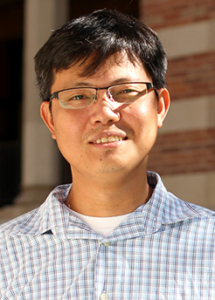
Stephen Acabado

Stephen Acabado

· Professor, Chair of Archaeology Interdepartmental Program, Director of Center for Southeast Asian StudiesVerified

University of California, Los Angeles · Anatomy and Cell Biology

Active 2009–2026

h-index13
Citations395
Papers4914 last 5y
Funding$159k
See your match with Stephen Acabado — sign in to PhdFit.Sign in

About

This site serves as a platform to share my research, publications, fieldwork updates, and collaborative projects focused on Southeast Asian archaeology, Indigenous knowledge, and human-environment interactions. This page showcases my work as an anthropological archaeologist, with emphasis on agricultural systems, community-based research, and climate adaptation in Southeast Asia and beyond.

Research topics

  • Archaeology
  • Demography
  • Political Science
  • Ecology
  • Geography
  • Sociology
  • Economics
  • Biology
  • Business
  • Economic growth
  • History
  • Environmental science
  • Art
  • Agroforestry
  • Aesthetics
  • Botany
  • Genetics
  • Ethnology

Selected publications

  • How mountain terraces have helped Indigenous peoples live with climate uncertainty

    2026-01-15

    articleOpen access1st authorCorresponding
  • Conservation for Whom? Archaeology, Heritage Policy, and Livelihoods in the Ifugao Rice Terraces

    Preprints.org · 2025-07-24 · 1 citations

    preprintOpen access1st authorCorresponding

    This paper examines the Ifugao Rice Terraces of the Philippine Cordillera as a living archaeological landscape whose conservation poses ethical questions about heritage, livelihood, and community agency. While UNESCO has designated these terraces as a World Heritage cultural landscape, conservation policies and tourism discourses often prioritize preserving their iconic rice cultivation for external consumption. Such approaches risk overlooking the dynamic social, economic, and environmental pressures facing Ifugao communities today. Using frameworks from archaeology, and historical ecology, this paper argues that conservation must move beyond aesthetic or static models to support local livelihoods, intangible heritage, and adaptive strategies. We analyze the terraces as a product of communal labor, indigenous engineering, and ritual systems, while also documenting the contemporary shift from heirloom tinawon rice to commercial crops under market and climate pressures. We also critique unequal tourism economies and explore models for equitable stewardship, including community-based tourism and environmental service fees. Finally, we call for an ethical conservation practice grounded in shared responsibility and local agency, recognizing that heritage landscapes are not relics to be frozen but living systems to be sustained in partnership with the people who maintain them.

  • I see sick people: Beliefs about sensory detection of infectious disease are largely consistent across cultures

    Brain Behavior and Immunity · 2025-04-22 · 2 citations

    articleOpen access
  • Filipino sailors dock in Mexico … and help invent tequila?

    2025-07-21

    preprint1st authorCorresponding
  • John G. Douglass (1968–2024)

    California Archaeology · 2025-01-02

    articleCorresponding
  • Conservation for Whom? Archaeology, Heritage Policy, and Livelihoods in the Ifugao Rice Terraces

    Land · 2025-08-25 · 2 citations

    articleOpen access1st authorCorresponding

    Heritage landscapes endure not through the preservation of fixed forms but through the capacity to adapt to changing social, political, economic, and environmental conditions. Conservation policies that privilege static ideals of authenticity risk undermining the very systems they aim to protect. This paper advances a model of shared stewardship that links conservation of heritage to support for livelihoods, functional flexibility, and community authority in decision-making. Using the Ifugao Rice Terraces of the Philippine Cordillera as a case study, we integrate archaeological, ethnographic, spatial, and agricultural economic evidence to examine the terraces as a dynamic socio-ecological system. Archaeological findings and oral histories show that wet-rice agriculture expanded in the 17th century, replacing earlier taro-based systems and incorporating swidden fields, managed forests, and ritual obligations. Contemporary changes such as the shift from heirloom tinawon rice to commercial crops, the impacts of labor migration, and climate variability reflect long-standing adaptive strategies rather than cultural decline. Comparative cases from other UNESCO and heritage sites demonstrate that economic viability, adaptability, and local governance are essential to sustaining long-inhabited agricultural landscapes. We thus argue that the Ifugao terraces, like their global counterparts, should be conserved as living systems whose cultural continuity depends on their ability to respond to present and future challenges.

  • Ceramic Continuities: Analyses of Pre-Spanish and Colonial Ceramic Procurement and Production in Old Kiyyangan Village, Ifugao, Philippines

    SSRN Electronic Journal · 2024-01-01

    preprintOpen access1st authorCorresponding
  • Older Is Not Necessarily Better: Decolonizing Ifugao History through the Archaeology of the Rice Terraces

    Land · 2024-02-14 · 3 citations

    articleOpen access1st authorCorresponding

    This study examines the intersection of archaeological data and community narratives in interpreting the Ifugao Rice Terraces in the Philippines, a UNESCO World Heritage Site. Long regarded as 2000-year-old symbols of an uncolonized cultural past, recent research challenges this view, suggesting a 16th-century origin coinciding with Spanish contact. The longstanding characterization of the Ifugao Rice Terraces as 2000-year-old monuments cemented a perception of Ifugao culture as static and unchanging, overshadowing the dynamic cultural practices that have persisted and evolved over the centuries. It is crucial to recognize that these terraces are not frozen in time but are active representations of Ifugao’s living culture, which has continually adapted to social, environmental, and historical changes while maintaining its distinct identity. This paradigm shift, supported by radiocarbon dating and ethnohistorical analysis, aligns more closely with local oral histories and portrays the Ifugao not as passive inheritors of tradition but as active participants in their history. We argue for the integration of scientific data with community stories, presenting a holistic understanding of the terraces as dynamic elements of Ifugao resilience and identity. The findings advocate a move away from romanticized historical interpretations toward a narrative that respects the complexity and adaptability of Indigenous cultural landscapes.

  • Manifest Destiny in Southeast Asia: Archaeology of American Colonial Industry in the Philippines, 1898–1987

    American Antiquity · 2024-05-06 · 2 citations

    articleOpen accessSenior author

    Abstract At the turn of the twentieth century, American logging companies backed by the US colonial regime initiated extensive extraction in Bikol, Philippines. Industrial infrastructure and the involvement of a newly assembled Bikolano workforce left a profound imprint on the region's landscape. This article discusses a collaborative archaeological project that used archival materials, place-name analysis, ethnographic interviews, discussions with local scholars, satellite mapping, and drone-mounted lidar scans of former industrial sites. Findings shed light on the enduring ramifications of American logging in the early 1900s on settlement patterns, the infrastructure of routes and mobility, the state of industries from Philippine independence in 1946 through the 1980s, and ongoing environmental hazards. These findings emphasize the legacy of American empire, reveal the role of Filipino logging workers in shaping the landscape through settlement decisions, and uncover intricate connections across a pan-Pacific American colonial frontier that was shaped by both extractive and settler colonialism. This article adds to an emerging trend in Americanist archaeology in which archaeology investigates recent historical and even contemporary events.

  • Review of: "Theorizing the Normalization of Plantation Agriculture in Colombia"

    2023-12-21

    peer-reviewOpen access1st authorCorresponding

    The MS "Theorizing the Normalization of Plantation Agriculture in Colombia," Andres Suarez provides a theoretical framework to understand the normalization of plantation agriculture, focusing on Hass avocado plantations in Colombia.This study provides a framework for understanding the broader implications of plantation agriculture in the Global South.However, a comprehensive understanding of such agricultural practices' complexities and varied impacts necessitates a comparative analysis with similar scenarios in different geographical contexts, such as the Dole plantations in Mindanao, Philippines.Suarez defines normalization as the process through which certain practices, behaviors, or conditions become accepted and regarded as standard within a specific society or context.It involves integrating new practices or ideas into established routines and structures, making them commonplace and expected.Normalization encompasses both descriptive considerations, such as what is typical or average, and prescriptive considerations, which involve judgments about the situations' desirability.It is a complex social process entailing the interplay between social-ecological-agrarian structures and human agency, where individuals actively shape and respond to the normalization process.The manuscript underscores the importance of normalization as an analytical tool, aiding our understanding and explanation of how certain phenomena or practices become accepted and routine within a particular context.By delving into the normalization process, the manuscript reveals insights into the social, economic, and ecological structures that contribute to the establishment and persistence of these phenomena.Furthermore, theories of normalization, such as the Normalization Process Theory (NPT), elucidate the social processes involved in implementing and sustaining new practices or phenomena.By examining their implementation, embedding, and integration, the manuscript highlights the role of human agency and the interaction between structures and individuals in the normalization process.The manuscript also sheds light on power dynamics, contestation, and social change.It recognizes the agency of individuals and communities in either accepting or resisting the normalization of certain practices.Additionally, by examining the normalization of phenomena, the manuscript identifies potential opportunities for structural elaboration and

Recent grants

Frequent coauthors

  • Marlon Martin

    12 shared
  • Adam Lauer

    University of Hawaii–West Oahu

    8 shared
  • Grace Barretto‐Tesoro

    University of the Philippines System

    5 shared
  • Mikhail Echavarri

    3 shared
  • Patrick Roberts

    3 shared
  • Chin-hsin Liu

    3 shared
  • Cheng‐Chieh Wu

    Institute of Plant and Microbial Biology, Academia Sinica

    2 shared
  • Queeny G. Lapeña

    2 shared

Education

  • PhD, Anthropology

    University of Hawaii at Manoa

    2010
  • BA, Anthropology

    University of the Philippines Diliman

    1999
  • Resume-aware match score
  • Save to shortlist
  • AI-drafted outreach

See your match with Stephen Acabado

PhdFit ranks faculty by your research interests, methods, and publications — grounded in their actual work, not templates.

  • Free to start
  • No credit card
  • 30-second signup