Resume-aware faculty matching

Find professors who actually fit you

Upload your resume. Four AI agents analyze your background, rank the faculty who fit, inspect their recent research, and help you draft outreach — grounded in their actual work, not templates.

Free to startNo credit cardCancel anytime
Top matches Balanced preset
Dr. Sarah Chen
Stanford · Interpretability · NLP
91
Dr. Marcus Holloway
MIT · Robotics · RL
84
Dr. Aisha Okonkwo
CMU · Fairness · HCI
82
Nova · Professor Researcher · re-ranking top 20…
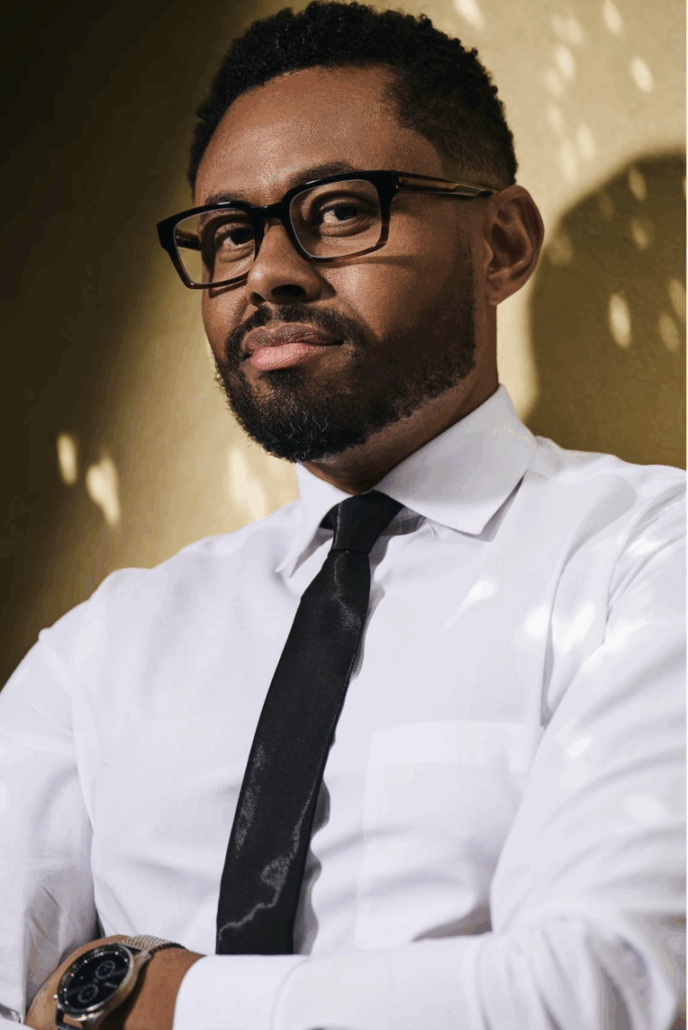
Terence Keel

Terence Keel

· Professor of African American Studies & Institute for Society and GeneticsVerified

University of California, Los Angeles · African American Studies

Active 2013–2025

h-index7
Citations302
Papers3515 last 5y
Funding
See your match with Terence Keel — sign in to PhdFit.Sign in

About

Terence Keel is a professor, author, and the director of the BioCritical Studies Lab, an interdisciplinary research space dedicated to studying how discrimination, inequality, and resilience are embodied in vulnerable populations. His work focuses on the intersections of social and biological factors that affect human health and society, emphasizing the lived experiences of marginalized groups. As the principal investigator of the BioCritical Studies Lab, Keel leads a team of researchers and students from diverse academic backgrounds, fostering collaborative inquiry into the complex dynamics of social injustice and human biology.

Research topics

  • Sociology
  • Epistemology
  • Political Science
  • Philosophy
  • Computer Science
  • Mathematics
  • Law
  • Engineering ethics
  • Criminology
  • Gerontology
  • Engineering
  • Medicine
  • Anthropology
  • Statistics
  • Demography
  • World Wide Web

Selected publications

  • Universals, difference, and ghosts: A response to Joseph Blankholm's <i>The Secular Paradox</i>

    Critical Research on Religion · 2025-02-18 · 1 citations

    article1st authorCorresponding

    This essay provides a critical response to Joseph Blankholm’s new work The Secular Paradox . I praise the book for its ingenuity and then raise questions about how the experience of what he calls the “secular paradox” might vary by racial identity. I also explore the intolerance of western liberalism toward ghosts to explore how Blankholm’s account of the secular paradox might also offer insight into America’s unwillingness to grapple with its primitive past.

  • Recruiting Standardized Simulated Patients for a Diverse and Inclusive Population

    Comprehensive healthcare simulation · 2025-01-01

    book-chapter
  • Roundtable on &lt;em&gt;Critical Approaches to Science and Religion&lt;/em&gt;: Response to Commentators

    Zygon® · 2025-12-17

    articleOpen access

    This roundtable conversation reflects on the aims and implications of Critical Approaches to Science and Religion (Columbia University Press, 2023), edited by Myrna Perez, Ahmed Ragab, and Terence Keel. The discussion responds to four critics—Megan Loumagne, Elizabeth Perez, Peter Harrison, and James Miller—who engaged the volume at the American Academy of Religion’s “Author Meets Critics” panel in 2024. In this dialogue, the volume’s editors consider how the study of science and religion might move beyond disciplinary reform toward more urgent forms of political and intellectual work. They question whether transforming academic fields remains a meaningful site of democratic practice amid the erosion of university infrastructures, the rise of authoritarian politics, and the vocational turn in higher education. The exchange revisits the legacy of the New Left, the status of basic research in the humanities and social sciences, and the relationship between research, teaching, and social transformation. Together, the participants articulate both the necessity and the limits of academic critique, proposing a renewed ethics of scholarship attentive to institutional fragility, epistemic inequality, and the moral imagination required to sustain democratic knowledge.

  • Eram Alam, Dorothy Roberts and Natalie Shibley (eds), <i>Ordering the Human: The Global Spread of Racial Science</i>

    Social History of Medicine · 2025-09-16

    article1st authorCorresponding
  • 2 Nihilism, Race, and the Critical Study of Science and Religion

    Columbia University Press eBooks · 2023-03-16 · 2 citations

    book-chapter1st authorCorresponding
  • Oleoresin Capsicum: The Racial-Political History of a Ubiquitous Chemical Munition

    Isis · 2023-12-02 · 1 citations

    articleOpen access1st authorCorresponding

    Oleoresin capsicum (OC) is a substance contained in capsicum peppers that produces a range of physiological responses in mammals, including inflammation and respiratory constriction. It is also the active ingredient in the most widely used chemical munition in the United States. OC-based pepper sprays are now issued to police officers by nearly every law enforcement agency in the country. Police use of pepper spray is supported by an ostensibly evidence-based consensus that OC exposure presents no significant risk of lethal injury. This essay examines the peculiar durability of that nonlethality consensus in the face of mounting contradictory evidence. It traces the trajectory of European science that links race and capsaicin sensitivity from colonization to slavery to the twentieth century, while also narrating the emergence of OC-based pepper spray as a distinct and highly desirable category of police weapon. It concludes by exposing medicolegal death examination practices that continually rehabilitate the nonlethality consensus by naturalizing deaths caused by or linked to OC exposure.

  • Introduction

    Columbia University Press eBooks · 2023-03-16

    book-chapter
  • Naturalizing unnatural death in Los Angeles County jails

    Medical Anthropology Quarterly · 2023 · 15 citations

    Senior authorCorresponding
    • Sociology
    • Gerontology
    • Criminology

    In this paper we use quantitative and qualitative methods to examine how death investigations in Los Angeles County jails disproportionately naturalize death among Black and Latino incarcerated people. Our study is based on an assessment of 58 autopsies, coroner investigator narratives, and toxicology reports produced between 2009 and 2018. We found that the Medical Examiner frequently arrived at natural or undetermined death determinations that minimized the culpability of carceral staff for loss of life that occurred within county jail. In our dataset, Black people were disproportionately classified as natural. Undetermined deaths were almost exclusively Latino. More than 75% of the cases in our study were deaths that occurred before standing trial. Our findings reveal how biomedical knowledge about incarcerated Black and Latino people is used to erase the life-diminishing effects of punishment, neglect, and maltreatment that are central to the project of mass incarceration.

  • CONCLUSION

    Columbia University Press eBooks · 2023-03-16

    book-chapter
  • Critical Approaches to Science and Religion

    Columbia University Press eBooks · 2023 · 26 citations

    Senior authorCorresponding
    • Sociology
    • Epistemology
    • Sociology

    This book offers a new direction for scholarship on science and religion that centers social, political, and ecological concerns. Featuring a diverse array of contributors, it draws on three vital schools of thought: critical race theory, feminist and queer theory, and postcolonial theory.

Frequent coauthors

  • Myrna Perez Sheldon

    9 shared
  • Ahmed Ragab

    Beni-Suef University

    8 shared
  • Elise K. Burton

    University of Toronto

    3 shared
  • Emily Klancher Merchant

    University of California, Davis

    2 shared
  • Wangui Muigai

    Brandeis University

    2 shared
  • Projit Bihari Mukharji

    Ashoka University

    2 shared
  • Sebastián Gil‐Riaño

    University of Pennsylvania

    2 shared
  • Osagie K. Obasogie

    2 shared

Labs

Education

  • PhD, History of Science; Committee on the Study of Religion

    Harvard University

    2012

Awards & honors

  • National Institute of Health National Library of Medicine ($…
  • Russell Sage Foundation, Foundation Trustee Grant for “Data…
  • Robert Wood Johnson Foundation Interdisciplinary Research Le…
  • Elected Fellow, International Society for Science and Religi…
  • Robert Wood Johnson Foundation Interdisciplinary Research Le…
  • Resume-aware match score
  • Save to shortlist
  • AI-drafted outreach

See your match with Terence Keel

PhdFit ranks faculty by your research interests, methods, and publications — grounded in their actual work, not templates.

  • Free to start
  • No credit card
  • 30-second signup