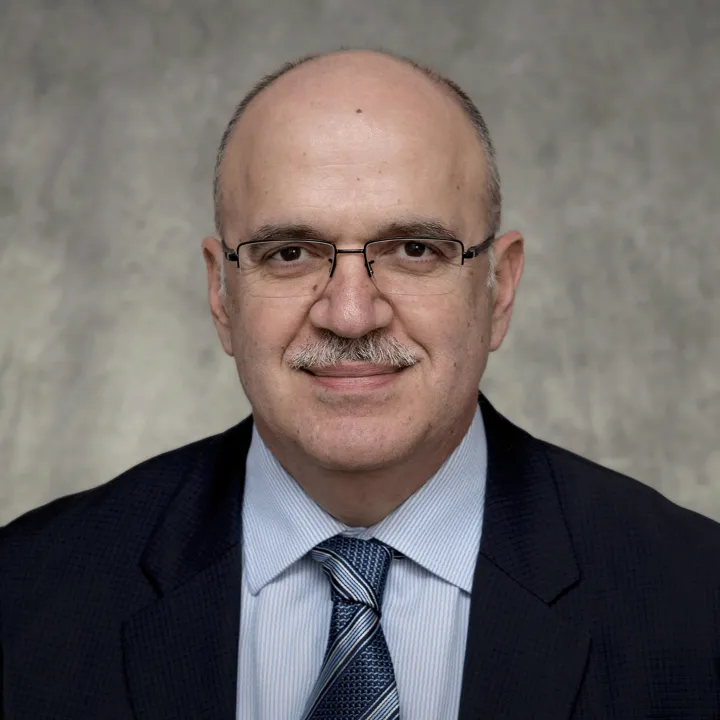
Themis R. Kyriakides
· ProfessorVerifiedYale University · Biological Engineering
Active 1992–2026
About
Themis Kyriakides, PhD, is an Associate Professor of Pathology and of Biomedical Engineering at Yale School of Medicine. He also serves as the Director of Graduate Programs in Pathology. His research interests encompass a broad range of topics including cell fusion, education, medical extracellular matrix, foreign bodies, inflammation, pathology, wound healing, animal experimentation, nanomedicine, translational research, and biomedical applications. Dr. Kyriakides' work focuses on understanding molecular events in the foreign body response, which is critical for advancing knowledge in pathology and biomedical engineering. His interdisciplinary approach integrates experimental pathology and biomedical engineering to address complex biological and medical challenges.
Research topics
- Medicine
- Immunology
- Materials science
- Biology
- Biomedical engineering
- Metallurgy
- Chemistry
- Biophysics
- Cell biology
- Endocrinology
- Nanotechnology
- Pathology
Selected publications
Epithelial Reprogramming and Transition during Pulmonary Bioengineering
bioRxiv (Cold Spring Harbor Laboratory) · 2026-01-26
articleOpen accessRecent research has emphasized the critical role of cell state transitions in tissue homeostasis. In lung biology, transitional cells are recognized as a feature of tissue-scale processes during both normal physiology and disease. The precise way that transitional cell states emerge and are regulated remains to be determined. Engineered tissues, built in a laboratory through bioengineering approaches, allow detailed study of cellular states that are not commonly found in native biology, and allow opportunities to directly induce and manipulate cellular transitions. The following study explores and characterizes epithelial cell states that emerge via cellular reprogramming in a tissue engineering context.
bioRxiv (Cold Spring Harbor Laboratory) · 2025-12-30
articleOpen accessAbstract Lipid-based nanoparticles, including extracellular vesicles (EVs), cell membrane vesicles (CMVs), and biomimetic nanovesicles, are emerging as powerful carriers for therapy and diagnosis due to their ability to transport diverse payloads across biological barriers. EVs, in particular, show promise for liquid biopsy and systemic therapy because of their endogenous origin, biocompatibility, and intrinsic targeting capacity. Cell-derived plasma membrane nanovesicles complement EVs by preserving the source cell’s membrane architecture and receptor landscape, creating customizable scaffolds for biomimetic drug delivery. However, the full potential of these lipid nanovesicles has been challenging because current isolation workflows are labor-intensive, low-yield, and often lack purity, forming a critical bottleneck for clinical translation and standardized manufacturing. To overcome these challenges, we developed a programmable electrostatic and light-activated platform for isolating lipid vesicles directly from complex biological fluids in a rapid, high-purity, and scalable manner. Our approach employs photocleavable lipid nanoprobes (PLNs) that insert into vesicle membranes in a size-dependent fashion and, together with a cationic polymer, enable efficient capture on a solid support. A brief light exposure cleaves the probes to trigger on-demand release and fractionation of intact vesicles with high speed and precision. Using this platform, we demonstrate high-purity EV isolation with preserved membrane protein functionality, as well as single-step enrichment of right-side-out (RSO) cell membrane nanovesicles that maintain native membrane orientation for effective drug delivery. The capability to rapidly isolate and tailor vesicle subpopulations by size and orientation establishes a unified materials platform for precision nanomedicine and advanced therapeutics, paving the way toward clinical-grade vesicle production and next-generation liquid biopsy applications.
An Injectable Alginate Hydrogel Modified by Collagen and Fibronectin for Better Cellular Environment
ACS Applied Bio Materials · 2025-01-31 · 6 citations
articleEncapsulating fibroblasts in alginate hydrogels is a promising strategy to promote wound healing. However, improving the cell function within the alginate matrix remains a challenge. In this study, we engineer an injectable hydrogel through mixing alginate function with collagen and fibronectin, creating a better microenvironment for enhancing fibroblast function and cytokine secretion. We systematically analyze microstructure, mechanical properties, and fibroblast behavior of the developed hydrogel and compare it to alginate control. Our results demonstrate that inclusion collagen and fibronectin lead to the formation of fibrils on macroporous structures with pore sizes ranging from 100 to 500 μm. Compared to collagen hydrogel, the composite hydrogel shows approximately 12-fold increase in storage modulus. After encapsulating fibroblasts into the modified hydrogels, we observed increased fibroblast spreading, proliferation, and cytokine secretion when compared to neat alginate hydrogel. In addition, VEGF secretion of encapsulated fibroblasts is upregulated, indicating its pro-angiogenic potential. These findings suggest that the alginate/collagen/fibronectin hydrogel-encapsulated fibroblasts might serve as a promising therapeutic approach for wound healing.
TSP2 Deficiency Promotes Fibroblast Proliferation and Migration With Enhanced WNT4/β‐Catenin/TGFb3
The FASEB Journal · 2025-12-22
articleOpen accessSenior authorCorrespondingChronic wounds, a major healthcare burden, are characterized by impaired fibroblast function and ECM remodeling. Thrombospondin-2 (TSP2), a matricellular glycoprotein, has been shown to negatively regulate wound healing. Here, we investigated the cellular and transcriptomic consequences of TSP2 deficiency in dermal fibroblasts, key cells in tissue repair and extracellular matrix (ECM) remodeling. Using bulk RNA sequencing of wild-type (WT) and TSP2 knockout (TSP2 KO) murine primary fibroblasts, we identified upregulation of pro-regenerative molecules and signaling pathways, specifically TGF-β3 and Wnt4/β-catenin, in the latter. To overcome the inherent variability of primary cells and establish a robust model, we generated a stable CRISPR/Cas9-engineered TSP2 knockout in NIH3T3 fibroblasts. This system confirmed that TSP2 depletion enhances fibroblast proliferation and migration, associated with increased activity of TGF-β3 and Wnt/β-catenin signaling pathways. These findings not only provide novel mechanistic insights into the role of TSP2 in regulating fibroblast function and ECM interactions during tissue repair, but also highlight TSP2 as a potential therapeutic target for promoting regeneration in healing-impaired or chronic wounds.
American Journal of Physiology-Heart and Circulatory Physiology · 2025-04-18 · 2 citations
articleOpen accessThis study identifies Tenascin-C (TNC) as a key regulator of arteriovenous fistula (AVF) patency. TNC is spatially and temporally regulated, driving neointimal hyperplasia and thrombosis by promoting a prothrombotic, inflammatory microenvironment. In Tnc −/− mice, reduced TNC expression increased thrombomodulin and anti-inflammatory macrophage polarization but impaired wall thickening and AVF patency. These findings link sustained TNC expression to AVF failure and suggest that targeting TNC pathways could enhance AVF outcomes in patients requiring hemodialysis.
Scientific Reports · 2025-09-02 · 1 citations
articleOpen accessSenior authorFibroblasts display complex functions linked to distinct gene expression profiles. These profiles influence matrix production, cell communication, and tissue development and repair. Thrombospondin-2 (TSP2), produced by fibroblasts, is a potent angiogenesis inhibitor and negatively associated with tissue repair. Single-cell RNA sequencing (scRNA-seq) on WT and TSP2 KO skin fibroblasts demonstrate distinct cell heterogeneity. Specifically, we found an enrichment of Sox10 + multipotent progenitor cells, identified as Schwann precursor cells, in TSP2 KO fibroblasts, while fibrosis-related subpopulations decreased. Immunostaining of mouse back skin wounds and cells validated the increase of this Sox10 + population. Furthermore, in silico analysis suggested enhanced PDGF-β-mediated pro-survival and inhibited BMP4-mediated differentiation signaling pathways. These molecular and functional alterations likely contribute to improved healing and increased neurogenesis in TSP2 KO wounds. Overall, our findings describe the heterogeneity of dermal fibroblasts (DFs) and identify pro-regenerative features of TSP2 KO fibroblasts.
Bone-derived extracellular matrix hydrogel from thrombospondin-2 knock-out mice for bone repair
Acta Biomaterialia · 2024-08-10 · 12 citations
articleOpen accessSenior authorCorrespondingAlteration of skin fibroblast steady state contributes to healing outcomes
bioRxiv (Cold Spring Harbor Laboratory) · 2024-12-12 · 2 citations
preprintOpen accessSenior authorCorrespondingFibroblasts display complex functions associated with distinct gene expression profiles that influence matrix production and cell communications and the autonomy of tissue development and repair. Thrombospondin-2 (TSP-2), produced by fibroblasts, is a potent angiogenesis inhibitor and negatively associated with tissue repair. Single-cell (sc) sequencing analysis on WT and TSP2KO skin fibroblasts demonstrate distinct cell heterogeneity. Specifically, we found an enrichment of Sox10+ multipotent progenitor cells, identified as Schwann precursor cells, in TSP2KO fibroblasts, while fibrosis-related subpopulations decreased. Immunostaining of tissue and cells validated the increase of this Sox10+ population in KO fibroblasts. Furthermore, in silico analysis suggested enhanced pro-survival signaling, including WNT, TGF-β, and PDGF-β, alongside a reduced BMP4 response. Additionally, the creation of two TSP2KO NIH3T3 cell lines using the CRISPR/Cas9 technique allowed functional and signaling validation in a less complex system. Moreover, KO 3T3 cells exhibited enhanced migration and proliferation, with elevated levels of pro-regenerative molecules including TGF-β3 and Wnt4, and enrichment of nuclear β-catenin. These functional and molecular alterations likely contribute to improved healing and increased neurogenesis in TSP2-deficient wounds. Overall, our findings describe the heterogeneity of dermal fibroblasts and identify pro-regenerative features of TSP2KO fibroblasts.
Targeting hypoxia and thrombospondin‐2 in diabetic wound healing
The FASEB Journal · 2024-10-09 · 5 citations
articleOpen accessSenior authorCorrespondingImpaired wound healing in diabetic patients is the leading cause of diabetes-associated hospitalizations and approximately 50% of lower limb amputations. This is due to multiple factors, including elevated glucose, sustained hypoxia, and cell dysfunction. Previously, diabetic wounds were found to contain excessive levels of the matricellular protein thrombospondin-2 (TSP2) and genetic ablation of TSP2 in diabetic mice or treatment of wounds with a hydrogel derived from TSP2-null mouse skin improved healing. Previously, TSP2 has been shown to be repressed by hypoxia, but in the present study we observed sustained hypoxia and overlapping TSP2 deposition in diabetic wounds. We determined this observation was due to the insufficient HIF-1α activation verified by western blot and immunofluorescent analysis of wound tissues and in vitro hypoxia experiments. Application of Dimethyloxalylglycine (DMOG), which can stabilize HIF-1α, inhibited TSP2 expression in diabetic fibroblasts in hypoxic conditions. Therefore, we prepared DMOG-containing TSP2KO hydrogel and applied it to the wounds of diabetic mice. In comparison to empty TSP2KO hydrogel or DMOG treatment, we observed improved wound healing associated with a reduction of TSP2, reduced hypoxia, and increased neovascularization. Overall, our findings shed light on the intricate interplay between hyperglycemia, hypoxia, and TSP2 in the complex environment of diabetic wounds.
Bone-Derived Extracellular Matrix Hydrogel from Thrombospondin-2 Knock-Out Mice for Bone Repair
SSRN Electronic Journal · 2024-01-01
preprintOpen accessSenior author
Recent grants
MCP-1 and attenuation of the foreign body response
NIH · $4.7M · 2005–2018
Frequent coauthors
- 69 shared
Paul Börnstein
University of Washington
- 65 shared
Christopher J. Bettinger
Carnegie Mellon University
- 64 shared
Suping Lyu
University of Florida
- 64 shared
Lauren D. Black
Cellular Research (United States)
- 64 shared
Jaime E. Ramı́rez-Vick
- 64 shared
Angela Panoskaltsis‐Mortari
University of Minnesota
- 64 shared
Jon Moseley
Carnegie Mellon University
- 64 shared
Wright Medical
Carnegie Mellon University
Labs
Education
- 1993
PhD, Microbiology
Washington State University
- Resume-aware match score
- Save to shortlist
- AI-drafted outreach
See your match with Themis R. Kyriakides
PhdFit ranks faculty by your research interests, methods, and publications — grounded in their actual work, not templates.
- Free to start
- No credit card
- 30-second signup