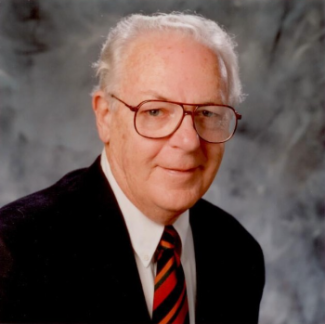
Thomas C. Bruice
University of California, Santa Barbara · Chemistry and Biochemistry
Active 1950–2016
About
Thomas C. Bruice was a distinguished professor in the Department of Chemistry & Biochemistry at the University of California, Santa Barbara. His research interests encompassed nucleoside material chemistry, including the synthesis and characterization of compounds used as antisense/antigene agents and tools for studying DNA-protein interactions. Additionally, he specialized in computational chemistry related to enzyme catalysis mechanisms, utilizing programs such as AMBER, CHARMM, and GAUSSIAN to study enzyme conformations, transition states, and catalytic processes. Bruice's work contributed significantly to understanding enzyme mechanisms and the design of bioorganic compounds. He served on the faculties of Yale, Johns Hopkins, and Cornell before joining UCSB in 1964, and was a member of the National Academy of Sciences, the American Academy of Arts and Sciences, and a fellow of the Royal Society of Chemistry. His numerous awards from the American Chemical Society recognized his contributions across bioorganic, bioinorganic, physical organic chemistry, and biochemistry.
Research topics
- Chemistry
- Computer science
- Stereochemistry
- Information retrieval
- Medicinal chemistry
Selected publications
On the Concept of Orbital Steering in Cat
2016-01-01
article1st authorCorrespondingAngular displacement from linear overlap of but a few degrees in the transition state of the enzyme- substrate complex has been postulated to be of great kinetic significance (orbital steering). The concept of orbital steering is shown to have evolved from the orienta- tion parameters of an equation previously proposed to evaluate the kinetic importance of propinquity. This equation is shown to be naive. Arguments provided against the concept of orbital steering include: (a) force constants predicted from orbital steering are about 100 times those experimentally determined from displacement of nuclei in a direction normal to the axis of a covalent bond (for example, at room temperature vibrational bending ampli- tudes of +5? or more are common); (b) because of the lessened directionality of orbitals containing nonbonded electron pairs, the force constants in transition states should be even smaller than in the case of a covalent bond; and (c) molecular orbital calculations predict shallow total energy minima for orbital alignment. The experi- mental rate data offered as a basis for the concept of orbital steering are shown to find rationalization in the previously observed dependence of AST on kinetic order and the energy requirements for the freezing-out of single bonds in the transition state leading to the formation of medium-size ring compounds from extended ground states. It is concluded that if orbital steering does exist, experi- mental and theoretical evidence to support this concept have yet to be presented. A task of the physical organic chemist has been one of provid- ing useful models for enzymatic processes. Any proposed model must be consistent with what we know to be true in terms of the fundamental theories and principles of basic physics and chemistry. In this paper we shall present a discus- sion of the implications of a recently proposed model, termed orbital steering (1), whose purpose is to explain the large en- hancement of the rates of a particular set of intramolecular reactions over their intermolecular counterparts. We will in addition present an alternative interpretation of the experi- mental observations in question, based on thermodynamics and reaction rate theory.
2016-01-01
articleSenior authorUtility Of Dual Electrochemical Gsh And Gssh Evaluation And Other Redox/detoxification Quantitation As Functional Parameters In Assessment Of Retinal Toxicity During In Vivo Drug Studies With Large Animal Eyes
2012-03-26 · 1 citations
articleSenior authorTetrahedron Letters · 2012-05-17 · 6 citations
articleSenior authorChemical Reviews · 2011-11-11 · 78 citations
reviewSenior authorADVERTISEMENT RETURN TO ISSUEPREVReviewNEXTIncorporation of Positively Charged Linkages into DNA and RNA Backbones: A Novel Strategy for Antigene and Antisense AgentsMoti L. Jain, Paula Yurkanis Bruice, István E. Szabó, and Thomas C. Bruice*View Author Information Department of Chemistry and Biochemistry, University of California, Santa Barbara, California 93106, United States*E-mail: [email protected]Cite this: Chem. Rev. 2012, 112, 3, 1284–1309Publication Date (Web):November 11, 2011Publication History Received17 December 2010Published online11 November 2011Published inissue 14 March 2012https://pubs.acs.org/doi/10.1021/cr1004265https://doi.org/10.1021/cr1004265review-articleACS PublicationsCopyright © 2011 American Chemical SocietyRequest reuse permissionsArticle Views3717Altmetric-Citations66LEARN ABOUT THESE METRICSArticle Views are the COUNTER-compliant sum of full text article downloads since November 2008 (both PDF and HTML) across all institutions and individuals. These metrics are regularly updated to reflect usage leading up to the last few days.Citations are the number of other articles citing this article, calculated by Crossref and updated daily. Find more information about Crossref citation counts.The Altmetric Attention Score is a quantitative measure of the attention that a research article has received online. Clicking on the donut icon will load a page at altmetric.com with additional details about the score and the social media presence for the given article. Find more information on the Altmetric Attention Score and how the score is calculated. Share Add toView InAdd Full Text with ReferenceAdd Description ExportRISCitationCitation and abstractCitation and referencesMore Options Share onFacebookTwitterWechatLinked InRedditEmail Other access optionsGet e-Alertsclose SUBJECTS:Biopolymers,Genetics,Guanidine,Monomers,Peptides and proteins Get e-Alerts
Development of potential anticancer agents that target the telomere sequence
Bioorganic & Medicinal Chemistry Letters · 2010-05-07 · 9 citations
articleSenior authorJournal of Biomolecular Structure and Dynamics · 2009-12-01 · 2 citations
articleSenior authorNormal mode analysis, using the elastic network model, has been employed to envision the low frequency normal mode motion trends in the structures of five intermediates and a transition state in the kinetic pathway of E. coli dihydrofolate reductase (DHFR). Five of the reaction pathway analog structures and a crystal structure resembling the transition state, using X-ray analyses determined by Kraut et al., have been adapted as structural models. The motions that poise pathways of the M20 loop transitions from closed to occluded conformations and sub domain rotation to close the substrate cleft, have been predicted and envisioned for the first time by this study. Pathway entries to the movement of the substrate binding cleft helices are also envisioned. These motions play roles in transition structure stabilization and in regulating the release of the product tetrahydrofolate (THF). The motions observed push the ground state conformation of each intermediate towards a higher energy sub state conformation. A set of conserved residues involved in the catalytic reactions and conformational changes, previously studied by kinetic, theoretical and NMR, have been analyzed. The importance of these motions in terms of protein dynamics are revealed and envisioned by the normal mode analysis. Additional residues are proposed as candidates for further study of their potential promotional function.
Biochemistry · 2008-02-09 · 22 citations
articleSenior authorThe catalysis by SET7/9 histone lysine methyltransferase of AdoMet N-methylation of the transcriptional factor p53-Lys4-NH 2 has been investigated with particular attention paid to the means of product specificity. After formation of the SET7/9.p53-Lys4-NH 3 (+).AdoMet complex, the following events occur: (i) the appearance of a water channel, (ii) a depronation of p53-Lys4-NH 3 (+) via this water channel into the aqueous solvent, and (iii) AdoMet methylation of p53-Lys4-NH 2 to form p53-Lys4-N(Me)H 2 (+). The formation of a water channel does not occur on formation of the SET7/9.p53-Lys4-NH 3 (+), SET7/9.p53-Lys4-N(Me)H 2 (+).AdoHcy, or SET7/9.p53-Lys4-N(Me)H 2 (+).AdoMet complex. Without a water channel, the substrate p53-Lys4-N(Me)H is not available because the proton dissociation p53-Lys4-N(Me)H 2 (+) --> p53-Lys4-N(Me)H + H (+) does not occur. The lack of formation of a water channel is due to the positioning of the methyl substituent of the SET7/9.p53-Lys4-N(Me)H 2 (+).AdoMet complex. By quantum mechanics/molecular mechanics, the computed free energy barrier of the methyl transfer reaction [p53-Lys4-NH 2 + AdoMet --> p53-Lys4-N(Me)H 2 (+) + AdoHcy] in the SET7/9 complex is Delta G (++) = 20.1 +/- 2.9 kcal/mol. This Delta G (++) is in agreement with the value of 20.9 kcal/mol calculated from the experimental rate constant (1.2 +/- 0.1 min (-1)). Our bond-order computations establish that the methyl transfer reaction in protein lysine methyltransferases occurs via a linear S N2 associative reaction with bond making of approximately 50%.
Biochemistry · 2008-05-31 · 23 citations
articleSenior authorMolecular dynamics simulations employing a molecular mechanics (MM) force field and hybrid quantum mechanics (QM) and MM (QM/MM) have been carried out to investigate the product specificity and mechanism of the histone H4 lysine 20 (H4-K20) methylation by human histone lysine methyltransferase SET8. At neutral pH, the target lysine is available to only the enzyme in the protonated state. The first step in the methylation reaction must be deprotonation of the lysine target which is followed by the (+)AdoMet methylation of the neutral lysine [Enz.Lys-CH(2)-NH(3)(+).(+)AdoMet --> H(+) + Enz.Lys-CH(2)-NH(2).(+)AdoMet -->--> Enz.Lys-CH(2)-N(Me)H(2)(+).AdoHcy]. The electrostatic interactions between two positive charges on (+)AdoMet and Lys20-NH(3)(+) decrease the pK(a) of Lys20-NH(3)(+). Upon formation of Enz.Lys-NH(3)(+).(+)AdoMet, a water channel by which the proton escapes to the outer solvent phase is formed. The formation of a water channel for the escape of a proton from Lys20-N(Me)H(2)(+) in Enz.Lys20-N(Me)H(2)(+).(+)AdoMet is not formed because the methyl substituent blocks the starting of the water channel. Thus, a second methylation does not take place. The dependence of the occurrence of methyl transfer on the formation of a water channel in SET8 is in accord with our previous reports on product specificity by histone lysine monomethyltransferase SET7/9, large subunit lysine dimethyltransferase (LSMT), and viral histone lysine trimethyltransferase (vSET). The average value of the experimental DeltaG(E)() for the six lysine methyl transfer reactions catalyzed by vSET, LSMT, and SET7/9 with p53 as a substrate is 22.1 +/- 1.0 kcal/mol, and the computed average (DeltaG(C)()) is 22.2 +/- 0.8 kcal/mol. In this study, the computed free energy barrier of the methyl transfer reaction [Lys20-NH(2) + (+)AdoMet --> Lys20-N(Me)H(2)(+) + AdoHcy] catalyzed by SET8 is 20.8 kcal/mol. This is in agreement with the value of 20.6 kcal/mol calculated from the experimental rate constant (0.43 +/- 0.02 min(-1)). Our bond-order computations establish that the H4-K20 monomethylation in SET8 is a concerted linear S(N)2 displacement reaction.
Bioorganic & Medicinal Chemistry Letters · 2008-05-16 · 13 citations
articleSenior authorCorresponding
Recent grants
NIH · $236k · 1989
NIH · $1.0M · 1994
NIH · $7.4M · 2007
Frequent coauthors
- 29 shared
Andrei Blaskó
- 28 shared
Paula Yurkanis Bruice
- 23 shared
Ya‐Jun Zheng
Xi'an Shiyou University
- 18 shared
Kalju Kahn
- 16 shared
George J. Kasperek
East Carolina University
- 16 shared
Kenneth A. Browne
- 15 shared
Haruhiko Yagi
- 14 shared
Jia Luo
Labs
Bruice GroupPI
Awards & honors
- Guggenheim Fellow
- Member of the National Academy of Sciences
- Member of the American Academy of Arts and Sciences
- Fellow of the Royal Society of Chemistry
- Resume-aware match score
- Save to shortlist
- AI-drafted outreach
See your match with Thomas C. Bruice
PhdFit ranks faculty by your research interests, methods, and publications — grounded in their actual work, not templates.
- Free to start
- No credit card
- 30-second signup