Resume-aware faculty matching

Find professors who actually fit you

Upload your resume. Four AI agents analyze your background, rank the faculty who fit, inspect their recent research, and help you draft outreach — grounded in their actual work, not templates.

Free to startNo credit cardCancel anytime
Top matches Balanced preset
Dr. Sarah Chen
Stanford · Interpretability · NLP
91
Dr. Marcus Holloway
MIT · Robotics · RL
84
Dr. Aisha Okonkwo
CMU · Fairness · HCI
82
Nova · Professor Researcher · re-ranking top 20…
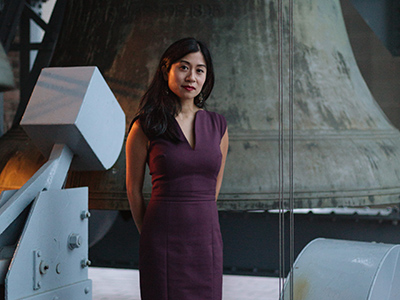
Tiffany Ng

Tiffany Ng

· Associate Professor of Music and University CarillonistVerified

University of Michigan · Department of Organ

Active 1981–2021

h-index8
Citations768
Papers1710 last 5y
Funding
See your match with Tiffany Ng — sign in to PhdFit.Sign in

About

Tiffany Ng is an associate professor of carillon and university carillonist at the University of Michigan, Ann Arbor. She is an energetic advocate of diversity in contemporary music, having premiered or revived over sixty pieces by emerging and established composers, and pioneered models for interactive crowdsourced carillon performances and environmental-data-driven sound installations. Her work significantly increased the American repertoire for carillon and electronics through her collaborations with various composers. Ng's concert career has taken her to festivals in fifteen countries across Europe, Australia, Asia, and North America, including notable events such as the University of Chicago Rockefeller Carillon New Music Festival, Canberra Carillon Festival, and the International Carillon Festivals in Barcelona and Bok Tower Gardens. She has also taught master classes at prestigious institutions including Yale University, the Eastman School of Music, and the University of Chicago. Her academic background includes a licentiate diploma from the Royal Carillon School “Jef Denyn,” a PhD from UC Berkeley, a master’s degree from the Eastman School of Music, and a bachelor’s degree from Yale University. Her research explores the intersection of music technology, history, and urban planning, with a focus on the carillon and organ in the context of modernism and Cold War diplomacy.

Research topics

  • Materials science
  • Composite material
  • Mechanical engineering
  • Engineering
  • Structural engineering

Selected publications

  • Limestone Calcined Clay Cement for Three-Dimensional-Printed Engineered Cementitious Composites

    ACI Materials Journal · 2021-10-09 · 30 citations

    article

    First Name is required invalid characters Last Name is required invalid characters Email Address is required Invalid Email Address

  • Additively manufactured continuous carbon fiber-reinforced thermoplastic for topology optimized unmanned aerial vehicle structures

    Composites Part B Engineering · 2021-03-29 · 139 citations

    articleOpen access
  • 3D-printable engineered cementitious composites (3DP-ECC): Fresh and hardened properties

    Cement and Concrete Research · 2021 · 210 citations

    • Materials science
    • Composite material
    • Mechanical engineering

    3D printing (3DP) is an emerging digital construction method for concrete materials. A major impediment to efficient 3D concrete printing (3DCP) is the need for steel reinforcement, the placement of which is incompatible with the 3DP process. Unlike plain concrete, ductile self-reinforced engineered cementitious composite (ECC) holds promise to remove the dependence on steel reinforcement. The objective of this research is to develop a 3D-printable ECC (3DP-ECC). The fresh rheological and hardened mechanical properties of 3DP-ECC are investigated. The robotically printed tensile specimens demonstrated the familiar multiple microcracking and strain-hardening behavior of conventionally cast ECC. Significant orthotropy is revealed in the compressive properties. The interface between printed layers is found to be toughened by a printed groove-tongue joint. The developed 3DP-ECC was used to print a twisted column with 150 layers, reaching a height of 1.5 m. This research lays the groundwork for efficient robotically 3D-printed structures of complex shapes.

  • Extrusion Nozzle Shaping for Improved 3DP of Engineered Cementitious Composites (ECC/SHCC)

    Rilem bookseries · 2020-01-01 · 25 citations

    book-chapterOpen access

    This paper focuses on the development of a nozzle steering and shaping system for concrete 3D printing (3DCP) of Engineered/Strain Hardening Cementitious Composites (ECC/SHCC). The investigation highlights the development of an integrated system that includes robotic end-effector tooling, automated control associated with the delivery and deposition processes, as well as multi-axis nozzle steering for enhanced surface quality of the printed components. The results are discussed along with demonstrated prototypes. While significant improvements to the speed and efficiency of 3DP cementitious materials have been developed in recent years, only a few precedents, discussed in the paper, have aimed to improve geometric surface quality of the final printed components. In addition to improving the surface quality, the designed extrusion shaping process has the potential to improve mechanical performance of ECC by maximizing interfacial surface area and improving fiber alignment. Material effects will also be discussed in relation to the development of the overall system. An overview of the geometric capabilities and limitations of the proposed system will be presented in comparison with existing 3DP techniques.

  • Active-Casting

    ACADIA quarterly · 2020-01-01 · 1 citations

    articleOpen access1st authorCorresponding

    Active-Casting explores the use of bespoke computer numerical controlled (CNC) manufactured knits to produce volumetric textile formwork for casting glass-fiber-reinforced concrete (GFRC). As a collaboration between experts in architecture, textile fabrication, and civil engineering, the research investigates multimaterial, functionally graded knit formwork as a fully seamless system to cast concrete. Working with controlled characteristics such as elasticity and stiffness of yarn type and knit structure, the soft textile is conceived as the vessel that defines the performative characteristics of volume, geometry, and surface detail. With only a minimal frame to suspend the volumetric cast, hydrostatic pressure “inflates” the fabric formwork, creating a dynamic form-finding process that eliminates the need for typical molding materials such as wood or foam. While active formfinding processes for CNC knit casting have been explored as an open-face, GFRC-sprayed system, the Active-Casting process produces a finished surface on all faces, embedded with expressions in form and surface detail from the knitted formwork. The precast units using this process reduce the amount of construction waste for formwork production, proposes a more automated fashion for manufacturing the formwork, and produces casts with complex geometries difficult to accomplish with traditional casting methods.

  • FORM{less}

    ACADIA quarterly · 2020-01-01

    articleOpen accessSenior author

    Form{less} focuses on the creation of complex thin-shell concrete forms using robotically thermoformed plastic molds. Typically, similar molds would be created using the vacuum forming process, producing direct replications of the pattern. Creating molds with this process is not only time- and material-intensive but also costly if customization is involved. Thin-shell concrete forms often require a labor-intensive process of manually finishing the open-face surface. The devised process of thermoforming two nested molds allows the concrete to be cast in between, with finished surfaces on both sides. Molds made with polyethylene terephthalate glycol (PETG) allow the formwork to be reused and recycled. The research and fabrication work include the development of heating elements and the creation of the robotic process for forming the PETG. The PETG is manipulated via a robotic arm, with a custom magnetic end effector. The integration of robotics not only enables precision for manufacturing but also allows for replicability with unrestricted threedimensional deformation. The repeatable process allows for rapid prototyping and geometric customization. Design options are then simulated computationally using SuperMatterTools, enabling further design exploration of this process without the need for extensive physical prototyping. This research aims to develop a process that allows for the creation of complex geometries while reducing the amount of material waste used for concrete casting. The novelty of the process created by dynamically forming PETG allows for quick production of formwork that is both customizable and replicable. This method of creating double-sided building components is simulated at various scales of implementation.

  • On the emergence of 3D printable Engineered, Strain Hardening Cementitious Composites (ECC/SHCC)

    Cement and Concrete Research · 2020 · 318 citations

    • Materials science
    • Composite material
    • Structural engineering
  • Work

    Journal of Architectural Education · 2019-07-03 · 1 citations

    articleOpen accessSenior author
  • Hard + Soft: Robotic Needle Felting for Nonwoven Textiles

    2018-08-25 · 5 citations

    book-chapter
  • Public Domesticity - Digital Fabrication and Design-Build in Detroit

    2018-01-01

    articleOpen access1st authorCorresponding

    [F]orensis is used to interrogate the relation between the two constitutive sites of forensics-namely fields and forums. In forensic terms the division is straightforward; the field is the site of investigation and the forum is the place where the results of an investigation are presented and contested. However, both these sites must be understood to be more than mere locational designations. The field is not only a neutral, abstract grid on which traces of a crime can be plotted out, but itself a dynamic and elastic territory, a force field that is shaped by but also shapes conflict. The forum, in turn, is a composite apparatus. It is constituted as a shifting triangulation between three elements: a contested object or site, an interpreter tasked with translating “the language of things,” and the assembly of a public gathering. Forensis thus establishes a relation between the animation of material objects and the gathering of political collectives.

Frequent coauthors

  • Wes McGee

    11 shared
  • Victor C. Li

    University of Michigan–Ann Arbor

    6 shared
  • Kequan Yu

    Tongji University

    6 shared
  • Sean Ahlquist

    A. Alfred Taubman Health Care Center

    4 shared
  • Tracey Weisman

    A. Alfred Taubman Health Care Center

    4 shared
  • Evgueni T. Filipov

    4 shared
  • Gideon van Zijl

    2 shared
  • Karsten Nefs

    Eindhoven University of Technology

    2 shared

Awards & honors

  • Henry Russel Award
  • U-M Institute for the Humanities Faculty Fellowship
  • Shirley Verrett Award for service to women of color in the a…
  • Ronald Barnes Memorial Scholarship for Carillon Studies
  • E. Power Biggs Fellowship of the Organ Historical Society
  • Resume-aware match score
  • Save to shortlist
  • AI-drafted outreach

See your match with Tiffany Ng

PhdFit ranks faculty by your research interests, methods, and publications — grounded in their actual work, not templates.

  • Free to start
  • No credit card
  • 30-second signup