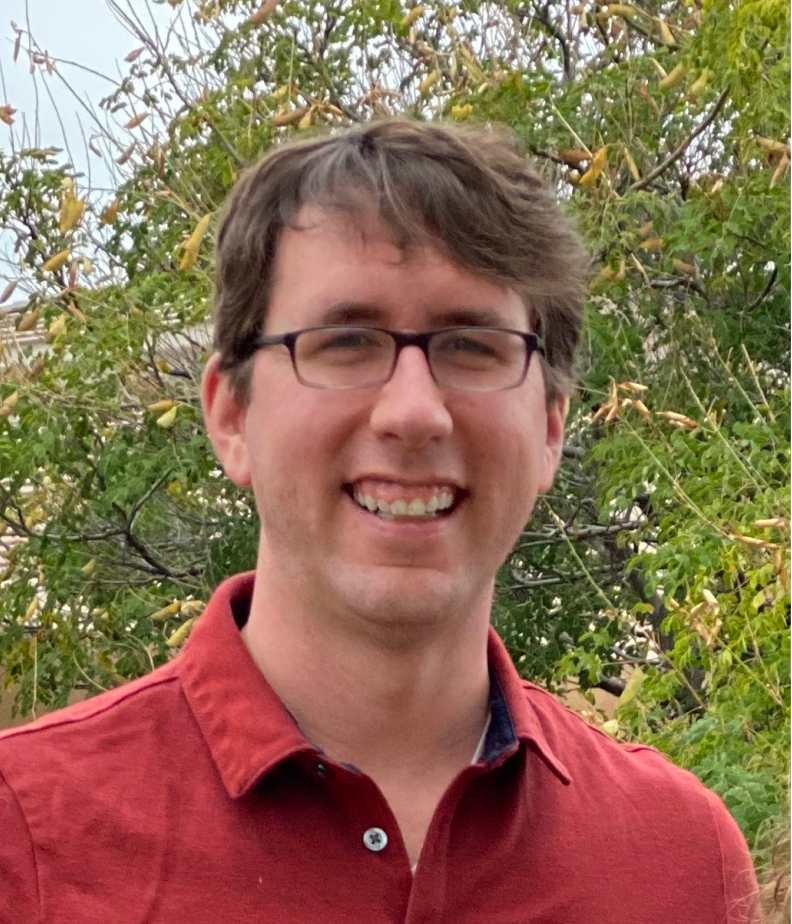
Timothy Brady
· ProfessorUniversity of California, San Diego · Psychology
Active 1976–2024
About
Timothy Brady is a Professor of Psychology and the Principal Investigator of the Vision and Memory Lab at UC San Diego. He received his PhD from MIT's Department of Brain and Cognitive Sciences, working with Dr. Aude Oliva, and completed postdoctoral research in the Department of Psychology at Harvard with Dr. George Alvarez in the Harvard Vision Lab. His research focuses on visual perception, working memory, and long-term visual memory, utilizing computational tools, psychophysical experiments, neuroimaging techniques, and behavioral studies to investigate how humans process, store, and utilize visual information. Brady's work aims to understand the neural and cognitive mechanisms underlying visual cognition, including how memory interacts with perception and decision-making processes.
Research topics
- Computer Science
- Information Retrieval
- Neuroscience
- Psychology
- Cognitive psychology
- Mathematics
- Database
- Statistics
Selected publications
Journal of Cognitive Neuroscience · 2021 · 97 citations
Senior authorCorresponding- Psychology
- Cognitive psychology
- Neuroscience
Almost all models of visual working memory-the cognitive system that holds visual information in an active state-assume it has a fixed capacity: Some models propose a limit of three to four objects, where others propose there is a fixed pool of resources for each basic visual feature. Recent findings, however, suggest that memory performance is improved for real-world objects. What supports these increases in capacity? Here, we test whether the meaningfulness of a stimulus alone influences working memory capacity while controlling for visual complexity and directly assessing the active component of working memory using EEG. Participants remembered ambiguous stimuli that could either be perceived as a face or as meaningless shapes. Participants had higher performance and increased neural delay activity when the memory display consisted of more meaningful stimuli. Critically, by asking participants whether they perceived the stimuli as a face or not, we also show that these increases in visual working memory capacity and recruitment of additional neural resources are because of the subjective perception of the stimulus and thus cannot be driven by physical properties of the stimulus. Broadly, this suggests that the capacity for active storage in visual working memory is not fixed but that more meaningful stimuli recruit additional working memory resources, allowing them to be better remembered.
Nature Human Behaviour · 2020 · 157 citations
- Computer Science
- Information Retrieval
- Computer Science
Understanding how people rate their confidence is critical for the characterization of a wide range of perceptual, memory, motor and cognitive processes. To enable the continued exploration of these processes, we created a large database of confidence studies spanning a broad set of paradigms, participant populations and fields of study. The data from each study are structured in a common, easy-to-use format that can be easily imported and analysed using multiple software packages. Each dataset is accompanied by an explanation regarding the nature of the collected data. At the time of publication, the Confidence Database (which is available at https://osf.io/s46pr/) contained 145 datasets with data from more than 8,700 participants and almost 4 million trials. The database will remain open for new submissions indefinitely and is expected to continue to grow. Here we show the usefulness of this large collection of datasets in four different analyses that provide precise estimations of several foundational confidence-related effects.
Psychophysical scaling reveals a unified theory of visual memory strength
Nature Human Behaviour · 2020 · 290 citations
Senior authorCorresponding- Computer Science
- Cognitive psychology
- Psychology
Recent grants
CAREER: Spatial Ensemble Structure in Visual Working Memory
NSF · $571k · 2017–2023
NSF · $524k · 2022–2026
Familiarity and Meaning in Visual Working Memory
NSF · $541k · 2018–2022
Continuous strength, population-based representations in visual working memory
NSF · $520k · 2022–2026
Frequent coauthors
- 42 shared
George A. Alvarez
- 41 shared
Viola S. Störmer
Brain (Germany)
- 28 shared
Chaipat Chunharas
King Chulalongkorn Memorial Hospital
- 25 shared
Maria M. Robinson
University of California, San Diego
- 21 shared
Mark W. Schurgin
University of California, San Diego
- 19 shared
Aude Oliva
Massachusetts Institute of Technology
- 19 shared
Jamal Williams
Yale University
- 18 shared
Talia Konkle
Harvard University
Labs
Education
PhD, Brain and Cognitive Sciences
Massachusetts Institute of Technology
BA, Cognitive Science
Yale University
Similar researchers at University of California, San Diego
- Resume-aware match score
- Save to shortlist
- AI-drafted outreach
See your match with Timothy Brady
PhdFit ranks faculty by your research interests, methods, and publications — grounded in their actual work, not templates.
- Free to start
- No credit card
- 30-second signup