Resume-aware faculty matching

Find professors who actually fit you

Upload your resume. Four AI agents analyze your background, rank the faculty who fit, inspect their recent research, and help you draft outreach — grounded in their actual work, not templates.

Free to startNo credit cardCancel anytime
Top matches Balanced preset
Dr. Sarah Chen
Stanford · Interpretability · NLP
91
Dr. Marcus Holloway
MIT · Robotics · RL
84
Dr. Aisha Okonkwo
CMU · Fairness · HCI
82
Nova · Professor Researcher · re-ranking top 20…
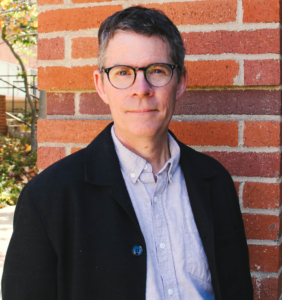
Toby Higbie

Toby Higbie

University of California, Los Angeles · History

Active 1997–2022

h-index3
Citations55
Papers143 last 5y
Funding
See your match with Toby Higbie — sign in to PhdFit.Sign in

About

Toby Higbie is a professor at UCLA specializing in United States social history, labor and working class history, digital humanities, and public history. His research focuses on these areas, contributing to the understanding of social dynamics and labor movements within the United States. As a faculty member, he is involved in teaching and advancing scholarship in these fields, integrating digital tools and public history initiatives to enhance engagement and research dissemination.

Research topics

  • Political Science
  • Sociology
  • Law
  • Computer Science
  • History
  • Labour economics
  • Political economy
  • Economics

Selected publications

  • The Border at Work: Undocumented Workers, the ILGWU in Los Angeles, and the Limits of Labor Citizenship

    Labor Studies in Working-Class History of the Americas · 2022

    1st authorCorresponding
    • Political Science
    • Sociology
    • Political Science

    Abstract In 2000, the AFL-CIO officially embraced the call for amnesty for undocumented immigrant workers, reversing long-standing policy in favor of greater restriction and border enforcement. The roots of this new approach stretched back to the 1970s, when the growing presence of undocumented workers in the industrial workforce challenged organized labor's nationalist orthodoxy. Taking the International Ladies Garment Workers Union (ILGWU) in Los Angeles as a case study, we show how one union confronted new demographic and organizing realities and recognized the demand for unionization among new immigrants. Radical community organizers, legal advocates, and union organizing staff created a practice of labor citizenship, the recognition of the immigrants’ right to remain by virtue the demand for their labor. The promise of belonging through organizing and collective bargaining was limited by state power and the structural weakness of organized labor in the emerging neoliberal economy. Nevertheless, ILGWU campaigns trained a cohort of organizers that would become central to the union upsurge in Los Angeles during the 1990s.

  • Making Labor and Working-Class History in Los Angeles

    Labor Studies in Working-Class History of the Americas · 2021

    1st authorCorresponding
    • Sociology
    • Political Science
    • Sociology

    Research Article| March 01 2021 Making Labor and Working-Class History in Los Angeles Tobias Higbie Tobias Higbie TOBIAS HIGBIE is professor of history and Labor Studies at the University of California, Los Angeles. He is also the chair of Labor Studies and associate director of the Institute for Research on Labor & Employment at UCLA. Higbie is the author of Labor’s Mind: An Intellectual History of the Working Class (2019), Indispensable Outcasts: Hobo Workers and Community in the American Midwest, 1880–1930 (2003), and articles on migration, print culture, working-class education, and robots. Higbie also serves as contributing editor for contemporary affairs at Labor. He holds a PhD in history from the University of Illinois and is a member of the American Federation of Teachers. Search for other works by this author on: This Site Google Labor (2021) 18 (1): 6–9. https://doi.org/10.1215/15476715-8767302 Cite Icon Cite Share Icon Share Facebook Twitter Email Permissions Search Site Citation Tobias Higbie; Making Labor and Working-Class History in Los Angeles. Labor 1 March 2021; 18 (1): 6–9. doi: https://doi.org/10.1215/15476715-8767302 Download citation file: Zotero Reference Manager EasyBib Bookends Mendeley Papers EndNote RefWorks BibTex toolbar search Search nav search search input Search input auto suggest search filter Books & JournalsAll JournalsLabor Search Advanced Search In November 2019, Los Angeles labor unions, immigrant community organizations, and Democratic elected officials gathered to celebrate the political transformation of their state. Twenty-five years earlier, California voters overwhelmingly supported Proposition 187, a ballot initiative that aimed to deny social services, healthcare, and public education to undocumented immigrants. Embraced by the faltering reelection campaign of Republican governor Pete Wilson, Prop 187 generated ugly and xenophobic campaign rhetoric that anthropologist Leo Chavez dubbed “the Latino threat narrative.”1 Although a federal judge struck down the law, Prop 187 soon generated a progressive backlash. California’s growing number of Latinx voters swung hard to the Democrats, driving the GOP into the political wilderness. As of 2020, prolabor and pro-immigrant Democrats hold all statewide offices and proudly claim the mantle of the anti-Trump resistance.The election of Donald Trump in 2016 may yet prove to... © 2021 by Labor and Working-Class History Association2021 You do not currently have access to this content.

  • Review: <i>Vagrant Nation: Police Power, Constitutional Change, and the Making of the 1960s</i> by Risa Goluboff

    Pacific Historical Review · 2018-01-01

    article1st authorCorresponding

    Book Review| August 01 2018 Review: Vagrant Nation: Police Power, Constitutional Change, and the Making of the 1960s by Risa Goluboff Vagrant Nation: Police Power, Constitutional Change, and the Making of the 1960s. By Risa Goluboff. (New York, Oxford University Press, 2016. viii + 471 pp.) Tobias Higbie Tobias Higbie University of California, Los Angeles Search for other works by this author on: This Site PubMed Google Scholar Pacific Historical Review (2018) 87 (3): 556–558. https://doi.org/10.1525/phr.2018.87.3.556 Views Icon Views Article contents Figures & tables Video Audio Supplementary Data Peer Review Share Icon Share Facebook Twitter LinkedIn MailTo Tools Icon Tools Get Permissions Cite Icon Cite Search Site Citation Tobias Higbie; Review: Vagrant Nation: Police Power, Constitutional Change, and the Making of the 1960s by Risa Goluboff. Pacific Historical Review 1 August 2018; 87 (3): 556–558. doi: https://doi.org/10.1525/phr.2018.87.3.556 Download citation file: Ris (Zotero) Reference Manager EasyBib Bookends Mendeley Papers EndNote RefWorks BibTex toolbar search Search Dropdown Menu toolbar search search input Search input auto suggest filter your search All ContentPacific Historical Review Search This content is only available via PDF. © 2018 by the Pacific Coast Branch, American Historical Association2018 Article PDF first page preview Close Modal You do not currently have access to this content.

  • Labor's Mind

    University of Illinois Press eBooks · 2018-12-30 · 1 citations

    book1st authorCorresponding
  • Labor's Mind: A History of Working-Class Intellectual Life

    2018-12-30 · 1 citations

    book1st authorCorresponding
  • Class Unknown: Undercover Investigators of American Work and Poverty from the Progressive Era to the Present

    Labor Studies in Working-Class History of the Americas · 2016-02-01

    article1st authorCorresponding

    Book Review| February 01 2016 Class Unknown: Undercover Investigators of American Work and Poverty from the Progressive Era to the Present Class Unknown: Undercover Investigators of American Work and Poverty from the Progressive Era to the Present. Pittenger, Mark. New York: New York University Press, 2012x + 277 pp., $79.00 (cloth); $25.00 (paper) Tobias Higbie Tobias Higbie Search for other works by this author on: This Site Google Labor (2016) 13 (1): 148–151. https://doi.org/10.1215/15476715-3342803 Cite Icon Cite Share Icon Share Facebook Twitter LinkedIn MailTo Permissions Search Site Citation Tobias Higbie; Class Unknown: Undercover Investigators of American Work and Poverty from the Progressive Era to the Present. Labor 1 February 2016; 13 (1): 148–151. doi: https://doi.org/10.1215/15476715-3342803 Download citation file: Zotero Reference Manager EasyBib Bookends Mendeley Papers EndNote RefWorks BibTex toolbar search Search Dropdown Menu toolbar search search input Search input auto suggest filter your search Books & JournalsAll JournalsLabor Search Advanced Search The text of this article is only available as a PDF. © 2016 by Labor and Working-Class History Association2016 Article PDF first page preview Close Modal You do not currently have access to this content.

  • Five Ideas for Digital Labor History

    eScholarship (California Digital Library) · 2014-05-01

    articleOpen access1st authorCorresponding

    Over the last two decades, digital technologies have transformed practicallyevery aspect of historians’ professional lives. When I entered graduate school in the1990s, there were still professors who wrote articles out by hand, and then turnedover stacks of legal pads to the departmental secretaries to key into computers. In the archives we took notes with paper and pencil and made as many photocopies as we could afford. Today, laptops have displaced the office staff, most archives allow personal digital cameras, and we leave the archives with hundreds of JPEG files instead of note cards. But what comes next? Here are five suggestions, by no means exhaustive of the possibilities, for Labor Historians to make use of digital tools in teaching and research.

  • Stirring the Pot and Adding Some Spice: Workers Education at the University of California, 1921-1962

    eScholarship (California Digital Library) · 2013-06-14

    articleOpen access1st authorCorresponding

    This essay traces the development of University of California workers’ education programming, with an emphasis on the Pacific Coast School for Workers and its rocky relationship with university administrators. I then examine the University of California’s response to legislative efforts to fund worker education and industrial relations programs, and the ultimate development of the Institute for Industrial Relations. I conclude with some thoughts about implications of this history for present-day labor programming within the university, and for the labor movement. Outreach to organized workers, and efforts to bring working class students into the university, reflected a contest over knowledge about work, unions, and political economy. With the development of Industrial Relations programs, American universities positioned themselves as neutral arbiters able to stand above the dirty work of industrial conflict. But the university purchased this neutrality by foreclosing a deeper connection to workers-as-students and students-as-workers. For administrators, it was an easy choice. “Industrial Relations” sanctioned legitimate university interactions with unions and managers separate from the core liberal arts curriculum and the on-campus community. In the postwar expansion of higher education, working class youth would encounter the university asstudentsrather thanworkers. But the development of Industrial Relations was also a boon to labor educators who gained new legitimacy and funding stability. In the years after 1945, outreach programs to labor expanded significantly, particularly at UCLA.Â

  • Why Do Robots Rebel? The Labor History of a Cultural Icon

    Labor Studies in Working-Class History of the Americas · 2013-03-01 · 30 citations

    articleOpen access1st authorCorresponding

    In his sustained treatment of the Czech author Karel Čapek's masterwork, R.U.R., Toby Higbie suggests the ways that the playwright's imagery (repeated in subsequent science fiction) of “robots” drew on contemporary fears and foreboding about industrial work. For one, the image of machine-made men bore a close resemblance to the bureaucratic transformation of factory floors under the regime of Taylorism. However, Higbie asks, “Could democracy survive with robot-like citizens? What kind of politics would come from people so dominated by the machine process?” After tracking the robot image from the 1920s through the dystopias of the Great Depression, Higbie discusses the similarities and discontinuities of imaginative robotic forms within the cyber-fiction of the twenty-first century.

  • Tied to the Great Packing Machine: The Midwest and Meatpacking

    Labor Studies in Working-Class History of the Americas · 2008-11-25 · 2 citations

    article1st authorCorresponding

    Book Review| December 01 2008 Tied to the Great Packing Machine: The Midwest and Meatpacking Tied to the Great Packing Machine: The Midwest and Meatpacking Wilson J. Warren Iowa City: University of Iowa Press, 2007 xi + 206 pp., $39.95 (cloth) Tobias Higbie Tobias Higbie Search for other works by this author on: This Site Google Labor (2008) 5 (4): 109–111. https://doi.org/10.1215/15476715-2008-031 Cite Icon Cite Share Icon Share Twitter Permissions Search Site Citation Tobias Higbie; Tied to the Great Packing Machine: The Midwest and Meatpacking. Labor 1 December 2008; 5 (4): 109–111. doi: https://doi.org/10.1215/15476715-2008-031 Download citation file: Zotero Reference Manager EasyBib Bookends Mendeley Papers EndNote RefWorks BibTex toolbar search Search Dropdown Menu toolbar search search input Search input auto suggest filter your search Books & JournalsAll JournalsLabor Search Advanced Search The text of this article is only available as a PDF. © 2008 by Labor and Working-Class History Association2008 Article PDF first page preview Close Modal Issue Section: Book Reviews You do not currently have access to this content.

Frequent coauthors

  • Gaspar Rivera‐Salgado

    UCLA Medical Center

    4 shared

Awards & honors

  • Best Article Prize, Labor vol. 10
  • Allan Sharlin Memorial Award, Social Science History Associa…
  • Philip Taft Labor History Book Award, Cornell University Sch…
  • Resume-aware match score
  • Save to shortlist
  • AI-drafted outreach

See your match with Toby Higbie

PhdFit ranks faculty by your research interests, methods, and publications — grounded in their actual work, not templates.

  • Free to start
  • No credit card
  • 30-second signup