Resume-aware faculty matching

Find professors who actually fit you

Upload your resume. Four AI agents analyze your background, rank the faculty who fit, inspect their recent research, and help you draft outreach — grounded in their actual work, not templates.

Free to startNo credit cardCancel anytime
Top matches Balanced preset
Dr. Sarah Chen
Stanford · Interpretability · NLP
91
Dr. Marcus Holloway
MIT · Robotics · RL
84
Dr. Aisha Okonkwo
CMU · Fairness · HCI
82
Nova · Professor Researcher · re-ranking top 20…
Tom Erbe

Tom Erbe

· Chair

University of California, San Diego · Music

Active 1995–2022

h-index2
Citations22
Papers102 last 5y
Funding
See your match with Tom Erbe — sign in to PhdFit.Sign in

About

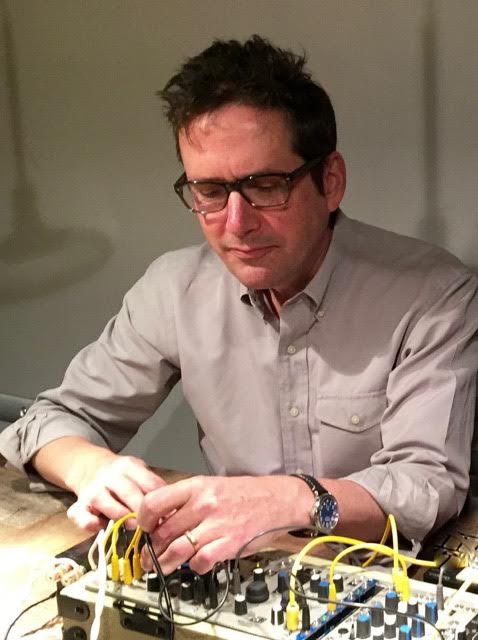
Tom Erbe is deeply involved and dedicated to electronic and computer music research, and creation. He creates computer music software and hardware, most notably the sound processing application SoundHack, the many SoundHack plugins, and several ground-breaking synthesis modules developed with Make Noise Music. He has performed and collaborated on electronic music pieces by notable artists such as Alvin Lucier, John Cage, James Tenney, Maryanne Amacher, Larry Polansky, Alvin Curran, Robert Ashley, Clipping, and others. As a recording engineer, Tom Erbe has produced over 100 CDs of contemporary music, including the restoration of James Tenney's early computer music, recording of Bridge Records' Morton Feldman series, a compilation of the Lyrachord series of contemporary Indonesian music, and over 20 years of the Leonardo Music Journal's annual compilation of experimental music.

Research topics

  • Computer Science
  • Computer Security
  • Operating system
  • Software engineering
  • Telecommunications
  • Visual arts
  • Acoustics
  • Art
  • Human–computer interaction
  • Multimedia
  • Art history

Selected publications

  • Tom Erbe Interviewed by Theodore Gordon

    Organised Sound · 2022

    1st authorCorresponding
    • Computer Science
    • Computer Science
    • Visual arts

    In this interview, Tom Erbe reflects on his three decades as a developer of computer music software and hardware, both freeware and commercial. Tom met with Theodore Gordon on 8 December 2021 and discussed the beginnings of SoundHack and its roots in experimental music studio practice and hacker culture, ideas behind the design of sound processor interface and the shift from experimental software development to Eurorack modular hardware design.

  • Thirty Years of Sound Hacking: From freeware to Eurorack

    Organised Sound · 2022 · 2 citations

    1st authorCorresponding
    • Computer Science
    • Computer Science
    • Computer Security

    For slightly more than 30 years I have been developing audio software and hardware under the moniker soundhack . Through these years I have programmed applications, plugins, externals, hardware and Eurorack modules – usually focusing on signal processing techniques and applications that are not easily available or offered by mainstream software companies. In this article, I would like to share my point of view and relate the rationale behind the development of these tools, my evolving sonic and design aesthetic, and some of the advantages, disadvantages and other differences between the the various hardware and software contexts.

  • Letter from the President / Letter from the Editor

    array. the journal of the ICMA · 2020-10-21

    letterOpen access1st authorCorresponding
  • Extended Convolution Techniques for Cross-Synthesis.

    The Journal of the Abraham Lincoln Association · 2016-01-01 · 4 citations

    articleOpen access
  • The Computer Realization of John Cage's Williams Mix.

    The Journal of the Abraham Lincoln Association · 2016-01-01 · 1 citations

    articleOpen access1st authorCorresponding

    This paper describes the process of creating a new performance of John Cage's early tape music piece Williams Mix (1952).It details the features of the score, the sound library, and the process used by Cage and his group of friends (David Tudor, Earle Brown, Louis and Bebe Barron, etc.) to construct the piece.The construction of a new version of the piece is then described, discussing the problems interpreting the score, the collection of sounds according to Cage's specification, and the creation of a computer music patch to perform Williams Mix.

  • Building the Erbe-Verb: Extending the Feedback Delay Network Reverb for Modular Synthesizer Use

    The Journal of the Abraham Lincoln Association · 2015-01-01 · 1 citations

    articleOpen access1st authorCorresponding

    The paper describes the design of a Eurorack Synthesizer reverb module that extends the feedback-delay network reverb in several ways.The extensions are oriented around the needs of live electronic music: 1) the creation of abstract resonant spaces which may or may not have a resemblance to acoustic spaces, 2) quick modulation of all parameters -modeless morphing between all states of the reverb.In this short paper I will open up the design of the Erbe-Verb, show the techniques used, and how they combine to make a very flexible performance reverb processor.

  • PD SPECTRAL TOOLKIT

    The Journal of the Abraham Lincoln Association · 2013-01-01

    articleOpen accessSenior author

    The Pd Spectral Toolkit, a set of Pure Data objects for spectral signal processing in OS X, is described and illustrated with example patches.These objects facilitate spectral signal processing by providing commonly used data manipulations, conversions, and utilities that users must implement from scratch when working with spectral data.Additional objects are provided to achieve novel methods of spectral data manipulation, allowing more advanced spectral algorithms to be expressed while requiring fewer objects within a Pure Data patch.A comprehensive list of objects is included, and a web address to download the toolkit, its source code, and an IDE project containing the objects is provided.

  • SoundHack: A Brief Overview

    Computer Music Journal · 1997-01-01 · 8 citations

    article1st authorCorresponding

    SoundHack is a sound-file processing program for the Apple Macintosh. When I started writing it in 1991, there was very little signal-processing software available on the Macintosh. Because my first exposure to computer music was at the Computer Audio Research Lab in San Diego, I wanted to have programs like Mark Dolson's pvoc and convolvesf (Moore, Loy, and Dolson 1983) on a computer that I could afford. By implementing spectral soundprocessing algorithms on the Macintosh, I was able to take advantage of the computer's graphical user interface to make the algorithms easy to use and understand. My intention with SoundHack has been to make sophisticated sound processing available on this inexpensive, intuitive computer and, consequently, to make it accessible to most composers. In the five years since its inception, SoundHack has gone from a simple sound-file filter and format converter to a mature program with a rich set of signal-processing and sound-file utility functions. The processing algorithms now include binaural filtering, sound-file convolution, spectral-dynamics processing, gain scaling, spectral mutation, the phase vocoder, varispeed, spectral extraction, and spectral analysis/resynthesis. Most of these algorithms are based on the well-known windowed FFT/IFFT analysis/resynthesis technique and a simple inputfilter-output signal-flow structure. In this article, I will give a brief tour of my program, showing its unique features and the working environment it presents to the user.

  • Music from the Center for Contemporary Music at Mills College

    Computer Music Journal · 1996-01-01 · 1 citations

    article
  • Spectral Mutation in Soundhack

    Computer Music Journal · 1996-01-01 · 8 citations

    articleSenior author

    Soundhack is a widely used program available for the Apple Macintosh computer that performs a variety of sound file manipulations. The functions of the program, authored by one of us (Tom Erbe), include sound-file type conversion, spectral dynamic processing, a varispeed/sample rate converter, sound file convolution, ring modulation, a phase vocoder, a binaural filter, and an amplitude analysisand-gain-change module. In Soundhack versions 0.8 and above, the authors have implemented a system of spectral mutation functions that allow for a number of different trans-

Frequent coauthors

  • Larry Polansky

    3 shared
  • Cooper Baker

    1 shared
  • Alvin Curran

    1 shared
  • Chris Donahue

    1 shared
  • Theodore J. Gordon

    1 shared
  • Chris Brown

    Leeds Teaching Hospitals NHS Trust

    1 shared
  • M. Payne

    1 shared
  • John Bischoff

    Mills College

    1 shared

Labs

  • Music - Tom Erbe LabPI

Awards & honors

  • SoundHack software, winner of first prize at the first Conco…
  • Echophon, Electronic Musician Editors Choice award in 2013
  • Erbe-Verb, Electronic Musician Editors Choice award in 2015
  • Resume-aware match score
  • Save to shortlist
  • AI-drafted outreach

See your match with Tom Erbe

PhdFit ranks faculty by your research interests, methods, and publications — grounded in their actual work, not templates.

  • Free to start
  • No credit card
  • 30-second signup