Resume-aware faculty matching

Find professors who actually fit you

Upload your resume. Four AI agents analyze your background, rank the faculty who fit, inspect their recent research, and help you draft outreach — grounded in their actual work, not templates.

Free to startNo credit cardCancel anytime
Top matches Balanced preset
Dr. Sarah Chen
Stanford · Interpretability · NLP
91
Dr. Marcus Holloway
MIT · Robotics · RL
84
Dr. Aisha Okonkwo
CMU · Fairness · HCI
82
Nova · Professor Researcher · re-ranking top 20…
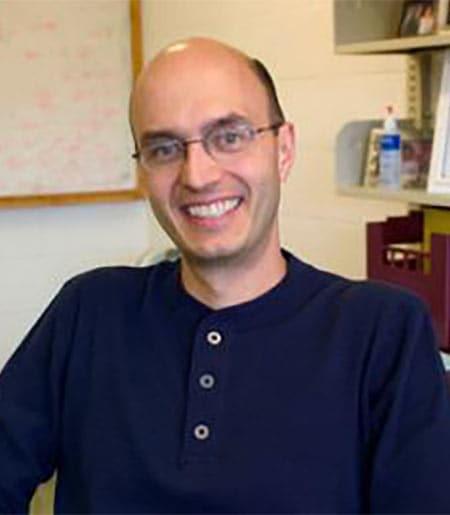
Tomás Arias

Tomás Arias

· James Gilbert White Distinguished Professor in the Physical Sciences and Stephen H. Weiss Presidential Fellow Director of Undergraduate Studies PhysicsVerified

Cornell University · Family and Consumer Sciences

Active 1985–2026

h-index43
Citations21.2k
Papers23748 last 5y
Funding
See your match with Tomás Arias — sign in to PhdFit.Sign in

About

Tomás Arias is the James Gilbert White Distinguished Professor in the Physical Sciences and a Stephen H. Weiss Presidential Fellow at Cornell University. His research links the ab initio quantum mechanical description of materials to the physical behavior of real materials, focusing on identifying problems where the quantum perspective can significantly impact understanding. His work involves exploiting theoretical techniques and supercomputer architectures to perform large-scale quantum calculations, as well as developing new theoretical methods to connect ab initio calculations with phenomena on larger scales. His research group aims to calculate from first principles how complex phenomena in condensed matter systems arise from the interactions among electrons and nuclei. This work encompasses understanding many-body systems, physics across various length and time scales, and thermal effects in complex phase spaces. His research spans multiple disciplines including mathematics, numerical analysis, software development, supercomputer architecture, many-body theory, and condensed matter physics. His students contribute to a diverse array of applications and theoretical problems, with many publishing multiple papers before graduation. Current research topics include development of wavelet and excited-state methods for electronic structure calculations, phonon-phonon couplings in one-dimensional systems such as carbon nanotubes, surface chemistry, organic solar cells, photoelectrochemical cells, and the interaction of water with quantum systems.

Research topics

  • Physics
  • Materials science
  • Condensed matter physics
  • Computer Science
  • Optoelectronics
  • Optics
  • Quantum mechanics
  • Organic chemistry
  • Nuclear physics
  • Mechanical engineering
  • Theoretical physics
  • Engineering
  • Atomic physics
  • Chemical engineering
  • Chemistry
  • Physical chemistry
  • Inorganic chemistry
  • Nanotechnology
  • Electrical engineering

Selected publications

  • Enhanced quantum efficiency from optical interference in alkali antimonide photocathodes: Modeling and experimental results

    Journal of Applied Physics · 2026-02-12

    articleOpen access

    We present measurements of enhanced quantum efficiency (QE) in thin film alkali antimonide photocathodes from optical interference in the cathode-substrate multilayer. Modulations in the spectral response are observed over a range of visible wavelengths and are shown to increase the QE by more than a factor of two at specific wavelengths. We present a model describing the QE modulations based on the three step photoemission process incorporating cases of both constant density of states and density functional theory-derived density of states and show that the calculated results are in good agreement with the measurements. Model predictions demonstrate that QE can be enhanced by more than a factor of 5 by optimization of cathode and substrate layer thicknesses. Additionally, these calculations reveal that optical interference can yield higher quantum efficiencies in thin films compared to thick, optically dense films. We model the QE vs excitation wavelength of multiple alkali antimonide compounds at different thicknesses. We then discuss the advantages of this interference effect for electron accelerators.

  • Vacuum Wannier Functions for First-Principles Scattering and Photoemission

    arXiv (Cornell University) · 2026-03-14

    preprintOpen accessSenior author

    We establish a first-principles theory of vacuum Wannier functions unifying tight-binding and nearly-free-electron descriptions across solid-vacuum interfaces. Analytic solutions for canonical Wannier functions in arbitrary dimension and disentangled functions in 1D motivate a numerically verified 3D Wannier close-packing principle, enabling dense k-space construction of full Born-series scattering states at interfaces and thus predictive photoemission calculations without semiempirical vacuum potentials. Applications to graphene and h-BN reveal corrections beyond the first-Born approximation.

  • Active-learning inspired <i>ab initio</i> theory-experiment loop approach for management of material defects: Application to superconducting qubits

    Physical Review Materials · 2026-04-27 · 2 citations

    articleOpen accessSenior author

    Surface oxides are associated with two-level systems (TLSs) that degrade the performance of niobium-based superconducting quantum computing devices. To address this, we introduce a predictive framework for selecting metal capping layers that inhibit niobium oxide formation. Using DFT-calculated oxygen interstitial and vacancy energies as thermodynamic descriptors, we train a logistic regression model on a limited set of experimental outcomes to successfully predict the likelihood of oxide formation beneath different capping materials. This approach identifies Zr, Hf, and Ta as effective diffusion barriers. Our analysis further reveals that the oxide formation energy per oxygen atom serves as an excellent standalone descriptor for predicting barrier performance. By combining this new descriptor with lattice mismatch as a secondary criterion to promote structurally coherent interfaces, we identify Zr, Ta, and Sc as especially promising candidates. This closed-loop strategy integrates first-principles theory, machine learning, and limited experimental data to enable rational design of next-generation materials.

  • A computational picture of hydride formation and dissipation in Nb SRF cavities

    Superconductor Science and Technology · 2026-02-25

    articleOpen access

    Abstract Research linking surface hydrides to Q-disease, and the subsequent development of methods to eliminate surface hydrides, is one of the great successes of superconducting radiofrequency cavity R&amp;D. We use time-dependent Ginzburg–Landau to extend the theory of hydride dissipation to sub-surface hydrides. Just as surface hydrides cause Q-disease behavior, we show that sub-surface hydrides cause high-field Q -slope (HFQS) behavior. We find that the abrupt onset of HFQS is due to a transition from a vortex-free state to a vortex-penetration state. We show that controlling hydride size and depth through impurity doping can eliminate HFQS.

  • Vacuum Wannier Functions for First-Principles Scattering and Photoemission

    arXiv (Cornell University) · 2026-03-14

    articleOpen accessSenior author

    We establish a first-principles theory of vacuum Wannier functions unifying tight-binding and nearly-free-electron descriptions across solid-vacuum interfaces. Analytic solutions for canonical Wannier functions in arbitrary dimension and disentangled functions in 1D motivate a numerically verified 3D Wannier close-packing principle, enabling dense k-space construction of full Born-series scattering states at interfaces and thus predictive photoemission calculations without semiempirical vacuum potentials. Applications to graphene and h-BN reveal corrections beyond the first-Born approximation.

  • Effective Atom Theory: Gradient-Driven ab initio Materials Design

    ArXiv.org · 2025-09-08

    preprintOpen accessSenior author

    We introduce Effective Atom Theory (EAT), a framework that transforms combinatorial materials design into a smooth, gradient-driven optimization within density functional theory (DFT). Atoms are represented as probabilistic mixtures of elements, enabling gradient-based optimizers to converge to a physically realizable material in about 50 energy evaluations -- far fewer than combinatorial optimization methods. Applied to Co-Cr-Ni-V oxides for the alkaline oxygen evolution reaction (OER), EAT leads to a final recommended composition of Co0.19Cr0.06V0.31Ni0.44O.

  • $\textit{Ab initio}$ Theory of Eliminating Surface Oxides of Superconductors with Noble-Metal Encapsulation

    arXiv (Cornell University) · 2025-09-03

    preprintOpen accessSenior author

    Nanometer-scale surface chemistry limits the performance of SRF cavities and quantum circuits. We present an ab initio framework connecting DFT interfacial energetics with strong-coupling Eliashberg theory for capped Nb and Ta surfaces. This approach identifies Au and Au-based alloys (AuPd, AuPt) as effective passivation layers. Our model further predicts that combining a noble-metal capping layer with an appropriate wetting/adhesion layer (WAL) yields far more robust adhesion than a capping layer alone under realistic conditions, enabling thinner caps, and thereby addressing a central challenge in superconducting surface passivation.

  • <i>Ab Initio</i> Electron-Phonon-Coupling Theory of Elastic Helium-Atom Scattering

    Physical Review Letters · 2025-10-15

    articleSenior author

    We propose a fully ab initio approach to predicting thermal attenuation in elastic helium atom scattering amplitudes, validated through strong agreement with experiments on Nb(100) and (3×1)-O/Nb(100) surfaces. Our results reveal the relative contributions from bulk, resonant, and surface phonon modes, as well as from different surface mode polarizations, providing insights into differences between smooth and corrugated surfaces. These findings advance understanding of surface dynamics and electron-phonon coupling, laying groundwork for future studies on surface superconductivity.

  • Analyzing NBA player positions and interactions with density-functional fluctuation theory

    Scientific Reports · 2025-06-05 · 3 citations

    articleOpen accessSenior author

    The increasing availability of high-precision player-tracking data in sports-centimeter-precision positional information of athletes captured dozens of times per second-has the potential to improve the quantification of player abilities and overall team strategies. Working toward achieving this quantification, we adapt density-functional fluctuation theory (DFFT) to infer spatial preferences and player-to-player interactions in National Basketball Association (NBA) basketball. We first demonstrate several foundational results, including the ability of DFFT to predict the location of a player to within 3% of the half-court area roughly half the time, and to provide a team-position-based metric that correlates strongly with play outcomes. Building on these results, we demonstrate that it is possible to improve player positioning and identify player-specific tendencies, such as the consistency with which a player positions himself to help his team collectively defend against 2-point or 3-point shots. Finally, we quantify how particular players attract the opposing team, with and without the ball, constituting the first advanced quantification of 'player gravity' that explicitly deconfounds the influence of teammate positioning.

  • Low barrier ZrO <i>x</i> -based Josephson junctions

    APL Materials · 2025-11-01 · 2 citations

    articleOpen access

    The Josephson junction is a crucial element in superconducting devices, and niobium is a promising candidate for the superconducting material due to its large energy gap relative to aluminum. AlOx has long been regarded as the highest quality oxide tunnel barrier and is often used in niobium-based junctions. Here, we propose ZrOx as an alternative tunnel barrier material for Nb electrodes. We theoretically estimate that zirconium oxide has excellent oxygen retention properties and experimentally verify that there is no significant oxygen diffusion leading to NbOx formation in the adjacent Nb electrode. We develop a top–down, subtractive fabrication process for Nb/Zr–ZrOx/Nb Josephson junctions, which enables scalability and large-scale production of superconducting electronics. Using cross-sectional scanning transmission electron microscopy, we experimentally find that depending on the Zr thickness, ZrOx tunnel barriers can be fully crystalline with chemically abrupt interfaces with niobium. Further analysis using electron energy loss spectroscopy reveals that ZrOx corresponds to tetragonal ZrO2. Room temperature characterization of fabricated junctions using Simmons’ model shows that ZrO2 exhibits a low tunnel barrier height, which is promising in merged-element transmon applications. Low temperature transport measurements reveal sub-gap structure, while the low-voltage sub-gap resistance remains in the megaohm range.

Frequent coauthors

Labs

Awards & honors

  • Andrew Moore Lockett III Award (1990)
  • Corning Eugene Sullivan Award (1993)
  • ATT Cooperative Research Fellow (1986-1992)
  • Alfred P. Sloan Foundation Research Fellow (1993-1999)
  • Department of Energy Defense Programs Young Scientist (1996)
  • Resume-aware match score
  • Save to shortlist
  • AI-drafted outreach

See your match with Tomás Arias

PhdFit ranks faculty by your research interests, methods, and publications — grounded in their actual work, not templates.

  • Free to start
  • No credit card
  • 30-second signup