Resume-aware faculty matching

Find professors who actually fit you

Upload your resume. Four AI agents analyze your background, rank the faculty who fit, inspect their recent research, and help you draft outreach — grounded in their actual work, not templates.

Free to startNo credit cardCancel anytime
Top matches Balanced preset
Dr. Sarah Chen
Stanford · Interpretability · NLP
91
Dr. Marcus Holloway
MIT · Robotics · RL
84
Dr. Aisha Okonkwo
CMU · Fairness · HCI
82
Nova · Professor Researcher · re-ranking top 20…
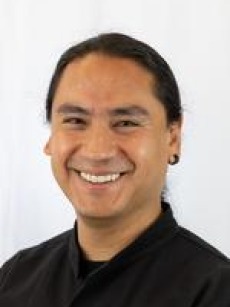
Tonatiuh Sanchez-Vizuet

Tonatiuh Sanchez-Vizuet

Verified

University of Arizona · Mathematics

Active 2015–2026

h-index9
Citations207
Papers4124 last 5y
Funding$250k
See your match with Tonatiuh Sanchez-Vizuet — sign in to PhdFit.Sign in

About

Tonatiuh Sanchez-Vizuet is an Assistant Professor in the Department of Mathematics at The University of Arizona, where he is also a member of the Graduate Faculty. His role involves teaching and research within applied mathematics, contributing to the department's academic and research missions. He is associated with the Graduate Interdisciplinary Program (GIDP) and actively participates in the department's scholarly activities. His contact information includes an office at ENR2-S459, and he can be reached via email at tonatiuh@arizona.edu or by phone at 520-621-6098. The department offers a range of undergraduate and graduate programs in mathematics and statistics, and Sanchez-Vizuet's work supports the department's focus on advancing mathematical research and education.

Research topics

  • Mathematics
  • Mathematical analysis
  • Applied mathematics
  • Physics
  • Statistical physics

Selected publications

  • Lambert’s problem in orbital dynamics: a self-contained introduction

    The European Physical Journal Plus · 2026-02-15

    articleSenior authorCorresponding
  • Surrogate-based multilevel Monte Carlo methods for uncertainty quantification in the Grad-Shafranov free boundary problem

    ArXiv.org · 2025-01-14

    preprintOpen accessSenior author

    We explore a hybrid technique to quantify the variability in the numerical solutions to a free boundary problem associated with magnetic equilibrium in axisymmetric fusion reactors amidst parameter uncertainties. The method aims at reducing computational costs by integrating a surrogate model into a multilevel Monte Carlo method. The resulting surrogate-enhanced multilevel Monte Carlo methods reduce the cost of simulation by factors as large as $10^4$ compared to standard Monte Carlo simulations involving direct numerical solutions of the associated Grad-Shafranov partial differential equation. Accuracy assessments also show that surrogate-based sampling closely aligns with the results of direct computation, confirming its effectiveness in capturing the behavior of plasma boundary and geometric descriptors.

  • A symmetric boundary integral formulation for time-domain acoustic-elastic scattering

    ArXiv.org · 2025-02-07

    preprintOpen access1st authorCorresponding

    A symmetric boundary integral formulation for the transient scattering of acoustic waves off homogeneous and isotropic elastic obstacles is analyzed. Both the acoustic scattered field and the elastodynamic excited field are represented through a direct integral representation, resulting in a coupled system of interior/exterior integral equations that is symmetrized through the introduction of an auxiliary mortar variable. The analysis of each system and of its Galerkin discretization is done through the passage to the Laplace domain, which allows for the use of convolution quadrature for time discretization. Since the operators of the acustic and elastic Calderón calculus appear independently of each other, the formulation is well suited for non-intrusive numerical impementations (i.e. existing codes for acoustic and elastic problems can be used without any modification).

  • A symmetric boundary integral formulation for time–domain acoustic-elastic scattering

    Computational Mechanics · 2025-10-24 · 1 citations

    article1st authorCorresponding
  • Boundary-Field Formulation for Transient Electromagnetic Scattering by Dielectric Scatterers and Coated Conductors

    SIAM Journal on Mathematical Analysis · 2025-03-24 · 1 citations

    article
  • A coupled HDG discretization for the interaction between acoustic and elastic waves

    ArXiv.org · 2025-05-21

    preprintOpen access

    We propose and analyze an HDG scheme for the Laplace-domain interaction between a transient acoustic wave and a bounded elastic solid embedded in an unbounded fluid medium. Two mixed variables (the stress tensor and the velocity of the acoustic wave) are included while the symmetry of the stress tensor is imposed weakly by considering the antisymmetric part of the strain tensor (the spin or vorticity tensor) as an additional unknown. Convergence of the method is demonstrated and theoretical rates are obtained; numerical results suggesting optimal order of convergence and superconvergence of the traces are presented.

  • Well-posedness for the biharmonic scattering problem for a penetrable obstacle

    ArXiv.org · 2025-06-11

    preprintOpen accessSenior author

    We address the direct scattering problem for a penetrable obstacle in an infinite elastic two--dimensional Kirchhoff--Love plate. Under the assumption that the plate's thickness is small relative to the wavelength of the incident wave, the propagation of perturbations on the plate is governed by the two-dimensional biharmonic wave equation, which we study in the frequency domain. With the help of an operator factorization, the scattering problem is analyzed from the perspective of a coupled boundary value problem involving the Helmholtz and modified Helmholtz equations. Well-posedness and reciprocity relations for the problem are established. Numerical examples for some special cases are provided to validate the theoretical findings.

  • A boundary integral equation formulation for transient electromagnetic transmission problems on Lipschitz domains

    Springer Link (Chiba Institute of Technology) · 2025-06-26

    article1st authorCorresponding

    We propose a boundary integral formulation for the dynamic problem of electromagnetic scattering and transmission by homogeneous dielectric obstacles. In the spirit of Costabel and Stephan, we use the transmission conditions to reduce the number of unknown densities and to formulate a system of coupled boundary integral equations describing the scattered and transmitted waves. The system is transformed into the Laplace domain where it is proven to be stable and uniquely solvable. The Laplace domain stability estimates are then used to establish the stability and unique solvability of the original time domain problem. Finally, we show how the bounds obtained in both Laplace and time domains can be used to derive error estimates for semi discrete Galerkin discretizations in space and for fully discrete numerical schemes that use Convolution Quadrature for time discretization and a conforming Galerkin method for discretization of the space variables.

  • A boundary integral equation formulation for transient electromagnetic transmission problems on Lipschitz domains

    ESAIM. Mathematical modelling and numerical analysis · 2025-05-01

    articleOpen access1st authorCorresponding

    We propose a boundary integral formulation for the dynamic problem of electromagnetic scattering and transmission by homogeneous dielectric obstacles. In the spirit of Costabel and Stephan, we use the transmission conditions to reduce the number of unknown densities and to formulate a system of coupled boundary integral equations describing the scattered and transmitted waves. The system is transformed into the Laplace domain where it is proven to be stable and uniquely solvable. The Laplace domain stability estimates are then used to establish the stability and unique solvability of the original time domain problem. Finally, we show how the bounds obtained in both Laplace and time domains can be used to derive error estimates for semi discrete Galerkin discretizations in space and for fully discrete numerical schemes that use Convolution Quadrature for time discretization and a conforming Galerkin method for discretization of the space variables.

  • An unfitted HDG discretization for a model problem in shape optimization

    ArXiv.org · 2025-09-25

    preprintOpen access

    We apply an unfitted HDG discretization to a model problem in shape optimization. The method proposed uses a fixed, shape regular, non-geometry conforming mesh and a high order transfer technique to deal with the curved boundaries arising in the optimization process. The use of this strategy avoids the need for constant remeshing and enables a highly accurate description of the domain using a coarse computational mesh. We develop a rigorous analysis of the well-posedness of the problems that arise from the optimality conditions, and provide an a priori error analysis for the resulting discrete schemes. Numerical examples with manufactured problems are provided demonstrating the convergence of the scheme and the efficiency of the transfer path method. The approach proposed yields high resolution approximations of the boundary using grids with as few as 100 times less elements than an interpolatory technique.

Recent grants

Frequent coauthors

  • Manuel Solano

    University of Concepción

    14 shared
  • Nestor Sánchez

    Universidad Nacional Autónoma de México

    13 shared
  • George C. Hsiao

    12 shared
  • Jiaxing Liang

    University of Maryland, College Park

    11 shared
  • Francisco‐Javier Sayas

    University of Delaware

    8 shared
  • Howard C. Elman

    University of Maryland, College Park

    7 shared
  • Antoine Cerfon

    New York University

    5 shared
  • Wolfgang L. Wendland

    University of Stuttgart

    3 shared
  • Resume-aware match score
  • Save to shortlist
  • AI-drafted outreach

See your match with Tonatiuh Sanchez-Vizuet

PhdFit ranks faculty by your research interests, methods, and publications — grounded in their actual work, not templates.

  • Free to start
  • No credit card
  • 30-second signup