Resume-aware faculty matching

Find professors who actually fit you

Upload your resume. Four AI agents analyze your background, rank the faculty who fit, inspect their recent research, and help you draft outreach — grounded in their actual work, not templates.

Free to startNo credit cardCancel anytime
Top matches Balanced preset
Dr. Sarah Chen
Stanford · Interpretability · NLP
91
Dr. Marcus Holloway
MIT · Robotics · RL
84
Dr. Aisha Okonkwo
CMU · Fairness · HCI
82
Nova · Professor Researcher · re-ranking top 20…
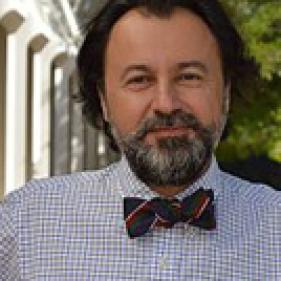
Touraj Daryaee

Touraj Daryaee

· Maseeh Chair in Persian Studies & Culture, History and Director of the Dr. Samuel M. Jordan Center for Persian Studies and Culture

University of California, Irvine · Classics

Active 1995–2025

h-index15
Citations1.1k
Papers15735 last 5y
Funding
See your match with Touraj Daryaee — sign in to PhdFit.Sign in

About

Touraj Daryaee is the Maseeh Chair in Persian Studies & Culture at UC Irvine, where he also serves as the Director of the Dr. Samuel M. Jordan Center for Persian Studies and Culture. He earned his Ph.D. in History from UCLA in 1999 and is a faculty member in the Department of History within the School of Humanities. His research focuses on the ancient and medieval history of Iran, with particular emphasis on the Sasanian Empire. He has worked extensively on Middle Persian literature, editing and translating texts related to geography, chess, and backgammon, and has a strong interest in the history of Zoroastrianism in Late Antiquity and its encounter with Islam. Daryaee is the editor of several academic journals, including the Name-ye Iran-e Bastan and Sasanika: Late Antique Iran Project. His scholarly contributions include numerous publications on Iranian history, kingship, and culture, and he has authored and edited several books on the subject, such as 'The Sasanian Empire' and 'From Oxus to Euphrates: The World of Late Antique Iran.' He has held distinguished appointments, including Bahari Senior Fellow at Oxford University and visiting professorships at UCLA and California State University Fullerton. His work is recognized for its detailed analysis of Iran's history within the broader context of world history, contributing significantly to the understanding of Iran's ancient and late antique periods.

Research topics

  • Sociology
  • Political Science
  • History
  • Ancient history
  • Telecommunications
  • Geography
  • Political economy
  • Engineering
  • Law
  • Economic history

Selected publications

  • Geschichte und Trends der Achaemenid Studies

    2025-01-01

    book-chapter1st authorCorresponding
  • Epilogue: the Evolution of the Ancient Iranian Army

    2024-10-10

    book-chapter1st authorCorresponding
  • Autorinnen und Autoren

    2023-10-05

    otherOpen access1st authorCorresponding
  • THE TWO KINGS OF ĒRĀNŠAHR:

    Peeters Publishers eBooks · 2023-12-31

    book-chapter1st authorCorresponding
  • Sasanian Persia

    I.B.Tauris eBooks · 2023-01-01 · 11 citations

    book1st authorCorresponding

    Of profound importance in late antiquity, the Sasanian Empire is virtually unknown today, except as a counterpoint to the Roman Empire. In this highly readable history, Touraj Daryaee fills a significant gap in our knowledge of world history. He examines the Sasanians' complex and colourful narrative and demonstrates their unique significance, not only for development of Iranian civilization but also for Roman and Islamic history. The Sasanians were the last of the ancient Persian dynasties and are best known as the pre-eminent practitioners of the Zoroastrian religion. Founded by Ardashir l in 224 CE, the Sasanian Empire was the dominant force in the Middle East for several centuries until its last king, Yazdgerd lll, was defeated by the Muslim Arabs in the seventh century. In this concise yet comprehensive book, Touraj Daryaee provides an unrivalled account of Sasanian Persia. Drawing on extensive new sources, he paints a vivid portrait of

  • Arash the Archer and Mountains as Limits of the Sasanian Empire in the Inscription of Shapur I at Naqš-e Rostam

    Böhlau Verlag eBooks · 2023-10-05

    book-chapter1st authorCorresponding
  • Mazdak and Late Antique ‘Socialism’

    Cambridge University Press eBooks · 2022-11-03

    book-chapter1st authorCorresponding

    During the reign of Kawād I (AD 498–531), king of Ērānšahr (Realm of the Iranians), a Zoroastrian priest by the name of Mazdak, son of Bāmdād, appears in some sources whose rulings about property and ownership have been deemed proto-socialist. According to sources in Middle Persian of the late Sasanian Empire (AD 224–651), Mazdak promoted the sharing of women and property.

  • The Bones of Khosrow: The Sacred Topography of Ctesiphon

    Electrum · 2022-10-21

    articleOpen access1st authorCorresponding

    This essay discusses the importance of Ctesiphon in the historical and literary tradition of Sasanian and Post-Sasanian Iran. It is proposed that there was a significant buildup of the Ctesiphon’s defenses in the third century that it made its conquest by the Roman Empire impossible and its gave it an aura of impregnability. By the last Sasanian period the city was not only inhabited by Iranian speaking people and a capital, but it also became part of Iranian lore and tradition, tied to mythical Iranian culture-heroes and kings. Even with the fall of the Sasanian Empire, in Arabic and Persian poetry the grandeur and memory of Ctesiphon was preserved as part of memory of the great empires of the past.

  • Alexander at Pasargadae and the Frawašī of Cyrus

    Classica et orientalia · 2022-01-01 · 7 citations

    book-chapter1st authorCorresponding
  • The Cambridge History of Socialism

    Cambridge University Press eBooks · 2022 · 8 citations

    • Political Science
    • Sociology
    • Economic history

    This volume describes the various movements and thinkers who wanted social change without state intervention. It covers cases in Europe, the Americas, Africa and Asia. The first part discusses early egalitarian experiments and ideologies in Asia, Europe and the Islamic world, and then moves to early socialist thinkers in Britain, France, and Germany. The second part deals with the rise of the two main currents in socialist movements after 1848: anarchism in its multiple varieties, and Marxism. It also pays attention to organisational forms, including the International Working Men's Association (later called the First International); and it then follows the further development of anarchism and its 'proletarian' sibling, revolutionary syndicalism – its rise and decline from the 1870s until the 1940s on different continents. The volume concludes with critical essays on anarchist transnationalism and the recent revival of anarchism and syndicalism in several parts of the world.

Frequent coauthors

  • Khodadad Rezakhani

    28 shared
  • Jan Stronk

    Cardiff University

    6 shared
  • Keith Rutter

    Cardiff University

    6 shared
  • Lloyd Llewellyn‐Jones

    6 shared
  • Virginie C. Rey

    6 shared
  • Andrew Erskine

    6 shared
  • Thomas Harrison

    6 shared
  • Judith A. Lerner

    6 shared

Education

  • Ph.D., Iranian History

    University of California, Los Angeles

    2000
  • M.A., Iranian History

    University of California, Los Angeles

    1996
  • B.A., Near Eastern Languages and Cultures

    University of California, Los Angeles

    1994

Awards & honors

  • British Society for Middle Eastern Studies, 2010
  • Bahari Senior Fellow, Oxford University 2014
  • École pratique des Hautes Études en Sciences Sociales 2010
  • Iranian Kingship, The Arab Conquest and Zoroastrian Apocalyp…
  • Resume-aware match score
  • Save to shortlist
  • AI-drafted outreach

See your match with Touraj Daryaee

PhdFit ranks faculty by your research interests, methods, and publications — grounded in their actual work, not templates.

  • Free to start
  • No credit card
  • 30-second signup