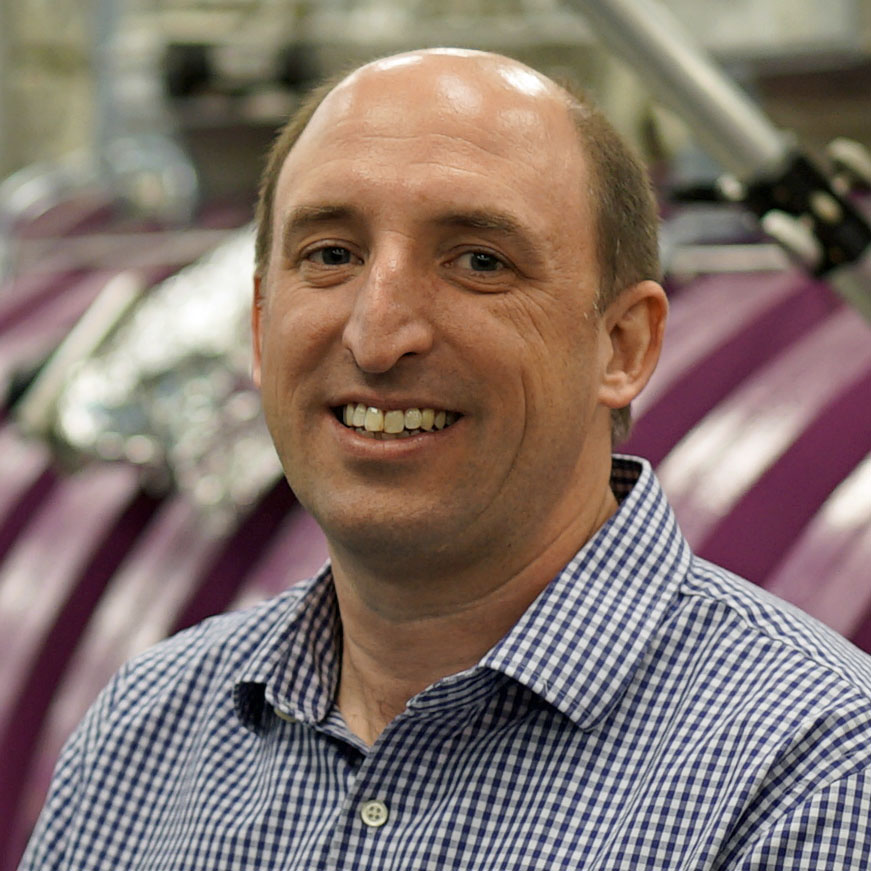
Troy Carter
· ProfessorVerifiedUniversity of California, Los Angeles · Physics and Astronomy
Active 1908–2026
About
Troy Carter is a Professor of Physics at the University of California, Los Angeles, currently on a leave of absence from UCLA. He was appointed Director of the Fusion Energy Division at Oak Ridge National Laboratory on July 1, 2024. His research focuses on waves, instabilities, turbulence, and transport in magnetically confined plasmas, motivated by the understanding of processes in space and astrophysical plasmas as well as the development of carbon-free electricity generation via nuclear fusion. Prof. Carter has led significant initiatives including the DOE FESAC Long Range Planning process, resulting in the 2021 report 'Powering the Future: Fusion and Plasmas.' He has served as the Director of the Basic Plasma Science Facility (BaPSF), a national user facility supported by DOE and NSF, and the Plasma Science and Technology Institute (PSTI) at UCLA. Recognized for his contributions, he is a Fellow of the APS and AAAS, and has received awards such as the APS DPP John Dawson Excellence in Plasma Physics Research Award and the Fusion Power Associates Leadership Award. His academic background includes BS degrees in Physics and Nuclear Engineering from North Carolina State University and a PhD in Astrophysical Sciences from Princeton University.
Research topics
- Nuclear physics
- Physics
- Atomic physics
- Classical mechanics
- Computational physics
- Optics
- Geophysics
Selected publications
Columbia Academic Commons (Columbia University) · 2026-03-12
articleOpen accessColumbia Academic Commons (Columbia University) · 2026-03-12
articleOpen accessDoppler Backscattering Data Analysis and Integrated Modeling with OMFIT
Fusion Science & Technology · 2025-02-11 · 2 citations
articleSenior authorAccelerating the Fusion Workforce
arXiv (Cornell University) · 2025-01-06 · 1 citations
preprintOpen accessThe fusion energy research and development landscape has seen significant advances in recent years, with important scientific and technological breakthroughs and a rapid rise of investment in the private sector. The workforce needs of the nascent fusion industry are growing at a rate that academic workforce development programs are not currently able to match. This paper presents the findings of the Workforce Accelerator for Fusion Energy Development Conference held in Hampton, Virginia, United States of America (USA), on May 29-30 2024, which was funded by the US National Science Foundation (NSF). A major goal of the conference was to focus on bringing public and private stakeholders together to identify opportunities for partnership in fusion research and education with the goal of meeting the needs for a talented and diverse workforce. Representatives from industry, academia, and national laboratories participated in the conference through the preparation of white papers, presentations, and group discussions, and the production of recommendations to address the challenges facing the US fusion workforce.
Physics of beam-driven ion cyclotron emission in the large plasma device
Nuclear Fusion · 2025-05-06 · 3 citations
articleOpen accessAbstract Ion cyclotron emission (ICE) is widely observed from spatially localised minority energetic ion populations in toroidal magnetically confined fusion (MCF) plasmas, both tokamaks and stellarators. Its spectral structure is typically regular with narrow suprathermal peaks, whose frequency separation matches a local energetic ion cyclotron frequency. Here we report the first computational (fully nonlinear self-consistent kinetic particle-in-cell code) and analytical (linear magnetoacoustic cyclotron instability (MCI)) studies of ICE observations from cylindrical plasmas contained in the Large Plasma Device (LAPD). Because LAPD is cylindrical, the plasma physics giving rise to the observed ICE spectrum necessarily excludes toroidal effects. Our approach, previously successful for toroidal plasma ICE, assumes slab geometry and hence is well adapted to LAPD. ICE from LAPD is strongly electrostatic, as distinct from electromagnetic, and is driven by 15 keV beam ions for which the ratio of perpendicular speed to the local Alfven speed, <mml:math xmlns:mml="http://www.w3.org/1998/Math/MathML" overflow="scroll"> <mml:mrow> <mml:msub> <mml:mi>v</mml:mi> <mml:mo>⊥</mml:mo> </mml:msub> <mml:mrow> <mml:mo>/</mml:mo> </mml:mrow> <mml:msub> <mml:mi>v</mml:mi> <mml:mi>A</mml:mi> </mml:msub> </mml:mrow> </mml:math> , is 0.15, lower than in MCF plasmas from which beam-driven ICE has previously been observed. Our results are in good agreement with these observations. There is congruence between simulated ICE spectra, obtained in the saturated nonlinear regime of our computations, and observed ICE spectra; the underlying physics is essentially the same as in toroidal plasmas; and there is alignment with linear analytical theory where appropriate. The present work establishes a mapping from the cylindrical LAPD ICE observations to toroidal MCF ICE observations. The LAPD spectra are instances of beam-driven MCI-type ICE in its sub-Alfvenic, predominantly electrostatic manifestation, which has precedents in MCF stretching back to the 1990s. An interesting corollary is that, for many purposes, ICE in toroidal MCF plasmas ‘might as well’ be occurring in a cylinder.
Accelerating the fusion workforce in the USA
Plasma Physics and Controlled Fusion · 2025-08-11 · 5 citations
articleOpen accessCorrespondingAbstract The fusion energy research and development landscape has seen significant advances in recent years, with important scientific and technological breakthroughs and a rapid rise of investment in the private sector. The workforce needs of the nascent fusion industry are growing at a rate that academic workforce development programs are not currently able to match. This paper presents the findings of the Workforce Accelerator for Fusion Energy Development Conference held in Hampton, Virginia, United States of America (USA), on 29–30 May 2024, which was funded by the National Science Foundation of the USA. A major goal of the conference was to focus on bringing public and private stakeholders together to identify opportunities for partnership in fusion research and education with the goal of meeting the needs for a talented and diverse workforce. Representatives from industry, academia, and national laboratories participated in the conference through the preparation of white papers, presentations, and group discussions, and the production of recommendations to address the challenges facing the fusion workforce in the USA.
The Astrophysical Journal · 2025-03-19
articleOpen accessAbstract We have studied the propagation of inertial Alfvén waves through parallel gradients in the Alfvén speed using the Large Plasma Device at the University of California, Los Angeles. The reflection and transmission of Alfvén waves through inhomogeneities in the background plasma are important for understanding wave propagation, turbulence, and heating in space, laboratory, and astrophysical plasmas. Here we present inertial Alfvén waves under conditions relevant to solar flares and the solar corona. We find that the transmission of the inertial Alfvén waves is reduced as the sharpness of the gradient is increased. Any reflected waves were below the detection limit of our experiment, and reflection cannot account for all of the energy not transmitted through the gradient. Our findings indicate that, for both kinetic and inertial Alfvén waves, the controlling parameter for the transmission of the waves through an Alfvén speed gradient is the ratio of the Alfvén wavelength along the gradient divided by the scale length of the gradient. Furthermore, our results suggest that an as-yet-unidentified damping process occurs in the gradient.
Direct measurement of the complex impedance of a whistler mode exciting loop antenna
2025-05-05
articleOpen accessSenior authorWave coupling and propagation from a fast-wave antenna in the lower hybrid range of frequencies
Journal of Plasma Physics · 2025-07-18
articleOpen accessA set of experiments were conducted on the LArge Plasma Device (LAPD) at UCLA to test the operational principles of a traveling wave antenna of the comb-line type. This antenna was designed to launch helicon waves (fast waves in the lower hybrid range of frequencies) on DIII-D. With the order-of-magnitude lower static magnetic field on LAPD, the antenna excites waves in a different regime. Whenever fast waves can propagate in LAPD, slow waves are also supported by the plasma so it is necessary to distinguish between the two cold-plasma branches in evaluating the effectiveness of the launcher. The results show that the launcher couples well to fast waves when the plasma supports fast-wave propagation; control of the principal imposed parallel wavenumber can be achieved through varying the launch frequency on the antenna within its bandwidth of operation; and that the launched waves exhibit strong directionality. We also investigate the role of the plasma profile and wave mode on the loading characteristics. Additionally, a comparison with full-wave modeling of the propagating waves is shown using both a cold-plasma model in COMSOL and a hot-plasma model in RFPisa, which obtain similar results in the present regime.
2025-01-07
articleHigh energy electrons from either solar wind or from human activity may become trapped inside the Van Allen radiation belts or create an artificial radiation belt that can persist for long periods of time. Spacecraft flying through these belts are susceptible to damage from these trapped electrons. Whistler waves are known to precipitate electrons into the atmosphere, so a proposed solution is using spacecraft to carry compact electron beams or antennas to remediate these trapped electrons. This remediation effort has picked up momentum with knowledge gained from recent space missions such as the Van Allen Probe spacecraft which collected data on electron loss mechanisms. Additionally, the recently completed Demonstration and Science Experiment (DSX) satellite mission conducted experiments on the efficiency of injecting very low frequency (VFL) waves in space with their novel 82-meter tip to tip electric dipole antenna. However, based on these missions and existing laboratory studies, there is still no clear candidate as the best generator of whistler waves for the purposes of a spacecraft-based radiation belt remediation mission.
Recent grants
Studies of turbulence, transport and flows in the Large Plasma Device
NSF · $402k · 2009–2013
Studies of Flows, Turbulence and Transport in the Large Plasma Device
NSF · $525k · 2012–2015
CAREER: Laboratory studies of large amplitude Alfven waves
NSF · $705k · 2006–2012
Frequent coauthors
- 42 shared
S. Vincena
University of California, Los Angeles
- 39 shared
Walter Gekelman
University of California, Los Angeles
- 36 shared
Hantao Ji
Princeton Plasma Physics Laboratory
- 33 shared
B. Van Compernolle
General Atomics (United States)
- 32 shared
M. Yamada
Kanagawa University
- 32 shared
Shreekrishna Tripathi
University of California, Los Angeles
- 30 shared
Patrick Pribyl
California Science Center
- 28 shared
T. L. Rhodes
General Atomics (United States)
Education
- 1995
B.S., Physics and Nuclear Engineering
North Carolina State University
- 2001
Ph.D., Astrophysical Sciences
Princeton University
Awards & honors
- Fellow of the APS
- Fellow of the AAAS
- APS DPP John Dawson Excellence in Plasma Physics Research Aw…
- Fusion Power Associates Leadership Award
- Resume-aware match score
- Save to shortlist
- AI-drafted outreach
See your match with Troy Carter
PhdFit ranks faculty by your research interests, methods, and publications — grounded in their actual work, not templates.
- Free to start
- No credit card
- 30-second signup