Resume-aware faculty matching

Find professors who actually fit you

Upload your resume. Four AI agents analyze your background, rank the faculty who fit, inspect their recent research, and help you draft outreach — grounded in their actual work, not templates.

Free to startNo credit cardCancel anytime
Top matches Balanced preset
Dr. Sarah Chen
Stanford · Interpretability · NLP
91
Dr. Marcus Holloway
MIT · Robotics · RL
84
Dr. Aisha Okonkwo
CMU · Fairness · HCI
82
Nova · Professor Researcher · re-ranking top 20…
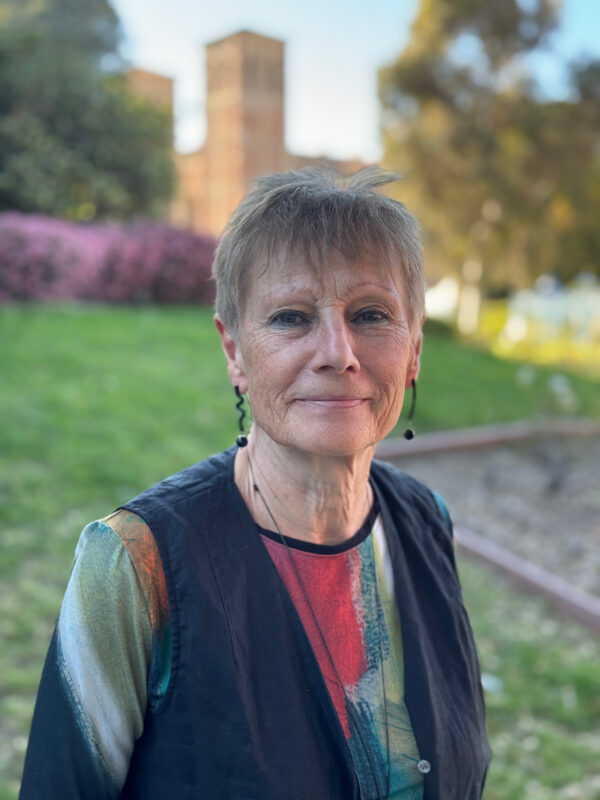
Ursula K. Heise

Ursula K. Heise

· Professor

University of California, Los Angeles · Environmental Science and Policy

Active 1970–2024

h-index22
Citations3.7k
Papers13943 last 5y
Funding
See your match with Ursula K. Heise — sign in to PhdFit.Sign in

About

Ursula K. Heise holds the Marcia H. Howard Term Chair in Literary Studies in the Department of English and the Institute of the Environment and Sustainability at UCLA. She is co-founder and current Director of the Lab for Environmental Narrative Strategies (LENS). Her research and teaching focus on the environmental humanities; contemporary environmental literature, arts, and cultures in the Americas, Germany, Japan, Spain, and Vietnam; literature and science; science fiction; and narrative theory. Her books include Sense of Place and Sense of Planet: The Environmental Imagination of the Global (Oxford University Press, 2008) and Imagining Extinction: The Cultural Meanings of Endangered Species (University of Chicago Press, 2016), which won the 2017 book prize of the British Society for Literature and Science. She is co-editor of The Routledge Companion to the Environmental Humanities (Routledge, 2017), and co-editor of the series Literatures, Cultures, and the Environment with Palgrave. She is also producer and writer of Urban Ark Los Angeles, a documentary on urban parrots created as a collaboration of LENS with the public television station KCET-Link. Her most recent book, a co-edited essay collection on Environment and Narrative in Vietnam, will be published in 2023. She is currently at work on a book entitled “Reclaiming Ecotopia: Science Fiction and Environmental Futures.”

Research topics

  • Sociology
  • Computer Science
  • Political Science
  • Ecology
  • Philosophy
  • Environmental ethics
  • Social Science
  • Law
  • Biology
  • Archaeology
  • Linguistics
  • Art
  • Literature
  • Gender studies
  • History
  • Psychology
  • Social psychology
  • Anthropology
  • Geography

Selected publications

  • Introduction: Environment and Narrative in Vietnam

    Literatures, Cultures, and the Environment · 2024-01-01

    book-chapter1st authorCorresponding
  • Environment and Narrative in Vietnam

    Literatures, Cultures, and the Environment · 2024-01-01 · 6 citations

    bookOpen access1st authorCorresponding
  • Conservation Humanities and Multispecies Justice

    Humanities · 2024-03-01 · 4 citations

    articleOpen access1st authorCorresponding

    This article argues that biodiversity conservation is primarily a social and cultural issue and only secondarily a scientific one. It explains the proxy logic of narratives about endangered species, which typically serve as proxies for community identities and the changes communities have undergone through processes of modernization and colonization. Polar bears, whose endangerment is interpreted differently by North American and European audiences, on the one hand, and by Inuit communities, on the other, serve as an example of how endangered species narratives not only involve culture but also, more specifically, issues of multispecies justice. Conservation humanities needs to engage with the two central problems that multispecies justice has identified and grappled with: conflicts between the interests of disadvantaged human communities and nonhuman species and conflicts and trade-offs between the interests of different nonhuman species. The essay argues that adopting the framework of “multispecies justice” rather than “conservation” will help to overcome some of the impasses of interdisciplinary collaboration in environmental studies in the past.

  • Frontmatter

    Anglia - Zeitschrift für englische Philologie · 2024-04-01

    articleOpen access
  • Novela negra, ciencia ficción y futuros climáticos

    Theory Now Journal of Literature Critique and Thought · 2024-07-30 · 3 citations

    articleOpen access1st authorCorresponding

    Este ensayo explora los retos narrativos de la ficción climática con respecto a escalas temporales, espaciales y sociales. Tras una breve discusión teórica, el ensayo se centra en el género de la "novela negra" en combinación con la ciencia ficción como estrategia narrativa específica para la ficción climática. Se analizan dos novelas españolas sobre el cambio climático, El secreto del agua de Arturo Arnau Tarín (2007) y 2065 de José Miguel Gallardo (2017), en comparación con la novela estadounidense The Water Knife de Paolo Bacigalupi (2015), con el objetivo de demostrar los beneficios y las dificultades de adaptar un género literario establecido al tema del cambio climático.

  • Frontmatter

    Anglia - Zeitschrift für englische Philologie · 2023-11-28

    articleOpen access
  • :<i>How Nature Matters: Culture, Identity, and Environmental Value</i>

    The Quarterly Review of Biology · 2023-11-07

    review1st authorCorresponding
  • Frontmatter

    Anglia - Zeitschrift für englische Philologie · 2023

    • Philosophy
    • Linguistics
  • Frontmatter

    Anglia - Zeitschrift für englische Philologie · 2023-09-01

    articleOpen access
  • Urban Narrative and the Futures of Biodiversity

    Cambridge University Press eBooks · 2022-03-10

    book-chapter1st authorCorresponding

    Cities have traditionally been neglected settings in environmental writing and ecologically oriented literary criticism, but have played a central role in the thought and writings of the environmental justice movement. Recently, they have also come into focus as “novel ecosystems” of their own in fiction and nonfiction. This chapter surveys two thematic emphases in environmental literature that portrays cities at risk from either toxicity or climate change, both of which continue to emphasize the antagonism between urban landscapes and the forces of nature by describing cities as either sources or targets of environmental risk. It then focuses on a third and less explored approach to the city as a multispecies community to outline four recurrent templates: the awareness narrative in which individuals or communities discover urban species; the narrative of urban return in which wild species reclaim the city; narratives about cities as sites of newly emergent species through evolution or technological modification; and narratives of urban bonds between humans and nonhumans. All of these narratives shift the emphasis from the city as an ecological wasteland to a new understanding of novel urban ecosystems and novel biological habitats that need to be understood in terms of multispecies justice.

Frequent coauthors

  • Olga Fischer

    University of New Hampshire

    66 shared
  • Verena Olejniczak Lobsien

    Advisory Board Company (United States)

    66 shared
  • Martin Puchner

    Walter de Gruyter (Germany)

    66 shared
  • Elisabeth Bronfen

    66 shared
  • Philip Durkin

    Walter de Gruyter (Germany)

    66 shared
  • Terttu Nevalainen

    University of Helsinki

    66 shared
  • Martin Middeke

    66 shared
  • Liliane Louvel

    Université Paris Cité

    65 shared

Education

  • Ph.D., English

    University of California, Los Angeles

    1990
  • M.A., English

    University of California, Los Angeles

    1986
  • B.A., English

    University of California, Los Angeles

    1983

Awards & honors

  • 2011 Guggenheim Fellow
  • 6th Biophilia Award for pushing forward the field of Environ…
  • BBVA Foundation’s 6th Biophilia Award for pushing forward th…
  • Resume-aware match score
  • Save to shortlist
  • AI-drafted outreach

See your match with Ursula K. Heise

PhdFit ranks faculty by your research interests, methods, and publications — grounded in their actual work, not templates.

  • Free to start
  • No credit card
  • 30-second signup