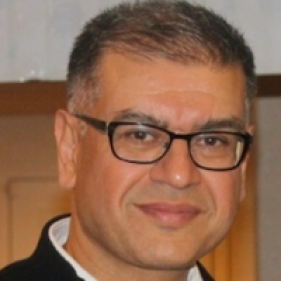
Vinayak Chaturvedi
· Professor of HistoryUniversity of California, Irvine · History
Active 1999–2025
About
Vinayak Chaturvedi is a Professor of History at the University of California, Irvine, affiliated with the School of Humanities. He earned his Ph.D. in History from the University of Cambridge in 2001. His research interests encompass South Asia, with a focus on social and intellectual history. Chaturvedi has authored and edited several books, including 'Hindutva and Violence: V.D. Savarkar and the Politics of History' (2022), 'Peasant Pasts: History and Memory in Western India' (2007), and 'Peasant Pasts: History, Politics and Nationalism in Gujarat' (2008). He has also edited volumes such as 'Mapping Subaltern Studies and the Postcolonial' and 'The Pandemic: Perspectives on Asia.' His scholarly work includes articles on historiography, intellectual history, and agrarian social history, with a particular focus on colonial and postcolonial India, the politics of history, and the social dynamics of peasant communities. Chaturvedi's contributions extend to public discourse through writings on contemporary issues in Gujarat and the history of violence and nationalism in South Asia. His academic achievements include fellowships from the Royal Historical Society, the British Academy, the National Endowment for the Humanities, and a visiting fellowship at Stanford University’s Asia Pacific Research Center.
Research topics
- Political Science
- Sociology
- Computer Security
- Social Science
- Computer Science
- Religious studies
- World Wide Web
- Economics
- Art history
- Law
- Philosophy
- History
- Management
- Classics
- Economic history
- Art
- Internet privacy
Selected publications
The American Historical Review · 2025-10-06
article1st authorCorrespondingAbstract This essay examines the Italian city of Rome as an archive to discuss connected histories of Italian and Indian political thought in the twentieth century. Inspired by the methodological writings of Carlo Ginzburg, the essay explores the intellectual links among Benito Mussolini, M. K. Gandhi, B. S. Moonje, and Antonio Gramsci that helped to shape Indian nationalism, Italian fascism, Communism, and the future of subalternity.
NLR/Sidecar · 2022-04-29
article1st authorCorrespondingState University of New York Press eBooks · 2022-09-01
book1st authorCorrespondingC.A. Bayly’s Unfinished Business: A History of Ideas in an Old Manuscript
South Asia Journal of South Asian Studies · 2022
1st authorCorresponding- Political Science
- Political Science
- History
PhishSpy – A Phishing Detection Tool and Defensive Approaches
2022 · 1 citations
- Computer Science
- Computer Security
- Computer Science
The art to trick the victim into believing the fake scenarios as legitimate with the intention of getting the target to either download malware or take over personal information. Phishing has become the ultimate fashionable cybercrime among cybercriminals. The impact of phishing is adverse and can lead to unfavorable scenarios, indeed cybercrime. Since these attacks are increasing exponentially and cause huge damage and financial losses, the detection of phishing is of great importance and has also become an area of great interest. In this paper we will discuss a few new tactics for detecting this phishing technique. However, there are already contrasting explanations in many papers, but phishing is very active and in action with new masks that were just discovered in 2022, and for detecting them, there is no algorithm or approach yet. This document describes the most frequent phishing tactics as well as the PhishSpy algorithmic (heuristics-based) tool created to detect phishing, which can discover phishing URLs and provide a suspect score as an output to the user. The PhishSpy algorithmic program features a catch rate of 95%. This paper discusses the methodology used to create this algorithmic program, as well as the implementation details and testing results.
Violence as Civility: V.D. Savarkar and the Mahatma’s Assassination
South Asian History and Culture · 2020 · 3 citations
1st authorCorresponding- Sociology
- Sociology
- Social Science
This paper examines V.D. Savarkar’s interpretation of the place of violence within his larger arguments about civility as a way to rethink the murder of M.K. Gandhi – the Mahatma. Savarkar’s seminal work on Hindutva transformed political debate in the twentieth century by rethinking the categories of ‘Hindu’ and ‘Hindusthan.’ His contributions to the debates on civility provided an important insight: that is, violence was central to the understanding of what he calls Hindu civility – and by extension Hindu civilization. For him, to marginalize the centrality of violence was to not only overlook the basic foundation of civility, but it was to ignore the foundation of what it meant to be a Hindu. It was a radical statement of inscribing violence as central to the episteme of Hindu thought. This paper argues that Savarkar’s interpretation of political assassination was a key component of his conceptualization of violence as an ethical mode of conduct. It further examines Savarkar’s writings on the need for political assassinations against those individuals who promoted ‘excessive non-violence.’
JAS volume 78 issue 2 Cover and Front matter
The Journal of Asian Studies · 2019-05-01 · 1 citations
articleOpen access1st authorCorrespondingAn abstract is not available for this content so a preview has been provided. As you have access to this content, a full PDF is available via the ‘Save PDF’ action button.
JAS volume 78 issue 4 Cover and Front matter
The Journal of Asian Studies · 2019-11-01 · 1 citations
articleOpen access1st authorCorrespondingAn abstract is not available for this content so a preview has been provided. As you have access to this content, a full PDF is available via the ‘Save PDF’ action button.
JAS volume 78 issue 1 Cover and Front matter
The Journal of Asian Studies · 2019-02-01 · 1 citations
articleOpen access1st authorCorrespondingAn abstract is not available for this content so a preview has been provided. As you have access to this content, a full PDF is available via the ‘Save PDF’ action button.
From Oral History to Intellectual History (and the Unintended Autobiography)
South Asia Journal of South Asian Studies · 2018-10-02 · 1 citations
article1st authorCorrespondingThis paper provides an interpretation of the Bengali Intellectuals Oral History Project as a new archive for studying the intellectual history of South Asia. It explains that an important outcome of the nexus between oral history and intellectual history is the construction of an ‘unintended autobiography’ of each subject interviewed in the project. By considering the centrality of autobiography, the paper offers insights into rethinking the methodological approaches to writing the intellectual history of South Asia. Finally, it provides a reading of Partha Chatterjee’s seminal writings, along with his oral history, as a way to consider the convergence of autobiography with political thought.
Frequent coauthors
- 6 shared
Muhamad Ali
- 5 shared
Heather Hindman
The University of Texas at Austin
- 4 shared
Rian Thum
University of Manchester
- 4 shared
Paola Zamperini
Northwestern University
- 4 shared
Rina Verma
University of Cincinnati
- 4 shared
Shruti Kapila
- 4 shared
K. A. David
University of California, Riverside
- 4 shared
Charlene Makley
Reed College
Education
- 2001
Ph.D., History
University of Cambridge
Awards & honors
- Grants Fellow, Royal Historical Society
- British Academy Visiting Fellowship at Oxford University
- National Endowment of the Humanities Summer Stipend
- Shorenstein Fellowship at Stanford University’s Asia Pacific…
- Resume-aware match score
- Save to shortlist
- AI-drafted outreach
See your match with Vinayak Chaturvedi
PhdFit ranks faculty by your research interests, methods, and publications — grounded in their actual work, not templates.
- Free to start
- No credit card
- 30-second signup