Resume-aware faculty matching

Find professors who actually fit you

Upload your resume. Four AI agents analyze your background, rank the faculty who fit, inspect their recent research, and help you draft outreach — grounded in their actual work, not templates.

Free to startNo credit cardCancel anytime
Top matches Balanced preset
Dr. Sarah Chen
Stanford · Interpretability · NLP
91
Dr. Marcus Holloway
MIT · Robotics · RL
84
Dr. Aisha Okonkwo
CMU · Fairness · HCI
82
Nova · Professor Researcher · re-ranking top 20…
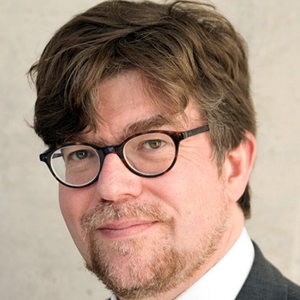
Volker Leppin

Volker Leppin

· ProfessorVerified

Yale University · Department of Film and Media Studies

Active 1970–2026

h-index8
Citations286
Papers36682 last 5y
Funding
See your match with Volker Leppin — sign in to PhdFit.Sign in

About

Volker Leppin is a professor in the Humanities at Yale Divinity School. He was educated at the University of Marburg, Heidelberg University, and participated in the Theological Academic Year in Jerusalem program. He received a chair in Church History at the University of Jena in 2000, and in 2010, he moved to the University of Tübingen, where he held the chair in Church History and directed the Institute for Late Middle Ages and Reformation until 2021. His scholarship focuses on medieval and Reformation studies, emphasizing the understanding of the Reformation as a transformation of the medieval world rather than a stark rupture. He also concentrates on the history of spirituality and mysticism. Leppin is a member of several prestigious scholarly societies, including the Academies of Sciences at Heidelberg, the Saxonian Academy of Sciences, and the European Academy of Arts and Sciences in Salzburg. He is the author of 20 monographs, including a biography of Martin Luther titled 'Martin Luther. A Late Medieval Life,' and has contributed extensively to critical text editions and scholarly articles, covering a broad range of interests from antiquity to the modern era.

Research topics

  • Philosophy
  • Theology
  • Humanities
  • Religious studies
  • Medicine
  • Art

Selected publications

  • Luther und die Juden

    Mohr Siebeck eBooks · 2026-01-01

    book1st authorCorresponding

    Volker Leppin addresses the much-debated question of Luthers attitude toward the Jews by situating it within late medieval theology and exegesis. He shows how Luthers anti-Jewish polemics emerged from intra-Christian criticism and became embedded in the framework of early modern proto-antisemitism.

  • Die Komposition von Meister Eckharts Maria-Martha-Predigt

    2026-01-01 · 1 citations

    book-chapterOpen access1st authorCorresponding

    L'A. etudie le sermon de Maitre Eckhart consacre a Marthe et Marie (Sermon Q 86) sur Luc 10,38-42. Il recherche l'architecture de sa composition et met en lumiere la structure concentrique. Cette structure permet a Maitre Eckhart de faire entrer les contenus dans le schema des trois chemins vers Dieu distinguant la recherche de Dieu dans l'action dans les choses creees et par l'extase.

  • Aesthetic Negotiations in Devotional Texts. A Comparison of Chapter II,25 of The Flowing Light of the Godhead and Meister Eckhart’s Sermon 57

    2025-05-05

    book-chapterOpen accessSenior author

    This chapter brings together literary studies and theological investigations in the field of Church History.It examines aspects of a Christian aesthetics as prevalent in the Middle Ages, focusing on Chapter II,25 of The Flowing Light of the Godhead, handed down under the name of Mechthild of Magdeburg and Meister Eckharts Sermon 57.Christian aesthetics finds its place here somewhere between the concealment of a transcendent God and his becoming visible in the incarnation.With its rhetorical inventory, Chapter II,25 of the Flowing Light aims to achieve a performative comprehension of what is said in order to lead, qua identification, to the experience of unity (unio) with God.Even if the structure of argumentation in Meister Eckharts Sermon 57 largely follows scholarly and learned guidelines and patterns, the goal here is also to convey and visualize the salvation of the biblical events in the here and now.In the tension between the religious reference to salvation and the linguistic design, whose mediating power is both doubted and celebrated, aesthetic processes of negotiation become tangible with great intensity.Therefore, this article aims to show how functionally bound texts, especially those claiming to mediate religious salvation, could become an outstanding site of aesthetic reflection in the pre-modern era.

  • Embrico of Mainz. Retelling Muhammad in the Wake of the Christian Simony Controversy

    Brepols eBooks · 2025-01-01

    book-chapterOpen access1st authorCorresponding

    Retelling Muhammad in the Wake of the Christian Simony ControversyIn 'Co-produced Religions: Judaism, Christianity and Islam' , Katharina Heyden and David Nirenberg state that 'co-production' is a term that is helpful for understanding how 'many and varied Muslim, Jewish, and Christian communities are forming, re-forming and transforming themselves by interacting with, thinking about, and imagining each other' . 1 This might sound like a bit of a vague generalization at first glance.It offers the possibility, though, of understanding how these respective religions developed their own convictions in part as a mirror of that of other.This will be exemplified in the following by a life of Muhammad, composed in the twelfth century and versified into 'rhymed leonine hexameters' by an unknown Christian author. 2 According to John Tolan, the leading expert on this text, it is 'perhaps the earliest and certainly the most elaborate twelfth-century portrayal of Muhammad' and 'also the first coherent theo logical response to Islam by a Latin writer outside of Spain' . 3 The poem obviously deserves to be interpreted in light of its * I am deeply grateful to Colin Hoch (Yale University) for editing this essay.1 Heyden and Nirenberg, 'Co-produced Religions' . 2 Tolan, ' Anti-Hagio graphy' , p. 26.Tolan actually mentions 1149 lines, but Al-Tamimi, 'Medieval Christian Depictions of Islam' , rightly counts only 1148 lines.In the following, I will use Al-Tammini's translation for rendering the text of the vita in English.The critical standard edition of the original can be found in: Embricon de Mayence, La Vie de Mahomet, ed. by Cambier.A handier edition is Medi eval Latin Lives of Muhammad, ed. by Yolles and Weiss, where we find the Latin text without apparatus together with a translation which does not, like Al-Tammini's, try to follow the poetical organization of Embrico's text.I will give the respective passages in this work in the following, too. 3 Tolan, ' Anti-Hagio graphy' , p. 26.The editors of Medi eval Latin Lives even praise it as the 'first extensive work about Muhammad from Western Europe' (p.xiii).In his collection of essays on Christianity and Islam, Tolan explains why it is so important that Embrico was situated in Central Europe: 'While authors north of the Pyrenees created an imaginary Islam that they

  • Der Einfluss Johannes Ecks auf den jungen Luther

    2025-08-26

    articleOpen access1st authorCorresponding

    1640436855

  • 2017 - ein Jubiläum

    Universitätsbibliothek Tübingen - Open Journals - Ökumenische Rundschau · 2025-03-06

    articleOpen access1st authorCorresponding
  • Luther's Marriage in its Theological Setting

    Lutheran quarterly · 2025-11-18

    articleOpen access1st authorCorresponding

    Abstract: Luther's marriage took some of the Reformer's companions by surprise. Indeed, Luther had for a long time attempted to get Katharina married to someone else, but this did not work out. The Reformer's own resistance to marriage might have been overcome through his parents' influence. Luther drew his foremost understanding of marriage, as a remedy against sin, from Peter Lombard's Sentences , thus demonstrating that the Lutheran theology of marriage was more a transformation of medieval thought than a break from it. The marriage of a monk and a nun caused an uproar and was an example of Luther's new understanding of Christianity.

  • Ars moriendi and the Senses

    Renaissance and Reformation · 2025-07-09

    article1st authorCorresponding

    Late medieval artes moriendi are an example of the opposition between spiritual and bodily senses, as is otherwise known in mystical texts. The artes moriendi counselled believers in their hour of death, when their physical senses were fading away. As this article will argue, this handicap could turn into an advantage when it led to a focus on the spiritual senses. Seeing with the inner eye would bring believers onto the path to God and, thus, help them to overcome temporal death through eternal life. Even if the genre of ars moriendi came to an end with the Reformation in Protestant countries, the idea of spiritual senses overcoming death survived.

  • J. S. Bach and the Mystical Tradition

    Lutheran quarterly · 2025-05-22

    articleOpen access1st authorCorresponding

    Abstract: The essay understands mysticism as a form of spirituality and theology centered on overcoming the separation between the creator and creation here and now and argues that we find this kind of spirituality in several texts which Bach put to music. The first obvious field is bridal mysticism, rooted in Bernard of Clairvaux, which we find in Cantata BWV 49 or cantata BWV 159. Another prominent theme in Bach's oeuvre is passion mysticism for which the Passions of the composer give plenty of evidence. The Christmas oratorio falls more into the field of incarnation mysticism.

  • 161Die Entstehung des Reformatorenbildes: Luther und Honterus im Vergleich

    2025-02-25

    book-chapterOpen access1st authorCorresponding

Frequent coauthors

  • Hermann Spieckermann

    9 shared
  • Wolfgang Behringer

    Saarland University

    9 shared
  • Erich Bryner

    7 shared
  • Leo Lucassen

    6 shared
  • Irène Dingel

    6 shared
  • Stefan Reichmuth

    6 shared
  • Gerrit Walther

    6 shared
  • Peter Opitz

    6 shared

Education

  • Habilitation, Theologie

    Ruprecht Karls Universität Heidelberg

    1999
  • Dr. theol., Theologie

    Ruprecht Karls Universität Heidelberg

    1994

Awards & honors

  • Member of the Academies of Sciences at Heidelberg
  • Member of the Saxonian Academy of Sciences
  • Member of the European Academy of Arts and Sciences, Salzbur…
  • Resume-aware match score
  • Save to shortlist
  • AI-drafted outreach

See your match with Volker Leppin

PhdFit ranks faculty by your research interests, methods, and publications — grounded in their actual work, not templates.

  • Free to start
  • No credit card
  • 30-second signup