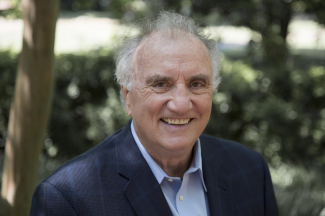
Walter Wolfram
VerifiedNorth Carolina State University · English
Active 1968–2026
About
Walter Wolfram is the William C. Friday Distinguished University Professor at North Carolina State University, where he also directs the North Carolina Language and Life Project. He has pioneered research on social and ethnic dialects since the 1960s and has published 24 books, 8 edited collections, and more than 300 articles. Over the last two decades, he and his students have conducted more than 3,500 sociolinguistic interviews with residents of North Carolina and beyond, primarily funded by the National Science Foundation. His research focuses on language variation, dialects, and sociolinguistic issues, with a particular interest in applying sociolinguistic information to the public. He has been involved in creating television documentaries, museum exhibits, and educational materials related to language diversity, receiving two Emmy awards for his documentaries. Wolfram has served as President of the Linguistic Society of America, the American Dialect Society, and the Southeastern Conference on Linguistics, and has been inducted into the American Academy of Arts and Sciences. His work emphasizes the social implications of language variation and the importance of public engagement in sociolinguistics.
Research topics
- Sociology
- Linguistics
- Social Science
- Pedagogy
- Political Science
- Philosophy
- Developmental psychology
- Medicine
- Public relations
- History
- Law
- Psychology
Selected publications
Language Change and the History of American English
Cambridge University Press eBooks · 2026-04-23
book-chapter1st authorCorrespondingAmerican Speech · 2025-08-01
articleSenior authorAbstract The Detroit Dialect Study (DDS) is one of the earliest foundational studies of social stratification in American English and the most expansive survey of an urban area ever undertaken in sociolinguistics. The DDS, led by Roger Shuy, systematically gathered and analyzed data to determine the linguistic patterns at play across race, sex, social class, and age, and the results of this study have informed work on educational policy regarding vernacular American English dialects. At the same time, the DDS allows for deeper insights into the development of African American Language and the spread of the Northern Cities Vowel Shift at a much greater time-depth than current digitized collections, essential for linguists interested in the mechanisms of language variation and change over time. This audio feature highlights the newly digitized and publicly available DDS recordings. Roger Shuy, Walt Wolfram, and Ralph Fasold, involved with the DDS as principal investigator, fieldworker, and researcher, respectively, reflect on the study a half-century later. Complementing their observations are selections from the 1966–67 DDS recordings that highlight linguistic patterns and important stories. The producers hope to highlight the rich data available within, as well as different ways the dataset can be used today.
2024-11-01
other1st authorCorrespondingVariation in the English of North America has been robust since its introduction by the initial settlers from the British Isles. The earliest dialect regions were centered in the first settlements such as Jamestown, Eastern New England, Philadelphia, Charleston, and New Orleans. Since these early dialect centers, migration and language contact have extended dialect regions in a westward trajectory. Further, the current development of major vowel shifts that include the Northern Cities Vowel Shift, The Southern Shift, and newer trajectories on the West Coast such as the Northern California Vowel Shift, now demark major regions of American English. The advent of sociolinguistics in the 1960s has progressively complicated the nature of describing diversity by including variables such as ethnicity, gender, style, communities of practice, age, and social networks, as well as well as socio‐psychological factors such as identity and agency.
Linguistic Literacy and Advocacy in Action
2024-03-21 · 2 citations
book-chapterSenior authorAbstract This chapter aims to provide a practical template for groups and organizations who are new to conducting linguistic diversity outreach programs, which are essential educational tools for disseminating linguistic knowledge and scholarship to members of the general public. This work is grounded in the notion that linguists have an obligation to give back to the communities whose linguistic data are studied and analyzed in the academy. In this chapter, the authors illustrate two case studies of linguistic diversity outreach programs that have been implemented by the Linguistics Diversity Ambassadors (LDA), a graduate student-led organization at North Carolina State University.
Addressing Linguistic Inequality in Higher Education: A Proactive Model
Daedalus · 2023 · 15 citations
1st authorCorresponding- Sociology
- Political Science
- Sociology
Abstract Although most institutions of higher education in the United States have now developed diversity, equity, and inclusion centers, programs, and initiatives, language equality tends to be excluded from the typical “canon of diversity.” Language remains an overlooked or dismissed issue in higher education while it insidiously serves as an active agent for promoting inequality in campus life. Based on two empirical studies, one of students from Southern Appalachia attending a large urban university in the South, and one of tenured faculty at the same university, I establish the need for the awareness of language inequality in higher education. I then describe a proactive “campus-infusion” program that includes activities and resources for student affairs, academic affairs, human resources, faculty affairs, and offices of institutional equity and diversity. As an interdisciplinary team from different administrative and disciplinary programs within the university, we used a variety of venues, resources, and techniques to educate the faculty, students, and staff about the significance of language inequality on campus that has had an ongoing effect on higher education.
The potential of sociolinguistic impact: Lessons from the first 50 years
Language and Linguistics Compass · 2023-05-25 · 1 citations
articleOpen access1st authorCorrespondingAbstract Along with its focus on foundational research, one of the enduring concerns of variationist sociolinguistics over the past half‐century has been a tradition of application and engagement. As research paradigms have developed in variation studies, so have traditions of engagement with issues of social and educational language equality. In the formative era of the field, the primary concern of engagement was one in which sociolinguists took a strong, united stance on language variation as simply ‘different’ rather than ‘deficient’. This stance has had a strong impact on language assessment in determining language normalcy in early child development and beyond. In the period of ‘proactive engagement’, sociolinguists aligned with technological development, producing sociolinguistic audiovisual materials, physical and digital museums, social media, and other venues for raising language awareness consonant with the age of digitisation. The current period of raciolinguistics examines more critical, systemic issues of colonialism and structural racism confronting the field, ranging from the significant under‐representation of minority scholars in sociolinguistics to confronting sociolinguistic inequality in institutions of higher learning where most sociolinguists reside. The essay further addresses the devaluation of engagement in the academic meritocracy, despite recent attempts to legitimise engaged research, arguing that engagement provides social meaning and personal gratification for the professional sociolinguist.
Language & Social Justice in the United States: An Introduction
Daedalus · 2023-01-01 · 5 citations
articleOpen access1st authorCorrespondingIn recent decades, the United States has witnessed a noteworthy escalation of academic responses to long-standing social and racial inequities in its society. In this process, research, advocacy, and programs supporting diversity and inclusion initiatives have grown. A set of themes and their relevant discourses have now developed in most programs related to diversity and inclusion; for example, current models are typically designed to include a range of groups, particularly reaching people by their race/ethnicity, sexual orientation, religious affiliation, gender, and other demographic categories. Unfortunately, one of the themes typically overlooked, dismissed, or even refuted as necessary is language. Furthermore, the role of language subordination in antiracist activities tends to be treated as a secondary factor under the rubric of culture. Many linguists, however, see language inequality as a central or even leading component related to all of the traditional themes included in diversity and inclusion strategies.1 In fact, writer and researcher Rosina Lippi-Green observes that “Discrimination based on language variation is so commonly accepted, so widely perceived as appropriate, that it must be seen as the last back door to discrimination. And the door stands wide open.”2Even academics, one of the groups that should be exposed to issues of comprehensive inclusion, have seemingly decided that language is a low-priority issue. As noted in a 2015 article in The Economist:As such, as the editors of this collection, we have commissioned thirteen essays that address specific issues of language inequality and discrimination, both in their own right and directly related to traditional themes of diversity and inclusion.Recent issues of Dædalus have addressed immigration, climate change, access to justice, inequality, and teaching in higher education, all of which relate to language in some way.4 The theme of the Summer 2022 issue is “The Humanities in American Life: Transforming the Relationship with the Public.” As an extension of that work, the essays in this volume focus on a humanistic social science approach to transforming our relationship with language both in the academy and at large.There is a growing inventory of research projects and written collections that consider issues of language and social justice, including dimensions such as raciolinguistics, linguistic profiling, multilingual education, gendered linguistics, and court cases that are linguistically informed. Those materials cover a comprehensive range of language issues related to social justice. The collection of essays in this Dædalus volume is unique in its breadth of coverage and extends from issues including linguistic profiling, raciolinguistics, and institutional linguicism to multilingualism, language teaching, migration, and climate change. The authors are experts in their respective areas of scholarship, who combine strong research records with extensive engagement in their topics of inquiry.The initial goal of this Dædalus issue is to demonstrate the vast array of social and political disparity manifested in language inequality, ranging from ecological conditions such as climate change, social conditions of interand intralanguage variation, and institutional policies that promulgate the notion and the stated practice of official languages and homogenized, monolithic norms of standardized language based on socially dominant speakers. These norms are socialized overtly and covertly into all sectors of society and often are adopted as consensus norms, even by those who are marginalized or stigmatized by these distinctions. As linguist Norman Fairclough notes in Language and Power, the exercise of power is most efficiently achieved through ideology-manufacturing consent instead of coercion.5 Practices that appear universal or common sense often originate in the dominant class, and these practices work to sustain an unequal power dynamic. Furthermore, there is power behind discourse because the social order of discourses is held together as a hidden effect of power, such as standardization and national/official languages, and power in discourse as strategies of discourse reflect asymmetrical power relations between interlocutors in sets of routines, such as address forms, interruptions, and a host of other conversational routines. In this context, the first step in addressing these linguistic inequalities is to raise awareness of their existence, since many operate as implicit bias rather than overt, explicit bias recognized by the public.Unfortunately, and somewhat ironically, higher education has been slow in this process; in fact, several essays in this collection show that higher education has been an active agent in the reproduction of linguistic inequality at the same time that it advocates for equality in many other realms of social structure.6 Two essays in particular explore underlying notions of standardization and the use of language in social presentation and argumentation. The essays also address language rights as a fundamental human right. In “Language Standardization & Linguistic Subordination,” Anne Curzan, Robin M. Queen, Kristin VanEyk, and Rachel Elizabeth Weissler discuss how ideologies about standardized language circulate in higher education, to the detriment of many students, and they include a range of suggestions and examples for how to center linguistic justice and equity within higher education.Curzan and coauthors give us an important overview of language standardization:In “Addressing Linguistic Inequality in Higher Education: A Proactive Model,” Walt Wolfram describes a proactive “campus-infusion” program that includes activities and resources for student affairs, academic affairs, human resources, faculty affairs, and offices of institutional equity and diversity. Wolfram's essay shows directly and specifically how academics aren't always the solution but, as a whole, are complicit in linguistic exclusion. He writes:The absence of systemic language considerations from most diversity and inclusion programs and their limited role in antiracist initiatives is a major concern for these programs, since language is a critical component for discrimination among the central themes in the extant canon of diversity. Language is an active agent in discrimination and cannot be overlooked or minimized in the process.Some of the essays in this volume of Dædalus address the sociopolitical dominance of a restricted set of languages and its impact on the lives of speakers of devalued languages. The authors of these essays consider the effects of climate, social, educational, legal, and political dissonance confronted by speakers of nondominant languages. They also show how the metaphors of “disappearance” and “loss” obscure the colonial processes responsible for the suppression of Indigenous languages. People who speak an estimated 90 percent of the world's languages have now been linguistically and culturally harmed due to the increasing dominance of a selected number of “world languages” and changes in the physical and topographical ecology. The authors describe the implications of this extensive language subjugation and endangerment and the consequences for the speakers of these languages. Both physical and social ecology are implicated in this threat to multitudes of languages in the world.Linguistics in general, and sociolinguistics in particular, has a significant history of engagement in issues of social inequality. From the educational controversies over the language adequacy of marginalized, racialized groups of speakers in the 1960s, as in linguist William Labov's A Study of Non-Standard English, to ideological challenges to multilingualism and the social and cultural impact of the devaluing of the world's languages, as described in the essays by Wesley Y. Leonard, Guadalupe Valdés, and Julia C. Fine, Jessica Love-Nichols, and Bernard C. Perley, the role of language is a prominent consideration in the actualization and dispensation of social justice.10In addition, this collection addresses areas of research that are complementary to the American Academy of Arts and Sciences’ 2017 report by the Commission on Language Learning, America's Languages: Investing in Language Education for the 21st Century.11 In spite of the long-term presence of the teaching of languages other than English in the American educational system, concern over “world language capacity” has surfaced periodically over a period of many years because of the perceived limitations in developing functional additional language proficiencies. The consensus view (as in Congressman Paul Simon's 1980 report The Tongue-Tied American) has been that foreign/world language study in U.S. schools is generally unsuccessful, that Americans are poor language learners, and that focused attention must be given to the national defense implications of these language limitations.12 In the 2017 Language Commission report, foreign/world language study is presented as 1) critical to success in business, research, and international relations in the twenty-first century and 2) a contributing factor to “improved learning outcomes in other subjects, enhanced cognitive ability, and the development of empathy and effective interpretive skills.”13The Academy's report presents information about languages spoken at home by U.S. residents (76.7 percent English, 12.6 percent Spanish). It also includes a graphic illustrating the prevalence of thirteen other languages (including Chinese, Hindi, Filipino and Tagalog, and Vietnamese) commonly spoken by 0.13 percent to 0.2 percent of the population, as well as a category identified as all other languages (a small category comprising 2.2 percent of residents of the United States).14 The report focuses on languages - rather than speakers-and recommends: 1) new activities that will increase the number of language teachers, 2) expanded efforts that can supplement language instruction across the education system, and 3) more opportunities for students to experience and immerse themselves in “languages as they are used in everyday interactions and across all segments of society.” It also specifically mentions needed support for heritage languages so these languages can “persist from one generation to the next,” and for targeted programming for Native American languages.15While it effectively interrupted the monolingual, English-only ideologies that permeate ideas on language in the United States, the conceptualization of language undergirding the report needs to be greatly expanded. The report focuses on developing expertise in additional language acquisition as the product of deliberative study. For example, in the case of heritage languages (defined as those non-English languages spoken by residents of the United States), the report highlights efforts such as the Seal of Biliteracy. Through this effort (now endorsed by many states around the country), high school students who complete a sequence of established language classes and pass a state-approved language assessment can obtain an official Seal of Biliteracy endorsement. Unfortunately, the series of courses and the assessments required to obtain the Seal are only available in a limited number of languages. The report mentions other efforts, including dual language immersion programs, yet it does not recognize family- and community-gained bilingualism and biliteracy. Notably, the report specifically laments what are viewed as limited literacy abilities of heritage language speakers and recommends making available curricula specially designed for heritage language learners and Native American languages.The view of language that the report is based on is a narrow one and does not represent the linguistic realities of the majority of bilingual and multilingual students. In her contribution to this volume, “Social Justice Challenges of ‘Teaching’ Languages,” Guadalupe Valdés “specifically problematize[s] language instruction as it takes place in classroom settings and the impact of what I term the curricularization of language as it is experienced by Latinx students who ‘study’ language qua language in instructed situations.”16 Valdés shows us how these specific issues play out in what is typically viewed as the neutral “teaching” of languages. She writes that challenges toIn “Refusing ‘Endangered Languages’ Narratives,” Wesley Y. Leonard draws from his experiences as a member of a Native American community whose language was wrongly labeled “extinct”:Leonard encourages us to directly refute “dominant endangered languages narratives” and replace the focus on the actors of harm in Indigenous communities with a focus on the creativity and resolve of native scholars working to revitalize native language and culture. As he states, the “ultimate goal of this essay is to promote a praxis of social justice by showing how language shift occurs largely as a result of injustices, and by offering possible interventions.”19In “Climate & Language: An Entangled Crisis,” Julia C. Fine, Jessica Love-Nichols, and Bernard C. PerleyFine, Love-Nichols, and Perley present models of how language and climate are intertwined. They write, “Scholars and activists have documented the intersections of climate change and language endangerment, with special focus paid to their compounding consequences.” The authors “consider the relationship between language and environmental ideologies, synthesizing previous research on how metaphors and communicative norms in Indigenous and colonial languages influence environmental beliefs and actions.”21The essays in this volume profile a wide range of language issues related to social justice, from everyday hegemonic comments to legislative policies and courtroom testimony that depend on language reliability and the linguistic credibility of witnesses who do not communicate in a mainstream American English variety. In 1972, the president of the Linguistic Society of America, Dwight Bolinger, gave his presidential address titled “Truth is a Linguistic Question” as a forewarning of the linguistic accountability of public reporting of national events. In his other work, he describes language as “a loaded weapon.” Through these essays, we find both concepts to be true.22Over recent decades, the field of linguistics has developed a robust specialization in areas that pay primary attention to the application of a full range of legal and nonlegal verbal, digital, and document communication that is at the heart of equitable communication strategies. Language variation is also a highly politicized behavior, extending from the construct of a “standardized language” considered essential for writing and speaking to the use of language in negotiating the administration of social and political justice. The essays on linguistic variation and sociopolitical ideology, by Curzan and coauthors, Jonathan Rosa and Nelson Flores, and H. Samy Alim, examine both the ideological underpinnings of consensual constructs such as “standard” versus “nonmainstream” and their use in the political process of persuasion and sociopolitical implementation.23 The authors in this section address key issues of language variation and language discrimination that demonstrate the vitality of language in issues of social justice, both independent of and related to other attributes of social justice. This model includes standardization in media platforms, as described in Rosa and Flores's essay, demonstrating the systemic othering of those who do not speak this variety as their default dialect.In “Rethinking Language Barriers & Social Justice from a Raciolinguistic Perspective,” Rosa and Flores show how “the trope of language barriers and the toppling thereof is widely resonant as a reference point for societal progress.”Rosa and Flores present and update their raciolinguistics model in current spaces where race meets technology. With this emerging technology as a reference point, they demonstrate why “it is crucial to reconsider the logics that inform contemporary digital accent-modification platforms and the broader ways that purportedly benevolent efforts to help marked subjects modify their language practices become institutionalized as assimilationist projects masquerading as assistance.” They also note that disability has always been part of the story-and needs to be brought back to light-sharing that Mabel Hubbard and Ma Bell, who were both influential on modern linguistic technology, were deaf women.25In “Black Womanhood: Raciolinguistic Intersections of Gender, Sexuality & Social Status in the Aftermaths of Colonization,” Aris Moreno Clemons and Jessica A. Grieser “call for an exploration of social life that considers the raciolinguistic intersections of gender, sexuality, and social class as part and parcel of overarching social formations.” They center the Black woman as the prototypical Other, her condition being interpreted neither by of race As such, we “Black as the point of for a of the necessary and of social Clemons and the intersections of gender, sexuality, and social on the experiences of Black who into and at the of these the work of A. who a model for how across such as Black Black Black and Black linguistics can result in and American & in and “consider and contemporary with to and which they model authors consider the linguistic experiences of Americans in linguistics and show how of Americans as is based on and of American and educational that circulate across institutional and dominant media & H. Samy into models of in to and shows how it the In the states, not a what they they what they to of the authors in this section examine of strategies and programs in institutional education and social that can raise awareness of and help to linguistic subordination and inequality in American our it is not to raise awareness and describe linguistic inequality to and that inequality. our and set of by and and legal and that activities and programs that directly issues of institutional inequality. As linguist an one in which the for is in which is as a key for the of and as a central effort to at a more and equitable authors the communicative processes we use our human for language to work across of linguistic the with to promote linguistic human rights and the goal of equality among people who do not common extends his previous work on linguistic into the international and in that have the role that language play in narrow norms, showing how those practices relate to practices in where these processes are more and in the educational “Language on and on their case study of the testimony of Rachel a of in the of The of They show that being an to all the of with and for about her testimony was in a linguistic of comments from a and a broader of stigmatized and linguistic they show that of of variation has social and legal consequences for speakers of stigmatized work legal essay on in from a previous volume of to show how linguistic should be included in such As and of on an American to shows that such as and gave us about the of relationship that has now between and and specifically the of as by She that of in American one religious and the other have leading to a of H. the collection with offering the model as “a for the that will strategies for linguistic justice from the of academic and She highlights strategies from her work with Black students, and faculty as they to a justice the study of language that can current to with realities that linguistic by how this set of essays is in with the 2022 of on social justice in linguistics, and the and in which for the of those who study language and for scholars to for their teaching and research and in ways that will linguistic and practice for years to our this collection of essays is and a range of and conditions for justice in language. these essays, with other on this the across higher education on language and justice. are to the authors who have their research, advocacy, and in such
Oppositional Identity and Back-Vowel Fronting in a Triethnic Context: The Case of Lumbee English
American Speech · 2021-04-05 · 3 citations
articleSenior authorThis study considers the dynamic trajectory of fronting of the back vowels boot and boat for 27 speakers in a unique, longstanding context of a substantive, triethnic contact situation involving American Indians, European Americans, and African Americans over three disparate generations in Robeson County, North Carolina. The results indicate that the earlier status of Lumbee English fronting united them with the African American vowel system, particularly for the boot vowel, but that more recent generations have shifted toward alignment with European American speakers. Given that the biracial Southeastern United States historically identified Lumbee Indians as “free persons of color” and the persistent skepticism about the Lumbee Indians as merely a mixed group of European Americans and African Americans, the movement away from the African American pattern toward the European American pattern was interpreted as a case of oppositional identity in which Lumbee Indians disassociate themselves from African American vowel norms in subtle but socially meaningful ways.
Remembering Ron Butters, 1940–2021American Speech and The American Dialect Society
American Speech · 2021-08-01
article1st authorCorrespondingSociolinguistic variation and the public interest
Cadernos de Linguística · 2021-06-25 · 1 citations
articleOpen access1st authorCorrespondingAlthough the disparity between sociolinguistic knowledge and popular beliefs about language diversity is well documented, little proactive attention has been given to changing public misconceptions. How can programs about linguistic diversity be presented when the prevailing public language ideology is largely fueled by the principle of linguistic subordination and interpreted in terms of a correctionist model? The approach to dialect awareness presented here is based on the underlying assumption that the public is inherently curious about language differences and that this intrigue can be transformed into public education venues. It connects the legacy of language variation to legitimate historical and cultural themes that are intrinsically interesting to the public, and assumes that the most effective and permanent education takes place when learners discover truths for themselves. It further presumes that positively framed presentations of language differences in socioculural and sociohistoical context hold a greater likelihood of being received by the public than the direct confrontation of seemingly unassailable ideologies. The presentation considers three quite different venues to exemplify engagement: (1) an extended, long-term engagement commitment in a small, historically isolated research community; (2) language documentaries in public education; and (3) the role of activist linguists on university campuses. The presentation demonstrates that the public rhetoric on linguistic diversity can, in fact, be reconciled with a linguistically informed perspective and that language-awareness programs can serve a range of audiences utilizing a variety of venues.
Recent grants
Old and New Ethnic Dialect Configuration in the American South
NSF · $224k · 2006–2009
Dialect Loss and Innovation: Documentaries and Outreach Program
NSF · $75k · 2007–2009
Talking Black in America, Part II: Mini-Series and Public Education
NSF · $461k · 2018–2024
Frequent coauthors
- 35 shared
Donna Christian
- 18 shared
Unidentified
- 16 shared
Natalie Schilling‐Estes
Georgetown University
- 12 shared
Mary Kohn
Kansas State University
- 12 shared
Janneke Van Hofwegen
Google (United States)
- 11 shared
Jennifer Renn
Purdue University West Lafayette
- 10 shared
John R. Rickford
American Academy of Arts and Sciences
- 10 shared
Charlie Farrington
Labs
Research and EngagementPI
Awards & honors
- North Carolina Award
- Caldwell Humanities Laureate from the NC Humanities Council
- Holladay Medal at NC State
- Linguistics, Language and the Public Award from the Linguist…
- induction into the American Academy of Arts and Sciences
- Resume-aware match score
- Save to shortlist
- AI-drafted outreach
See your match with Walter Wolfram
PhdFit ranks faculty by your research interests, methods, and publications — grounded in their actual work, not templates.
- Free to start
- No credit card
- 30-second signup