Resume-aware faculty matching

Find professors who actually fit you

Upload your resume. Four AI agents analyze your background, rank the faculty who fit, inspect their recent research, and help you draft outreach — grounded in their actual work, not templates.

Free to startNo credit cardCancel anytime
Top matches Balanced preset
Dr. Sarah Chen
Stanford · Interpretability · NLP
91
Dr. Marcus Holloway
MIT · Robotics · RL
84
Dr. Aisha Okonkwo
CMU · Fairness · HCI
82
Nova · Professor Researcher · re-ranking top 20…
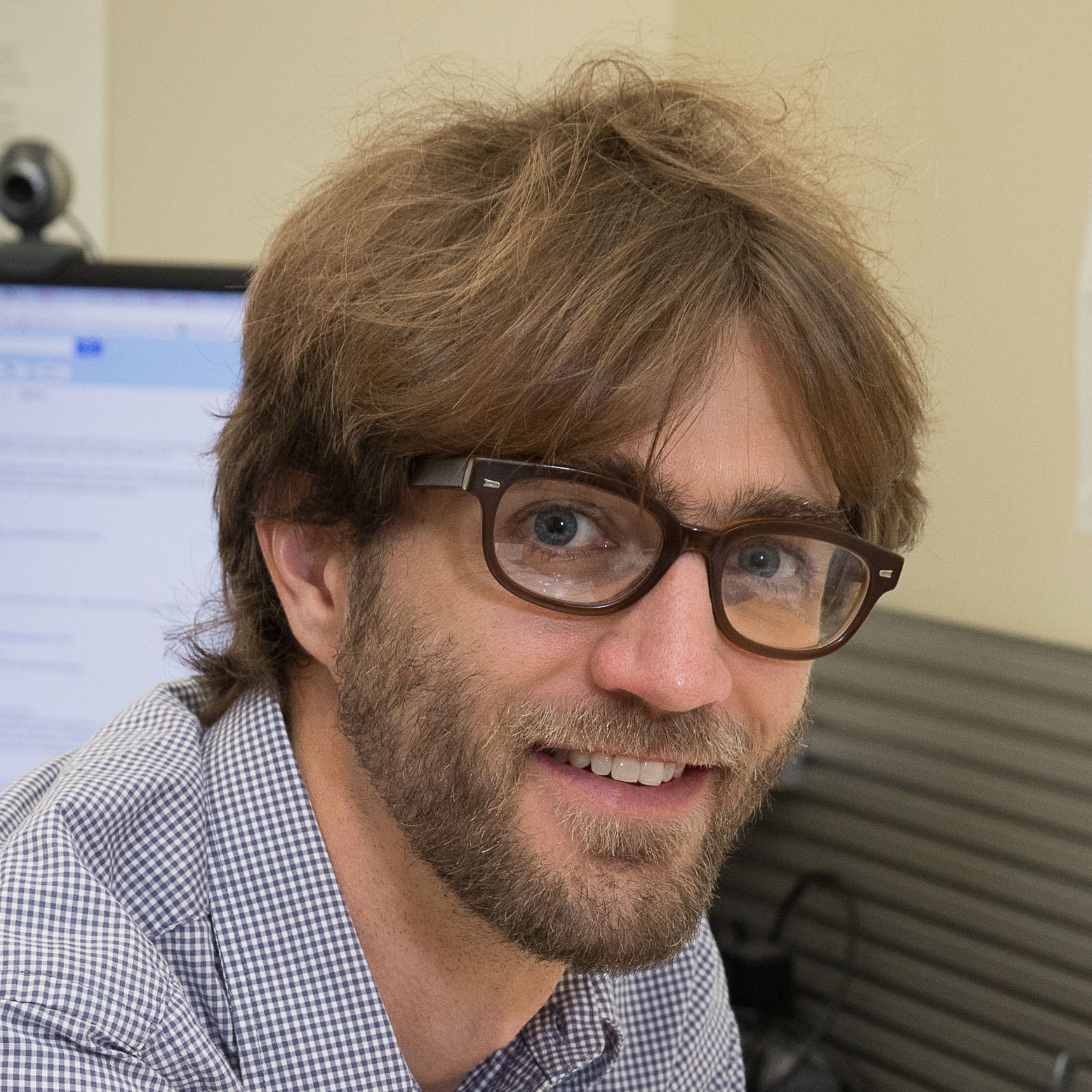
Wes Campbell

Wes Campbell

· ProfessorVerified

University of California, Los Angeles · Physics and Astronomy

Active 1904–2026

h-index40
Citations8.1k
Papers24185 last 5y
Funding$1.6M
See your match with Wes Campbell — sign in to PhdFit.Sign in

About

Wes Campbell is a professor at UCLA Physics & Astronomy, leading the Campbell Group. His research focuses on using ultra-cold atoms and molecules to explore physical processes that permeate our world, with a specific emphasis on the physics of quantum information. This includes advanced sensing, simulation, and computing applications, where gas and liquid phase atoms and molecules are utilized as tiny computers to perform tasks that cannot be simulated on classical computers. His approach involves focusing on novel species and innovative control methods to leverage the inherent 'quantumness' of these molecules for higher performance in quantum information processing. Professor Campbell's work encompasses a range of cutting-edge topics such as the development of molecules that can repeatedly scatter light without bleaching for quantum information processing, quantum error correction codes hosted within single atoms to mitigate electromagnetic errors, high-precision magnetic field measurement using liquid-phase molecular solutions, and matter-wave interferometry with trapped ions to verify entanglement and enable ultrafast quantum gates. His research has led to significant publications, including articles in Nature Chemistry and Science, and advances in understanding and harnessing quantum phenomena for practical applications.

Research topics

  • Physics
  • Quantum mechanics
  • Chemistry
  • Atomic physics
  • Astrobiology
  • Organic chemistry
  • Radiochemistry
  • Condensed matter physics
  • Physical chemistry
  • Astrophysics

Selected publications

  • Sub-hertz optical transitions in excited Yb$^+$

    ArXiv.org · 2026-02-07

    articleOpen accessSenior author

    We present the observation of three semi-forbidden transitions in singly-ionized ytterbium from the metastable $^{2}\mathrm{F}^o_{7/2}$ state. Owing to the long lifetimes of both the upper and lower states involved, these transitions are narrow and complement those already frequently used in this atom for quantum information and searches for new physics. We report the absolute frequencies of these electric quadrupole transitions, their isotope shifts, hyperfine structure, and measurements of the quadrupole transition moments. We find that the spontaneous lifetimes of these excited states are limited by slow magnetic dipole emission to lower-lying, odd-parity states, the lowest of which is accessible by laser excitation from ${}^2\mathrm{F}_{7/2}^o$ and is an attractive candidate for hosting a long-lived qubit.

  • Unraveling vibronic interactions in molecules functionalized with optical cycling centers

    The Journal of Chemical Physics · 2026-01-06 · 1 citations

    article

    We report detailed characterization of the vibronic interactions between the first two electronically excited states, à and B̃, in SrOPh (Ph = phenyl, -C6H5) and its deuterated counterpart, SrOPh-d5 (-C6D5). The vibronic interactions, which arise due to non-adiabatic coupling between the two electronic states, mix the B̃,ν0 state with the energetically close vibronic level, Ã,ν21ν33, resulting in extra transition probability into the latter state. This state mixing is more prominent in the deuterated molecule because of the smaller energy gap between the interacting states. We model the mixing of the à and B̃ states using the Köppel-Domcke-Cederbaum (KDC) Hamiltonian parameterized in the diabatic framework of Ichino, Gauss, and Stanton on the basis of equation-of-motion coupled-cluster calculations. The simulation attributes the observed mixing to a second-order effect mediated by linear quasi-diabatic couplings between the Ã-C̃ and B̃-C̃ states. Based on the measured spectra, we deduce an effective coupling strength of ∼0.5 cm-1. Non-adiabatic couplings between different electronic states are an important factor that should be considered in the design of laser-cooling protocols for complex molecules.

  • Quantum gate dynamics beyond the rotating wave approximation using multitimescale quantum averaging theory

    Physical review. A/Physical review, A · 2026-01-06 · 1 citations

    articleSenior author
  • Quantum averaging theory for multitimescale driven quantum systems

    Physical review. A/Physical review, A · 2026-01-06 · 1 citations

    articleSenior author
  • Hyperfine spectroscopy of optical-cycling transitions in singly ionized thulium

    Scientific Reports · 2026-03-30

    articleOpen access

    We present a spectroscopic investigation of [Formula: see text] that provides two key foundations for its use as a platform for advanced quantum applications. First, we establish the complete spectroscopic road map for optical cycling (including laser cooling) by performing high-resolution spectroscopy on [Formula: see text] ions in an ion trap. We characterize the primary 313 nm and complementary 448/453 nm cycling transitions, identify the essential near-infrared repumping frequencies, and determine the magnetic-dipole hyperfine A constants for all relevant levels. Second, we report a detailed characterization of a metastable state as a candidate for hosting a robust qubit, performing lifetime measurements and Zeeman-resolved microwave hyperfine spectroscopy with [Formula: see text] precision.

  • Sub-hertz optical transitions in excited Yb$^+$

    Open MIND · 2026-02-07

    preprintSenior author

    We present the observation of three semi-forbidden transitions in singly-ionized ytterbium from the metastable $^{2}\mathrm{F}^o_{7/2}$ state. Owing to the long lifetimes of both the upper and lower states involved, these transitions are narrow and complement those already frequently used in this atom for quantum information and searches for new physics. We report the absolute frequencies of these electric quadrupole transitions, their isotope shifts, hyperfine structure, and measurements of the quadrupole transition moments. We find that the spontaneous lifetimes of these excited states are limited by slow magnetic dipole emission to lower-lying, odd-parity states, the lowest of which is accessible by laser excitation from ${}^2\mathrm{F}_{7/2}^o$ and is an attractive candidate for hosting a long-lived qubit.

  • Angular Geometry of Atomic Multipole Transitions

    ArXiv.org · 2025-10-08

    preprintOpen access1st authorCorresponding

    A simple way to calculate Rabi frequencies is outlined for interactions of atomic or nuclear multipole moments with laser fields that focuses on their relative geometry. The resulting expression takes the form of a dot product between the laser polarization and a vector spherical harmonic, thereby naturally connecting to the multipole's far-field spontaneous-emission pattern and providing a way to visualize the interaction. Since the vector spherical harmonics are not yet a standard tool in quantum science, their relevant properties are reviewed. This approach is illustrated in the calculation of a variety of beam effects, yielding both perturbative corrections and some nontrivial cases with non-vanishing coupling.

  • Quantum Averaging Theory for Multi-Timescale Driven Quantum Systems

    ArXiv.org · 2025-03-12

    preprintOpen accessSenior author

    We present a multi-timescale Quantum Averaging Theory (QAT), a unitarity-preserving generalized Floquet framework for analytically modeling periodically and almost-periodically driven quantum systems across multiple timescales. By integrating the Magnus expansion with the method of averaging on multiple scales, QAT captures the effects of both far-detuned and near-resonant interactions on system dynamics. The framework yields an effective Hamiltonian description while retaining fast oscillatory effects within a separate dynamical phase operator, ensuring accuracy across a wide range of driving regimes. We demonstrate the rapid convergence of QAT results toward exact numerical solutions in both detuning regimes for touchstone problems in quantum information science.

  • Internal State Cooling of an Atom with Thermal Light

    Entropy · 2025-02-21 · 1 citations

    articleOpen accessSenior authorCorresponding

    A near-minimal instance of optical cooling is experimentally presented, wherein the internal-state entropy of a single atom is reduced more than twofold by illuminating it with broadband, incoherent light. Since the rate of optical pumping by a thermal state increases monotonically with its temperature, the cooling power in this scenario increases with higher thermal occupation, an example of a phenomenon known as cooling by heating. In contrast to optical pumping using coherent, narrow-band laser light, here, we perform the same task with fiber-coupled, broadband sunlight, the brightest laboratory-accessible source of continuous blackbody radiation.

  • Flexion: Adaptive In-Situ Encoding for On-Demand QEC in Ion Trap Systems

    ArXiv.org · 2025-04-22

    preprintOpen access

    Recent advances in quantum hardware and quantum error correction (QEC) have set the stage for early demonstrations of fault-tolerant quantum computing (FTQC). A key near-term goal is to build a system capable of executing millions of logical operations reliably -- referred to as a megaquop quantum computer (MQC). In this work, we propose a novel system architecture targeting MQC on trapped-ion quantum computers (TIQC), leveraging their ultra-high-fidelity single-qubit gates (1Q) and efficient two-qubit (2Q) logical CNOT gates enabled by the quantum charge-coupled device (QCCD) architecture with the ion shuttling feature. We propose Flexion, a hybrid encoding scheme that uses bare qubits for 1Q gates and QEC-encoded logical qubits for 2Q gates. This approach avoids fully encoding all qubits, eliminating the overhead of gate synthesis, teleportation, and magic state distillation for non-Clifford gates. To support this, we design (1) a low-noise conversion protocol between bare and logical qubits, (2) a bare-logical hybrid instruction set architecture tailored for 2D grid-based TIQC, and (3) a compiler that minimizes conversion cost and optimizes the scheduling efficiency. We evaluate our approach on VQA and small-scale FTQC benchmarks, showing that it achieves superior performance improvements with significantly reduced resource overhead, offering a practical path toward early FTQC on TIQC.

Recent grants

Frequent coauthors

  • C. Monroe

    Keck Hospital of USC

    80 shared
  • Crystal Senko

    University of Waterloo

    70 shared
  • John M. Doyle

    67 shared
  • Eric R. Hudson

    55 shared
  • Jonathan Mizrahi

    Ochsner Medical Center

    45 shared
  • David Hucul

    44 shared
  • Rajibul Islam

    University of Alabama at Birmingham

    43 shared
  • Edem Tsikata

    Massachusetts Eye and Ear Infirmary

    42 shared

Education

  • B.S., Physics & Astronomy

    Trinity University

  • Ph.D., Physics

    Harvard University

  • Resume-aware match score
  • Save to shortlist
  • AI-drafted outreach

See your match with Wes Campbell

PhdFit ranks faculty by your research interests, methods, and publications — grounded in their actual work, not templates.

  • Free to start
  • No credit card
  • 30-second signup