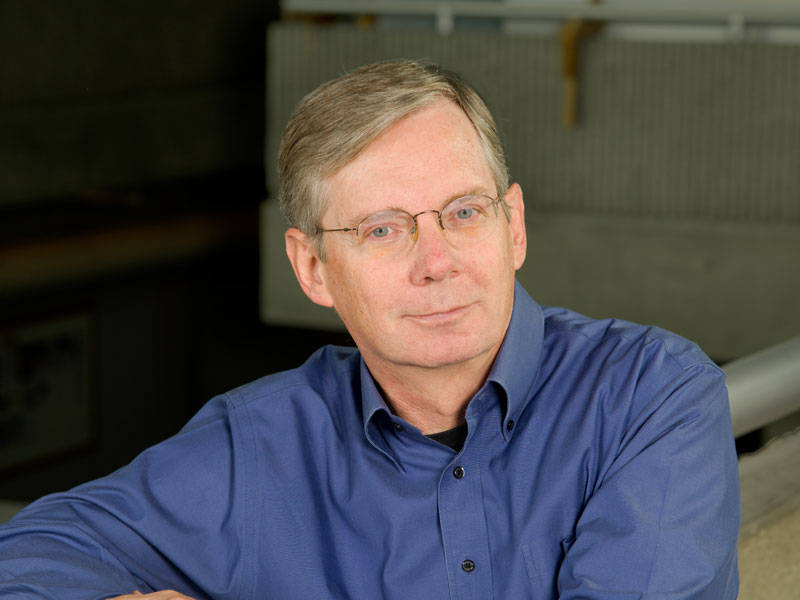
William J. Drummond
· Associate Professor of City & Regional PlanningGeorgia Institute of Technology · City and Regional Planning
Active 1983–2021
About
William J. (Bill) Drummond is an associate professor in the College of Design at the Georgia Institute of Technology, where he also directs the Master of Science degree in Geographic Information Science and Technology. He has been teaching at Georgia Tech since 1987, with courses covering climate change planning, land conservation, sustainable urban development, socioeconomic GIS, programming for GIS, and PhD quantitative research methods. His primary research interests focus on climate change mitigation, including work on population forecasting with advanced time-series models, the relationship between urban form and greenhouse gas emissions, and new methods of estimating building-level and neighborhood-level greenhouse gas emissions. Drummond has contributed to climate-related projects funded by organizations such as the U.S. Department of Energy, the Atlanta Regional Commission, the Georgia Environmental Protection Division, and the Ray C. Anderson Foundation. He is the lead developer of the Drawdown Georgia GHG Emissions Trackers, which estimate local greenhouse gas emissions across Georgia, and has provided technical analyses for Georgia's first climate action plan and the Atlanta Regional Commission's Climate Action Plan.
Research topics
- Sociology
- Political Science
- Criminology
- Psychology
- Art
- Philosophy
- Art history
- Environmental ethics
- Literature
- Physics
- History
Selected publications
Discourse approaches to politics, society and culture · 2021-10-25
book-chapterSenior authorAbstract The social dimension behind the (re-)production of news genre forms is examined in news reporting examples that present different discourse outcomes in the “postfoundational” social world for whom the prestige of news craft remains key ( Cotter 2010 ). Stories in “legacy” journalism ( New York Times ) are compared with the San Quentin News , the oldest prison newspaper in the US ( Drummond 2020 ). The SQN, while socially marginal, reflects central values of journalism in its story forms and demonstrates the direct link that media have with their audience. The NYT, while socially central, is itself becoming marginalized in the broader media context as traditional news stories assume less importance in everyday meaning-making. Together, they show how foundational discourse parameters shift or are reconfigured.
2020-07-10
book-chapter1st authorCorrespondingPrison Truth: The Story of the San Quentin News
2020 · 4 citations
1st authorCorresponding- Sociology
- Criminology
- History
San Quentin State Prison, California's oldest prison and the nation's largest, is notorious for once holding America's most dangerous prisoners. But in 2008, the Bastille-by-the-Bay became a beacon for rehabilitation through the prisoner-run newspaper the San Quentin News. Prison Truth tells the story of how prisoners, many serving life terms, transformed the prison climate from what Johnny Cash called a living hell to an environment that fostered positive change in inmates' lives. Award-winning journalist William J. Drummond takes us behind bars, introducing us to Arnulfo García, the visionary prisoner who led the revival of the newspaper. Drummond describes how the San Quentin News, after a twenty-year shutdown, was recalled to life under an enlightened warden and the small group of local retired newspaper veterans serving as advisers, which Drummond joined in 2012. Sharing how officials cautiously and often unwittingly allowed the newspaper to tell the stories of the incarcerated, Prison Truth illustrates the power of prison media to humanize the experiences of people inside penitentiary walls and to forge alliances with social justice networks seeking reform
2020-07-10
book-chapterOpen access1st authorCorrespondingUniversity of California Press eBooks · 2020
1st authorCorresponding- Sociology
- Political Science
- Criminology
2020 · 1 citations
1st authorCorresponding- Sociology
- Political Science
- Criminology
PART II. The Characters in the Newsroom
2020-07-10
book-chapter1st authorCorrespondingPART III. How It All Came Together
2020-07-10
book-chapter1st authorCorrespondingNorth Carolina in Ruins? The State Role in Financing Local Infrastructure
UNC Libraries · 2019-08-16
articleOpen accessSenior authorOver the last two years there has risen a growing public concern about the state of the nation's infrastructure; that is, public facilities, highways, water supply, and wastewater treatment services. The genesis of this concern was the 1981 book, America in Ruins , by Pat Choate and Susan Walter. Choate and Walter argued that: "America's public facilities are wearing out faster than they are being replaced. Under the exigencies of tight budgets and inflation, the maintenance of public facilities essential to national economic renewal has been deferred. Replacement of obsolescent public works has been postponed. New construction has been cancelled... Without attention to deterioration of that infrastructure, economic renewal will be thwarted, if not impossible. We have no recourse but to face the complex task at hand of rebuilding our public facilities as an essential prerequisite to economic renewal." In North Carolina there is currently an estimated $3 billion backlog of needs to repair and replace obsolete, temporary, and deteriorating facilities in highways, sewer, and schools alone. The number of inhabitants in North Carolina is expected to increase by 17 to 25 percent by the year 2000, requiring the state's infrastructure to support between 900,000 and 1.4 million more people and up to one-half million more households. Employment is predicted to increase at approximately twice the rate of population growth. The level and location of major private sector capital and other investment decisions will likely be influenced by the quality of infrastructure available and whether or not a sound program for maintenance and expansion exists.
2019-07-23
book-chapter1st authorCorrespondingQuantitative methods have become a standard component of the planning curriculum, as they serve three major purposes for practicing planners: they help us understand why cities grow and decline; they provide us with procedures to forecast the values of important variables around which we build plans for the future; and they allow us to track our progress in meeting important global and local goals. This chapter provides an overview of the potential structure and content of a course on basic quantitative planning methods, either in short or semester-long versions. It explains the interrelations between different types of quantitative tools and describes the utility of each type, as well as describing how recent and continuing advances in technology have facilitated the use of such tools.
Frequent coauthors
- 2 shared
Arthur C. Nelson
- 2 shared
Steven P. French
Georgia Institute of Technology
- 1 shared
Lori Sene Sorrow
- 1 shared
Catherine L. Ross
- 1 shared
Kathleen M. Heady
- 1 shared
Raymond J. Burby
- 1 shared
Bo Wang
Chinese People's Liberation Army
- 1 shared
Colleen Cotter
- Resume-aware match score
- Save to shortlist
- AI-drafted outreach
See your match with William J. Drummond
PhdFit ranks faculty by your research interests, methods, and publications — grounded in their actual work, not templates.
- Free to start
- No credit card
- 30-second signup