Resume-aware faculty matching

Find professors who actually fit you

Upload your resume. Four AI agents analyze your background, rank the faculty who fit, inspect their recent research, and help you draft outreach — grounded in their actual work, not templates.

Free to startNo credit cardCancel anytime
Top matches Balanced preset
Dr. Sarah Chen
Stanford · Interpretability · NLP
91
Dr. Marcus Holloway
MIT · Robotics · RL
84
Dr. Aisha Okonkwo
CMU · Fairness · HCI
82
Nova · Professor Researcher · re-ranking top 20…
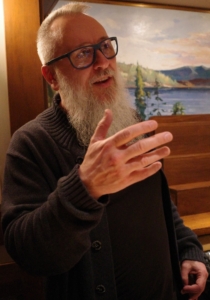
William Marotti

William Marotti

Verified

University of California, Los Angeles · History

Active 1999–2023

h-index6
Citations225
Papers2511 last 5y
Funding
See your match with William Marotti — sign in to PhdFit.Sign in

About

William Marotti is a professor at UCLA specializing in Japan. His research focuses on Japanese history, and he is recognized for his contributions to the field through his academic work and teaching. As a faculty member in the UCLA Department of History, he is involved in exploring various aspects of Japanese history, contributing to the understanding of Japan's historical developments and cultural contexts.

Research topics

  • Computer Science
  • Sociology
  • Political Science
  • Aesthetics
  • Engineering
  • Art
  • Law
  • Archaeology
  • History
  • Media studies

Selected publications

  • Selected Chronology

    Routledge eBooks · 2023

    1st authorCorresponding
    • History
    • Archaeology

    1940Nakajima is born on December 5 in Fukaya, Saitama prefecture, about 70 kilometers northwest of Tokyo, where his family have been farmers for well over three hundred years. As a third son, Nakajima would not be expected to inherit any of the family’s modest property.

  • When Art Grabs You

    2023-02-22

    book-chapter1st authorCorresponding

    Nakajima appears as a paradoxically untimely figure of timely intervention: strangely present, even pivotal, yet overlooked. Nakajima’s performance work in the oddly unstructured, expanding spaces of commuting through trains, stations, and streets predates similar and better-known explorations by avant-gardists in Tokyo and beyond. His chanting, free-form, often collaborative public performances across Europe likewise demand consideration within the broader contemporaneous explorations of ritual, ceremony, and bodily possibility in art in the 1960s. Nakajima repeatedly played a role in jump-starting spaces of possibility, from Tokyo to Ubbeboda, from Spui Square and the Dutch Provos to Antwerp and Sweden.Nakajima’s work presented a realized actuality of transformative, unbounded practices that, despite or because of their imperfect intelligibility, allowed others to see and experience the world differently. Following that elusive actuality, in turn, reveals the potential of such art and politics to emerge at any time—unpredictably, beyond intention or design; untimely but perhaps made more graspable by a bit of openness, by attention to the unusual. In this essay I consider Nakajima across our intertwined investigations. Following contemporaneous critic Yoshida Yoshie, I consider the relations of art, politics, and violence in the 1960s and the very possibilities of art.

  • Art and Street Politics in the Global 1960s

    2023-02-22

    book1st authorCorresponding
  • The Politics of Violence, Glue-Sniffing, and Liberation: Exclusions and Possibilities in 1968 Japan

    2023-10-03

    book-chapterOpen access1st authorCorresponding
  • Introduction

    Routledge eBooks · 2023

    1st authorCorresponding
    • Computer Science
    • Computer Science

    In ways that challenge our imaginings of the role, place, and possibilities of art, Yoshio Nakajima’s storied career has traversed an astounding range of locations, scenes, and movements as well as media and performance modes. The paradox of Nakajima’s work is that, despite its apparent exemplification of art’s potential to move and to transform, it has largely fallen out of accounts in which its impact might have justifiably featured. The present volume represents an international collaboration of researchers working to remedy this oversight. This introduction briefly outlines the subsequent chapters and the separate and collective stakes of the project. Nakajima’s work provides a compelling case for evaluating approaches to these transformations of art and politics and to their specific interrelation. Nakajima’s peripatetic practices are exemplary in their nonconformity and demonstrate the inadequacy of notions of specificity that would oppose an authentic local or national frame to an inauthentic transnational one. Conversely, they manifest a key dimension of the 1960s as a global event in the interrelation between eventfulness itself and the redrawing of categories of practice and understanding.

  • Introduction to special issue on imagination and the real

    Japan Forum · 2022-05-27

    article1st authorCorresponding

    Click to increase image sizeClick to decrease image size Disclosure statementNo potential conflict of interest was reported by the author(s).Additional informationNotes on contributorsWilliam MarottiWilliam Marotti, University of California Los Angeles, History, Los Angeles, CA, USA. Email: marotti@history.ucla.edu; URL: www.history.ucla.edu/marottiNotes1 As Bushelle notes, she uses this term in a specific technical sense within Japanese Studies. See Bushelle, note 5.2 Bushelle, 17.3 For a succinct summation of the manifold ways the modern nation state comprises a profoundly ‘deep structure’, see Goswami (2004 Goswami, Manu. 2004. Producing India: From Colonial Economy to National Space, 19–20. Chicago, IL: University of Chicago Press.[Crossref] , [Google Scholar]), 19–20.4 See Marotti (2013 Marotti, William. 2013. Money, Trains, and Guillotines: Art and Revolution in 1960s Japan. Durham, NC: Duke University Press.[Crossref] , [Google Scholar]); on the broader relations of happenings as a global set of emergent practices, and their overlap and distinctions with experiments in theater, see Rodenbeck (2011 Rodenbeck, Judith F. 2011. Radical Prototypes: Allan Kaprow and the Invention of Happenings. Cambridge, MA: MIT Press. [Google Scholar]).

  • The Performance of Police and the Theatre of Protest

    Journal of dramatic theory and criticism · 2021 · 1 citations

    1st authorCorresponding
    • Political Science
    • Sociology
    • Political Science

    On the basis of historical work on the global 1960s in Japan, I argue for the need to reconceptualize police/protest confrontations as essentially performative at all levels—as activists’ confrontations against normalized understandings and practices and, on the other side, the police’s defense of norms and of state legitimacy, including that of their own use of force. It is a performance of two counterposed senses, of the conventional and the possible, playing to enact or elide new emancipatory claims.

  • Art at the Limits of Community

    Review of Japanese culture and society · 2021-01-01

    articleSenior author

    Art at the Limits of Community Yoshiko Shimada (bio) and William Marotti (bio) Preface Contemporaneous with the Tokyo 2020 Olympics preparations and fanfare, the planned reprisal of a 2015 art exhibition that had examined the censorship of art became itself the target of rightist threats and denunciations by rightwing populist officials. After a series of abortive openings and cancellations, the Non-Freedom of Expression Kansai (Hyōgen no fujiyūten Kansai) exhibition opened in Osaka on July 16, 2021, the result of citizen efforts demanding the right to see and evaluate the works for themselves. The following account by scholar and participating artist Yoshiko Shimada considers these contentions and their significance during the fraught spectacle of the Olympics. An epilogue by historian William Marotti reflects on the episode as a case documenting the current possibilities for art and community in Japan. Art and the 2020 Olympics: Non-Freedom of Expression and Osaka's Human Wall Introduction In mid-May of 2021, some 83% of the population had reservations about holding the Tokyo Olympics.1 Opponents mounted a number of street protests; most were small in scale and quickly dispersed by police. Politicians implied a link between arrested protesters and certain "anti-Japan leftist elements," suggesting that opposition to the games was nothing short of a betrayal of the country.2 It was impossible even to imagine an artistic direct action like Hi Red Center's Tokyo Cleaning Event, staged on the eve of the Tokyo 1964 Olympics.3 However, there is one notable example of direct action by citizens who defied state control: the Non-Freedom of Expression exhibition held in Osaka in July of 2021. Although the exhibition did not directly address the Tokyo Olympics, it constitutes a rare instance of a successful artistic action that aimed to protect civil rights [End Page 93] during a time of profound censorship and almost complete control of public space by the state—in the name of "safety and security" (anshin to anzen)—in its anticipation of the Olympics and associated nationalist expectations and hopes. Chronology of the Non-Freedom of Expression Exhibition The first Non-Freedom of Expression exhibition was held in Tokyo in 2015 featuring works that had been subjected to censorship. The exhibition was later invited to be reprised as part of the 2019 Aichi Triennale, in a section titled "After 'Freedom of Expression?'"4 However, the Triennale Executive Committee decided to close it after rightists protested against works addressing the emperor system and "comfort women," especially the Statue of Peace (or so-called "Comfort Woman Statue"). The exhibition was reopened for a few days at the end of the Triennale, but most visitors were unable to see it.5 This ambiguous end to the most controversial art event of 2019 thus left the debate on freedom of expression and censorship essentially unresolved—while leaving a road map for further reductive politicization. In 2021, the exhibition was to be reinstated in Tokyo on June 25, but the Tokyo Committee decided to cancel it after the gallery that was to host the exhibit withdrew its offer of its facilities due to rightist street protests and threats. Another exhibition of selected works from the Non-Freedom of Expression exhibit was scheduled to be held at Nagoya City Civic Gallery from July 6 to 11, but on July 8 the gallery received an envelope that contained a firecracker. The city sealed off the venue until July 11, in effect closing the rest of the exhibition. Stated concerns about "safety and security" remained dubious, as Nagoya Mayor Kawamura Takashi had been vocal about his stance against the Non-Freedom of Expression exhibition ever since the time of the Aichi Triennale, even going so far as to stage an anti-exhibition sit-in with rightists. The Kansai Executive Committee then planned to hold the Non-Freedom of Expression exhibition from July 16 to 18 at L-Osaka, the Osaka Prefectural Labor Center.6 Permission was subsequently revoked, however, by the administrator of L-Osaka on June 25. On the following day, Prefectural Governor Yoshimura Hirofumi expressed his support of the revocation. Prefectural Governor Yoshimura and Mayor Kawamura both belong to the rightwing populist party...

  • Money, Trains, and Guillotines

    2020-10-01

    book1st authorCorresponding

    During the 1960s a group of young artists in Japan challenged official forms of politics and daily life through interventionist art practices. William Marotti situates this phenomenon in the historical and political contexts of Japan after the Second World War and the international activism of the 1960s. The Japanese government renewed its Cold War partnership with the United States in 1960, defeating protests against a new security treaty through parliamentary action and the use of riot police. Afterward, the government promoted a depoliticized everyday world of high growth and consumption, creating a sanitized national image to present in the Tokyo Olympics of 1964. Artists were first to challenge this new political mythology. Marotti examines their political art, and the state's aggressive response to it. He reveals the challenge mounted in projects such as Akasegawa Genpei's 1,000-yen prints, a group performance on the busy Yamanote train line, and a plan for a giant guillotine in the Imperial Plaza. Focusing on the annual Yomiuri Indépendant exhibition, he demonstrates how artists came together in a playful but powerful critical art, triggering judicial and police response. Money, Trains, and Guillotines expands our understanding of the role of art in the international 1960s, and of the dynamics of art and policing in Japan

  • Part III. Theorizing Art and Revolution

    2020-10-02

    book-chapter1st authorCorresponding

Frequent coauthors

  • Mariko Asano Tamanoi

    Association of Research Libraries

    1 shared
  • Donald C. McCallum

    Waseda University

    1 shared
  • Youngju Ryu

    1 shared
  • Mari Ishida

    Waseda University

    1 shared
  • Aynne Kokas

    Waseda University

    1 shared
  • Serk- Bae Suh

    Waseda University

    1 shared
  • Emily Anderson

    1 shared
  • Thu-Huong Ngyuyen-Vo

    Waseda University

    1 shared

Education

  • PhD, East Asian Languages and Civilizations

    University of Chicago

    2001
  • Resume-aware match score
  • Save to shortlist
  • AI-drafted outreach

See your match with William Marotti

PhdFit ranks faculty by your research interests, methods, and publications — grounded in their actual work, not templates.

  • Free to start
  • No credit card
  • 30-second signup