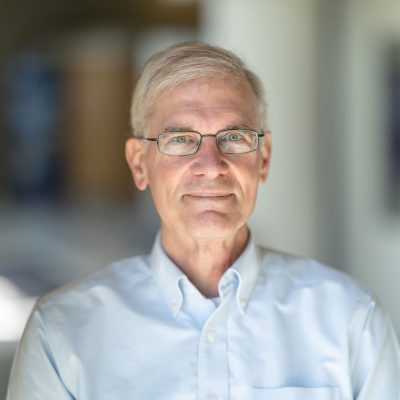
William T. Baumann
· Professor of Electrical and Computer EngineeringVerifiedVirginia Tech · Electrical and Computer Engineering
Active 1954–2025
About
William T. Baumann is an Associate Professor in the Bradley Department of Electrical and Computer Engineering at Virginia Tech. He holds a Ph.D. from Johns Hopkins University obtained in 1985, an M.S.E.E. from MIT in 1980, and a B.S.E.E. from Lehigh University in 1978. His research interests include classical and modern control system design, microprocessor systems, system identification, electronics, computational biology, biomedical applications, and control. Recent work involves dynamic modeling of biological systems, including modeling breast cancer cells to understand therapy resistance and stochastic modeling of the yeast cell cycle to produce more accurate models and understand the impact of molecular noise on cell cycle progression.
Research topics
- Medicine
- Internal medicine
- Computer Science
- Pharmacology
- Oncology
- Bioinformatics
- Biology
- Cancer research
- Computational biology
Selected publications
WEE1 inhibition delays resistance to CDK4/6 inhibitor and antiestrogen treatment in ER+ MCF7 cells
npj Systems Biology and Applications · 2025-11-17 · 1 citations
articleOpen accessSenior authorCorrespondingAlthough endocrine therapies and Cdk4/6 inhibitors have improved outcomes for patients with estrogen receptor positive (ER+ ) breast cancer, continuous application of these drugs often results in resistance. Upregulation of G1 and S phase kinase activities during therapy can allow cancer cells to bypass drug induced cell cycle arrest. We investigated whether inhibiting WEE1, a key G2 checkpoint regulator also involved in G1/S transition, could delay the development of resistance. We treated ER+ MCF7 breast cancer cells with palbociclib alternating with a combination of fulvestrant and WEE1 inhibitor AZD1775 for 12 months. We found that the alternating treatment delayed the development of drug resistance to palbociclib and fulvestrant compared to monotherapies. We developed a mathematical model that can simulate cell proliferation under monotherapy and alternating drug treatments. Finally, we showed that the mathematical model can be used to minimize the number of fulvestrant plus AZD1775 treatment periods while maintaining its efficacy.
bioRxiv (Cold Spring Harbor Laboratory) · 2024-09-19
preprintOpen accessSenior authorCorrespondingAlthough endocrine therapies and Cdk4/6 inhibitors have produced significantly improved outcomes for patients with estrogen receptor positive (ER+) breast cancer, continuous application of these drugs often results in resistance. We hypothesized that cancer cells acquiring drug resistance might increase their dependency on negative regulators of the cell cycle. Therefore, we investigated the effect of inhibiting WEE1 on delaying the development of resistance to palbociclib and fulvestrant. We treated ER+ MCF7 breast cancer cells with palbociclib alternating with a combination of fulvestrant and a WEE1 inhibitor AZD1775 for 12 months. We found that the alternating treatment prevented the development of drug resistance to palbociclib and fulvestrant compared to monotherapies. Furthermore, we developed a mathematical model that can simulate cell proliferation under monotherapy, combination or alternating drug treatments. Finally, we showed that the mathematical model can be used to minimize the number of fulvestrant plus AZD1775 treatment periods while maintaining its efficacy.
Methods in molecular biology · 2023 · 5 citations
Senior authorCorresponding- Computer Science
- Computer Science
- Computational biology
Modeling breast cancer proliferation, drug synergies, and alternating therapies
iScience · 2023 · 10 citations
Senior authorCorresponding- Medicine
- Pharmacology
- Oncology
Estrogen receptor positive (ER+) breast cancer is responsive to a number of targeted therapies used clinically. Unfortunately, the continuous application of targeted therapy often results in resistance, driving the consideration of combination and alternating therapies. Toward this end, we developed a mathematical model that can simulate various mono, combination, and alternating therapies for ER + breast cancer cells at different doses over long time scales. The model is used to look for optimal drug combinations and predicts a significant synergism between Cdk4/6 inhibitors in combination with the anti-estrogen fulvestrant, which may help explain the clinical success of adding Cdk4/6 inhibitors to anti-estrogen therapy. Furthermore, the model is used to optimize an alternating treatment protocol so it works as well as monotherapy while using less total drug dose.
2023-03-30
supplementary-materialsOpen access<p>Patient/tumor characteristics of human breast cancer tissue microarrays.</p>
2023-03-30
supplementary-materialsOpen access<p>Relationship between IRF1 and ATG7 in human tissue microarrays.</p>
2023-03-30
preprintOpen access<p>Knockdown of IRF1 alters BECN1 and IGF1R/mTOR expression.</p>
2023-03-30
preprintOpen access<p>Knockdown of IRF1 alters BECN1 and IGF1R/mTOR expression.</p>
2023-03-30
preprintOpen access<p>Nuclear IRF1 is induced following ATG7 and BECN1 knockdown.</p>
2023-03-30
preprintOpen access<p>Model ranges, their range, and description.</p>
Recent grants
Optimizing Targeted Breast Cancer Therapy by Mathematical Modeling and Experimental Studies
NIH · $2.0M · 2016–2022
Frequent coauthors
- 40 shared
Ayesha N. Shajahan‐Haq
Georgetown University Medical Center
- 32 shared
Robert Clarke
Hormel (United States)
- 24 shared
Jessica L. Schwartz‐Roberts
- 22 shared
John J. Tyson
BC Centre for Disease Control
- 22 shared
Anni Wärri
University of Turku
- 18 shared
Margaret L. Axelrod
- 18 shared
Bassem R. Haddad
Georgetown University
- 18 shared
Bhaskar Kallakury
Georgetown University
- Resume-aware match score
- Save to shortlist
- AI-drafted outreach
See your match with William T. Baumann
PhdFit ranks faculty by your research interests, methods, and publications — grounded in their actual work, not templates.
- Free to start
- No credit card
- 30-second signup