Resume-aware faculty matching

Find professors who actually fit you

Upload your resume. Four AI agents analyze your background, rank the faculty who fit, inspect their recent research, and help you draft outreach — grounded in their actual work, not templates.

Free to startNo credit cardCancel anytime
Top matches Balanced preset
Dr. Sarah Chen
Stanford · Interpretability · NLP
91
Dr. Marcus Holloway
MIT · Robotics · RL
84
Dr. Aisha Okonkwo
CMU · Fairness · HCI
82
Nova · Professor Researcher · re-ranking top 20…
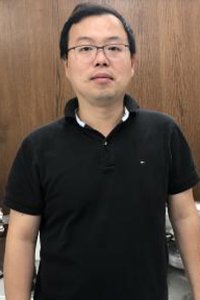
Xinyuan Zheng

Xinyuan Zheng

· Associate Professor, Department of Earth and Environmental SciencesVerified

University of Minnesota · Earth Sciences

Active 1988–2025

h-index19
Citations1.5k
Papers7142 last 5y
Funding$1.1M2 active
See your match with Xinyuan Zheng — sign in to PhdFit.Sign in

About

Xinyuan Zheng is an Associate Professor in the Department of Earth and Environmental Sciences at the University of Minnesota Twin Cities. His research focuses on biogeochemical cycles of major and trace elements across a wide range of spatial and temporal scales, with implications for understanding key processes that have shaped surface environments of our planet throughout geological history. He specializes in isotope geochemistry, developing new techniques for isotope analysis, conducting experimental isotope geochemistry for non-traditional stable isotopes, and studying chemical oceanography. His work includes reconstructions of paleo-climate and environment using stable and radiogenic isotopes, particularly in relation to ocean circulation and redox states of past oceans.

Research topics

  • Chemistry
  • Environmental chemistry
  • Chromatography
  • Geology
  • Computer Science
  • Environmental science
  • Radiochemistry
  • Agronomy
  • Oceanography
  • Biology
  • Soil science
  • Nuclear physics
  • Physics
  • Optics
  • Animal science
  • Materials science
  • Geochemistry

Selected publications

  • Distinct potassium (K) isotope signatures in K-rich porewater from the Ulleung Basin (East Sea) reflect differences in marine silicate alteration rate

    2025-01-01

    article
  • Evolution of the oceanic Mg cycle through time: Insights from δ <sup>26</sup> Mg record of marine carbonate (brachiopods) and authigenic clay (glauconite) archives

    2025-01-01

    article
  • Authigenic Marine Sediment Sinks of K and Mg in the Abyssal Pacific Ocean

    2025-01-01

    article
  • Experimental constraints on stable potassium (K) isotope fractionation during phase separation in NaCl–KCl–H2O and KCl–H2O systems: implications for the K isotope composition of seafloor hydrothermal vent fluids

    Geochimica et Cosmochimica Acta · 2025-07-23 · 1 citations

    articleSenior authorCorresponding
  • Reviews and syntheses: Review of proxies for low-oxygen paleoceanographic reconstructions

    Biogeosciences · 2025-02-18 · 17 citations

    articleOpen access

    Abstract. A growing body of observations has revealed rapid changes in both the total inventory and the distribution of marine oxygen over the latter half of the 20th century, leading to increased interest in extending oxygenation records into the past. The use of paleo-oxygen proxies has the potential to extend the spatial and temporal range of current records, constrain pre-anthropogenic baselines, provide datasets necessary to test climate models under different boundary conditions, and ultimately understand how ocean oxygenation responds beyond decadal-scale changes. This review seeks to summarize the current state of knowledge about proxies for reconstructing Cenozoic marine oxygen: sedimentary features, sedimentary redox-sensitive trace elements and isotopes, biomarkers, nitrogen isotopes, foraminiferal trace elements, foraminiferal assemblages, foraminiferal morphometrics, and benthic foraminiferal carbon isotope gradients. Taking stock of each proxy reveals some common limitations as the majority of proxies functions best at low-oxygen concentrations, and many reflect multiple environmental drivers. We also highlight recent breakthroughs in geochemistry and proxy approaches to constraining pelagic (in addition to benthic) oxygenation that are rapidly advancing the field. In light of both the emergence of new proxies and the persistent multiple driver problem, the need for multi-proxy approaches and data storage and sharing that adhere to the principles of findability, accessibility, interoperability, and reusability (FAIR) is emphasized. Continued refinements of proxy approaches and both proxy–proxy and proxy–model comparisons are likely to support the growing needs of both oceanographers and paleoceanographers interested in paleo-oxygenation records.

  • Potassium Isotope Variations (δ <sup>41</sup> K) in Cambrian Glauconites from Australia and China: Insights into Paleo-Seawater and Diagenetic Alteration

    2025-01-01

    article
  • Comment on egusphere-2023-2981

    2024-04-11

    peer-reviewOpen accessCorresponding

    <strong class="journal-contentHeaderColor">Abstract.</strong> A growing body of observations reveals rapid changes in both the total inventory and distribution of marine oxygen over the later half of the 21st century, leading to increased interest in extending oxygenation records into the past. Use of paleo-oxygen proxies have the potential to extend the spatial and temporal range of current records, bound pre-anthropogenic baselines, provide datasets necessary to test climate models under different boundary conditions, and ultimately understand how ocean oxygenation responds beyond decadal scale changes. This review seeks to summarize the current state-of-knowledge about proxies for reconstructing Cenozoic marine oxygen: sedimentary features, sedimentary redox-sensitive trace elements and isotopes, biomarkers, nitrogen isotopes, foraminiferal trace elements, foraminifera assemblages, foraminifera morphometrics, and benthic foraminifera carbon isotope gradients. Taking stock of each proxy reveals some common limitations in that the majority of proxies function best at low-oxygen concentrations and many reflect multiple environmental drivers. We also highlight recent breakthroughs in geochemistry and proxy approaches for constraining pelagic (in addition to benthic) oxygenation that are rapidly advancing the field. In light of both the emergence of new proxies and the persistent multiple driver problem, the need for multi-proxy approaches and FAIR data storage and sharing is emphasized. Continued refinement of proxy approaches and both proxy-proxy and proxy-model comparisons are likely to support the growing needs of both oceanographer and paleoceanographers interested in paleo-oxygenation records.

  • Supplementary material to "Reviews and syntheses: Review of proxies for low-oxygen paleoceanographic reconstructions "

    2024-01-09

    preprintOpen access

    Ca. Scalindua profunda' anammox hypoxia/anoxia, O 2 <20µmol

  • Reviews and syntheses: Review of proxies for low-oxygen paleoceanographic reconstructions 

    2024-01-09 · 8 citations

    preprintOpen accessCorresponding

    Abstract. A growing body of observations reveals rapid changes in both the total inventory and distribution of marine oxygen over the later half of the 21st century, leading to increased interest in extending oxygenation records into the past. Use of paleo-oxygen proxies have the potential to extend the spatial and temporal range of current records, bound pre-anthropogenic baselines, provide datasets necessary to test climate models under different boundary conditions, and ultimately understand how ocean oxygenation responds beyond decadal scale changes. This review seeks to summarize the current state-of-knowledge about proxies for reconstructing Cenozoic marine oxygen: sedimentary features, sedimentary redox-sensitive trace elements and isotopes, biomarkers, nitrogen isotopes, foraminiferal trace elements, foraminifera assemblages, foraminifera morphometrics, and benthic foraminifera carbon isotope gradients. Taking stock of each proxy reveals some common limitations in that the majority of proxies function best at low-oxygen concentrations and many reflect multiple environmental drivers. We also highlight recent breakthroughs in geochemistry and proxy approaches for constraining pelagic (in addition to benthic) oxygenation that are rapidly advancing the field. In light of both the emergence of new proxies and the persistent multiple driver problem, the need for multi-proxy approaches and FAIR data storage and sharing is emphasized. Continued refinement of proxy approaches and both proxy-proxy and proxy-model comparisons are likely to support the growing needs of both oceanographer and paleoceanographers interested in paleo-oxygenation records.

  • Sequential separation of cerium (Ce) and neodymium (Nd) in geological samples for high-precision analysis of stable Ce isotopes, and stable and radiogenic Nd isotopes by MC-ICP-MS

    Journal of Analytical Atomic Spectrometry · 2024-01-01 · 4 citations

    articleSenior authorCorresponding

    Stable isotopes of cerium (Ce) and neodymium (Nd), two rare earth elements (REEs), have emerged recently as useful tracers for a range of geological and environmental processes, such as redox changes in environments or continental weathering.

Recent grants

Frequent coauthors

  • Brian L. Beard

    University of Wisconsin–Madison

    46 shared
  • Clark M. Johnson

    University of Wisconsin–Madison

    39 shared
  • Eric Roden

    21 shared
  • Tara Djokic

    Australian Museum

    18 shared
  • Thiruchelvi R. Reddy

    University of Wisconsin–Madison

    14 shared
  • Martin J. Van Kranendonk

    Curtin University

    12 shared
  • Alexander Thomas

    11 shared
  • Feifei Deng

    Helmholtz-Zentrum Hereon

    10 shared
  • Resume-aware match score
  • Save to shortlist
  • AI-drafted outreach

See your match with Xinyuan Zheng

PhdFit ranks faculty by your research interests, methods, and publications — grounded in their actual work, not templates.

  • Free to start
  • No credit card
  • 30-second signup