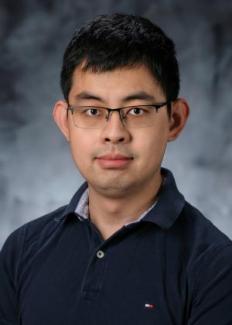
Yang Hai
VerifiedUniversity of California, Santa Barbara · Chemistry and Biochemistry
Active 2001–2026
About
Yang Hai is an Assistant Professor in the Department of Chemistry & Biochemistry at the University of California, Santa Barbara. His research focuses on the discovery and characterization of enzymes involved in biochemical transformations, natural product biosynthesis, and enzyme mechanisms, catalysis, and inhibition. His group aims to integrate chemical and biological approaches to uncover new enzyme functions, expand biocatalysis tools, and study enzymes implicated in human diseases and agriculture. Additionally, his research involves collaboration with materials scientists and engineers to develop biocatalytic and synthetic biological methods for creating new biopolymers and biomaterials. Dr. Hai received his B.S. in Chemistry from Peking University in 2011 and completed his Ph.D. in Chemistry at the University of Pennsylvania in 2016 under the guidance of Prof. David W. Christianson, focusing on metallohydrolases using protein X-ray crystallography. He conducted postdoctoral studies at UCLA in Prof. Yi Tang's group from 2016 to 2020, studying fungal natural product biosynthesis, discovering new enzymes and metabolic pathways through genome mining. In 2018, he also spent a summer at the Marine Biological Laboratory at Woods Hole studying microbiology, exploring microbial diversity in nature.
Research topics
- Evolutionary biology
- Biology
- Genetics
- Demography
Selected publications
BMJ Paediatrics Open · 2026-05-01
articleOpen access1st authorCorrespondingOBJECTIVES: To assess the trends of autism spectrum disorders (ASD) in China and globally, to extract the epidemiological characteristics and to predict the burden in 2030. Data on the prevalence and disability-adjusted life years (DALYs) for ASD from 1990 to 2021 were collected from the Global Burden of Disease (GBD) database. METHODS: The Join-point regression model was used to analyse changes in the disease burden of ASD over time, and the Auto-regressive Integrated Moving Average (ARIMA) model was employed to predict the trend by 2030. RESULTS: From 1990 to 2021, the age-standardised prevalence and age-standardised DALYs rate of ASD in China were lower than the global average level. However, the average annual percentage change (AAPC) in these rates was 0.22% for prevalence and 0.23% for DALYs, which were higher than the global average levels. It is forecasted that the disease burden of ASD in China showed an uptrend by 2030, corresponding to the age-standardised prevalence of 660.28 per 100 000 and age-standardised DALYs rate of 126.66 per 100 000. In comparison, the global levels are 793.01 per 100 000 and 147.43 per 100 000 by 2030, respectively. CONCLUSIONS: Our findings demonstrate a strong positive correlation between the age-standardised prevalence and DALYs rate of ASD and sociodemographic index (SDI) across most countries. The health impact of ASD has been on an upward trajectory over the past three decades. ASD significantly contributes to health loss, particularly among preschool boys. The disease burden of ASD in China is likely to increase progressively in the future, highlighting the urgency of implementing targeted prevention and control measures.
Biosynthesis of the Central Tricyclic Skeleton of Trichothecene Mycotoxins
Journal of the American Chemical Society · 2025-03-12 · 9 citations
articleSenior authorCorrespondingTrichothecenes are a widespread family of sesquiterpenoid toxins that can pose significant risks to food and feed safety as well as environmental health. A defining feature of all trichothecenes is their central tricyclic 12,13-epoxytrichothec-9-ene (EPT) motif. Although the formation of the EPT central skeleton has long been presumed to be a spontaneous process, the nonenzymatic cyclization reaction forming the tetrahydropyran ring in EPT requires acid catalysis; otherwise, it occurs too slowly to sustain efficient trichothecene biosynthesis under physiological conditions. Here, we resolved this decades-old problem by identifying the missing enzymes for EPT biosynthesis. We demonstrate that the C11 hydroxyl group of universal trichothecene precursors, isotrichodiol and isotrichotriol, must be acetylated by a strictly conserved O-acetyltransferase Tri3 to furnish a better leaving group. These acetylated intermediates preferentially undergo spontaneous allylic rearrangement with water to give shunt products, trichodiol and trichotriol. Therefore, a novel cyclase, Tri14, which was previously annotated as a hypothetical protein, is required to overcome the kinetically unfavored oxide bridge closure and meanwhile suppress the spontaneous formation of any shunt products.
Engineering a PLP-dependent Mannichase
Methods in enzymology on CD-ROM/Methods in enzymology · 2025-01-01
book-chapterOpen accessSenior authorCorrespondingA Self‐Sufficient β‐Methylarginine Biosynthetic Pathway in <i>Planctomycetes</i>
ChemBioChem · 2025-06-16
articleOpen accessSenior authorCorrespondingβ-Methyl amino acids (β-MAAs) enhance the bioactivity of natural products and possess intrinsic pharmacological properties as free amino acids. While the biosynthetic capacity for this class of noncanonical amino acids has been established in certain bacterial lineages such as Gammaproteobacteria and Actinomycetes, other bacterial phyla remain largely unexplored. A genome-mining-guided discovery of a novel biosynthetic gene cluster capable of producing β-methylarginine, from the phylum Planctomycetes is reported. Both in vivo and in vitro evidence indicates that Planctomycetes employ a transaminase (PlaA) and a methyltransferase (PlaB) to synthesize this β-MAA. Unlike previously described β-methylarginine biosynthetic pathways, PlaA and PlaB function as a self-sufficient enzyme cascade that operates without the need for additional keto acid and amino acid partners. These findings expand the catalytic repertoire for β-MAAs biosynthesis and establish Planctomycetes as a new source of secondary metabolites discovery.
Biosynthesis of the α-d-mannosidase inhibitor (−)-Swainsonine
Nature Chemical Biology · 2025-08-11 · 4 citations
articleOpen accessSenior authorCorrespondingCysteine <i>S</i> ‐conjugate sulfoxide β‐lyase activity for human <scp>ACCS</scp>
FEBS Journal · 2025-01-28 · 1 citations
articleOpen accessSenior authorCorresponding1-Aminocyclopropane-1-carboxylate synthase (ACCS) catalyzes the conversion of S-adenosyl-methionine to 1-aminocyclopropane-1-carboxylate (ACC), a rate-limiting step in ethylene biosynthesis. A gene encoding a putative ACCS protein was identified in the human genome two decades ago. It has been shown to not exhibit any canonical ACC synthase activity and its true function remains obscure. In this study, through a biochemical profiling approach, we demonstrate that human ACCS possesses cysteine conjugate sulfoxide β-lyase activity. This function is unexpected but reasonable, as it somewhat parallels the activity of ACCS proteins found in non-seed plants. Structure-function relationship study of human ACCS, guided by an AlphaFold2 model, allowed us to identify key active site residues that are important for its β-lyase activity. Our biochemical study of human ACCS also provided insights into the function of other mammalian ACCS homologs.
Chemical Science · 2025-01-01 · 8 citations
articleOpen accessreconstitution of each catalytic step carried out by a hrPKS condensing region. Application of intact protein mass spectrometry shows that the AT domain operates selective acyl transfer to the ACP domain, ensuring precise loading of the coenzyme A (CoA)-tethered acetyl and malonyl starter/extender units, which is governed by a substrate recycling mechanism and kinetic parameters towards each substrate. The KS domain is shown to select for the correct starter unit for transacylation and subsequent chain elongation, and was also able to utilise methylmalonyl-CoA. This work provides the first comprehensive interrogation of a fungal hrPKS condensing region, which both affirms and expands our understanding of how these systems function, and provides a framework for future bioengineering efforts.
Journal of Plant Pathology · 2024-10-11 · 2 citations
articleBiosynthesis of the alpha-D-Mannosidase Inhibitor (-)-Swainsonine
bioRxiv (Cold Spring Harbor Laboratory) · 2024-09-27
preprintOpen accessSenior authorCorresponding(-)-Swainsonine is a polyhydroxylated indolizidine alkaloid with potent inhibitory activity against α-D-mannosidases. In this work, we successfully reconstituted swainsonine biosynthetic pathway both in vivo and in vitro. Our study unveiled an unexpected epimerization mechanism involving two α-ketoglutarate-dependent non-heme iron dioxygenases (SwnH2 and SwnH1), and an unusual imine reductase (SwnN), which displays substrate-dependent stereospecificity. The stereochemical outcome of SwnN-catalyzed iminium reduction is ultimately dictated by SwnH1-catalyzed C8-hydroxylation. We also serendipitously discovered that an O-acetyl group can serve as a detachable protecting/directing group, altering the site-selectivity of SwnH2-catalyzed hydroxylation while maintaining the stereoselectivity. Insights gained from the biochemical characterization of these tailoring enzymes enabled biocatalytic synthesis of a new polyhydroxylated indolizidine alkaloid, opening doors to the biosynthesis of diverse natural product-based glycosidase inhibitors.
Molecular and Structural Basis for Cγ−C Bond Formation by PLP‐Dependent Enzyme Fub7
Angewandte Chemie · 2024-02-03
articleSenior authorCorrespondingAbstract Pyridoxal 5’‐phosphate (PLP)‐dependent enzymes that catalyze γ‐replacement reactions are prevalent, yet their utilization of carbon nucleophile substrates is rare. The recent discovery of two PLP‐dependent enzymes, CndF and Fub7, has unveiled unique C−C bond forming capabilities, enabling the biocatalytic synthesis of alkyl‐ substituted pipecolic acids from O‐ acetyl‐L‐homoserine and β‐keto acid or aldehyde derived enolates. This breakthrough presents fresh avenues for the biosynthesis of pipecolic acid derivatives. However, the catalytic mechanisms of these enzymes remain elusive, and a dearth of structural information hampers their extensive application. Here, we have broadened the catalytic scope of Fub7 by employing ketone‐derived enolates as carbon nucleophiles, revealing Fub7’s capacity for substrate‐dependent regioselective α‐alkylation of unsymmetrical ketones. Through an integrated approach combining X‐ray crystallography, spectroscopy, mutagenesis, and computational docking studies, we offer a detailed mechanistic insight into Fub7 catalysis. Our findings elucidate the structural basis for its substrate specificity, stereoselectivity, and regioselectivity. Our work sets the stage ready for subsequent protein engineering effort aimed at expanding the synthetic utility of Fub7, potentially unlocking novel methods to access a broader array of noncanonical amino acids.
Frequent coauthors
- 28 shared
Jun‐Long Zhang
- 27 shared
Juanjuan Chen
- 20 shared
Yi Tang
Shanghai University of Traditional Chinese Medicine
- 18 shared
Pingyong Xu
University of Chinese Academy of Sciences
- 18 shared
Jing Jing
- 14 shared
D.W. Christianson
California University of Pennsylvania
- 11 shared
Hongfei Yu
Liaoning Shihua University
- 10 shared
Xue-Bing Xie
Yunnan Normal University
Education
- 2016
Ph.D, Chemistry
University of Pennsylvania
- 2011
BS, College of Chemistry and Molecular Engineering
Peking University
- Resume-aware match score
- Save to shortlist
- AI-drafted outreach
See your match with Yang Hai
PhdFit ranks faculty by your research interests, methods, and publications — grounded in their actual work, not templates.
- Free to start
- No credit card
- 30-second signup