Resume-aware faculty matching

Find professors who actually fit you

Upload your resume. Four AI agents analyze your background, rank the faculty who fit, inspect their recent research, and help you draft outreach — grounded in their actual work, not templates.

Free to startNo credit cardCancel anytime
Top matches Balanced preset
Dr. Sarah Chen
Stanford · Interpretability · NLP
91
Dr. Marcus Holloway
MIT · Robotics · RL
84
Dr. Aisha Okonkwo
CMU · Fairness · HCI
82
Nova · Professor Researcher · re-ranking top 20…
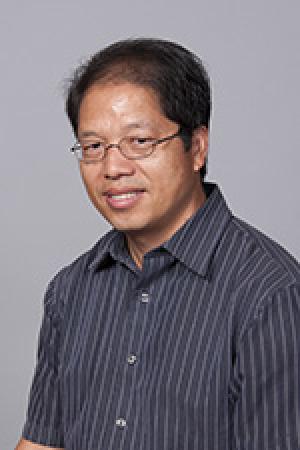
Zha Blong Xiong

Zha Blong Xiong

Verified

University of Minnesota · Family Social Science

Active 2000–2026

h-index10
Citations283
Papers336 last 5y
Funding
See your match with Zha Blong Xiong — sign in to PhdFit.Sign in

About

Zha Blong Xiong is an Associate Professor at the University of Minnesota's Family Social Science department. His research focuses on the vulnerabilities faced by refugees, particularly in experiencing family disruptions and secondary changes without adequate resources and necessary support. His work aims to address these challenges by understanding the specific needs of refugee families and developing strategies to support their stability and well-being.

Research topics

  • Psychology
  • Developmental psychology
  • Sociology
  • Social psychology
  • Gender studies

Selected publications

  • Scoping Review of Asian Doctoral Students’ Experiences and Persistence in United States Higher Education

    Journal of College Student Retention Research Theory & Practice · 2026-03-18

    articleSenior author

    Doctoral persistence in the United States remains a significant concern, yet the experiences of Asian doctoral students remain understudied. This scoping review analyzed 26 studies that included Asian doctoral participants to identify factors that shape their persistence. Guided by Perna and Thomas’s student success conceptual model, findings show that most reviewed studies (77%) focused on academic environment and relationships, while only 23% considered family-related influences. Additionally, nearly all studies (n = 25) included Asian doctoral students with other racial/ethnic groups, except for one study that only sampled Asian doctoral students. In general, most studies (n = 25) treat Asian students as a monolithic group without considering the heterogeneity and uniqueness of Asian doctoral students. Several future study ideas to address the diverse needs of Asian doctoral students are discussed.

  • Hmongcentric Niche Charter Schools: The Role of Social Capital on Students’ Perceived Academic Competence

    Journal of Southeast Asian American Education and Advancement · 2025-09-08

    articleOpen access1st authorCorresponding

    Using Coleman’s (1988) social capital theory, this study investigated the connection between family and school social capital and the perceived academic competence of students enrolled in Hmongcentric niche charter schools. The study analyzed 124 participants consisting of third, fourth, and fifth-grade students residing in Minnesota, with 93% identifying as Hmong. Results of structural equation modeling showed that school social capital, as measured by school attachment and school connection, is significantly linked to students’ perceived academic competence. Further analyses suggested that school attachment, especially in charter schools that focus on culture and language, plays a more crucial role in shaping students’ perceived academic competence. However, no significant association was found with family and extended family social capital. The study concludes by discussing implications for future research and how school attachment can inform educational policies and practices to support student success.

  • Investigating Early-Married Women’s Perceived Agency and Marital Quality in Rural Indonesia

    Family Sciences · 2025-12-15

    articleOpen accessSenior authorCorresponding

    Early marriage remains a persistent issue in Indonesia, with significant implications for women’s well-being and societal dynamics. Despite efforts to reduce its prevalence, challenges persist due to the intersection of social, cultural, and economic factors. This study aimed to examine the phenomenon of early marriage through the lens of women’s agency, focusing on their subjective experiences and perspectives within marital unions. Utilizing an interpretive phenomenological analysis (IPA), individual interviews were conducted with 17 early-married women in rural Indonesia to explore their lived experiences. Results highlighted early-married women’s definitions of happiness within marriage, their perceptions of agency and empowerment in marital relationships, and the role of agency in conforming to or resisting early marriage practices. The study provided insights into the complexities of early marriages in Indonesia and underscored the importance of understanding women’s agency in shaping marital outcomes and quality within a collectivist culture.

  • Motivations and challenges of Hmong family, friend, and neighbour caregivers

    Journal of Family Studies · 2025-08-10

    article1st authorCorresponding
  • “One man, one life, one marriage”: A qualitative analysis of Hmong women's divorce experiences

    Family Process · 2024-03-13 · 1 citations

    articleOpen access

    Despite the rising divorce rates in some immigrant communities in the US, there has been scant scholarly attention on how immigrants experience divorce, particularly on the role of culture in the divorce process. The primary goal of the present study was to explore the diverse divorce experiences of Hmong immigrants in the United States. As a patrilineal and patriarchal community, divorce is generally frowned upon, with Hmong women often experiencing shame and stigma. A narrative design with nine Hmong women was used to capture their intricate stories that highlight such experiences. Using a thematic analysis, our findings highlighted the complexity and cultural nuances the women in our sample encountered from initiating divorce to the divorce itself: (1) No wants a divorce, (2) Divorce is the "last straw", (3) Varying divorce pathways, and (4) Navigating systems as a Hmong woman. For those who have increased knowledge of both the US American court system and divorce laws along with the traditional Hmong mediations, they may be more equipped in navigating systems. Yet as Hmong divorce practices are performed by Hmong men, Hmong women may struggle with finding their voice or support needed to advocate for their divorce. In such cases, the US court system may be more appealing in assisting their cause (e.g., custody). Professionals working with such communities should be culturally aware and attuned to the different marriage and divorce practices to understand both cultural and legal barriers for those seeking a divorce.

  • Parents’ Ideas about Good Parenting: Narratives of First- and Second-Generation Hmong Parents

    Journal of Asian Research · 2023-08-08

    articleOpen access1st authorCorresponding

    Parenting ideas and practices are highly influenced by culture. However, when parents move to another country, their parenting ideologies and practices are often questioned by their children and the larger society. Therefore, the purpose of this study is to understand the concept of good parents and its origins from two generation Hmong parents. Twenty-one parents (9 first-generation and 12 second-generation) from a midwestern state in the United States (14 mothers and 7 fathers), ages ranging from 19 to 50 (mean=31.57, SD=8.29), participated in the study. Results show that good parents provide for their children’s basic needs, are involved in their children’s daily lives, communicate with their children without yelling, discipline their children with age-appropriate techniques, and teach their children to be responsible and independent. Additionally, we also found that parents learn about parenting from their family members instead of professionals. Suggestions for parent education and future studies are discussed.

  • Self-Reported Reasons for Divorce, Social Support, and Depression: An Exploratory Study With Hmong Women

    Journal of Family Issues · 2023-03-08 · 3 citations

    articleSenior author

    Contrary to other Asian Americans, Hmong, a subgroup of Southeast Asians, have seen a steady increase of divorce rates in prior decades. Due to their clan-based patrilineal system and collectivistic values, divorce is stigmatized and discouraged, especially for Hmong women. A mixed-methods approach was used to explore Hmong women’s reasons for divorce, divorce initiation, and the relationship of social support and depression levels. To analyze findings, a thematic content analysis of written responses in addition to regression models were conducted. Our qualitative findings show the most prominent reasons for divorce reported by Hmong women were personality or life differences, abusive behaviors, and infidelity. No statistical significance was found between initiation of divorce and perceived social support or depression and perceived social support. Implications of findings are shared.

  • Exploring Women’s Lived Experiences of Early Marriage in Rural Indonesia

    Journal of Asian Research · 2023-11-09 · 1 citations

    articleOpen access

    Early marriage is still a global concern, and Indonesia ranks second behind Cambodia in the number of early marriages within the ASEAN region. Despite the spread of technology and the influence of Western media, some Indonesian families, especially those who live in rural areas, continue to practice early marriage. Therefore, the purpose of this study was to understand the reasons behind early marriage based on the perspective of Indonesian women who were married before the age of 18. Based on a phenomenological approach, thirty women, ages 18-45, from the Madurese community in Situbondo, East Java participated in the study. Results showed that young Madurese women decided to get married for love and companionship, as well as for economic benefits and protecting the family’s honor. Participants also believed that cultural norms and values related to marriage, sexual purity, and gender expectations play a role in early marriage. Suggestions for future studies and community interventions are discussed.

  • Embroidering Collaboration Across University, Community, and School Contexts

    2021-06-02

    book-chapter1st authorCorresponding

    The purpose of this chapter is to describe the context for the Hmong Children’s Longitudinal Study (HCLS), delineate the collaborative process among university researchers and the Hmong community and charter schools in Minnesota, and share some preliminary data of the HCLS, as well as some lessons learned from working with Hmong charter schools and community members. The HCLS is a community-driven study based on the citizen health care model and funded by members of the Hmong community. It involves 188 Hmong children from third through fifth grades in three Hmong charter schools in Minnesota. The collaborative work took two years to carefully plan and launch the study. We learned that it is imperative for researchers to spend more time building relationships in the community before reaching out to start any study, be flexible and adaptable since collaborative work takes time to plan and execute, and get a buy-in and commitment early from the partnering schools and members of the community. Future directions of the Hmong Children’s Longitudinal Study are also discussed.

  • Role of Family in Refugee Adjustment: Experiences of Hmong, Somali, and Syrian Refugees in the USA

    Adversity and Resilience Science · 2021-08-31 · 15 citations

    article1st authorCorresponding

Frequent coauthors

  • Daniel F. Detzner

    9 shared
  • Malina Her

    University of Connecticut

    7 shared
  • Arunya Tuicomepee

    Chulalongkorn University

    5 shared
  • Veronica Deenanath

    4 shared
  • Dung Mao

    University of Minnesota

    4 shared
  • Kathryn D. Rettig

    4 shared
  • Nancy C. H. Lo

    Wright State University

    3 shared
  • Cahya Haniva Yunizar

    University of Minnesota

    3 shared

Education

  • Ph.D., Family Social Science

    University of Minnesota

Awards & honors

  • Community Outreach and Engagement Faculty Award, College of…
  • Certificate of Outstanding Leadership, Hmong 18 Council, Inc…
  • Outstanding Leadership Award, Lao Family Foundation (2014)
  • Lee Knefelkamp Research Award, Minnesota College Personnel A…
  • Resume-aware match score
  • Save to shortlist
  • AI-drafted outreach

See your match with Zha Blong Xiong

PhdFit ranks faculty by your research interests, methods, and publications — grounded in their actual work, not templates.

  • Free to start
  • No credit card
  • 30-second signup