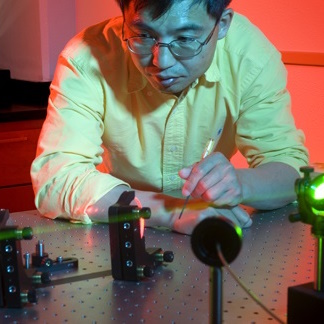
Zhien Wang
· ProfessorStony Brook University · Sustainability Studies
Active 1995–2024
About
Zhien Wang is a Professor in the Atmospheric Sciences department at Stony Brook University, affiliated with the Office of the Dean SOMAS. She holds a PhD from the University of Utah, obtained in 2000. Her overarching research theme involves developing new measurement capabilities for aerosol, cloud, precipitation, water vapor, and temperature to understand interactions among these elements, as well as land-atmosphere and ocean-atmosphere interactions. Her work aims to improve the parameterizations of cloud-related physical processes and the atmospheric boundary layer in weather and climate models. Her research is organized into four main themes: instrumentation and multi-sensor remote sensing algorithm development; cloud properties, processes, and parameterizations; atmosphere-land-ocean-ice interactions; and boundary layer structure, processes, and parameterization. She has contributed extensively to the field through numerous publications, including articles, conference contributions, and book chapters, and has been involved in multiple active research projects supported by agencies such as NASA, the US Navy, and the National Science Foundation. Her research focuses on advancing measurement techniques such as airborne Raman lidars and remote sensing algorithms to better understand cloud and atmospheric processes, with a particular emphasis on cloud physics, aerosol distributions, and boundary layer dynamics.
Research topics
- Geography
- Remote sensing
- Meteorology
- Computer Science
- Environmental science
- Geology
- Physics
- Atmospheric sciences
- Medicine
- Oceanography
- Climatology
Selected publications
Challenges and Opportunities in Lidar Remote Sensing
Frontiers in Remote Sensing · 2021 · 127 citations
1st authorCorresponding- Computer Science
- Remote sensing
- Computer Science
To support operational lidar applications, transferring research lidars into turnkey systems and reduce their costs are necessary steps. During the last 20 years, advances in industrial lasers improved
Connecting Land–Atmosphere Interactions to Surface Heterogeneity in CHEESEHEAD19
Bulletin of the American Meteorological Society · 2020 · 109 citations
- Environmental science
- Meteorology
- Atmospheric sciences
Abstract The Chequamegon Heterogeneous Ecosystem Energy-Balance Study Enabled by a High-Density Extensive Array of Detectors 2019 (CHEESEHEAD19) is an ongoing National Science Foundation project based on an intensive field campaign that occurred from June to October 2019. The purpose of the study is to examine how the atmospheric boundary layer (ABL) responds to spatial heterogeneity in surface energy fluxes. One of the main objectives is to test whether lack of energy balance closure measured by eddy covariance (EC) towers is related to mesoscale atmospheric processes. Finally, the project evaluates data-driven methods for scaling surface energy fluxes, with the aim to improve model–data comparison and integration. To address these questions, an extensive suite of ground, tower, profiling, and airborne instrumentation was deployed over a 10 km × 10 km domain of a heterogeneous forest ecosystem in the Chequamegon–Nicolet National Forest in northern Wisconsin, United States, centered on an existing 447-m tower that anchors an AmeriFlux/NOAA supersite (US-PFa/WLEF). The project deployed one of the world’s highest-density networks of above-canopy EC measurements of surface energy fluxes. This tower EC network was coupled with spatial measurements of EC fluxes from aircraft; maps of leaf and canopy properties derived from airborne spectroscopy, ground-based measurements of plant productivity, phenology, and physiology; and atmospheric profiles of wind, water vapor, and temperature using radar, sodar, lidar, microwave radiometers, infrared interferometers, and radiosondes. These observations are being used with large-eddy simulation and scaling experiments to better understand submesoscale processes and improve formulations of subgrid-scale processes in numerical weather and climate models.
Atmospheric chemistry and physics · 2020 · 113 citations
- Environmental science
- Atmospheric sciences
- Remote sensing
Abstract. Dust aerosol is important in modulating the climate system at local and global scales, yet its spatiotemporal distributions simulated by global climate models (GCMs) are highly uncertain. In this study, we evaluate the spatiotemporal variations of dust extinction profiles and dust optical depth (DOD) simulated by the Community Earth System Model version 1 (CESM1) and version 2 (CESM2), the Energy Exascale Earth System Model version 1 (E3SMv1), and the Modern-Era Retrospective analysis for Research and Applications version 2 (MERRA-2) against satellite retrievals from Cloud-Aerosol Lidar with Orthogonal Polarization (CALIOP), Moderate Resolution Imaging Spectroradiometer (MODIS), and Multi-angle Imaging SpectroRadiometer (MISR). We find that CESM1, CESM2, and E3SMv1 underestimate dust transport to remote regions. E3SMv1 performs better than CESM1 and CESM2 in simulating dust transport and the northern hemispheric DOD due to its higher mass fraction of fine dust. CESM2 performs the worst in the Northern Hemisphere due to its lower dust emission than in the other two models but has a better dust simulation over the Southern Ocean due to the overestimation of dust emission in the Southern Hemisphere. DOD from MERRA-2 agrees well with CALIOP DOD in remote regions due to its higher mass fraction of fine dust and the assimilation of aerosol optical depth. The large disagreements in the dust extinction profiles and DOD among CALIOP, MODIS, and MISR retrievals make the model evaluation of dust spatial distributions challenging. Our study indicates the importance of representing dust emission, dry/wet deposition, and size distribution in GCMs in correctly simulating dust spatiotemporal distributions.
Recent grants
NSF · $326k · 2019–2024
MRI: Development of a Multi-function Airborne Raman Lidar for Atmospheric Process Studies
NSF · $1.2M · 2013–2017
Collaborative Research: Colorado Airborne Multi-Phase Cloud Study (CAMPS)
NSF · $179k · 2010–2014
NSF · $587k · 2007–2013
NSF · $538k · 2011–2014
Frequent coauthors
- 51 shared
Dong Liu
- 45 shared
Bart Geerts
University of Wyoming
- 40 shared
Damao Zhang
- 39 shared
Tao Luo
- 38 shared
Jing Yang
China Meteorological Administration
- 34 shared
Guo Lin
National Oceanic and Atmospheric Administration
- 33 shared
Yingjian Wang
Hefei Institutes of Physical Science
- 29 shared
Andrew J. Heymsfield
NSF National Center for Atmospheric Research
Education
Ph.D.
Stony Brook University
Similar researchers at Stony Brook University
- Resume-aware match score
- Save to shortlist
- AI-drafted outreach
See your match with Zhien Wang
PhdFit ranks faculty by your research interests, methods, and publications — grounded in their actual work, not templates.
- Free to start
- No credit card
- 30-second signup