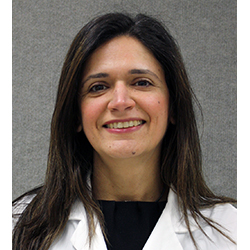
Alla Fayngersh
· Associate ProfessorVerifiedRutgers University · Medicine
Active 2004–2025
About
Dr. Alla Fayngersh is an Assistant Professor of Medicine at Rutgers New Jersey Medical School (NJMS). She completed her medical degree at the University of Rochester School of Medicine and Dentistry in 2001 and earned her Bachelor of Arts from Brandeis University in 1997. Her postgraduate training includes internal medicine at Mount Sinai Hospital and Medical Center in New York City. Dr. Fayngersh began her medical career at Englewood Hospital in New Jersey, where she worked for eight years, eventually serving as the Associate Program Director and Site Director for medical student education. Her dedication to medical education and academic leadership led her to join NJMS, where she holds multiple roles including Resident Preceptor in the Ambulatory Care Center and Medicine Clerkship Director for medical students. She is actively involved in curriculum development and student performance assessment, both at the institutional level and through national organizations such as the Association of American Medical Colleges. Dr. Fayngersh is recognized for her clinical skills and medical knowledge, guiding trainees in inpatient and outpatient settings and emphasizing the synthesis of complex medical information.
Research signals
Five dimensions sourced from public faculty / publication signals. Sign in to compare against your own profile and see your match score.
Research topics
- Computer Science
- Internal medicine
- Medicine
- Artificial Intelligence
- Management science
- Mathematics
- Gastroenterology
- Anesthesia
- Engineering
- Surgery
- Environmental health
- Demography
- Psychology
Selected publications
Medical Students on Their Internal Medicine Clerkship Experience Short Sleep Duration
ATS Scholar · 2025-04-03 · 1 citations
articleOpen accessAbstract Background Third-year medical students during their internal medicine clerkship may be predisposed to short sleep duration (<7 h of sleep per night) because of rigorous clinical schedules and academic demands. Objective To evaluate the prevalence of short sleep duration, its impact on performance, and perceived causes among third-year medical students on their internal medicine clerkship. Methods During the 2023–2024 academic year, third-year medical students at Rutgers Robert Wood Johnson Medical School (RWJMS) and Rutgers New Jersey Medical School completed a survey at the end of their internal medicine clerkship regarding their sleep practices. The schools differed in clerkship structure and grading system. Data were analyzed and compared between schools using the Fisher exact test. Responses for an open-ended question on sleep strategies were categorized into themes by sleep physicians. Results Of the 314 third-year medical students invited, 222 (70.7%) completed the survey. Short sleep duration was reported by nearly two-thirds of our cohort (143, 64.4%), with a significantly higher prevalence at RWJMS. Most reported sleep-related impairment on clinical duties or educational activities for 1–3 days per week (125, 56.3%), with more reporting ≥4 days per week at RWJMS. About one-third of our cohort reported drowsy driving either 1–3 days (82, 36.9%) or ≥4 days (68, 30.6%) per week. Despite high rates of short sleep duration, the overwhelming majority (196, 88.3%) had never received education on sleep management. Conclusion Short sleep duration is prevalent among third-year medical students during their internal medicine clerkship, potentially impacting their clinical performance and safety.
A Wake-up Call for Medical Students' Sleep Education
2024-04-30
articleUsing ChatGPT in the Development of Clinical Reasoning Cases: A Qualitative Study
Cureus · 2024 · 8 citations
- Computer Science
- Artificial Intelligence
- Computer Science
Background There has been an explosion of commentary and discussion about the ethics and utility of using artificial intelligence in medicine, and its practical use in medical education is still being debated. Through qualitative research methods, this study aims to highlight the advantages and pitfalls of using ChatGPT in the development of clinical reasoning cases for medical student education. Methods Five highly experienced faculty in medical education were provided instructions to create unique clinical reasoning cases for three different chief concerns using ChatGPT 3.0. Faculty were then asked to reflect on and review the created cases. Finally, a focus group was conducted to further analyze and describe their experiences with the new technology. Results Overall, faculty found the use of ChatGPT in the development of clinical reasoning cases easy to use but difficult to get to certain objectives and largely incapable of being creative enough to create complexity for student use without heavy editing. The created cases did provide a helpful starting point and were extremely efficient; however, faculty did experience some medical inaccuracies and fact fabrication. Conclusion There is value to using ChatGPT to develop curricular content, especially for clinical reasoning cases, but it needs to be comprehensively reviewed and verified. To efficiently and effectively utilize the tool, educators will need to develop a framework that can be easily translatable into simple prompts that ChatGPT can understand. Future work will need to strongly consider the risks of recirculating biases and misinformation.
Cureus · 2022 · 7 citations
Senior authorCorresponding- Medicine
- Anesthesia
- Surgery
Cerebellar hippocampal and basal nuclei transient edema with restricted diffusion (CHANTER) syndrome is a specific pattern of restricted diffusion in the hippocampi and cerebellum identified on brain imaging by clinicians in patients who present with altered mental status in the context of substance intoxication. These patients developed obstructive hydrocephalus a couple of days into their hospitalization that required therapy with osmotic agents and/or surgical interventions (i.e., drains and decompressive craniectomy). In prior cases published, many of the patients had good recovery. The case we present is of a woman who presented after polysubstance use and was found to have brain imaging findings supportive of CHANTER syndrome. Although she was treated with aggressive osmotic therapy and surgical interventions, she ultimately developed irreversible brain damage leading to an overall poor prognosis for recovery. Our case suggests variability in the progression of the syndrome and demonstrates the need for further studies to examine whether the substance of use and the patient's chronic medical conditions may contribute to the degree of recovery.
Medical Science Educator · 2022-07-12 · 2 citations
articleOpen access1st authorCorrespondingPLoS ONE · 2020 · 8 citations
- Medicine
- Internal medicine
- Gastroenterology
BACKGROUND AND AIM: We sought to determine the association between alanine aminotransferase (ALT) in the normal range and mortality in the absence of liver dysfunction to better understand ALT's clinical significance beyond liver injury and inflammation. METHODS: A cohort of 2,708 male and 3,461 female adults aged 20-75 years without liver dysfunction (ALT<30 in males & <19 in females, negative viral serologies, negative ultrasound-based steatosis, no excess alcohol consumption) from the National Health and Nutrition Examination Survey (NHANES)-III (1988-1994) were linked to the National Death Index through December 31, 2015. Serum ALT levels were categorized into sex-specific quartiles (Females: <9, 9-11, 11-14, ≥14 IU/L, Male: <12, 12-15, 15-20, ≥20 U/L). The primary outcome was all-cause mortality. Hazard ratios (HRs) were estimated, adjusting for covariates and accounting for the complex survey design. RESULTS: Relative to males in the lowest quartile (Q1), males in the highest quartile (Q4) had 44% decreased risk of all-cause mortality (aHR [95% CI]: 0.56 [0.42, 0.74]). Females in Q4 had 45% decreased risk of all-cause mortality (aHR [95% CI]: 0.55 [0.40, 0.77]). Males with BMI <25 kg/m2 in Q4 had significantly lower risk of all-cause mortality than Q1; however, this association did not exist in males with BMI ≥25 (BMI<25: 0.36 [0.20, 0.64], BMI≥25: 0.77 [0.49, 1.22]). Risk of all-cause mortality was lower in males ≥50 years than in males<50 (age≥50: 0.55 [0.39, 0.77], age<50: 0.81 [0.39, 1.69]). These age- and BMI-related differences were not seen in females. CONCLUSION: ALT within the normal range was inversely associated with all-cause mortality in U.S. adults.
PEDIATRICS · 2019-08-01
articleSenior authorIntroduction: Staphylococcal scalded skin syndrome is blistering condition characterized by extensive desquamation and cleavage of the superficial layers of the epidermis which has been well characterized in neonates and children below the age of 6 years. It is a rare syndrome in adults Case Report: A 55 year old female with HIV (CD4 1342), chronic hepatitis C, type 2 diabetes mellitus, chronic kidney disease stage III presented with 7 days of rash. It began on the soles and spread proximally involving her legs, …
Spontaneous tumor lysis syndrome in T-cell malignancy: two case reports
Stem Cell Investigation · 2019-08-01 · 9 citations
articleOpen accessTumor lysis syndrome (TLS) refers to a constellation of metabolic abnormalities that result from release of intracellular solutes (potassium, phosphate, and nucleic acid metabolites) from rapidly dying tumor cells. While TLS most commonly occurs following chemotherapy, spontaneous TLS can rarely occur in rapidly dividing liquid or solid malignancies. Here, we report the cases of two patients who presented with non-specific symptoms and were found to have spontaneous TLS. Work-up in both cases led to a diagnosis of T-cell malignancy (i.e., acute lymphoblastic leukemia and angioimmunoblastic lymphoma). Given that spontaneous TLS can be the first manifestation of an underlying malignancy, all physicians should be familiar with this oncologic emergency. Early recognition and prompt management can be lifesaving for patients with an otherwise curable malignancy.
PEDIATRICS · 2019-08-01
articleSenior authorIntroduction: Staphylococcal scalded skin syndrome is blistering condition characterized by extensive desquamation and cleavage of the superficial layers of the epidermis which has been well characterized in neonates and children below the age of 6 years. It is a rare syndrome in adults Case Report: A 55 year old female with HIV (CD4 1342), chronic hepatitis C, type 2 diabetes mellitus, chronic kidney disease stage III presented with 7 days of rash. It began on the soles and spread proximally involving her legs, torso and arms. It appeared dry with areas of desquamation and erythema. She felt constitutionally weak and fatigued. She had a recent admission for Clostridium difficile colitis and was discharged on parenteral metronidazole via peripherally inserted central catheter (PICC). Her diarrhea resolved. On examination, she was hypothermic to 94.8°F, hypotensive to 92/61 mmHg, and had extensive sloughing rash over bilateral legs and arms with areas of edema, erythema, and hyperkeratosis that was moderately tender. There were no bullae, crepitus, or mucosal membrane involvement. Along bilateral posterior heels, there was complete loss of epidermis with exposed underlying tissue with a hemorrhagic base. There was leukocytosis to 14.3 x 10^9/dL with 81% neutrophils. Creatinine was 1.8 mg/dL and albumin was 2 mg/dL. She received broad spectrum antibiotics and PICC line was removed. Dermatology obtained punch biopsies which showed cleavage of the superficial layer of the epidermis without inflammatory infiltration or apoptotic keratinocytes and diagnosis of Staphylococcal scalded skin syndrome was made. She improved on vancomycin. Discussion: Staphylococcus aureus is a facultative anaerobic gram positive coccus which can produce exfoliatin, an exotoxin, which cleaves the stratum granulosum from the underlying epidermal layers giving rise to the characteristic rash with Nikolsky sign. Adults with certain risk factors including chronic kidney disease, immune compromise and NSAID use have higher propensity given the inability to clear the toxin. This syndrome is defined by certain clinical and histopathological criteria. Given the extensive desquamation of the skin, insensible skin losses of fluids and toxin mediated immunological reaction - patients usually present in shock, with hypothermia, hypotension and multisystem dysfunction. It is important to distinguish SSSS from toxic epidermal necrolysis (TEN) which is done via skin biopsy. In TEN, sub-epidermal split and full thickness epidermal necrosis can be seen. Conclusion: Staphylococcal scalded skin syndrome is a rare but well characterized syndrome in adults with certain risk factors. Clinicians should have a high suspicion based on comorbidities and clinical presentation as it is a significant source of morbidity, highly contagious but easily treatable.
The American Journal of Cardiology · 2004-07-23 · 27 citations
article
Frequent coauthors
- 17 shared
Kristin Wong
- 13 shared
Neil Kothari
Rutgers, The State University of New Jersey
- 13 shared
Christin Traba
Rutgers, The State University of New Jersey
- 9 shared
David Cennimo
Veterans Biomedical Research Institute
- 9 shared
Sophia Chen
- 8 shared
Abeer Siddiqi
Columbia University Irving Medical Center
- 8 shared
Justin Hofmann
Rutgers New Jersey Medical School
- 4 shared
Giselle A. Suero-Abreu
Massachusetts General Hospital
- Resume-aware match score
- Save to shortlist
- AI-drafted outreach
See your match with Alla Fayngersh
PhdFit ranks faculty by your research interests, methods, and publications — grounded in their actual work, not templates.
- Free to start
- No credit card
- 30-second signup