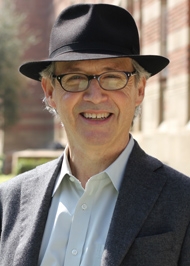
Alessandro Duranti
VerifiedUniversity of California, Los Angeles · Anatomy and Cell Biology
Active 1977–2023
Research signals
Five dimensions sourced from public faculty / publication signals. Sign in to compare against your own profile and see your match score.
Research topics
- Sociology
- Psychology
- Visual arts
- Aesthetics
- Art
Selected publications
Oxford University Press eBooks · 2021 · 6 citations
1st authorCorresponding- Sociology
- Aesthetics
- Art
Abstract The interaction among a group of musicians before, during, and after the performance of a jazz standard is analyzed to show the interdependence of jazz aesthetics and jazz ethics. The authors argue that what makes jazz distinct from other kinds of musical traditions is not just the ubiquity of improvisation in the genre but the vulnerability that jazz improvisation always generates—a vulnerability that is due to the genre’s reliance on both shared conventions and partly unpredictable individual choices. Analyzing video recordings of a university course on jazz organized to reproduce the setting of a jam session, the authors examine in detail the interactional assumptions and consequences of choices made by band members during the performance of “Softly, as in a Morning Sunrise.” The authors’ analysis shows how musicians position themselves to be responsive to one another as the song progresses, starting from an improvised “introduction” that sets the tempo, rhythm, and style of the song and continuing with smooth transitions from one solo to the next. Drawing from Erving Goffman’s ideas about the presentation of self and the phenomenology of Emmanuel Levinas, the authors examine the ethical implications of a musical “vacuum” that was created by one musician’s decision to wait to take his solo. In the interaction, the other musicians responded to the vacuum by assuming responsibility for the group’s performance and, more broadly, the performance of the jazz tradition, and this chapter uses their actions to illustrate how “jazz etiquette” operates as a practice that includes aesthetic, ethical, and practical concerns.
Frequent coauthors
- 11 shared
Elinor Ochs
University of California, Los Angeles
- 4 shared
Charles Goodwin
- 2 shared
Elizabeth Keating
The University of Texas at Austin
- 2 shared
Jennifer F. Reynolds
University of South Carolina
- 1 shared
Nathaniel Dumas
- 1 shared
Jason Throop
- 1 shared
Anjali Browning
- 1 shared
Nicco A. La Mattina
University of California, Los Angeles
Education
- 1981
PhD, Linguistics
University of Southern California
Similar researchers at University of California, Los Angeles
- Resume-aware match score
- Save to shortlist
- AI-drafted outreach
See your match with Alessandro Duranti
PhdFit ranks faculty by your research interests, methods, and publications — grounded in their actual work, not templates.
- Free to start
- No credit card
- 30-second signup