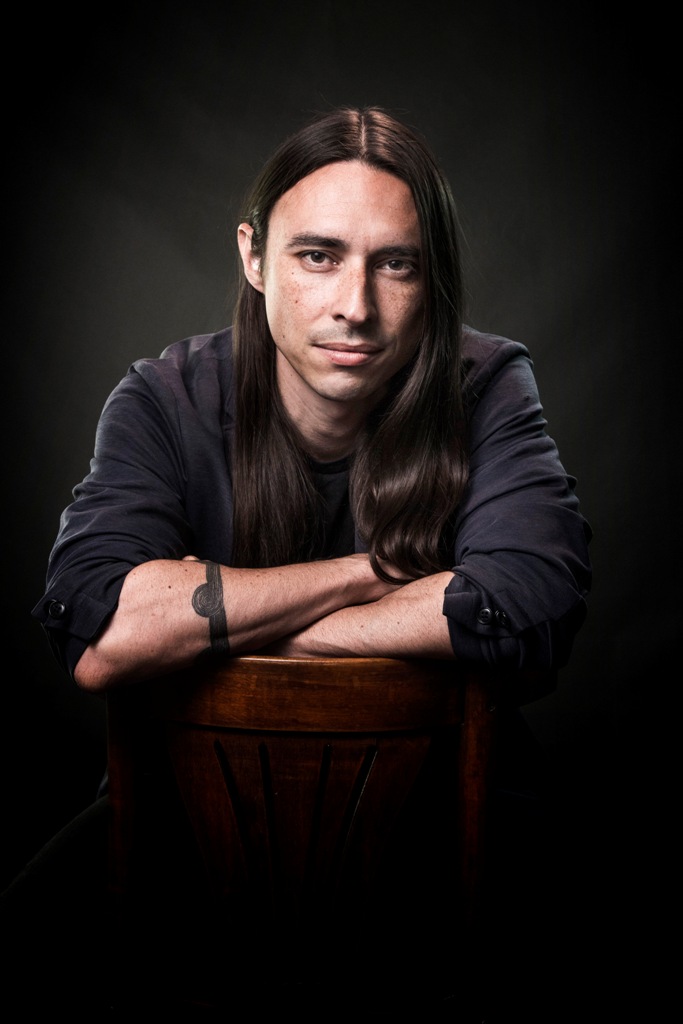
Joseph M. Pierce
· Associate ProfessorStony Brook University · Latin American and Iberian Studies
Active 2002–2025
About
Joseph M. Pierce is an Associate Professor in the Department of Hispanic Languages and Literature at Stony Brook University. He is also the Inaugural Director of the Native American and Indigenous Studies Initiative at the university. Pierce has authored the book 'Argentine Intimacies: Queer Kinship in an Age of Splendor, 1890-1910' published by SUNY Press in 2019, and is the author of 'Speculative Relations: Indigenous Worlding and Repair,' scheduled for publication by Duke University Press in 2025. Additionally, he co-edited 'Políticas del amor: Derechos sexuales y escrituras disidentes en el Cono Sur' in 2018 and contributed to the 2021 special issue of GLQ titled “Queer/Cuir Américas: Translation, Decoloniality, and the Incommensurable.” His work has been published in various academic venues including Revista Hispánica Moderna, Critical Ethnic Studies, and Latin American Research Review. Pierce is a citizen of the Cherokee Nation and has collaborated as a co-curator of the performance series Knowledge of Wounds with S.J. Norman. His research focuses on queer kinship, indigenous worlding, and decoloniality within Latin American contexts, with a particular emphasis on gender, sexuality, and cultural discourses.
Research topics
- Sociology
- Humanities
- Gender studies
- Political Science
- History
- Art
- Social Science
- Epistemology
- Philosophy
- Literature
- Law
- Political economy
- Aesthetics
- Anthropology
- Art history
Selected publications
2025-07-18 · 1 citations
book1st authorCorrespondingIndigenous relations are often described in anthropological terms, or as expressions of timeless, unchanging kinship ties. In Speculative Relations, Joseph M. Pierce challenges this view, considering the potential of these relations as a means of repairing the damages of history. Pierce approaches Indigenous art and culture not as objects of study, but through relations committed to reciprocity and care for human and more-than-human beings. Drawing on Cherokee thinking, Indigenous queer theory, literary and cultural studies, and art criticism, he illuminates pathways for understanding and resisting the ongoing damages of colonialism while pointing to future worlds and imaginaries that breathe life into Indigenous thought and practice. Analyzing a range of materials—from photography, literature, and sculpture to film and ethnography—Pierce reveals how speculation, as a form of situated knowledge production, can repair and reimagine the worlds that colonialism sought to destroy. In doing so, Pierce highlights how gestures, poetics, and embodiment can uphold tradition and harness the imaginative power of speculation to create pathways for living in good relations.
A Manifesto for Speculative Relations
2025-01-08
book-chapter1st authorCorrespondingFive Manifestos for the Beautiful World
2024-12-11
book1st authorCorrespondingThis book brings five artists, thinkers, and writers from different geographies and disciplines—Phoebe Boswell, Saidiya Hartman, Janaína Oliveira, Joseph M. Pierce, Cristina Rivera Garza—who propose new ways of being, illuminating our path toward a beautiful world.
Five Manifestos for the Beautiful World
2024-12-02
bookThe second annual Alchemy Lecture brought together five artists, thinkers, and writers who proposed new ways of being and discussed radical visions for the future. Five Manifestos for the Beautiful World captures and expands these lectures to illuminate our path towards this possible beautiful world. Joseph M. Pierce (Cherokee Nation) asserts that “for this decolonial future to become possible, the guiding force must no longer be capital but relations.” Film curator Janaína Oliveira (Brazil) evokes music and movement as a means toward this relationality. Visual artist Phoebe Boswell (UK/Kenya) asks, “If we burn down the institution, what happens next?” Saidiya Hartman (US) prompts us to consider our capacity to burn, examining whether “the gift of pragmatism yields a profound tolerance of the unlivable.” Cristina Rivera Garza (US/Mexico) gives us the language of the future in the subjunctive, “the smuggler who crosses the border of the future bearing unknown cargo.” Each alchemist is intimately concerned with this cargo, our ability to bear its weight, and how we might find the beautiful world together.
Settler-Colonial Elimination and the<i>Dobbs</i>Decision
GLQ A Journal of Lesbian and Gay Studies · 2024-01-01 · 13 citations
articleOpen accessSenior authorJodi A. Byrd and Joseph M. Pierce discuss the Supreme Court decisions Dobbs v. Jackson and Haaland v. Brackeen, which upheld the legality of the 1978 Indian Child Welfare Act. In this wide-ranging conversation, the authors reflect on “what Indigenous studies and queer studies can bring together,” considering Indigenous dispossession, kinship, settler colonialism, sovereignty, and reciprocity, among many other subjects.
A Manifesto for Speculative Relations
2024-12-02
book-chapter1st authorCorrespondingCherokee Nation citizen and professor Joseph M. Pierce asserts that “[f]or this decolonial future to become possible, the guiding force must no longer be capital but relations.”
2024-08-20
book-chapter1st authorCorrespondingThis chapter analyzes contemporary Native American poetry, in particular by authors whose work engages with embodied relations and eroticism. It argues that queer NDN (Indigenous) poets have turned to love as a theme and in doing so, expand its meanings beyond traditional understandings of queerness. The chapter briefly rehearses queer Indigenous studies as a field and then turns to five examples: the work of Lee Maracle, Arielle Twist, Jake Skeets, Natalie Diaz, and Billy-Ray Belcourt. The chapter concludes with a meditation on decolonial praxis and queer Indigenous love, advocating for an ethico-erotics of land as a method.
Altar, Tender: Sitting with devynn emory’s <i>can anybody help me hold this body</i>
Art Journal · 2023-07-03
article1st authorCorrespondingAbstractThis essay explores choreographies of grief and collectivity, embodiment and tenderness. It focuses on the work of devynn emory, a Lenape/Blackfoot choreographer, dance artist, acute care and hospice nurse, who in spring 2021 premiered a film, deadbird, and created a series of public grief altars collectively titled can anybody help my hold this body. I write from the perspective of a participant in the project, as an altar tender who sat with emory in New York City, the first stop on the tour. As such, I gesture towards the intimacies of loss as an embodied practice and on Indigenous relations with kin across thresholds of time and space. emory’s work situates the collective holding of space and the socialization of grief as part of an ongoing relationship with land, ancestors, spirits, and desire. Reflecting on the practice of holding space for both my own and other peoples’ grief, this essay lingers in the intimate choreographies of emory’s work, attempting to respond in kind with a braiding of queer, trans, and Indigenous enactments of care and reciprocity. Notes1. See https://www.devynnemory.com/about.2. The conversation is archived as part of the deadbird website: http://deadbird.land/about#conversation.3. The altar continues to tour with site-specific modifications, including Onondaga and Oneida lands (Syracuse and Hamilton, New York), October 13–15, 2022.4. These objects reference a line from deadbird that functions as a refrain in the film, and that was inspired by the work of Mark Aguhar, a transfeminine Filipinx artist, who passed away in 2012.5. Quoted in Siobhan Burke, “A Choreographer Who Bridges the Worlds of Dance and Nursing,” New York Times, March 25, 2021.Additional informationNotes on contributorsJoseph M. PierceJoseph M. Pierce (Cherokee Nation citizen) is associate professor at Stony Brook University and author of Argentine Intimacies: Queer Kinship in an Age of Splendor, 1890–1910 (Albany: SUNY Press, 2019); and co-editor of Políticas del amor: Derechos sexuales y escrituras disidentes en el Cono Sur (Santiago de Chile: Cuarto Propio, 2018) and the 2021 special issue of GLQ, “Queer/Cuir Américas: Translation, Decoloniality, and the Incommensurable.” Along with S. J. Norman (Wiradjuri) he is co-curator of the performance series Knowledge of Wounds.
A Questionnaire on Diaspora and the Modern
October · 2023
- Sociology
- History
- Literature
Abstract The twentieth century was deeply grooved with the trodden pathways of mass migrations. These journeys were propelled by violence and historical cataclysm: pogroms and genocides; natural and unnatural famines and disasters; land dispossession, regimes of apartheid and forced labor; revolution, war, and occupation; colonization and decolonization; and the realignments that followed in their wake. The pioneering sociologist W. E. B. Du Bois may have been the first to herald the character of the new century: Already in 1903, in his treatise The Souls of Black Folk, he situated “the color line” as the defining “problem of the twentieth century” in relation to diaspora. Theorists and writers as diverse as Georg Simmel, Paul Gilroy, E?douard Glissant, Kobena Mercer, Tony Judt, Brent Hayes Edwards, Fred Moten, Krista Thompson, Huey Copeland, and Saidiya Hartman have offered frameworks for understanding diaspora as a cultural formation inextricable from modernity itself. As their work suggests, diasporic thinking puts pressure on the ways that we have understood—and often continue to understand—both modernism and the modern. It counters linear narratives of time, geography, and memory; identities defined by national boundaries; the absence of concerns about race and the complicity that modernisms have had with regimes of power; and a vision of the modern severed from heritage or tradition. Yet despite the diasporic displacements that define the modern period, modernist studies within art history have often favored bounded narrative formations still fundamentally shaped by ideas of the individual and the nation-state as well as taxonomic categorizations according to style, movement, medium, and period. In part, these narrative choices both produce and are symptomatic of a deeply siloed field, cleaved into regional micro-domains (Americanists, Mexicanists); medium specialists (photo people and print people); and the imagined ruptures between the mod- ern and the contemporary, the modern and the postmodern, and the Western and the non-Western. Departmental structures, journals, job markets, museums, and galleries are still siloed by race, siphoned into forms of intellectual segregation that are normalized to an extraordinary degree. Art history, in other words, is divided. Given this, what should we do with the modern? The questions are many: How does attention to diasporic thinking shift our understanding of the modern—or does such thinking invalidate its historical and epistemological claims? How do we create space for the unseen and unthought? How do we write history in a mode skeptical of grand narratives that takes account of darkness as well as light? Or, following Fred Moten's explorations regarding a Black avant-garde: How do notions of avant-gardism put pressure on the ways in which we continue to understand modernism? Does the term “modernism” itself have continued viability and usefulness? If so, to what degree is diaspora—the propulsive vectors and cultural effects of multiple mass migrations—integral to it? Or are modernism and the interests of diaspora antithetical frameworks for the history of art, given what the former has historically enabled and repressed? And, finally, what methodological approaches might reveal its structuring forces in our approach to the cultural objects of the modern period? (Leah Dickerman for the Editors.)
Native American and Indigenous Studies · 2023-03-01
article1st authorCorrespondingReviewed by: The Conquest of the Desert: Argentina’s Indigenous Peoples and the Battle for History by ed. by Carolyne R. Larson Joseph M. Pierce (bio) The Conquest of the Desert: Argentina’s Indigenous Peoples and the Battle for History edited by Carolyne R. Larson University of New Mexico Press, 2020 some events in history seem to take on a life of their own. Often born of violence, these moments exceed chronology and themselves become orienting devices with a narrative magnetism that is difficult to escape (i.e., 1492). In Argentine history, the so-called Conquista del Desierto (Conquest of the Desert) is one such event, a campaign of military, economic, and territorial occupation of Indigenous land that took place in the 1870s and 1880s as part of the expansion of the settler colonial nation-state toward what it now calls the “Patagonia” or the “south of Argentina.” Carolyne R. Larson’s edited volume, The Conquest of the Desert: Argentina’s Indigenous Peoples and the Battle for History, attempts to expand the possibilities of interpreting this campaign beyond canonical historiography and toward multiple, interdisciplinary frames of reference. Divided into an introduction and nine chapters, the contributors include experts on nation formation, memory studies, genocide studies, environmentalism, literature and culture, and sociology. I appreciate how the volume not only questions academic disciplines but also the circulation of knowledge “about” history and the concomitant privileging of U.S.-based academics and scholarship. The book models how a singular topic, in this case the Conquista del Desierto, can be pried open, reassembled, and reimagined across territories, languages, and academic fields. For a project that claims to be invested in questioning historiographical praxis, this study oddly does not include the voices of Indigenous Peoples themselves. To my knowledge there are no Indigenous contributors to this volume. What is more, there is no recognition of this lack or the erasure that it perpetuates. It is one thing to say that history needs to be reevaluated considering a new set of methodological tools, but it is quite another to presume to tell the story of the Conquista del Desierto without the inclusion of the “conquered” themselves. While the editor’s introduction claims that the book “highlights indigenous and other counternarratives that challenge the official stories about the conquest,” (2) Indigenous voices are largely absent [End Page 148] from this narration, and the epistemological framing of “conquest”—and of history as a battle—limits the intervention that this work could have made. Take the arresting photograph that adorns the cover. No contributor analyzes it, and the subjects photographed remain nameless, as does the territory in which it was taken. We are only informed that the image was sourced from the Museo Etnográfico Juan B. Ambrosetti, part of the University of Buenos Aires. This gap is symptomatic of the edited volume and its framing of history. Yes, Indians appear, but their voices, names, feelings, and lives are registered only as background and as part of a disputed past that somehow never manages to include them. While the introduction promises to trouble disciplinary boundaries by looking “through the lenses of indigenous perspectives,” (11) none of those perspectives speak in their own voice or on their own terms. Individual chapters take up literary representation (Jennie I. Daniels), the sequestering and display of live Indigenous People in museums (Ricardo D. Salvatore), the negotiations between Mapuche and Tehuelche leaders in combat (Julio Vezub and Mark Healey), environmental and meteorological influences on the outcome of the “conquest” (Rob Christensen), and the discursive harnessing of the nineteenth-century military campaign by the leaders of Argentina’s last military dictatorship (1976–1983) (David M. K. Sheinin). While as a whole the collection challenges the legitimacy of the dominant historical archive, it nevertheless renders static certain frames of reference—in particular those related to orality, affect, and memory. Notable exceptions include the chapter by Walter Delrio and Pilar Pérez that emerged from the collective work of the Network of Researchers on Genocide and Indigenous Politics in Argentina, and the final two chapters, both of which engage in a reading of Mapuche cultural production that allows the community itself to come to the fore. Ana...
Frequent coauthors
- 2 shared
Marı́a Amelia Viteri
- 2 shared
Diego Falconí Trávez
Universitat Autònoma de Barcelona
- 2 shared
Lourdes Martínez-Echazábal
- 2 shared
Salvador Vidal‐Ortiz
American University
- 1 shared
Taína Caragol
- 1 shared
Kishwar Rizvi
- 1 shared
Chon A. Noriega
- 1 shared
N. S. Lobo
Education
- 2008
Ph.D., Hispanic Languages and Literature
University of California, Berkeley
- 2003
M.A., Hispanic Languages and Literature
University of California, Berkeley
- 2001
B.A., Spanish
University of California, Los Angeles
- Resume-aware match score
- Save to shortlist
- AI-drafted outreach
See your match with Joseph M. Pierce
PhdFit ranks faculty by your research interests, methods, and publications — grounded in their actual work, not templates.
- Free to start
- No credit card
- 30-second signup