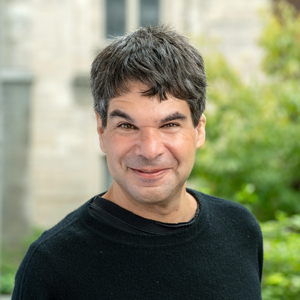
Joshua Knobe
· Howard H. Newman Professor of Philosophy, Professor of Linguistics, and Professor of PsychologyYale University · Department of Philosophy
Active 1997–2024
About
Joshua Knobe is an experimental philosopher appointed in both the Program in Cognitive Science and the Department of Philosophy at Yale University. His work involves using experimental methods associated with cognitive science to address philosophical questions, particularly focusing on how moral judgments influence people's intuitions about concepts such as intention, causation, free will, and consciousness. Knobe's research suggests that people's understanding of the world is infused with moral considerations, challenging the view that their basic approach to thinking about these questions is purely scientific or objective. His research topics include the impact of morality on intuitions about intentional action, the nature of free will and determinism, the concept of the true self and its moral implications, and the conditions under which entities are considered conscious, especially in relation to their physical bodies. Knobe has also explored how norms shape causal intuitions, especially regarding 'doing' versus 'allowing,' and has contributed to the field of experimental philosophy through edited volumes and manifestos that outline the role of experimentation in philosophical research. His work extends to examining intuitions about moral relativism, the influence of moral judgments on various cognitive domains such as happiness and valuing, and linguistic analyses of epistemic and deontic modals.
Research topics
- Computer Science
- Political Science
- Epistemology
- Psychology
- Social psychology
- Philosophy
- Sociology
- Cognitive science
- Cognitive psychology
- Law
Selected publications
Oxford Studies in Experimental Philosophy
Oxford University Press eBooks · 2024 · 43 citations
- Epistemology
- Philosophy
Abstract The fifth volume of Oxford Studies in Experimental Philosophy showcases the growing depth and breadth of the field. The essays here advance debates in several areas of experimental philosophy, including the measurement of beliefs about free will and moral objectivism, as well as methodological issues at the core of both experimental philosophy and philosophy more generally. This volume also includes work on new topics in experimental philosophy: attitudes about time, the auditory characteristics of slurs, children’s understanding of metaphors, and how people think about the problem of evil. The volume concludes with essays reviewing recent work on three central topics: causal judgment, knowledge ascription, and the experimental philosophy of consciousness.
Behavioral and Brain Sciences · 2020 · 226 citations
Senior authorCorresponding- Computer Science
- Psychology
- Cognitive psychology
Research on the capacity to understand others' minds has tended to focus on representations of beliefs, which are widely taken to be among the most central and basic theory of mind representations. Representations of knowledge, by contrast, have received comparatively little attention and have often been understood as depending on prior representations of belief. After all, how could one represent someone as knowing something if one does not even represent them as believing it? Drawing on a wide range of methods across cognitive science, we ask whether belief or knowledge is the more basic kind of representation. The evidence indicates that nonhuman primates attribute knowledge but not belief, that knowledge representations arise earlier in human development than belief representations, that the capacity to represent knowledge may remain intact in patient populations even when belief representation is disrupted, that knowledge (but not belief) attributions are likely automatic, and that explicit knowledge attributions are made more quickly than equivalent belief attributions. Critically, the theory of mind representations uncovered by these various methods exhibits a set of signature features clearly indicative of knowledge: they are not modality-specific, they are factive, they are not just true belief, and they allow for representations of egocentric ignorance. We argue that these signature features elucidate the primary function of knowledge representation: facilitating learning from others about the external world. This suggests a new way of understanding theory of mind - one that is focused on understanding others' minds in relation to the actual world, rather than independent from it.
Experimental Philosophical Bioethics
AJOB Empirical Bioethics · 2020 · 55 citations
- Sociology
- Epistemology
- Sociology
There is a rich tradition in bioethics of gathering empirical data to inform, supplement, or test the implications of normative ethical analysis. To this end, bioethicists have drawn on diverse methods, including qualitative interviews, focus groups, ethnographic studies, and opinion surveys to advance understanding of key issues in bioethics. In so doing, they have developed strong ties with neighboring disciplines such as anthropology, history, law, and sociology. Collectively, these lines of research have flourished in the broader field of “empirical bioethics” for more than 30 years (Sugarman & Sulmasy 2010). More recently, philosophers from outside the field of bioethics have similarly employed empirical methods—drawn primarily from psychology, the cognitive sciences, economics, and related disciplines—to advance theoretical debates. This approach, which has come to be called experimental philosophy (or x-phi), relies primarily on controlled experiments to interrogate the concepts, intuitions, reasoning, implicit mental processes, and empirical assumptions about the mind that play a role in traditional philosophical arguments (Knobe et al. 2012). Within the moral domain, for example, experimental philosophy has begun to contribute to long-standing debates about the nature of moral judgment and reasoning; the sources of our moral emotions and biases; the qualities of a good person or a good life; and the psychological basis of moral theory itself (Alfano, Loeb, & Plakias 2018). We believe that experimental philosophical bioethics—or “bioxphi”—can similarly explain how it is distinct from empirical bioethics more broadly construed, and attempt to characterize how it might advance theory and practice in this area.
Marketing Letters · 2020 · 141 citations
- Computer Science
- Political Science
- Social psychology
Frequent coauthors
- 24 shared
Jonathan Phillips
- 19 shared
Fiery Cushman
Harvard University
- 16 shared
Brent Strickland
Centre National de la Recherche Scientifique
- 14 shared
George E. Newman
- 14 shared
Brian D. Earp
Wellcome Centre for Ethics and Humanities
- 13 shared
Kevin Tobia
- 13 shared
Shaun Nichols
Cornell University
- 11 shared
Ivar R. Hannikainen
Universidad de Granada
Education
- 2006
PhD., Philosophy
Princeton University
Similar researchers at Yale University
- Resume-aware match score
- Save to shortlist
- AI-drafted outreach
See your match with Joshua Knobe
PhdFit ranks faculty by your research interests, methods, and publications — grounded in their actual work, not templates.
- Free to start
- No credit card
- 30-second signup